
Facundo Bernal’s Poems Spotlight Early Chicano Life in L.A. Long Before Border Walls
By Alex Espinoza
FROM: L.A. Times
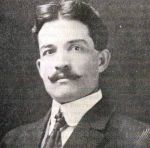 As the president issues the first veto of his tenure after Congress rejected his declaration of a national emergency to fund his wall, it’s hard to imagine that the dynamics along the U.S.-Mexico border were once different, when people shuttled back and forth between the two nations. Facundo Bernal marks such a moment in “Palos de Ciego,” his manuscript of poetry translated to English for the first time by Anthony Seidman as “A Stab in the Dark” for the Los Angeles Review of Books.

 I had a favorite study carrel at UC Berkeley: third-floor Moffitt Library, northeast corner. The bathroom — folded within an interior wall, set off, secluded — was weird, though. Someone had taken the time to punch a raw opening through the metal partition separating two stalls. It was as big in diameter as a Coke can, sometimes lined with wadded toilet paper, and framed with scrawled hieroglyphics (arrows, initials). I dismissed it as crazy, an elaborate work of vandalism, but it nagged at me. While I studied James Joyce and Virginia Woolf and stressed about my senior thesis, the men’s room was undergoing a silent and illogical transformation.
 The poet Mike Sonksen knows more about Los Ángeles than almost anyone. It began when he was a kid, his father and both grandfathers introducing him to the sprawling city by taking him on destination drives. Due to his father’s love of architecture, having, “taught me about…Frank Lloyd Write from an early age,” Sonksen “had a natural interest in maps and geography.” Those drives fostered that interest, dipping in and out of distinctly planned and inhabited neighborhoods that made up the patchwork quilt of, not only the city, but Los Ángeles County.
 Believing in fate is a foundational part of my life, so when I was perusing my list of books to indulge in next, something called me to John Brantingham’s The Green of Sunset. For starters, I think it was the title. I hear sunsets get called everything but green, and this had me seeking out the elements of a sunset often unseen, like reading between the rays of a departing sun, and that’s something I needed this week.
 Reading Ingrid M. Calderon-Collins’ Ablution, takes readers through the early days of love and beyond. Time passes, as it must. The narrative built within these poems, traverses the relationship between these lovers with a close lens, many titled with just a month and year. It feels too intimate at times, and readers might be compelled to look away, but that’s only a sign to keep reading.
 Like a hurricane of images, or a tsunami of grief, Sweeny’s lines strain against a background of stability and coherence that barely holds together. The book is an elegy not only because the title tells us so, but because it performs its elegiac ritual without the filter of conventional form or syntactical coherence. If grief is inchoate, the poet asks, what language is sufficient to the duty it is called upon to perform? The answer is a language suddenly released from its duties to inform or to persuade—functions of containment, framing, and interpretation—a non-syntax left to its singular capacity to conjure the ineffable, to bring it into being.
 SEVENTEEN AND HIGH, Nikki Darling swaggers down the middle of Garvey Boulevard, a busy thoroughfare in the San Gabriel Valley, as cars swerve around her: “‘Three Days’ by Jane’s Addiction is playing on my Walkman and I feel like I’m in a movie, like I’m an assassin.” She stands in the street with a cigarette hanging from her lips, with “someplace to be or maybe nowhere to go.” She taunts the cars as they pass: “Fly around me, motherfuckers! Fly around me like I’m not even here!”
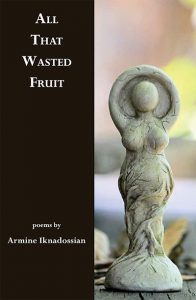 Arminé Iknadossian’s mother would gather olives from the trees that grew just outside of her daughter’s high school; she couldn’t imagine all of that wonderful fruit going to waste. Iknadossian has not written a poem for this image she remembers all of these years later, but perhaps all of the poems in her first collection of poetry are, in a way, an homage to her mother’s incessant olive gathering.

 Los Angeles Literature