
Invisible No More: How “Fade Into You” Reflects the L.A. Chicanx Experience
By Xochitl-Julisa Bermejo
FROM: LARB
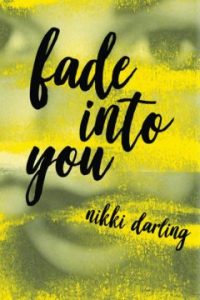 SEVENTEEN AND HIGH, Nikki Darling swaggers down the middle of Garvey Boulevard, a busy thoroughfare in the San Gabriel Valley, as cars swerve around her: “‘Three Days’ by Jane’s Addiction is playing on my Walkman and I feel like I’m in a movie, like I’m an assassin.” She stands in the street with a cigarette hanging from her lips, with “someplace to be or maybe nowhere to go.” She taunts the cars as they pass: “Fly around me, motherfuckers! Fly around me like I’m not even here!”
Continue reading “Invisible No More: How “Fade Into You” Reflects the L.A. Chicanx Experience”

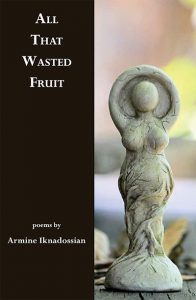 Arminé Iknadossian’s mother would gather olives from the trees that grew just outside of her daughter’s high school; she couldn’t imagine all of that wonderful fruit going to waste. Iknadossian has not written a poem for this image she remembers all of these years later, but perhaps all of the poems in her first collection of poetry are, in a way, an homage to her mother’s incessant olive gathering.

 Victoria Chang’s poetry collection Barbie Chang looks at the complex realities of racism for third-generation children. Even as a child, the speaker, Barbie Chang, is not able to have normal friendships with anyone—she overhears a classmate’s mother advising her daughter against forging a friendship with her because it is not in her best interest in “Barbie Chang’s Daughter:” “the new girl’s / mom tells Barbie Chang / that her own daughter should not tie / herself down too fast.”
 “IT’S THE BROKEN PARTS that matter” claims Vickie Vértiz, in a note to her poem “Nahuatl — A Revenge,” which features what she calls “imperfect” translations from the indigenous Nahuatl language into English. Vértiz’s imperfect translations recall what theorists Emily Apter and Jacques Lezra, following Walter Benjamin, call “untranslatables”: philosophical concepts that both invite and prevent transfer between languages, words that call out to be reinvented in their new language context precisely by resisting translation. In Vértiz’s poems, Latinxs living in California share “untranslatable” experiences that take place between English and Spanish. Her poems transform displacement and a polluted cityscape into sources of resistance and aesthetic restructuring. The visually and sonically rich setting of these poems may be polluted — by toxic air, water, and soil; toxic masculinity and white supremacy — but Vértiz celebrates what her community grows in this toxic ground and voices their untranslatable experiences.

 Napa, California–based artist known for multimedia installations, public art, photography, printmaking, and sculpture, Lewis deSoto revisits Southern California’s Inland Empire, where he lived the first half of his life. From his creative toolbox, deSoto grabs an old standby—his photographic lens—to articulate the 21st century present of the Inland Empire. He overlays the visuals with written filters of his narrative past to produce Empire: Photographs and Essays.

