
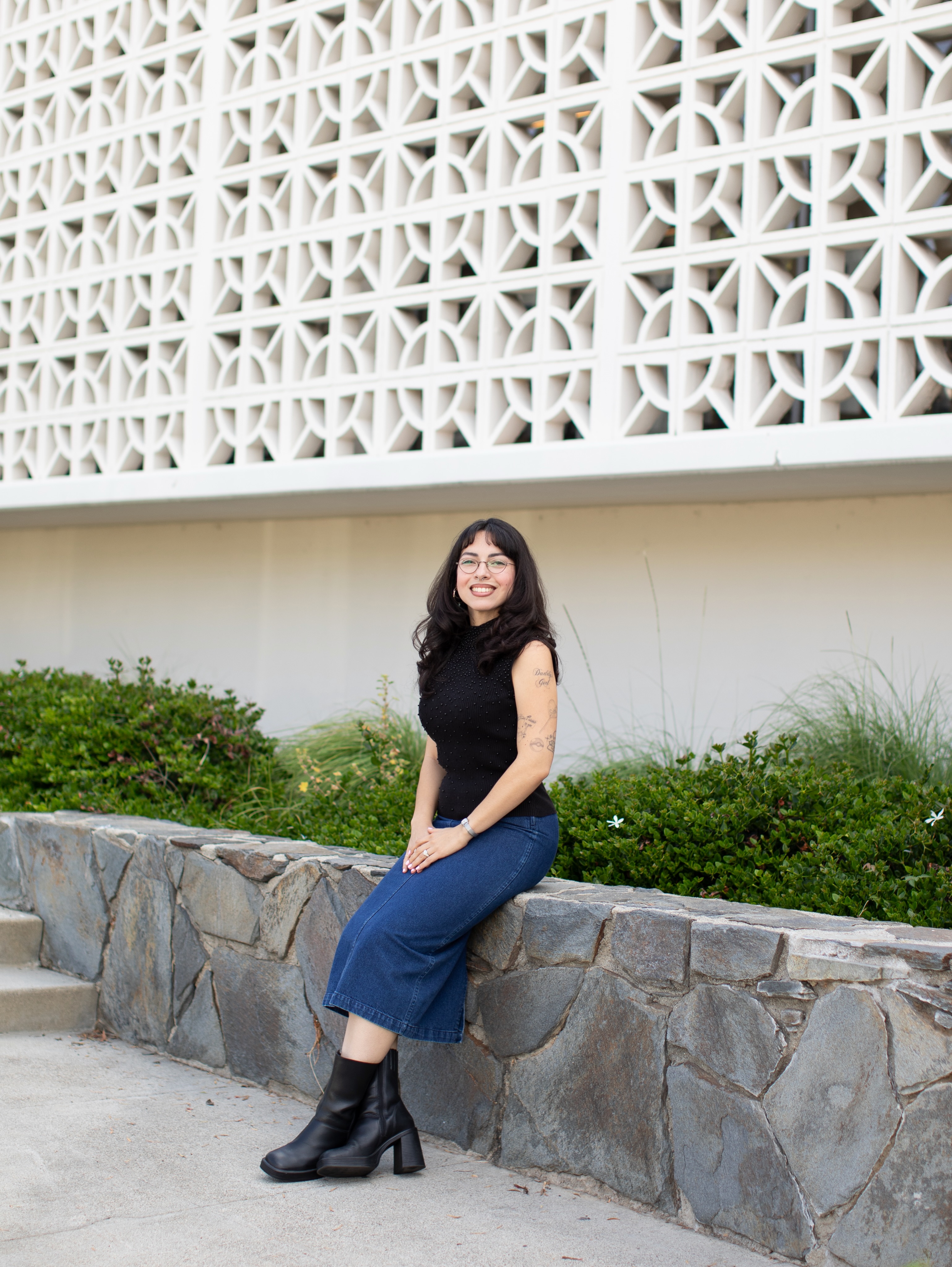
“Writing has changed my life,” Whittier’s inaugural Poet Laureate Alejandra Roggero said in a recent Corazón Magazine interview, “in the way it’s given me purpose” and provided community. Roggero was introduced to this literary community in middle school through teachers like Ms. Love, who, as she writes in “I Want to Write a Poem for My Teachers,” “gave me a family when mine is nowhere to be found.”
This literary family her teachers introduced her to—writers like Bukowski, Whitman, and Salinger, who expressed the individual experiences of being an outsider in society and the longing to be understood by often telling their own stories, showing her that she could tell hers too and not be alone—was empowering.
That sense of permission quickly hardened into conviction. By the time Roggero left high school in 2015, writing was no longer merely a refuge from her sense of being an orphan, from being raised by immature parents. It was a declared vocation. “We’ve come a long way,” she said in the same Corazón Magazine interview. “I was a writer back then, told them I was going to be a writer, and nothing has changed.” That undeterred dream of a young Latina, an outsider from Whittier, claiming her voice and staying local by attending Whittier College, drove her to engage in the local literary community, reading at open mics where she befriended like-minded poets and artists.
Being part of a community accepting of self-expression helped shape her desire to become a community advocate.
Now, serving as Whittier’s first-ever Poet Laureate, Roggero brings her advocacy for literary accessibility, creative expression, and empowerment, and her artistic philosophy of poetry as a tool to strip away the armor and open us up to connection and community, inseparable from each other, to the public square as a shared civic language. As she’s evolved into a mentor, an artivista, she says in her poem, she’s “ready now to teach someone else.”
Recently, I asked Alejandra Roggero about the influences on her poetry, local and otherwise and her thoughts on the Greater Los Ángeles literary community she’s become a part of.
Brian Dunlap: Who were the original influences on your writing? Poets, writers, maybe even musicians? Teachers? Why and how have they influenced your writing?
Alejandra Roggero: As a young student in middle school, I loved reading and writing, and my teachers gave me the freedom to explore. My eighth-grade English teacher, Ms. Jennifer Love, was a huge influence on my development as a writer. She was the first person to tell me that I could be one—that I didn’t just have to read books; I could tell my own stories, too. That changed everything.
Music was another tremendous influence. My dad introduced me, at a very young age, to all his rock ‘n’ roll favorites. Through rock ‘n’ roll, I discovered jazz, blues, and, of course, the rich influence of Spanish music that came with being the grandchild of Mexican and Cuban immigrants. Los Panchos and Buena Vista Social Club were the soundtracks to my childhood.
What my love for the arts taught me early on was that this life—this exploration of art, identity, and storytelling—was possible. Though I didn’t come from a family of artists, I found examples of art everywhere. I just had to listen, open my eyes, read books, and feel.
I still return to old favorites: Salinger, Fitzgerald, Steinbeck, and Brontë, to name a few. Poe, Bukowski, Hughes, and Whitman. Their lessons in life, love, and language have never been lost on me.
Dunlap: What local writers, past or present, have been influential to your writing and/or you’ve fallen in love with? In what ways have they been influential on your writing and/or in what ways have you fallen in love with their work?
Roggero: I’ve been blessed to befriend so many incredible artists over the last decade, and I could truly be here all day talking about them if given the opportunity. I love Jack Grapes’ whimsy and his approach to Method Writing. I love my dear friend Pam Concepcion’s call to home and nostalgia in her new book, Unbecoming. I love the reflections and storytelling of Juan Amador, particularly his perspective as a mama’s boy in a Latino family. Donato Martinez’s “If I Was God, I Would Visit the Hood” tears me apart every time I hear it.
There is still so much I am learning from my friends and colleagues in poetry and art. They see the brokenness of our world and write their own prescriptions for it. They remember people and give power to our stories—as Latinos, immigrants, and women. They understand the responsibility we have here. And the possibilities, too.
Being in community with so many writers over the years, and especially now as Poet Laureate of Whittier, has been incredibly meaningful. This work isn’t just an individual pursuit. It’s a shared cultural responsibility, and I’m thankful to be doing it alongside so many writers I admire and respect.
Dunlap: What writers do you read today, whether poets, essayists, novelists or others? What draws you to their work?
Roggero: My reading has increasingly become an extension of my own efforts to understand myself, my family, and the experiences that have shaped me. Poet Ada Limón has been a particularly meaningful influence. I admire her ability to find the extraordinary in the ordinary, to write about the body, family, and love with tenderness and honesty.
I’ve also found myself drawn to books that help me better understand childhood, parenthood, and the emotional lives of families. Books like Adult Children of Emotionally Immature Parents by Lindsay C. Gibson have given me language and perspective for experiences I’ve been trying to make sense of in my own life. That process of looking backward—examining my parents, my childhood, the things I’ve inherited, and the things I choose to carry forward—has become an important part of my writing, especially in my upcoming book, soft serve.
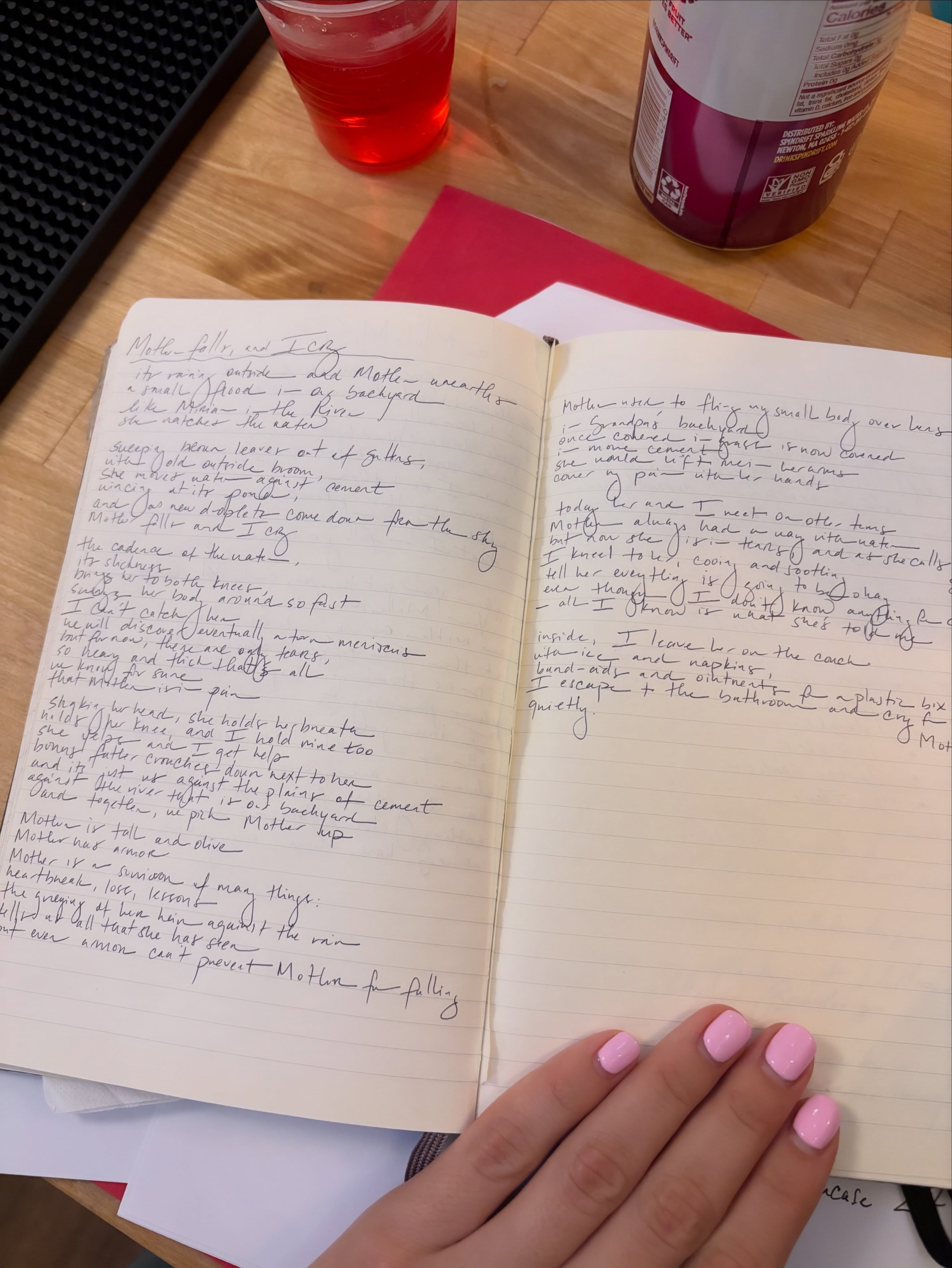
I think much of my work is an attempt to understand where I come from, how I’ve been shaped by the people who raised me, and what it means to make peace with, or sometimes make something entirely new from, what I’ve inherited.
Dunlap: From your engagement in the local literary community, what are your honest thoughts and opinions about this community, good, bad or otherwise? Its issues. Its positives and anything else?
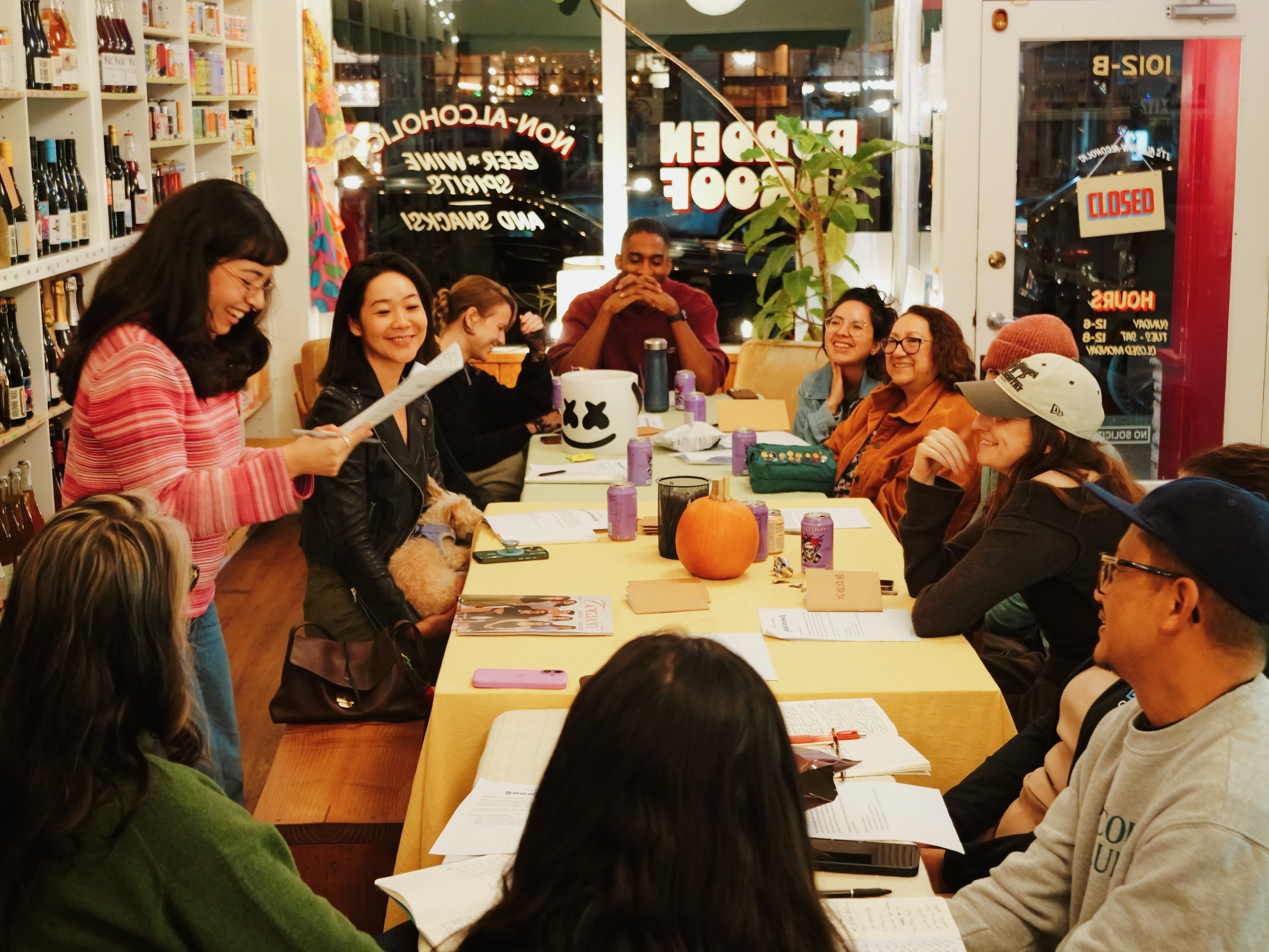
Roggero: This pocket of the literary community that I’m a part of is very special. Some of us are immigrants, some of us hail from the Eastside, and most of us are Latino. We are bright. We are loud. We are hilarious. We are very good listeners. We help each other, consistently carrying each other’s names, books, and accomplishments into new spaces and rooms. Many people in this community have extended their hands to me with love and genuine affection, and I’ve appreciated that so much, especially in this new position as Poet Laureate.
I attend poetry events weekly, and many writers in this community also attend my events and workshops with Poetry for the Masses. It really is a give and take, an equal exchange of energy and love. I don’t take that for granted. I know how much time, generosity, and care go into building and sustaining a literary community.
I can only speak to the community I’ve been fortunate enough to find myself in, and my experience has been overwhelmingly positive. Of course, there is always room for more connection, collaboration, and opportunity. I’d love to see even more of our writers find their way into new spaces, meet one another, and discover the work being made just around the corner from them. There is so much happening here, and I think there’s something really beautiful about continuing to find ways to bring it all together.
I encourage people to keep up, reach out, connect.


