
via via Instagram: @hermosaylibrosbookfestival and @EastLosBookFestival
This Hispanic Heritage Month, Los Angeles Literature has decided to highlight some of the powerful, thought-provoking local Latinx writers and poets of Greater Los Ángeles. In a region so deeply shaped by its Chicano community, this foundational influence, whose roots reach back to Mexican Los Ángeles, predating its Anglo presence, and its Salvadoran and Guatemalan communities, many of whom began arriving in the early 1980s, it only makes sense to celebrate the writers and poets who have emerged from these and the region’s other Latinx communities. The Chicano, Salvadoran, and Guatemalan communities, in particular, have shaped Los Ángeles through traditions of muralism, political activism, foodways, and community organizing—from the Chicano art cultivated by institutions such as Self Help Graphics & Art to the refugee and immigrant advocacy that gave rise to organizations such as the Central American Resource Center amid the Central American civil wars of the 1980s.
Author and lawyer Daniel A. Olivas rightly reminds us in his Preface to Latinos in Lotusland: An Anthology of Contemporary Southern California Literature, that “no group of people is monolithic.” Certainly not the communities these local writers and poets come from. Certainly not in the stories they tell.
Their work moves between migration and displacement, barrio and working-class life, family and love, gender and sexuality, violence and political resistance, cultural memory and identity, and sometimes the strange, magical possibilities of imagining life in Los Ángeles. They tell these stories through poetry, memoir, essay, fiction and magical realism.
In the past, Los Angeles Literature has published a list highlighting local Latinx literature. It included 32 local Latinx writers and poets. However, this year Los Angeles Literature has asked six local writers, including myself, to each recommend a local Latinx writer and provide a short explanation for why they chose that writer.
Gil Cuadros
Recommended by Brian Dunlap, poet, writer and Founder and Editor-in-Chief, Los Angeles Literature
I fell in love with Gil Cuadros’ work in grad school, when Alex Espinoza assigned his landmark work City of God for one of his classes I took at Fresno State. Cuadros was a gay Chicano from the Eastside of L.Á., who contracted HIV and died of AIDS during the during the AIDS crisis. The book is a collection of his semi-autobiographical poems and short stories exploring the intersection of queer identity, Chicano culture, race/racism, history and the devastating impact of AIDS on his life and on Los Ángeles during the AIDS crisis. His short story “My Aztlan: White Place” is my favorite short story of all time. It’s a powerful, unsparing account of living with AIDS, the isolation of being a gay Chicano man, navigating the otherness he experiences in the predominantly white gay community in Los Ángeles, and a fractured family and community history.
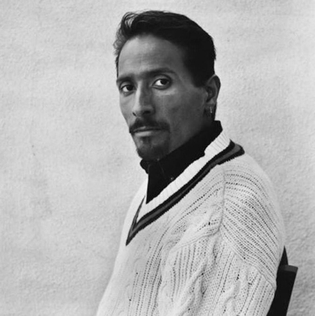
It was Cuadros’ ability to draw me in with his unwavering voice and confront the most difficult parts of his life unflinchingly—the hard truths—as he wrote about L.Á. history, racism and identity in “My Aztlan…” that caused me to fall in love with the story and his work.
Eduardo Martínez-Leyva
Recommeded by Lynne Thompson, Former Poet Laureate of Los Angeles
After receiving and reading Eduardo’s Felix Pollak Prize-winning collection, Cowboy Park, I had the honor to interview him for the Poetry L.A. Series. Eduardo is new to Los Ángeles, is now teaching at UCLA, and is going to become, I believe, an important voice in our local poetry scene. Proof of that has already been established when Cowboy Park won the Kate Tufts Discovery Award this year. The poems in the collection are tender and raw, by turns, and are important documentation of the status of immigrants and the queer community. Best compliment I can give: can’t wait for his next collection!
Ely Lupe
Recommended by Erica Castro, poet and Founder and Publisher of Daxson Publishing
Ely Lupe is a poet who brings vulnerability to her writing about her childhood and her own demons, bringing to light how trauma follows you into adulthood if not healed. This is seen in her collection Chillona Chingona, which takes the reader on a journey of healing trauma while at the same time painting a picture of the difficulties of being raised by immigrant parents. Her bilingual poetry collection speaks volumes about not fitting in and not knowing one’s own identity. Almost as if she has two identities, one at school trying to assimilate to this country, and one at home trying to be accepted by her immigrant parents. She paints the high expectations her parents give her because she is the oldest daughter, and at the same time trying to preserve her mental health in the midst of trying to be perfect.
Lupe’s truth in her poetry serves to show readers that mental health issues are real and painful, but with work and determination they can be treated. Also, Lupe, in her debut collection, reminds the reader to embrace every part of themselves and to recognize that growth can come from expressing the experiences that are sometimes difficult to put into words.
Janel Pineda
Recommeded by Lynne Thompson, Former Poet Laureate of Los Angeles
Although I haven’t had the pleasure of meeting Janel, her collection Lineage of Rain has stayed with me since it was published by Haymarket Books in 2020. Lineage is her first book and it strikes me that the poems have a level of sophistication that isn’t always achieved in debut collections. She is a Writing for Freedom Fellow and, having recently served as a recommender for that prestigious honor, I know she will continue to shine beside the best poets working in L.A. today.
Luivette Resto
Recommeded by Alexandra Umlas, Orange County Poet Laureate 2027-2028
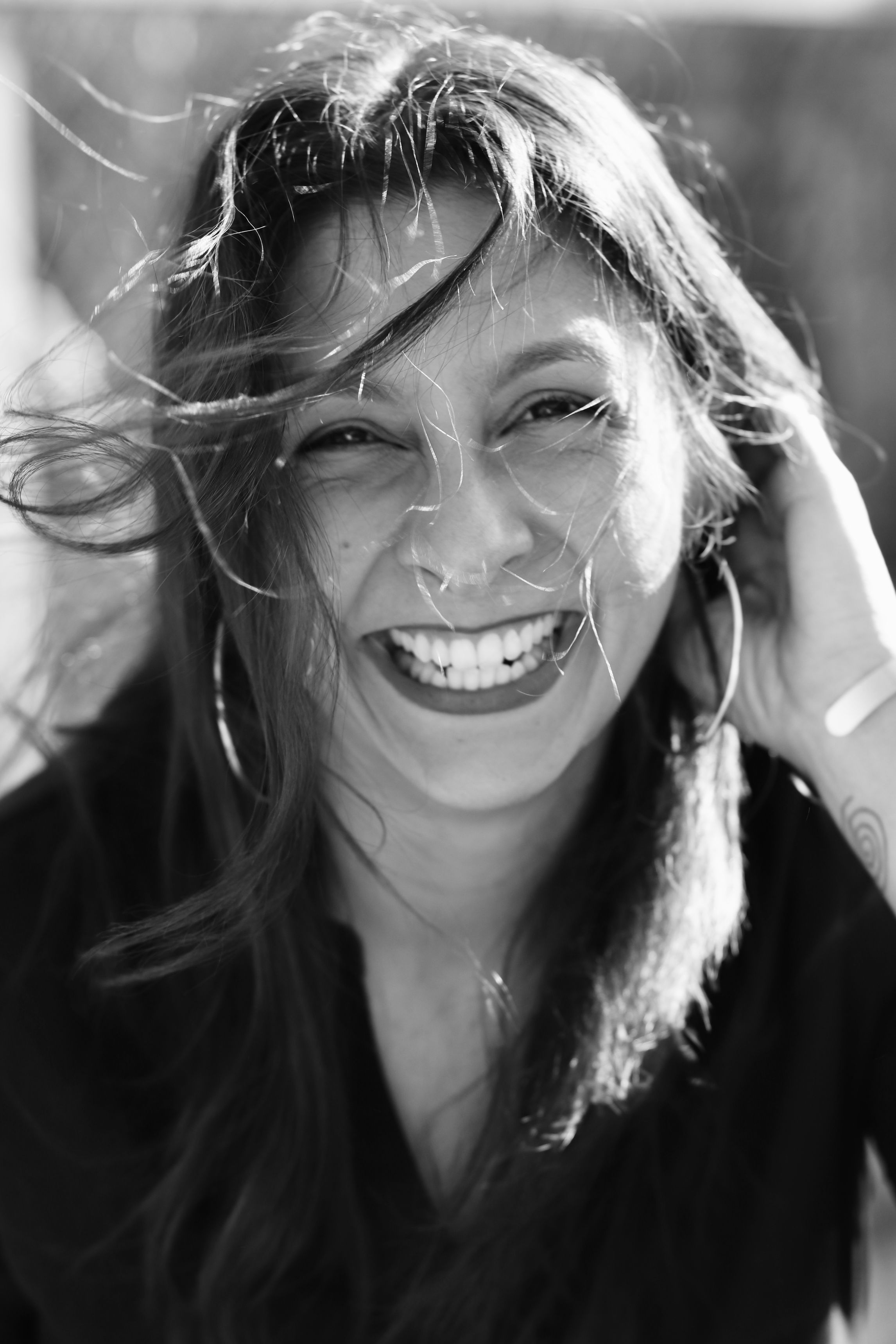
A poet I admire in the Greater Los Ángeles area is Luivette Resto, who is an energetic, authentic writer, teacher and mother, and when she reads, she commands the stage. I first became aware of her work through Moon Tide Press’s anthology of Southern California poetry, Lullaby of Teeth, which includes four of her poems. Some of her poems work within recognizable forms, while others seem to carry the echoes of forms. She can play with language while taking language absolutely seriously—not an easy thing to do. Resto has published three collections of poetry, including books from the Los Angeles-based Tía Chucha Press and FlowerSong Press. Beyond her writing and teaching, she is also deeply involved in the literary community, including her work as President of the Board of Trustees of Beyond Baroque.
I recently had the pleasure of seeing her host a Beyond Baroque fundraiser featuring local wines from Xochitl Wines, Paco Wines, Ulloa Cellars, and Eastside Luv paired with a featured guest poet. The evening was full of creativity, humor, and community—Resto helps create spaces where poetry feels alive, communal, and welcoming. You can hear Resto read her poem “What the Moon Said to the Poet” on the Poetry Foundation’s website. The poem ends with the lines, “I live openly in the brightness of the day / when things are concealed like agony, blessings, and love.” I keep returning to that image of the moon living openly in the brightness of the day. Perhaps that is what I admire most about Resto’s work: its willingness to embrace contradiction… to be playful and serious, but also to live outward and with the full essence of life while also being deeply rooted in community.
Miluka Rivera
Recommended by Camille Hernandez, Former Poet Laureate of Anaheim
Miluka Rivera’s activism and creative range set a new bar for multi-talented writers. Rivera’s works extend from novels to scripts and even thoughtful journalistic pieces. Fitting for Los Angeles, her storytelling prowess extends beyond the page and delves into film and television. It’s one thing to inform the current culture, but another to recognize the importance of building a pathway so new generations of Latinx artists can inspire future cultural shifts. Rivera’s contributions to the Screen Actors Guild (SAG), the Low-Cost Housing Project, and (previously) the Kumaras Center for the Arts, Dance & Etiquette show a pattern of commitment to both personal and public duty. For some artists, creation extends past the borders of the pages and bleeds into the physical realm: one creative endeavor and outreach project at a time.
Bonus
Fei Shumari
Recommeded by Pastiche Queen, performance artist and slam poet
Author bio:
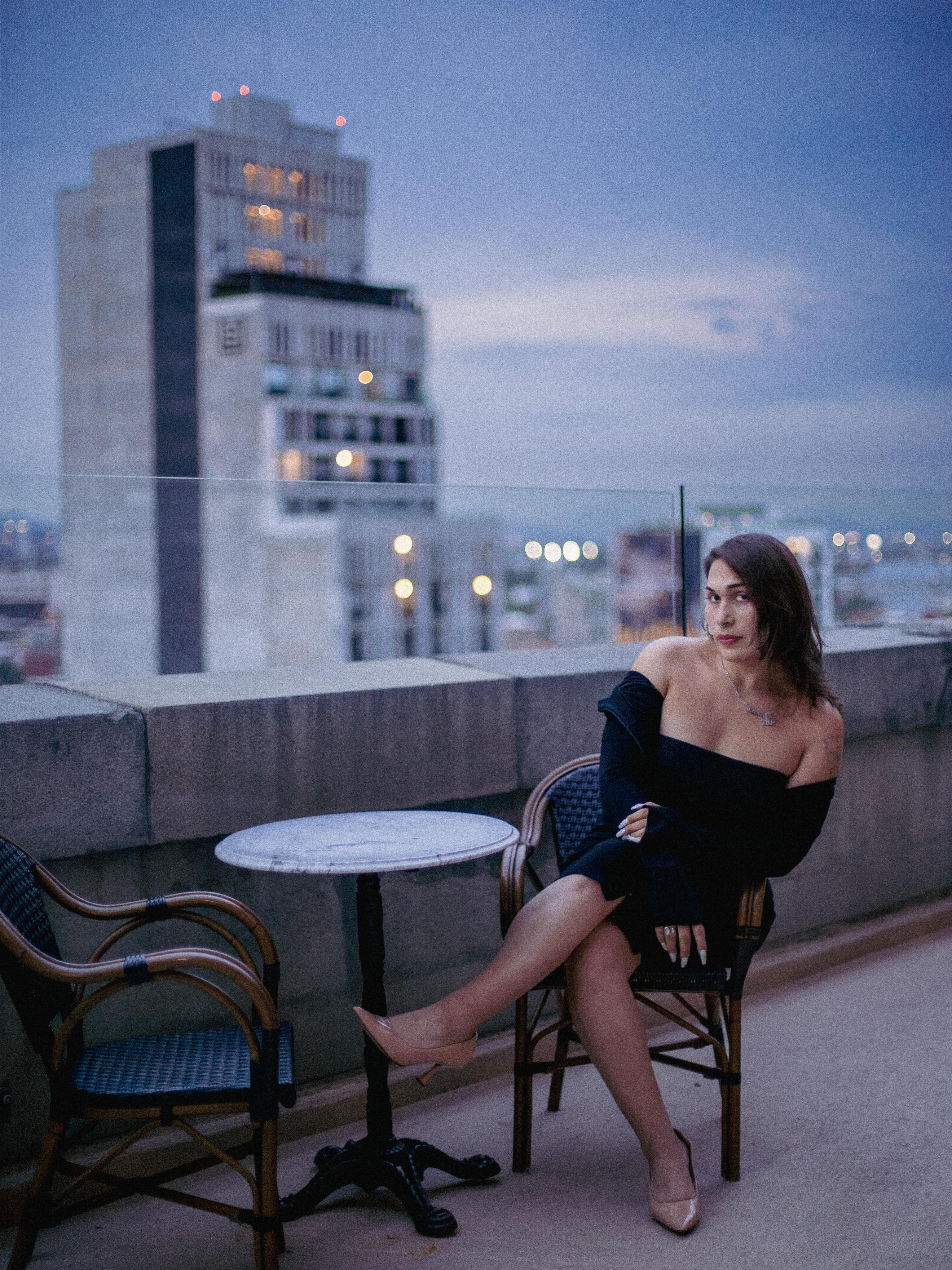
féi iká shumarí (formerly known as féi hernandez) is a two-spirit/trans (un)documented writer, visual artist, and healer. who was born in Chihuahua, Mexico and raised in Inglewood, CA. The author of Hood Criatura (Sundress Publications, 2020) and Chabóchi Doll (Abode Press, 2026), she was a 2023 Lambda Literary fellow and 2022 Tin House Scholar. Her poetry and prose explore Indigenous identity, migration and belonging, gender and sexuality, and the experiences of trans and undocumented people. féi is a descendent of the Pi’ma, Rarámuri, and Cora peoples.


