
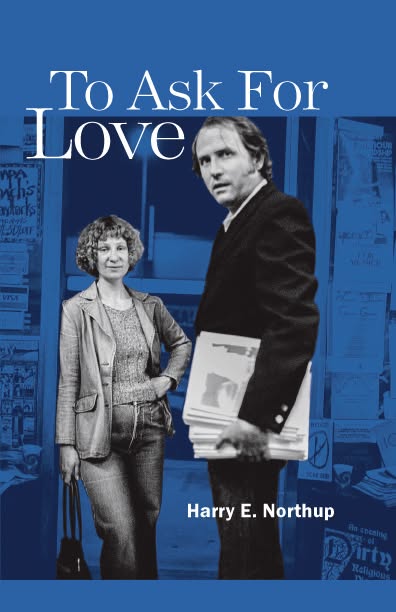
The loss of a loved one, especially the loss of a lover or spouse, has been a perennial theme in poetry. Dante composed The Divine Comedy around his loss of Beatrice; Edgar Allen Poe’s poems and stories mined his sorrows over the loss of his young bride; Edna St. Vincent Millay wrote numerous sonnets and lyric pieces about mourning for deceased lovers. Poets still use poetry for consolation, and to discover secrets about themselves and their loved ones that never revealed themselves during the years they shared.
Harry Northup’s To Ask For Love is a poetic chronicle of the author’s thoughts and internal struggles during the period following the passing of his wife Holly Prado. Their relationship lasted for over forty years, a love between two poets, known and celebrated in the Southern California poetry community. Northup, in this book, is using his poetic ability for personal healing. He allows the community to share his thoughts, to follow his journey through the most difficult of times.
The book is divided into three sections, each of which deals with a specific time period and a central idea. The first section is called “Distance Near.” These two words give us a contradiction that speaks to the conundrum of a person living and then not living, not being available. Death separates the lovers, yet, the memories are so strong, and the daily reminders so conspicuous, that the distance of mortality does not seem like such a distance. In the opening poem, “Sight Granted,” Northup addresses that contradiction:
           my tangible past has no benefit
           no coinage, nothing to blend
           evanesence with glory or whiteness
           no perception granted.
“Evanescence” refers to the process of disappearing gradually, of fading out. Northup, an actor with screen credits, that include “Taxi Driver” and “Silence of the Lambs,” might be evoking the image of a scene in a movie fading and blending into the next scene. But the impermanence of a human relationship, as he is able to bring it up in his “tangible” memory, cannot blend with either “glory” (vivid colors, real experiences) or “whiteness” (the blank screen of non-existence), and so there is “no perception granted,” no way of being able to see the past as it looked when it was the present and was not being taken away.
Through the rest of the first section, Northup’s poems speak of the “tangible” woman who was his wife. He misses her physically; recalls not only their lovemaking but their walks together, their sitting under trees, their eating “regular meals at regular times.” A poem called “The Scarf” presents something even more “tangible:” the objects Holly owned. Northup pictures Holly:
           wearing a scarf
           as she did as a child
           to protect her hair from the wind
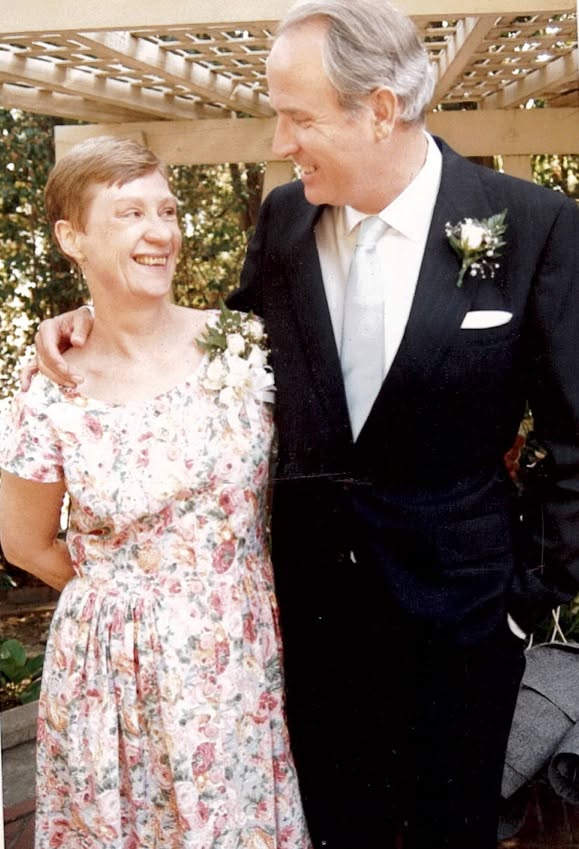
He also relates that he gave her friends some of her possessions, as they told him who they thought she was. But even those mementos, he says, are “not who she was.
That’s because, he continues, “She lived, she wrote, she loved.” In their real-life experience, Harry Northup met Holly Prado through the poetry community and knew her poetry first. Through her poetry, Northup learned much about her thoughts, likes, desires, and beliefs. Objects such as a scarf or a watercolor painting are concrete symbols of Holly’s aesthetic sensibility but the world created by Holly’s presence in Northup’s life encompasses a special universe that cannot be shared with others.
The second section is called “Meditation on a Flower” and finds Northup moving through the outdoor scenery in the Motion Picture and Television Fund’s retirement campus where he lived with Holly, and still lives. The beauty of the grounds (which Northup celebrated in a previous book) reminds him of Holly, as well as of earlier physical and emotional encounters with women.
“Holly” is a flowering plant, an evergreen, representing life that does not age. Holly becomes the flower of meditation in the section’s title poem. She is “the freeway flower” who “grows in death,” therefore perpetuating herself; the “waiting to die flower in pleasant place,” representing the process of illness in a caring environment; and the “foreign flower” which is “lost” and “unknown.” Northup sees the flowers being “given” and “accepted” through boundaries both concrete (the living world) and invisible (time). The flower is a force that will continue to grow, in spite of time and death. Her physical form appears to him in every place where they walked or sat on benches on the grounds of the Home. The poem “In Afternoon Sunlight and Shadow” speaks of the aching feeling of being without a woman and her touch. Then, the sight of some flower pots holding small trees triggers a visible image:
           The female face and shoulders burst
           Into flame, a scarf furling around
           Staying away from death's image.
This might be the scarf mentioned earlier in the book, the one Holly wore as a child. The vision of her bursting forth, blossoming like a plant, wearing something from her early life, is a defiant denial of her absence from the earthly plane. Northup sees his wife as a still-living being whose presence and personality are contained in all the growing plants.
The six poems that form the final section, “To See Beyond,” function as a prayer for drawing together the perceptions Northup has been working with in the two earlier sections. In these last poems, he is more concerned with his own identity now that his life is that of a single man, at an age where it becomes increasingly difficult for a person to handle life on their own after 30+ years of marriage.
The first poem is a self-description:
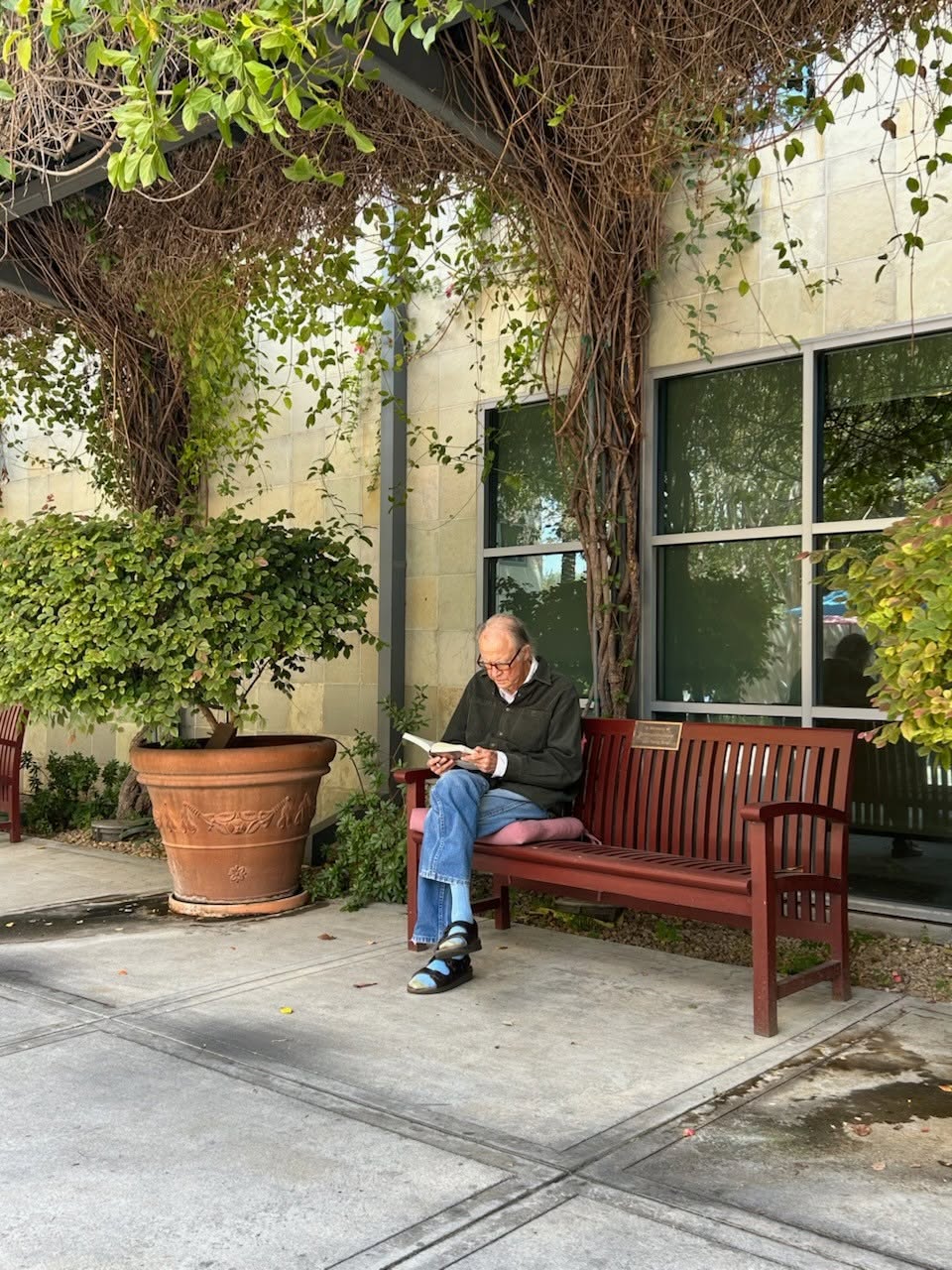
           In the glass patio door I see a man
           wearing reading glasses; he wears a long sleeve
           L.L. Bean gold T-shirt, blue pj pants;
           he has short, gray, reclining hair.
@harrynorthupfans
It’s amusing that he says “reclining” rather than “receding.” Maybe the hair is relaxed in the same way the clothes represent a feeling of relaxation. This is the garb of the retiree; almost a cultural cliché. But Northup also sees in this self-portrait “an old man alone,” “mostly learning to escape loneliness” and a man who is looking for safety and protection.
“Needed Rain” is a genuine prayer poem:
           O, Lord, I am frail and fallen
           & fear I should appear strong & confident
           & I break down & cry a dozen times a day.
It is too rainy, he says, to go to the chapel at the Home, yet he needs to ask for divine help. He admits that his wife, Holly, was what kept him going. Who will guide him now?
           To stay warm & dry & hopeful, I pray
           Love scolds me and never stops.
What a bulls-eye poetic shot this is! This is indeed asking for love, for the divine version of the human love that sustained this man while he was married, even though marriage or any close human relationship usually contains moments of strife.
Rain is “needed” to sustain the greenery that makes the retirement campus so beautiful. Rain is also the hassle that can keep someone from being able to do what is needed. The memory of Holly’s love giving Northup strength and shelter from the “rain,” must also “scold” him, remind him that he will be protected by his memories and what he has learned over the years from the close relationship.
Also, in “Personism,” Northup says he is carrying within him the “phone calls” and the talks that connected him with Holly. And in “From the Daytime Sky,” he again sends up a prayer, that he might be “inhabited” by grief but that the grief will wash him “inside and out.” And he finally finds acceptance of the situation.
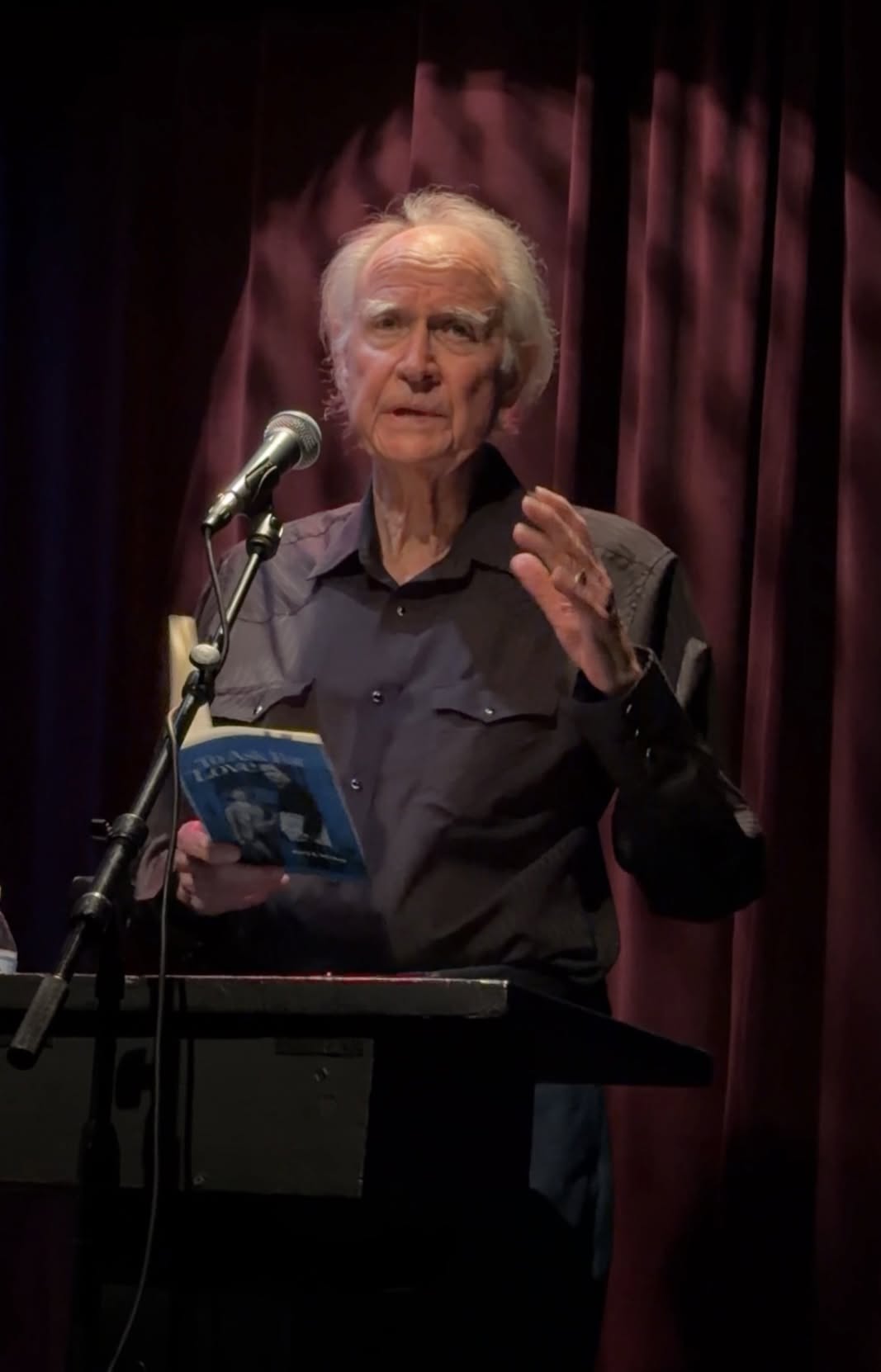
The last poem is called “About Morning.” Despite its simple language, this poem hits hard, as it presents the passage from night to dawn as a time when a man contemplates what life and death mean to him. Morning is traditionally an image of renewal, the darkness (representing death and endings) giving way to daylight, new hope, and new growth. Northup describes his reaction to another day as a struggle between that hope for renewal and the grief he is still feeling:
           The death of closing a door
           so no one hears it
           before it was light this morning

           for no cause but to escape
           A more coherent narrative
           would be stand clear & bow
           to the last stars in the morning sky.
The poem suggests that Northup passed a bad night. He says his eyes were unable to focus, so “the task was set aside until morning.” His task is to try to live through each day, to take up life again and be able to see objects and experience the quotidian actions of life without that deep fear of hearing a door close. That door is the door to his memories, both happy and sad. He must be able to live with his memories without fear of either losing them or denying the more painful parts of the past.
And of course, “morning,” the time of day, is a homonym of “mourning.”
By the book’s end, we wonder along with the author: is there a way to live beyond the life of a relationship ended by death? There is no easy answer. Northup has let us follow him through his struggle. He knows that life will not be the same for him. But life is about “asking for love” in some form, every day, and finding it in memories, in new insights, in an appreciation of what beauty still lives in the world, and in having the courage to reach out to others with that love. With the aid of poetry, Harry Northup has given us some of that love.


