
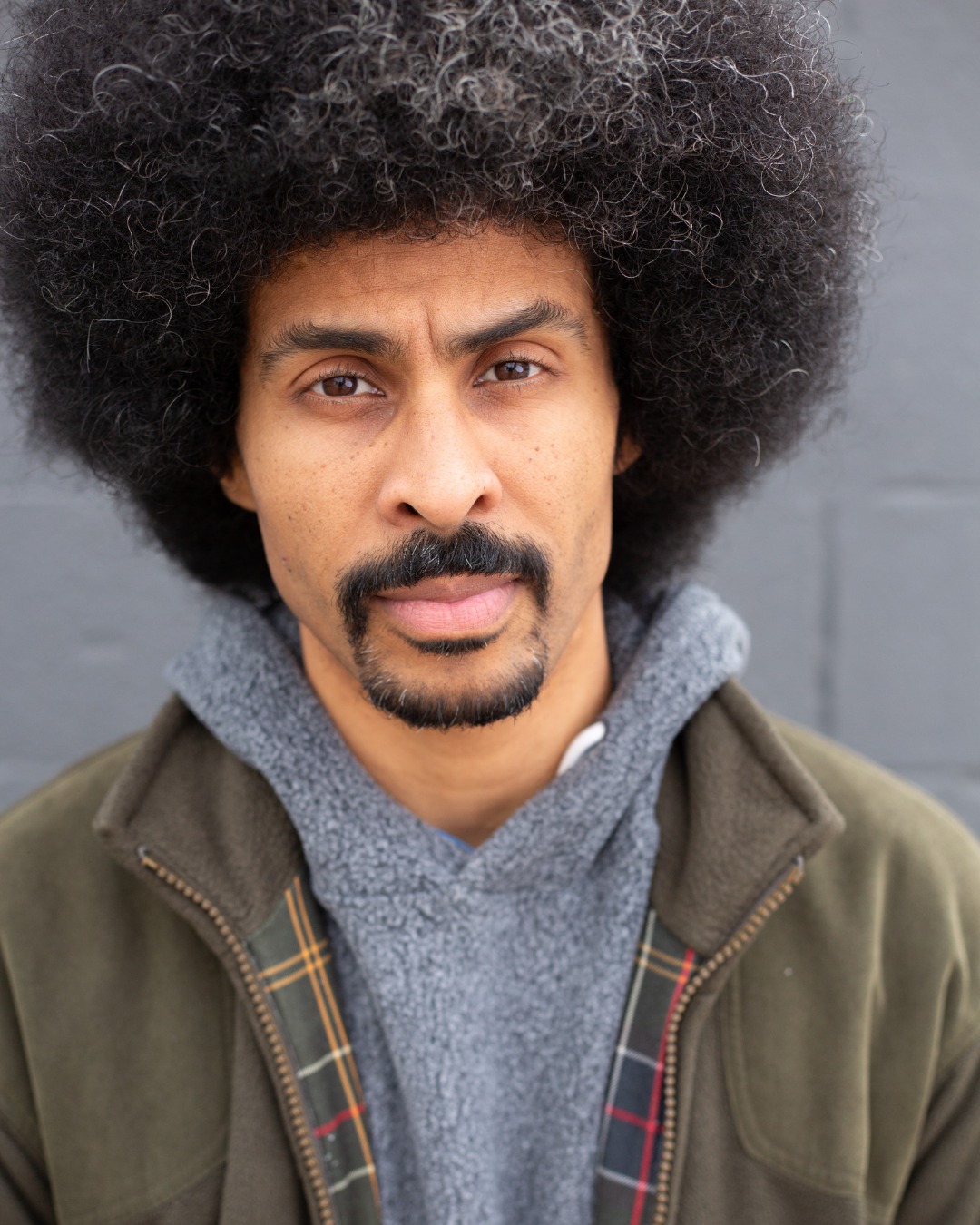
Sean Hill is an actor and poet. Born in SoCal and raised in Inglewood, his parents met in a Harlem Kodak shop before moving to Los Ángeles. This was after his mother’s father immigrated from Columbia to New York and became an engineer for Pan Am, where he “saved up enough money to bring over his whole family,” Hill said in a Southbay article.
Growing up with two older brothers and an older sister, in the early ’90s, when gangster rap was especially big in Southern California, it was a brother who introduced Hill to creativity and art through the rap poems he’d create. He found it easy to connect with the teenage angst his brother spoke about, which led his bother to get caught up in a gang. Despite this, Hill always felt good and uplifted, even cool, after hearing his brother’s words, which drove him to create his own poems.
Not long after, Hill’s parents sent his brother to live with their grandmother in New York, to divorce him from the gang life he was involved in. But for Hill, it was encouragement and how inauthentic the “gangster” life or persona felt to him just by penning gangster raps, and discovering his authentic self in the process, that kept him passionately creative.
However, it was not until college that Hill learned “the power in effective language” he said in the Southbay article, and began to experiment with the different ways he could share and perform his poetry. He utilized theater techniques and the academia of college, but with the rawness of hip hop elements. He wanted to ensure his words connected deeply with his audience.
To this day, Hill said, through his poetry; performances including being invited on stage by Grammy winners like Dave Yaden; his acting; the events he’s hosted; and the organizations he supports, he aims to leave this world in a much better place than when he entered it. By ensuring his audiences leave his performances empowered, uplifted, and able to understand themselves and the world a bit better.
Recently, I asked Sean Hill about his influences on his poetry, local and otherwise and his thoughts on the Greater Los Ángeles literary community.
The Interview has been edited for length and clarity.
Brian Dunlap: Who were the original influences on your writing? Poets, writers, maybe even musicians? Teachers? Why and how have they influenced your writing?
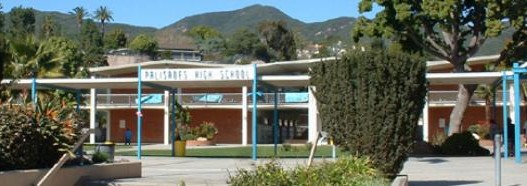
Sean Hill: Palisades High School! Creative writing teacher, Mr. Clima, was the first teacher that really gave me a strong belief in the poetry that I wrote. And since then, I believed in my voice a little bit more, and that influence is very powerful—to just believe in your voice. I think confidence-wise, self-esteem-wise, knowing that I had something to offer that felt special and unique. That teacher really sparked a lot of that, along with most of my English teachers ever since, I’d say, middle school into college. And of course my brother.
And thankfully, the kind of dialogue I’d have with poets and other writers helped shape my poetry more into a dialogue about solutions in the world, while pushing me to avoid saying the same ideas every other poet or artist is saying. [For example], a few poems are literally long answers to friends of mine after I reflected on heavy or emotional conversations we had about the world or something they went through.
I really took in the vulnerability Walt Whitman emoted, what Immortal Technique unapologetically gives, and Jack Johnson nourishes. Those are some of my favorite poets that pushed the envelope for me as a thinker, feeler, and as a philosopher in life.
Jack Johnson was the kind of writer who made me see the beauty and strength in speaking softly and framing topics in a gentle but powerful way—to use voice in a way that soothes and heals, helping people become aware of their flaws, confront their own corruption, and realize they no longer want to live that way because such softness, healing, and love was shown to them through that wonderful voice with his lava like metaphors…burning your ego and anger away.
Saul Williams and Amir Sulaiman felt like my two godfathers of poetry and they both inspired and gave me perspective on the potential depth of strength I could put in my voice and in my spirit. The topics they are never afraid to discuss, because of their in-depth research and reflection, are very powerful, very authentically provocative, very real, very life and death, very grounded in both internal and external revolutionary intentions, and in the responsibility we have towards future generations through our everyday choices and our actions of support.
One of the most powerful aspects of art that I have ever subconsciously taken in is intention.
Also, I’m the kind of artist that is influenced by all my friends and actors I admire, like Robin Williams, Denzel…especially film directors like Ava DuVernay and Barry Jenkins, Ryan Coogler. They are all poets to me. They write poetic dialogue that comes off so organic while creating visceral visual poetry. They express film in a way that has so many poetic elements that I get inspired to write a poem just from watching their movies, from taking in their work, their themes. Spoiler alert! I have actually written a poem inspired by their work…actually!
Dunlap: What local writers, past or present, have been influential to your writing and/or you’ve fallen in love with? In what ways have they been influential on your writing and/or in what ways have you fallen in love with their work?
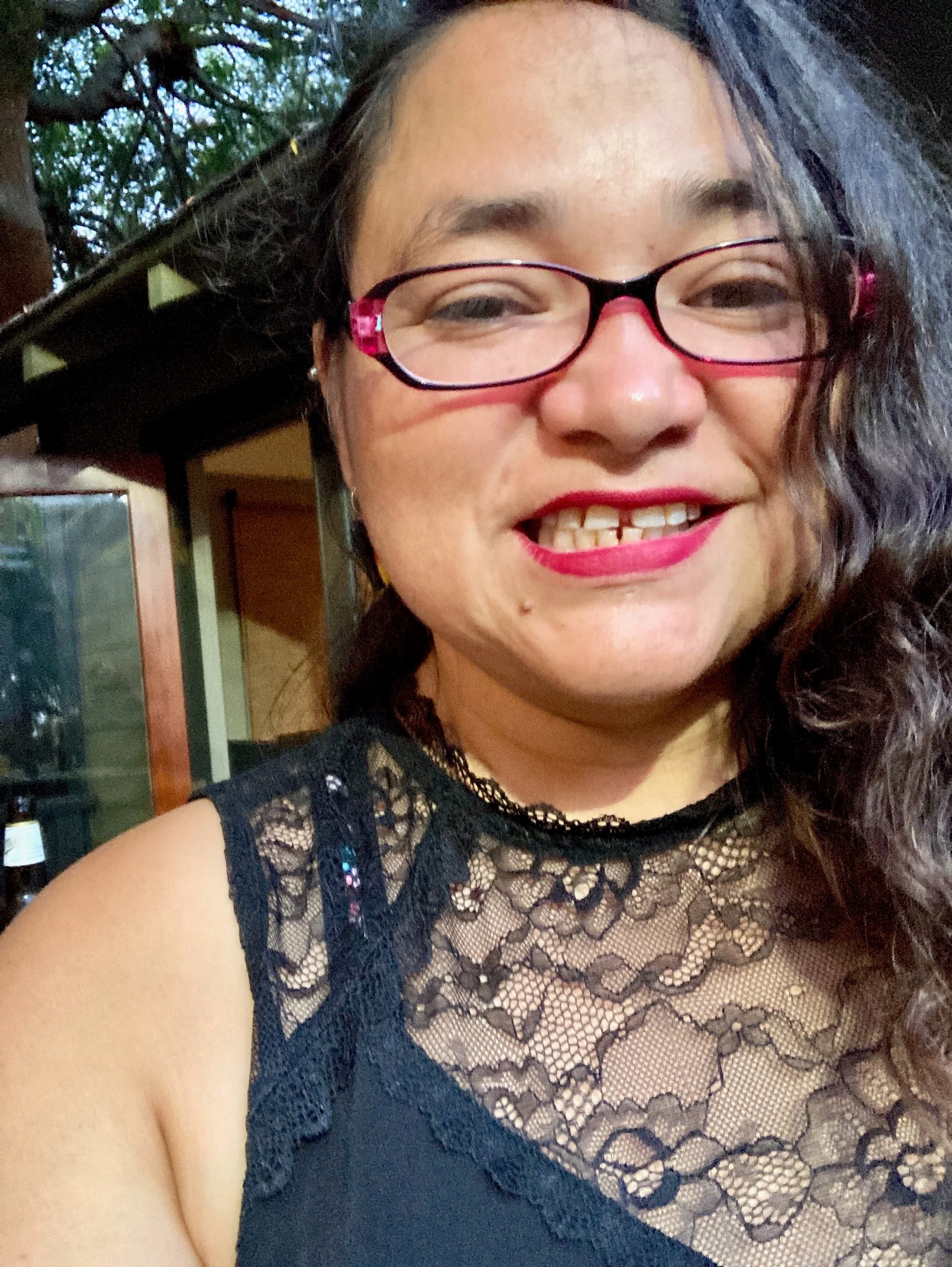
Hill: Mannnn, there’s a lot of good local writers, past and present, that have influenced my writing. I’ve fallen in love with so many poems over the years. The first poet that comes to mind is Los Angeles Poet Society’s Jessica Wilson. The kind of poems she makes have such a gentle heart, but one that’s fierce, too—one that’s not afraid to speak out against corruption and against hatred, but in a way that calls people back in. In a way that will ignite people to remember we are on stolen land, but then also make us want to be vulnerable enough to give up what we think is “ours”, give up our material things for the greater good, for the foundation of truth and good and doing the right thing. Because those things matter, and they always will.
They are traits that adhere to integrity, and without the core, or even the concept of integrity, then everything literally falls apart, right? Without the integrity of a building, nothing can be built upon. Without the integrity of a human body, we’d all be mush and puddles of people. Without the integrity of a cake, we’d never have great birthdays and candles would lose all meaning. *laughs*. You see where I’m going here…I feel like her work speaks volumes in very subtle and loud ways.
I’d also say Mike the Poet. Mr. “I Am ALIVE in Los Angeles!” Mike the Poet has a way to teach, entertain, and excite your being in a way that is not easy to do—it’s not easy to do at all. It is one of the hardest things, I think, to put into language: the condensed knowledge about the city of Los Ángeles he expresses in a way that creatively reminds us, informs us, and demands us to respect how beautiful this city is, how wonderful the people are, and how more honest and reflective we could be as a people. He notes the inspirations of L.Á., like jazz and art and the people that make the architecture of Los Ángeles possible, the diverse cultures that culminate into a crescendo of a lifestyle here. I think I first heard about the Watts Towers from one of his poems…his poems literally are a tour of L.Á. that we will remember for a lifetime.
[Mike] infuses it so beautifully into every line of his poetry, and I get blown away by that every time I hear his work. It’s the kind of poem that—and I feel like a lot of other artists will agree when I say this—one of the highest praises I can give a poem. It’s thinking or saying out loud, “Yo, I wish I wrote that.” It is easily one of the best things I could say about a poem, right? That I myself wish I could have created something so impactful, so economical with its language, so exciting with its verbiage, so uplifting with its rhythm and cadence, so inspiring with its concepts and intention, that poem…it’s just something I wish came from me.
Anyway, another local poet for sure, I would say, is Luivette Resto, who makes passionately bad-ass poetry. I don’t know how she does it—but she makes really detailed slices of life poetry while being a full-time mom and educator, and still comes out with a book, will still write poems in a way that you learn about her culturally and personally and very vulnerably. And, you know, she’s just not afraid to show the ugly and the beautiful parts of ourselves as a human being.
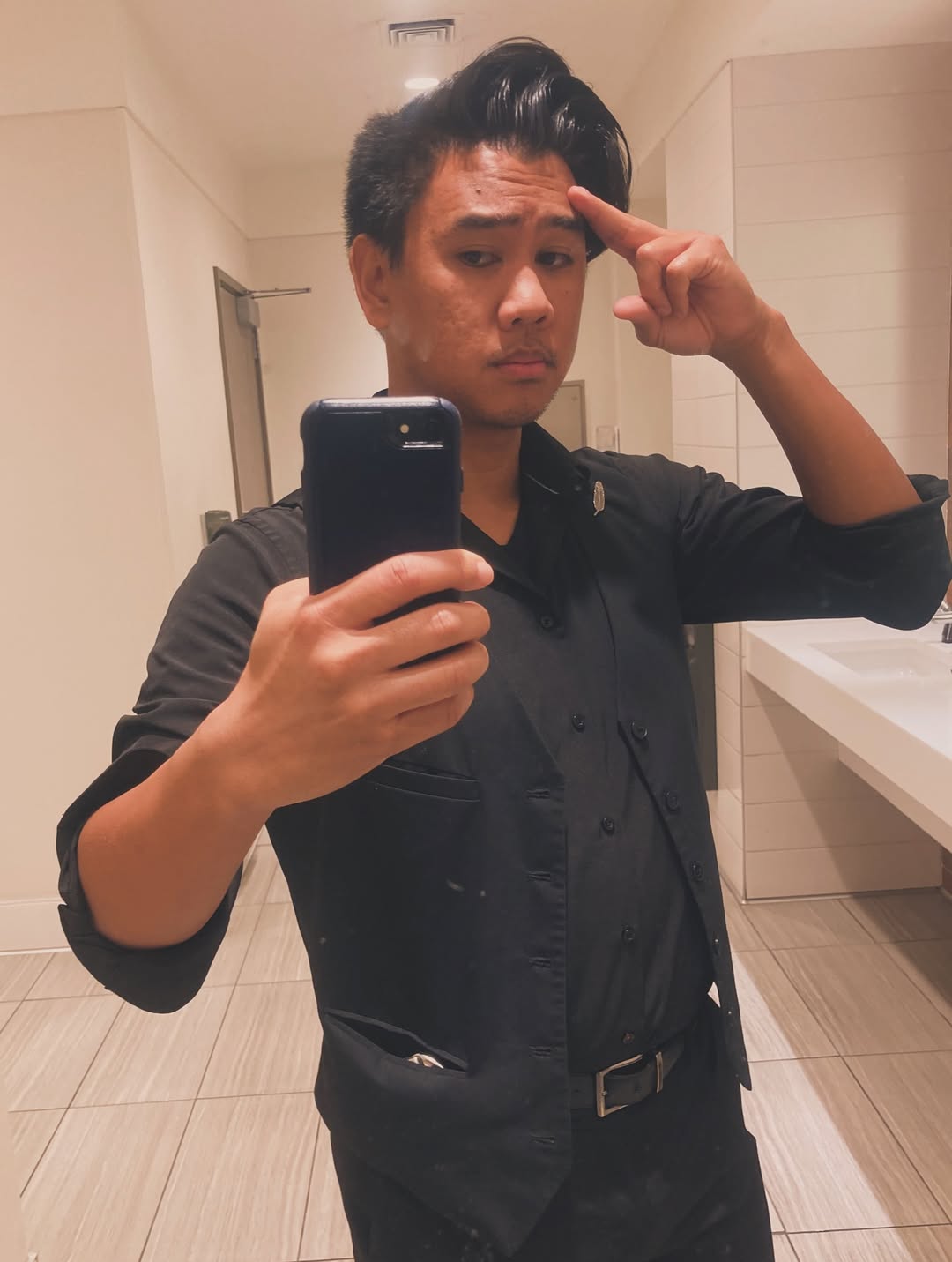
I’d say there’s some more…man, there are some great poets out here. Not enough time to name them all…but there are some GREAT poets. I’d be remiss if I didn’t give a shout-out to Soul Stuf, who somehow combines the ability to improvise rhyme schemes and rap into a poetic symphony of language and thought that seems really surreal sometimes. It’s like you think, he had to have this stuff memorized, even though there’s no way he could have…he’s just getting these words in the moment, and it’s very fun, very uplifting, very in the MOMENT! There’s a sense of…honesty and a kind of moral searching, but also openness and acceptance of others, that he puts into his work that I really like.
I’d say yeah, coming up in the Los Ángeles scene, a lot of the poets I was around, like Jason Brain, who’s led the open mic Soapbox for an entire generation of poets now going into 20 years, first started in Encino at a Coffee Bean and Tea Leaf. Jason Brain is definitely a poet that has shaped and influenced me because he held down a space that made you want to come back every week. He gave his all to it. The thing about having a consistent safe space to create and share and experiment with poetry, he definitely did that. I saw this man not only creating an anthology with two other authors—me and C.R. Cohen, a really great co-creator herself—then be able to pivot and write an entire year of one-act plays every single day…! He’s such a creative dude. I think he’s a leader that didn’t realize how much he led or how many events and communities he self-started, or maybe he knows exactly, and he’s got great self-esteem…heck, I should ask him.
Creating an open mic that had a name and a love and a genuine presence in the Valley community for so long, and then being able to take it to festivals, take it to different venues, and then turning Soapbox into a podcast—an online podcast where poets tune in and share poetry. [Brain] even went above and beyond ageism and would include multi-generational poets in his selection of collaborations. We had a phenomenal, loving poet named Dutch that would be part of the podcast as well, that I guest-hosted and co-hosted with for a number of months, maybe even two years. The idea of one person being able to do so much for community, specifically through poetry, is really profound, and I hope we get better as a poetry scene to always make sure we give our flowers and respects to those that have done so much.
The first poet who ever left a strong impression on me live was Sekou Andrews. So, the teacher/director of a touring theater class I was in, who was doing a play called “Blasting Holes in the Night,” written by alumni and one of the best DJ’s to ever NPR it up, decided to put an open mic at the beginning of every show. We went to Da Poetry Lounge to experience that for the first time, and I still remember this brother coming up to the stage and doing a poem that really called out the difference between a rapper and an artist. The first time I want to Da Poetry Lounge, when it was on Fairfax by Melrose, I was captivated the whole time by the closer, Sekou The Misfit, as he was call at the time…! So, I checked this out…
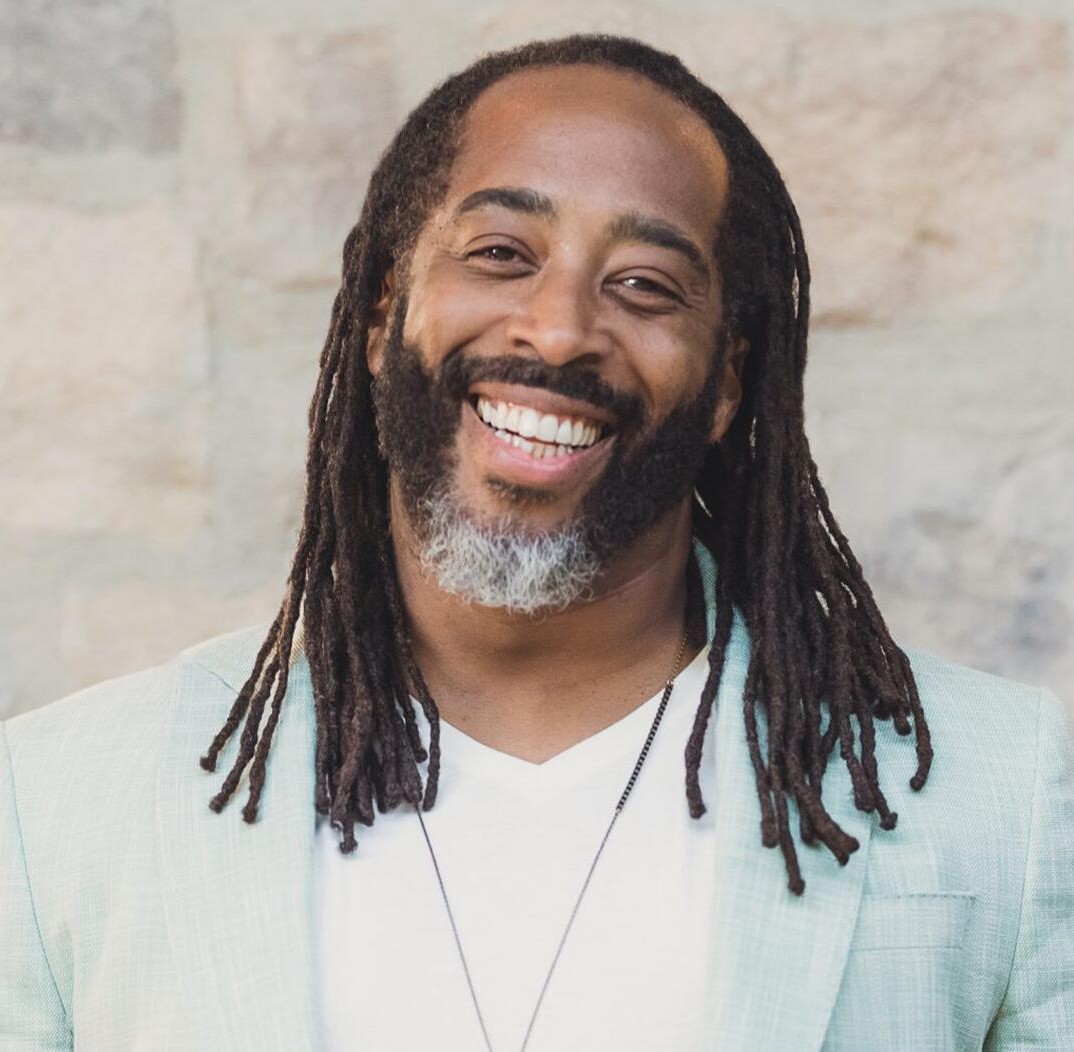
I felt like the crowd got so quiet—you could hear a pin drop. I remember I felt like time was stopping. I felt like I could see this brother’s aura; it was YELLOW…no joke!
At the end of it, we all just ignited—claps and snaps and good energy—it felt like world peace. It was an experience that thankfully happens all the time at any open mic that I’ve been to, where a person reaches into themselves in such a way that is so undeniable and so real and so transcendent that we all share this experience together. We understand our humanity infinitely deeper.
And I’d say Brooke—there’s a poet named Brooke who did a whole poetry book about her experience with sexual assault that I will never forget reading. It enhanced the way I viewed women in such an anchored way; it changed and enhanced the respect and value that I place upon women living in a world where their life is statistically at greater risk than mine at any given time, in any country, simply because of their gender. Because of the type of men that exist in their neighborhoods or in their personal lives—men they would never even know would do something so damaging. It really took the full story that Brooke painted to show every step of what it’s like to be sexually assaulted by someone you trusted.
I am just honored and privileged anytime a woman shares a story about that experience. But after that honor of trust to hear that story, I remind myself to stay open and stay vulnerable whenever hearing a story like that because of poets like her…because then…there’s a responsibility to be better men, be better protectors, be better raisers of men in touch with their anger/vulnerability and pain so they will never take it out on a woman or anyone else. I could go on about the infinite number of poets here who have influenced me but we would have to have a part 2, 3, 4, 5, 6,000 to this for sure.
Dunlap: What writers do you read today, whether poets, essayists, novelists or others? What draws you to their work?
Hill: I’m actually trying to read more writers today. When I go to poetry events, I try to get whoever’s book I can and actually start reading it instead of just keeping and hoarding all these poetry books to myself without diving into them.
I’d say Teresa Mei Chuc—she is just a phenomenal speaker and a phenomenal performer of poetry, as well as a writer. Between her and Jen Chang—I think she’s in West Hollywood—I still need to get into her work more, but her poetry draws me in for sure. Jen can make you have sympathy for anyone and even tell a story about the culture of food, and make you relate and look at food differently. She makes really big topics easy to digest as well while being so dang down to earth and welcoming at the same time, which is no small feat.
I’d also think of a poet like our former L.A. Poet Laureate, Lynne Thompson. There’s a regalness and a quality of speaking in the way that directly reaches the higher self and is really beautiful and apparent in her work. I feel like language itself is just honored and she knows how to use it.
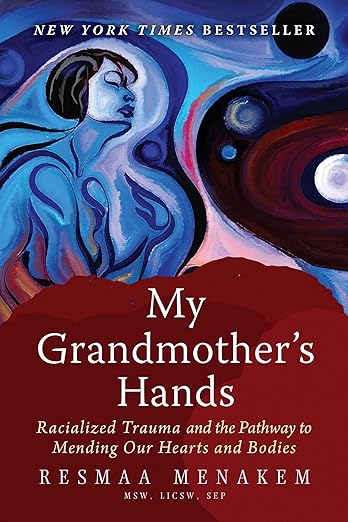
As for other poets and novelists, I would say the Rupi Kaurs of the world and Resmaa Menakem—the guy who did the book My Grandmother’s Hands. He definitely was VERY AMAZING read in a solutionary way. It is so special to read a book like that, where he discusses the work he does in police forces and around the world that enhances empathy and deepens the ability to see the heart of someone. It helps us understand why people do what they do, right? And not just write people off, but after we call people out—then let’s call them back in!
Let’s call them back into their highest self, call them back into what they were supposed to be as a decent, good, loving human being that got lost in misinformation or misunderstandings or ignorance or pain or trauma which tends to be roots of the worse actions we do on this planet.
Or, you know, the constructs that have pitted us against each other so often in this world, when in fact, we all want the same thing of happiness, and peace, and love, and being understood, and having a safe, loving life, a calling we enjoy being of service in, and a place to sleep and eat and raise a family if we choose to. And to connect with community in a way where we are not under any kind of negative pressure in this society to hurt anyone else.
And also, I LOVE to read every now and again the 1971 essay “When We Dead Awaken: Writing as Re-Vision,” which took its name directly from Ibsen’s play, I probably need to read more Langston Hughes and his essay, “The Negro Artist and the Racial Mountain” along with plenty more Bell Hooks & James Baldwin, digging into Alok V. Menon’s WONDERFUL work, and anything by Native American poet/actor John Trudell. I can always dive into more…some of his words literally changed how I view activism through poetry. I’ll end this interview with one of his quotes.
Dunlap: From your engagement in the local literary community, what are your honest thoughts and opinions about this community, good, bad or otherwise? Its issues. Its positives and anything else?
Hill: The literary and poetry community is absolutely, phenomenally perfect and exactly where it needs to be. In my opinion, it is constantly growing and evolving. Sometimes it even has fights with itself. Sometimes it will have moments where it roots out negativity or corruption; it will sometimes even put people out in the public eye and call out any kind of sexual assault or inappropriateness in a very loud and public way.
I just saw it online recently and it isn’t the first time I’ve seen a powerful poet call out another person/poet for wrongs done to them or others…I am definitely understanding of that when there are such powerful women, righteous rage, and understandable traumas in a community.
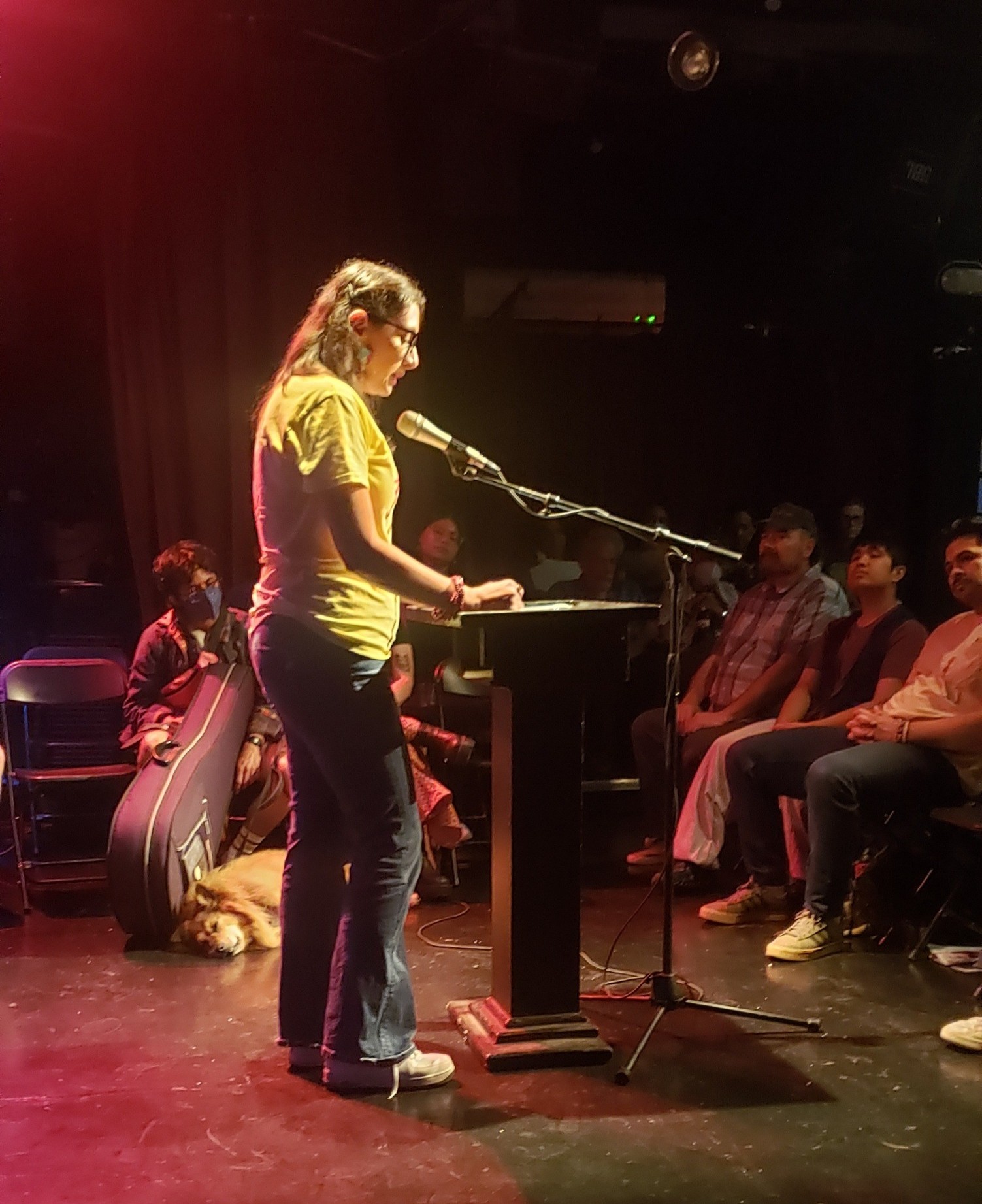
Whenever women are not heard or seen or respected, I now never expect a woman to handle things with “grace” and “take the high road,” because sometimes our feelings in this community are from a place of pain, being taken advantage of, or disrespected, blatantly…so why would a high road be taken when men aren’t holding themselves accountable. I still need to look into the recent case I heard about more and follow up sooner than later since I’ve worked with both parties, but don’t know them very intimately, haven’t spoken in a long while…but well enough to offer an ear or accountability or reparations or whatever may be needed, respectively.
So, even in our community, I think there is a “Law and Order” that happens, and there is a poetic justice that is always growing and always evolving. Matter of fact, I felt like I had to check in with a male before the word even got to me about this negative behavior towards women—and it’s always up to the aware, more mature, or well-versed folks in conflict resolution to make sure our brothers out there, who are violating or hurting women and getting called out, are getting help, getting held to account lawfully, and have some good men in their circle that are helping them take a public ousting constructively…healthy, and not implosive or harmful to himself or others during a time like this.
Also, locally to globally, poets are still being attacked for speaking their mind or for their art, in the legal system and in the poetic world. There are still artists and activists that get imprisoned or killed or more for speaking their mind and a local poet it’s happened to before still inspires me to do more today to speak truth to power but also convert those in power to be better people.
Amir Sulaiman, for example, told his story about FBI agents coming to his home after reciting a poem on an HBO television show. So, there are times when the truth—and the powers we speak it to as artists—can sometimes be “checked.” And the way he handled it, with humility and firmness in what his poetry was about, the ideas of justice, and why the government thought his poem about corruption was about them…power itself had to reflect on it like, “Oh, I assumed he was talking about me when speaking about corrupt systems…I guess we admitted something just now.” And that is the beauty of the reflective power of poetry, even for the system or the people we are trying to help heal.
In our community, one of my favorite parts of poetry—in the open mics, events, showcases, and the poetry variety improv shows—is the joy of talking about topics that don’t often get talked about in this world, whether they are considered taboo or too controversial. From personal stories about drug addiction, bad parenting, fake spirituality, to left-wing right-wing identity politics, we’re even growing and learning more language to help us reflect truths better for the world to understand.
I really truly appreciate how much this poetry scene is still humanizing everyone. It’s fundraising and creating and inventing—I partnered with nonprofits like the Community Coalition to host an open mic in response to the destruction of a mural with healing art and communication.
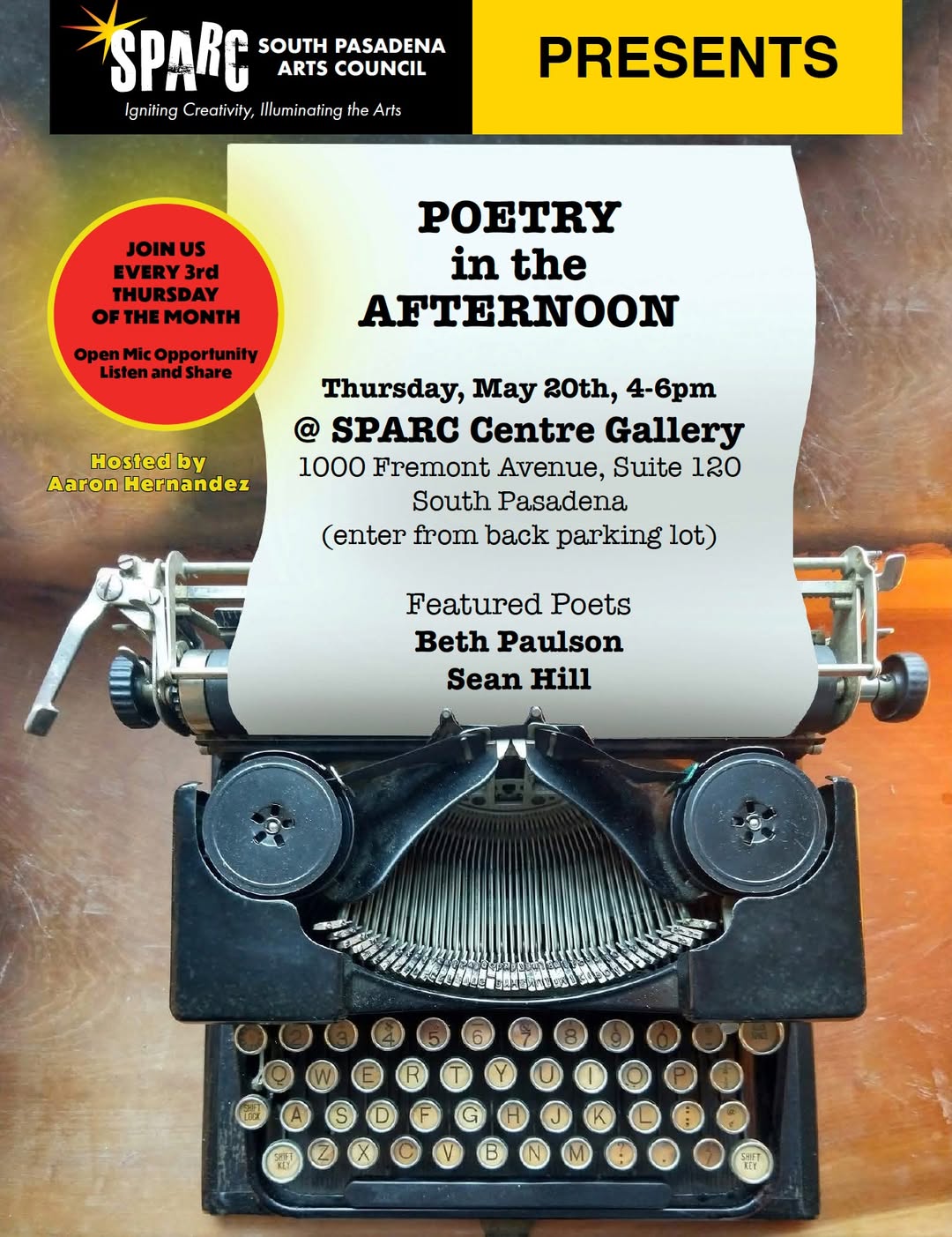
@southpasadenaartscounci
It makes sense that if everyone in a neighborhood knew each other, and learned about each other, and broke bread and laughed and shared their stories and did art together, there would be no need for stealing or violence or hatred or animosity—because we would all know each other and feel intimately responsible for the well-being of anyone we meet face to face.
There are profoundly beautiful cornerstones in the poetry community that are still running strong and are continuously being built. From Sunday Jump in Historic Filipinotown, to The Rapp Saloon in Santa Monica, to House of Brews in the Valley, to Tía Chucha’s in Sylmar, to the World Stage in Leimert Park, to Soul Stuf’s poetry events in multiple cities like North Hollywood or Studio City, to Fly Poet at the Savoy to the Ford theater where Get LIT did a show, teaching youth at so many different schools like LA Poet Society, doing hundreds of events annually that happen both online and in person…!
We also have the Sims Library of Poetry in Inglewood, the first Black-owned poetry library in the country, and great spots in Long Beach like The Definitive Soapbox [now located in Bellflower]. All these different places all across L.Á. County, into the OC, like Soapbox Sessions running strong and Two Idiots Peddling Poetry in the city of Orange—there’s such a beautiful, long-lasting, wide-reaching community of not just poets, but artists. These are family. These are dreamweavers & believers in the power of their dreams AND actions. These are architects of a better future.
These are the type of people that my dad, who is an ancestor now, since last year, would say are the kind of people who are making sure the next generation is better than the last, and they’re doing a beautiful job.
Please keep being a light my beautiful people.
My vibrant L.Á. poetry scene.
Please, please keep lighting this world up with a love and unity that would be happily blinding.
May the words of John Trudell touch your heart:
“No matter what they ever do to us, we must always act for the love of our people and the earth. We must not react out of hatred against those who have no sense.”
“Revolutions are based upon hate of the oppressor. Liberation is based upon love of the people and we will do whatever is necessary because of our love of the people and our love of the sacred Mother Earth.”


