
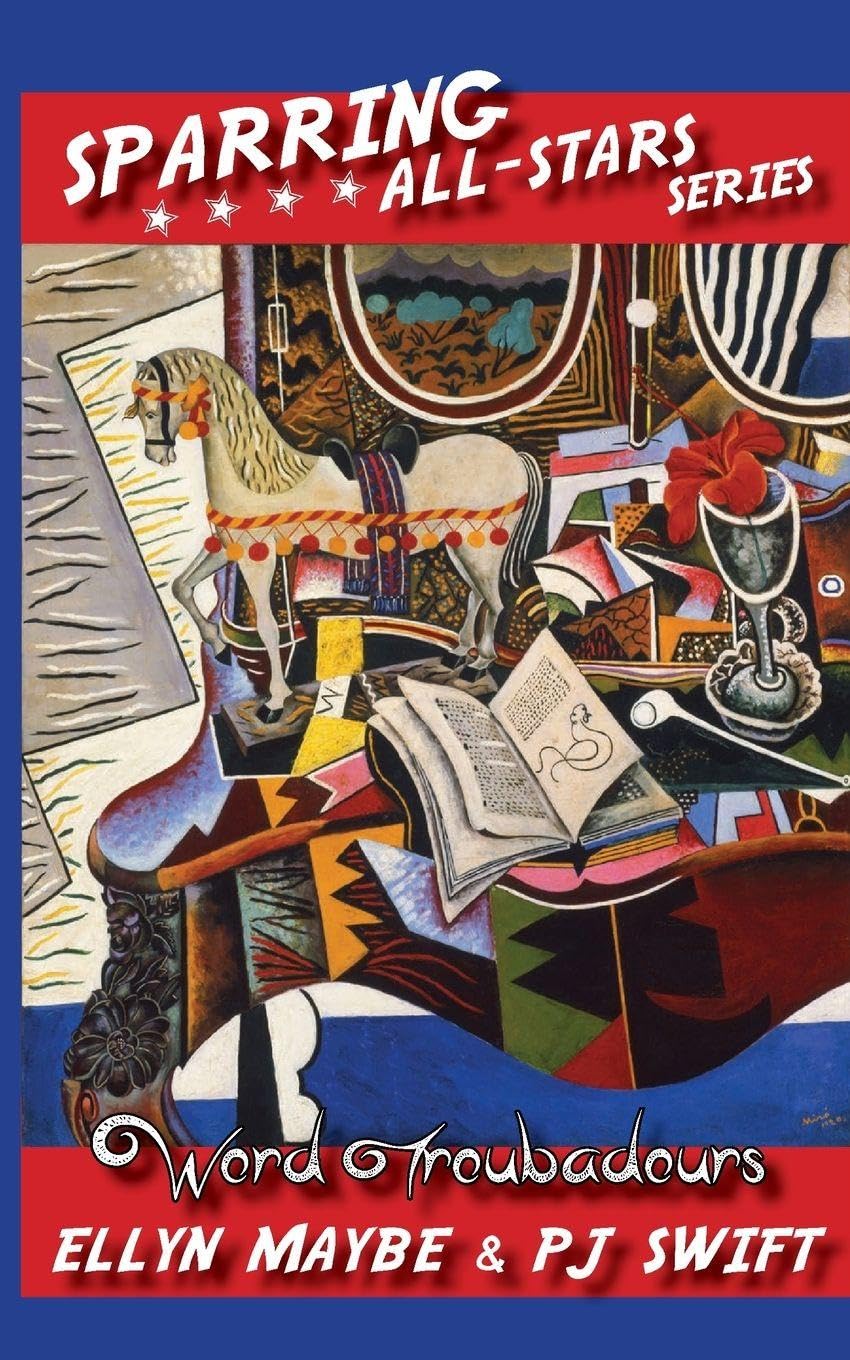
This unassuming-looking chapbook, Word Troubadours, is more than meets the eye. It presents the work of two poets whose voices complement each other and whose poems are arranged in a kind of call-and-response order, segueing from art to songs, from being an artist to myths, from dreams to world problems. While one can read the poems at leisure and in any order, it may be best to read them as they are laid out, the better to take in the dialogue effect.
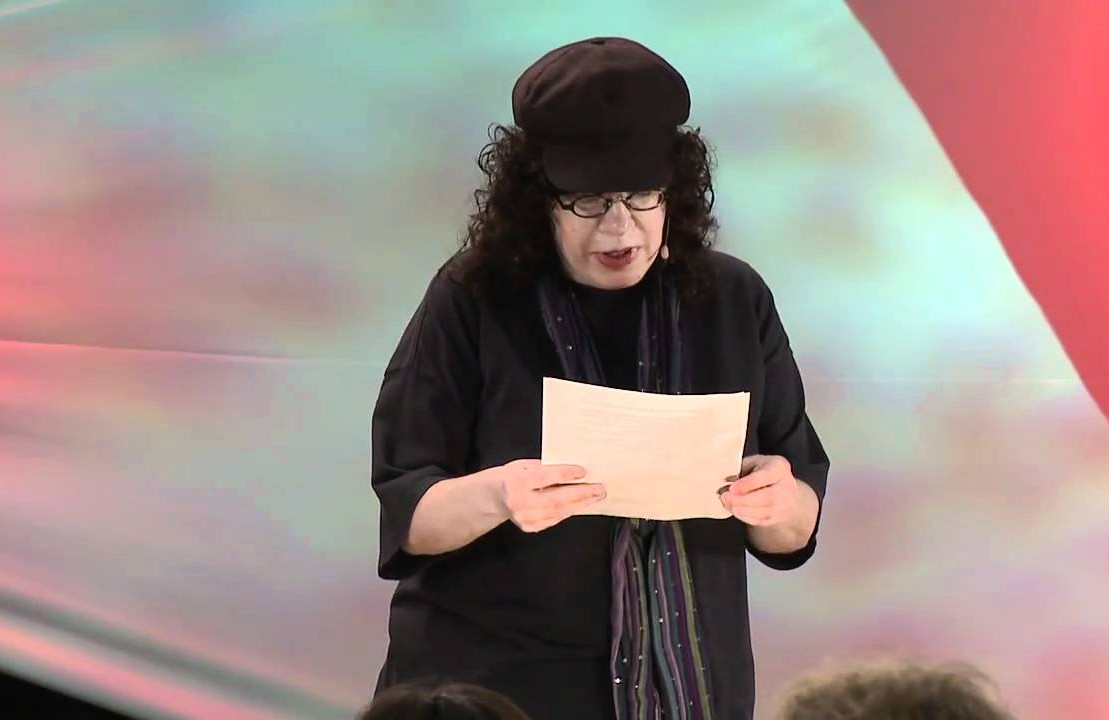
For those who may not be familiar with Ellyn Maybe, here is some background. Maybe has been a significant figure in Los Ángeles poetry since the 1990s. Originally from Milwaukee, she has lived in L.Á. (with sojourns in New York City and Prague) for most of her life. She came of age poetically during the 1980s, shyly signing up for open mics with her first name and the word “Maybe” as in “Maybe I’ll read,” which created her professional name.
At North Hollywood’s Iguana Café, she became one of its stars, regularly reading there, and later, in the 1990s, began appearing at other venues, working in the bookstore at Beyond Baroque, writing music reviews for a local paper, reading poetry in a film, inspiring other poets, and publishing her work in local magazines and in several books. After a stint at the FAMU film school in Prague, she returned to L.Á. and, with her cousin Harlan Steinberger, formed the Ellyn Maybe Band, performing her poems to a musical backdrop, recording a CD, and taking the show on the road as far as the Glastonbury Festival in Scotland.
While she has been less visible on the live reading circuit during the last few years, Ellyn Maybe has been as busy as ever writing poems, and Word Troubadours is her first collection in quite a while. Some of the featured poems were heard on her band’s CD, and some are newer, responses to the turbulent times we have been living in.
Her selected poems kick off with “Cinema Dance,” in which she celebrates life and art through the metaphor of making a movie
      We compose a shot list from confetti,
      We are part of speed of light.
      Jules and Jim and midnight.
      We resist the temptation to crawl into the world
      And pull our psyches over our heads.
Several key tropes of Ellyn Maybe’s poems are evident here: the references to pop culture, alliterative imagery (as in “We are Cinemascope/Chromakey with Chromosomes”) and a collective voice (the use of “We” not “I”). The tone is also joyous. Maybe’s poems are, for the most part, celebratory and positive. Those who are looking for lugubrious laments for the downfall of society can look elsewhere. Maybe even concludes this opening festive salvo with the lines:
      Feeding the soul is society’s true hunger.
      Dobre chut!
That last line means “Enjoy your meal,” the equivalent of “Bon Appétit” in Czech. Possibly a footnote with the translation might have been appropriate here and in a few other places in the book, but we do have the Internet these days to look things up.
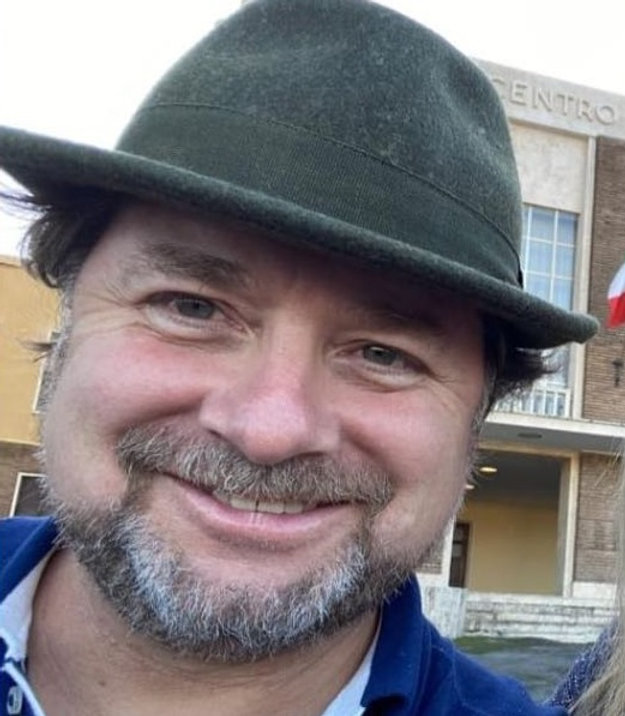
The poem that follows this is “The Two Tiny Grains of Marble” by PJ Swift. Swift, in contrast to Maybe, is not a well-known name yet. He spent most of his life in Europe, moved some years ago to Southern California, and in “his middle age” began writing poems. He committed to writing a poem each day and has now written over 2,500 poems. His style, in contrast to Maybe’s, is more contained, somewhat less personal, more anecdotal, and occasionally prose-like. “The Two Tiny Grains of Marble” is a short prose piece, describing the progress of the grains of marble into a slab, which becomes a Michelangelo sculpture.
Unfortunately, the creation of the sculpture separates the grains. One remains in the statue of the “Pieta.” The other grain is seemingly lost. But Swift reassures us, “this story also has a happy ending for the other grain that had been swept aside.”
“An assistant cleaned the studio floor and collected the powder that included the errant grain. That powder was collected and used as an ingredient for plaster. Plaster that the master used in another great work—the ceiling of the Sistine Chapel.” The two grains are, as Swift says, “blessed by the breath of art.”
Swift’s telling of this anecdote might not seem at first glance to fit in with Maybe’s celebration of cinema. But both pieces remind us that art is often created by the discarding and refinement of the raw materials, while what is discarded (cut pieces of film, leftover stone, and grains of stone from sculptures) can be recycled. There is no real rejection. Art can be inclusive and welcoming to all kinds of life experiences and people. This acceptance has always been a strong theme in Ellyn Maybe’s work, and Swift, with his prose piece, gets the message in a companion poem on what is outwardly a different subject.
As the book continues, the poems shift toward perceptions about other art forms. The delightful “Picasso” by Maybe discusses the well-known “Girl on a Rock” painting as something a person with a non-fashionable shape can get with. (“It hit me that Rubenesque/is not just some word/for someone who likes corned beef” is one of the most apt and funny lines in a poem ever). “Picasso” picks up from Swift’s poem about the grains of marble, but Swift follows the “Picasso” poem with “That Little Song,” which continues the theme of the outsider validated in its description of a song that outlives its initial popularity:
      “It survived because all those little moments that people shared and
      remembered all that variety of emotion, latched onto that song. That
      song was an emotional bank.”
Inevitably, social and political concerns enter the book’s stream-of-poetry-consciousness. Swift talks to the heaviness of oppressed situations in a more general way: in “Creation of Myths,” he says, ”We inhabit our time/we did not ask to exist/we flounder, we wonder/if we live, we resist.” Maybe’s “2016: The Year the 20th Century Finally Died” more specifically addresses the worldwide angst of losing so many cultural contributors (thankfully, she does not list them by name) but like Swift, she sees the determination to survive as the chance for us all to survive: “The last person on Earth will carry a pencil/That is why Earth has survived this long.”
I don’t know what the actual process of writing these poems was like. Most likely, they were produced independently and arranged in an order that creates the impression of their being organically linked. Some poems may have been responses to other poems. Maybe and Swift have been working together for some time on their poetry. In any case, the resulting collaboration has produced an entertaining and thought-provoking book.
Word Troubadours is packaged as a smaller-sized chapbook with a very narrow spine. Editor/publisher Daniel Yaryan has designed it with the signature Sparring Artists style, a comic-book logo set against actual art. The front cover is the surreal “Horse Pipe and Red Flower” by Joan Miro, while the back cover is Angel Zarraga’s “The Poet.” Between these paintings, the joined voices of Ellyn Maybe and PJ Swift fill in the whiteness of the pages with colors that only they can invent.


