
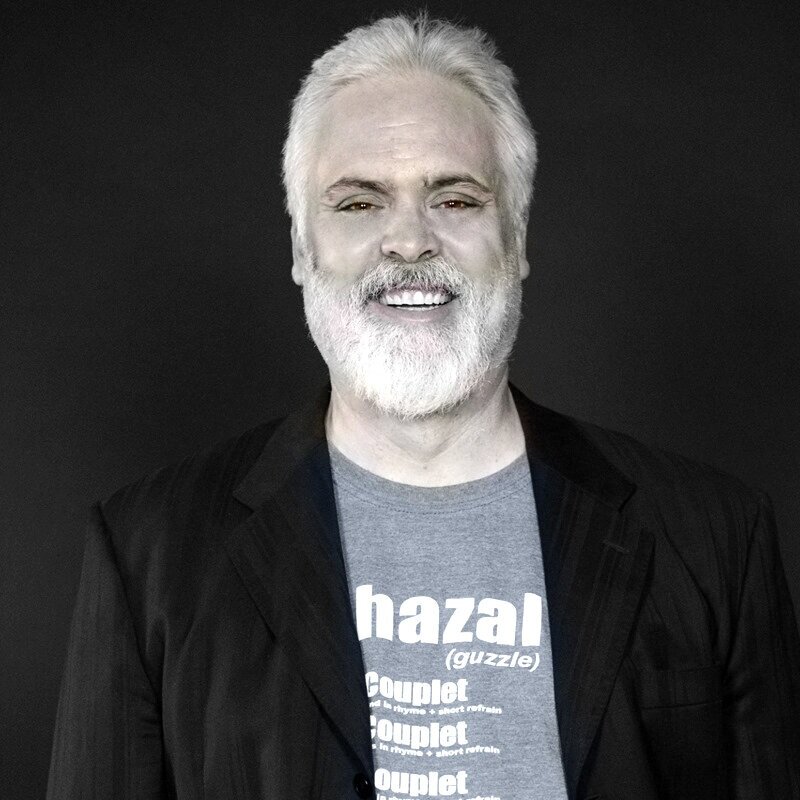
There are people who don’t so much enter a room as inhabit it. John Brantingham was one of those people. Wild white-haired and white bearded, he looked less like a professor than like someone the forest had agreed to lend us for a few hours. He would appear in a doorway, and the room would rearrange itself around him. He never demanded this. He would have been embarrassed to know it happened at all. That was the thing about John: his gravity was entirely unconscious, and therefore entirely real.
He was the author of 23 books. He was the first poet laureate of Sequoia and Kings Canyon National Parks, a writer-in-residence, a recipient of the New York State Council on the Arts Grant, a fiction editor, an anthologist, and a teacher who stood at the front of classrooms from California to China. His work appeared in hundreds of magazines, including a poem featured on Garrison Keillor’s Writer’s Almanac. He published the way other people breathe, not as performance, not as career management, but a biological necessity. He once called it an itch that simply had to be scratched. And he scratched it right up until the end: his published work page lists stories and poems appearing in journals through the spring and summer of 2025. There was no winding down. There was just John, and then there wasn’t.
I could never understand how one person could produce so much and remain so good, so present, so entirely himself in every line. The breadth of it was staggering and the quality never sagged. He wrote poetry about Degas and Goya and Paul Klee. He wrote flash fiction that won international prizes. He wrote suspense novels and memoir chapbooks and prose poems of exactly one hundred words, each one a discipline unto itself. He co-edited The L.A. Fiction Anthology, gathering voices that might otherwise have been scattered and lost. He was a man of letters in the old sense, the kind Gerald Locklin described when he said of John: In an age of superficiality, mediocrity, and sound-clichés, John Brantingham is a genuine throwback to when Men of Letters roamed the literary prairies. That was not flattery, it was recognition.
We shared a department for years at Mt. San Antonio College in Walnut, about 30 minutes south of Downtown Los Ángeles, where John directed the creative writing program for decades, me teaching journalism and John teaching English and writing.
To watch John teach was to watch someone who never once had to convince himself the work mattered. He didn’t perform enthusiasm. He was enthusiasm and decades of students felt the difference.

He once asked me how I kept students motivated to write the stories that got them in trouble with the higher-ups. I told him you can’t teach passion, either they have it or they don’t. John, being John, told me I was wrong. He said my passion flowed out of my body and into my students’ minds. I’ve taught journalism long enough to know when a quote is the whole story. That one was.
In his classroom, something specific and irreplaceable happened. Students who walked in thinking of writing as an assignment walked out understanding it as a practice, as a way of paying attention to the world rather than merely passing through it. He had a gift, one of the rarest in teaching, for making a student feel that their way of seeing mattered. Not that it was acceptable, not that it showed promise. That it mattered. That the world was somehow less without it fully expressed. Confidence, once installed that way, does not easily leave.
John knew good writing the way a copy editor knows a bad sentence. When he spotted a journalist hiding inside one of his English students, he didn’t send me an email or suggest they stop by some time. He walked them over himself. He’d walk in the newsroom, knock on my office door, make the introduction, and say something that made the kid stand a little straighter. He did this repeatedly, without keeping score. Some of my finest journalists came from John. They arrived with something I couldn’t give them. What he understood, and what I learned the hard way from running a student newsroom, is that you can teach someone to report. You can teach the inverted pyramid, the attribution, the follow-up call. What you can’t teach is the storyteller’s instinct, the need to find the human being inside the news event and make the reader feel something true. John’s students arrived with that already. They didn’t know they had it yet, but John knew. And my staff needed them badly.
Delivering them to the newsroom was only the beginning. When things got hard, John came back.
He was a rebel, not loud about it, but immovable. When our stories drew heat from administration, he would appear in the newsroom, disheveled and certain, and deliver his blessing in Latin first. Illegitimi non carborundum before translating it into the language we all knew, in plain English, that the bastards should never be allowed to win. It was theatrically perfect: classical education deployed as armor for young journalists.
One of my students made a sign with those Latin words. It hung in the newsroom the way the “Believe” sign hangs in Ted Lasso’s locker room, a daily reminder that the work mattered and that someone with serious literary credentials agreed.
He would defend our student newspaper and the student writers with a dead Roman’s words and not think twice. Promoting himself was where he drew the line
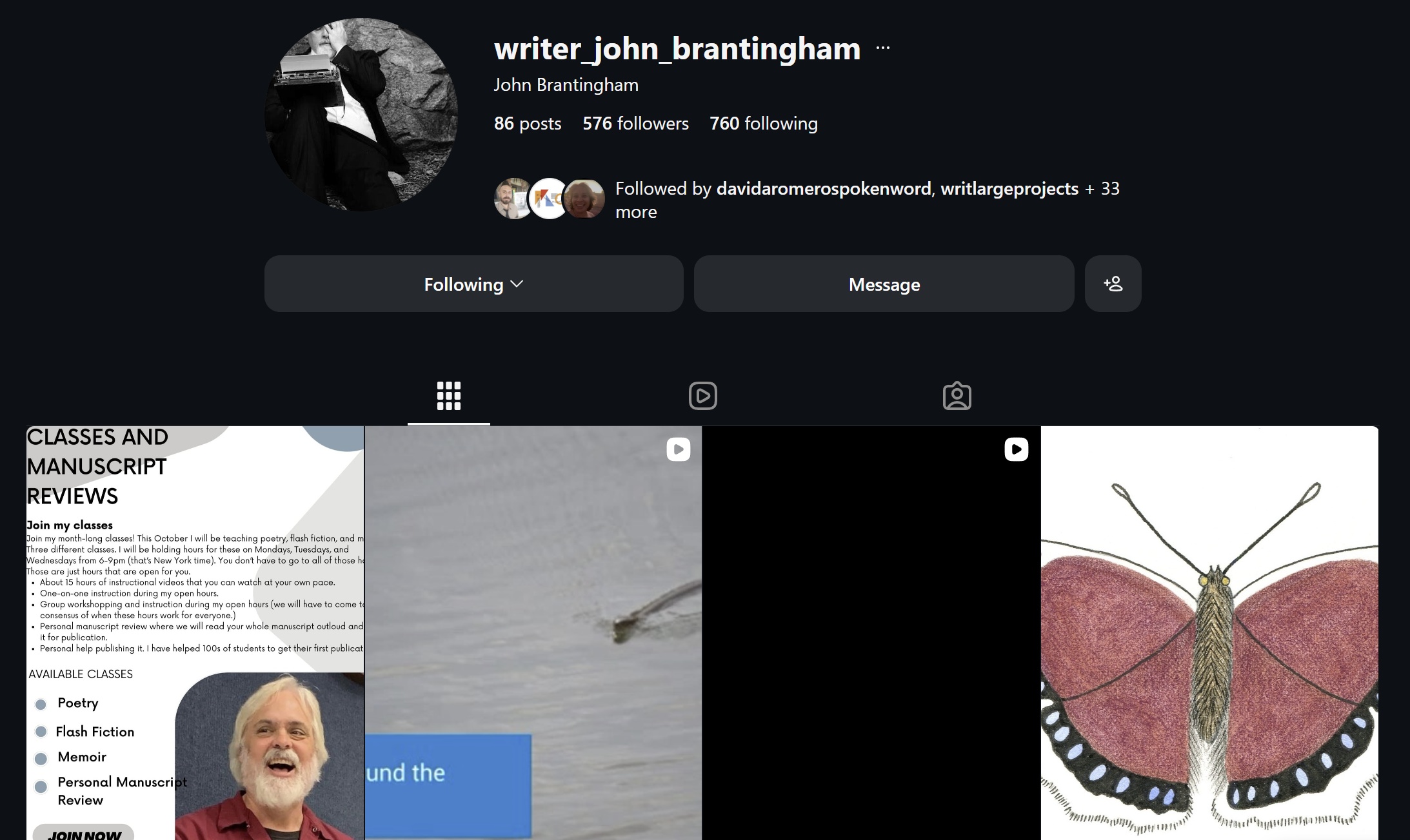
I spent a good stretch trying to convince him to let my public relations students take him on as a client. He agreed, reluctantly, with one condition he never budged on: he would not become a brand. He was suspicious of promotion on principle, not out of false modesty but out of genuine conviction that the work spoke for itself or it didn’t, and that manufacturing a persona around it was a kind of fraud.
My students learned quickly that the usual playbook didn’t apply. Every time they suggested something that smelled like marketing, John declined it. What they worked out together, eventually, was something more John’s speed: an Instagram account built around beauty rather than buzz. Outdoor photographs. Poetry set into landscape. It looked nothing like a promotional account and everything like John.
They learned something that semester: that authenticity isn’t a tone of voice you adopt for social media. It’s a standard you either keep, or you don’t. John kept it. And without realizing it, they started keeping it too.
When John finally left his tenured position at Mt. SAC for Western New York, that wilder, quieter life he had been writing toward for years, I was standing at the same edge myself, staring down at the same terrifying question: what does it cost to leave security, and what does it cost to stay? Then I read his essay, Moments of Thought: False Narratives of Stress and Burnout While Hiking Allegheny State Park, and something shifted. He made the choice feel legible. Not easy. Not without grief. But legible. He was honest about what academic life had taken from him, and honest about what the woods had given back. He wrote it not as manifesto but as testimony, and testimony is harder to argue with than manifesto, because testimony has already paid its price.
“Back in my teaching days, I began each day with caffeine and ended it with bourbon. Back in my teaching days, I sometimes luxuriated by taking a half-day for myself on Sundays. Back in my teaching days, I returned emails within eight hours. Back in my teaching days, I left for work at 8am and returned home at 10pm. I know that every single teacher who reads this will understand this. I know that a lot of people outside the profession will as well. We are working ourselves not only to death but into automation.”
Those words still hang in my office. They are not a complaint. They are a diagnosis. And like all great literary medicine, they work not by numbing but by naming, by handing you the precise language for something you have been suffering without words.
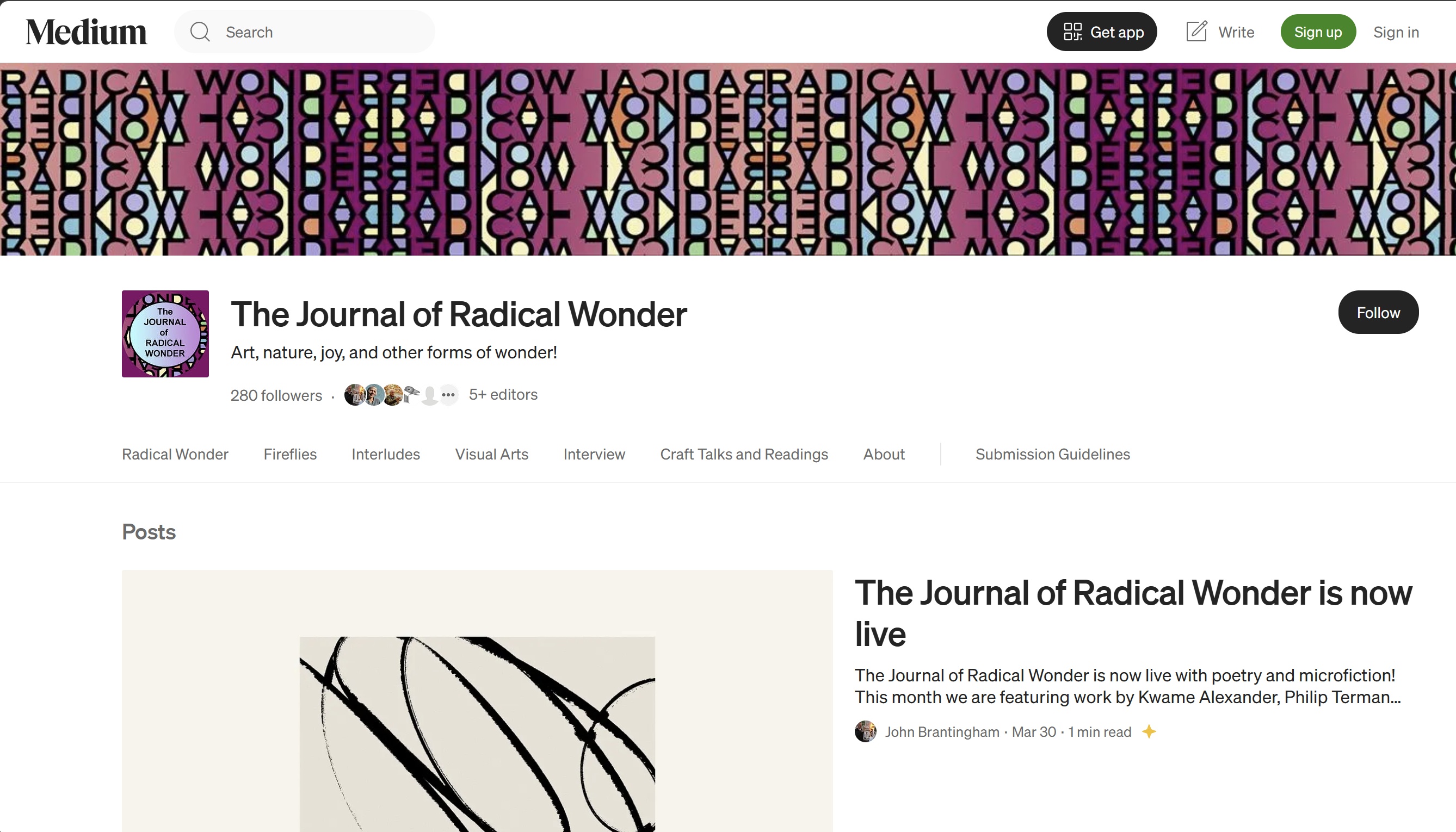
He called his Medium publication The Journal of Radical Wonder, built around beauty, art, nature, humanity, truth, and what he described as fighting cynicism and understanding the complex nature of joy. Leave it to John to make joy sound like serious intellectual work.
I got into journalism because I believed in the truth, and I stayed because I believed stories could change things. Somewhere in the middle of a long career, those beliefs can become habit, and you stop feeling them and start just doing them. John’s words disrupted that. They made me want to be more radical, to go deeper, to slow down, and to feel the wonder of life. Most importantly, he made me want to write again. Every time John published, I felt the itch. That was John’s effect on me. I doubt he knew.
I learned of John’s death the way you learn things now: a post from his wife Anne on Facebook. John had come a long way from the man who once vowed never to set foot on social media, and in the end, it was the right place for Anne to reach all of us at once. But grief through a screen has a particular cruelty. I fell to my knees, sobbing. You are alone when you receive it, and you cannot immediately make it into story, which is the only way humans have ever processed loss. I called our dear friend and former department chair Gary, because I knew he hadn’t seen it yet, and grief like that wants company immediately. We were in shock, so we did the only thing that made sense. We told John stories. We laughed. We cried. We made the kinds of promises that grief pulls out of you: that we would not let time get away from us, that we would gather our colleagues and celebrate him the way he deserved while we still could.
My second call was to Liz, our former student, a teacher herself now because of John, who she called Brantingham. I did not want her to read it on a screen alone. She had become a teacher the way people become teachers when someone has made them fall in love with the profession, not because the job paid well or was practical, but because a person showed them what the job could do to a human life. John had done that. He walked into her life when she was a student and had, in the way of the best teachers, been so completely himself that she could not help but want to be a version of that for someone else. He became her aspiration.
Liz was devastated and later posted something on Facebook that said it better than I ever could:
“I guess I’ll finally call you John. John, you changed my life. Your impact is immeasurable. I am who I am because you were who you were. Thank you for all the words of wisdom, the kindness, the belonging. I have never forgotten, and I never will. How lucky we are to have known such a fantastic human.”
He died too young. That phrase is easy to say and hard to mean. In John’s case it is both. The world is being asked to absorb the absence of someone who was still, right up until the end, at full creative force. There were more books in him. More mornings in the cold woods. More students he hadn’t found yet. More journalists he hadn’t walked to my door.


A fitting tribute for an incredible human. Thanks for sharing!
LikeLike