

Yago Cura is passionate about literature, its power to teach and its ability to tell any story authentically, especially literature written by people of color. That’s why being a librarian at L.Á.’s Hyde Park Miriam Matthews Branch Library fits him like a glove.
The library—located in the Hyde Park neighborhood of South Central—is named in honor of L.Á.’s first Black librarian Miriam Matthews, who, after discovering “a small collection of books on the Negro,” began building those books into a research collection chronicling the impact of African Americans on California’s history and culture. Any chance he gets, Cura will tell you this history and make it clear he’s following in her footsteps.
Cura is also a poet and the publisher of the micro press HINCHAS, publishing zines, poetry, poetry in translation, and library science non-fiction, focusing on social justice issues. The press came about after Cura published a book of ghazals in memory of journalist and close friend James Foley, who was murdered in 2014 by Isis, after he was captured in Syria while covering the Syrian civil war as an independent journalist. Cura, however, entered publishing in 2009, when Foley lent him $400 to bring his idea, Hinches de Poesia, an online journal that was dedicated to publishing contemporary Pan-American writing, to fruition.
As such, as a librarian, Cura focuses on ensuring that local poets have their books included in the library’s collection and that the public knows about these diverse poets living and working among them by hosting the library’s monthly open mic Miriam’s Garden.
An Argentinian American, born and raised in Miami, having attended Queens College/C.U.N.Y., living and working in New York for a time, Cura’s lived in Los Ángeles for the past 15 years. Recently, I asked Yago Cura about his influences on his poetry, local and otherwise and his thoughts on the Greater Los Ángeles literary community.
Brian Dunlap: Who were the original influences on your writing? Poets, writers, maybe even musicians? Teachers? Why and how have they influenced your writing?

In my final year at UMASS, there was a visiting professor from Slovenia that had come to teach poetry. His name was Tomaž Šalamun and I was fortunate enough to earn my “spot” in his poetry writing workshop that spring, and that experience has stayed with me for over 20 years. Salamamun was the most generous teacher I ever met and he hypnotized me with stories from the years he has spent in Mexico City as an attaché for the Slovenian government. I remember him point-blank telling me to stop reading Eduardo Galeano because Galeano’s Memory of Fire was rubbing off on my work. Hispoetry collection, The Four Questions of Melancholy (1996) was super inspirational to me at the time; Salamun’s poems have a tendency to make me more conscious of my breathing while I read them and has taught me to be comfortable with abstract thought, with religious epiphany, even though I am not religious, and the treacherous mundanity of life. Salamun teaches us to chant and deliver the word.
I would count McGrath’s American Noise as an early inspiration and template for what I wanted to achieve with writing. Campbell recently blurbed a book that HINCHAS put out by Abel Folgar, so his influence is still around today, and I always look to try to emulate what he’s achieved. And, I attended the Poets & Writers Program at UMASS-Amherst and David Berman also attended the program, a couple of years before I started there. I may be crazy but I feel like McGrath’s American Noise is the 90’s version of Berman’s Actual Air. Obviously, Espada’s Imagine the Angels of Bread (1996) is another piece of my personal canon.
Dunlap: What local writers, past or present, have been influential to your writing and/or you’ve fallen in love with? In what ways have they been influential to your writing and/or in what ways have you fallen in love with their work?
Dunlap: What writers do you read today, whether poets, essayists, novelists or others? What draws you to their work?

Cura: I tend to read more non-fiction than poetry. I will read a poetry book but it has to pique my interest in a certain way. But, let me be clear, I will thumb through any poetry book and I will read four to five poems before putting it away. I absolutely love the work of Roberto Bolaño and Valeria Luisieli and obviously most of the Latin American Poets like Olivero Girondo and Vicente Huidobro and Roberto Juarroz. I am working my way slowly through Cristina Garza’s Liliana’s Invincible Summer. I just read on audiobook the Joseph Heller novel, Catch-22, and I find it and Ellison’s The Invisible Man among the best novels of the 20th Century. I am currently working on reading everything written by Mariana Enriquez and am actually reading her newest collection of short stories, A Sunny Place for Shady People.
Dunlap: From your engagement in the local literary community, what are your honest thoughts and opinions about this community, good, bad or otherwise? It’s issues. It’s positives and anything else?
One of my favorite poets is Nazim Hikmet who was Turkish and spent more than 20 years locked up for being a communist. Imagine if I was like, sorry Nazim, you’re not Argentine or American so I am not going to read you because I only read what I can relate to. There are some venues and poets that go out of their way to include burgeoning poets and there are some venues that purposefully work to ensure the performers they obtain are only from their colleague/peer circle, even though these poets and venues are the minority.
For example, in terms of generous poets, ones that work in the community and with the community and not just change the community I would say to hit up Mike Sonksen, Adolfo Guzman-Lopez, Daryl Gussin (one of the editors of Razorcake), Luivette Resto, Gloria Enedina Alvarez, Jesenia Chavez (Chabemucho), and Brenda Vaca. Brenda Vaca runs Riot of Roses Publishing House and they are coming out with some great titles this year.
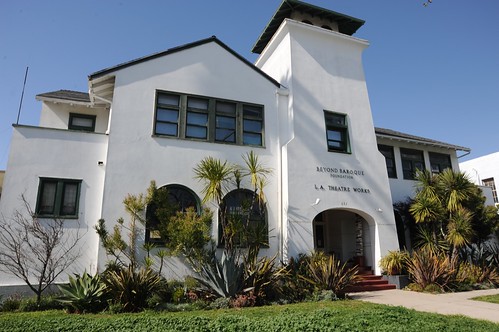
In terms of venues, I would say that Ivan Salinas and Jimmy Vega are really holding it down at Beyond Baroque and I would also shamelessly plug the series I run in South Central Los Ángeles, Miriam’s Garden, as places that purposefully look for up and coming writers which is not the norm. The positive thing about the L.Á. Poetry Scene is that once you find your tribe, things tend to work out, but it can be very lonely until you find your tribe.


Yago is amazing!!
LikeLike