
By Brian Dunlap
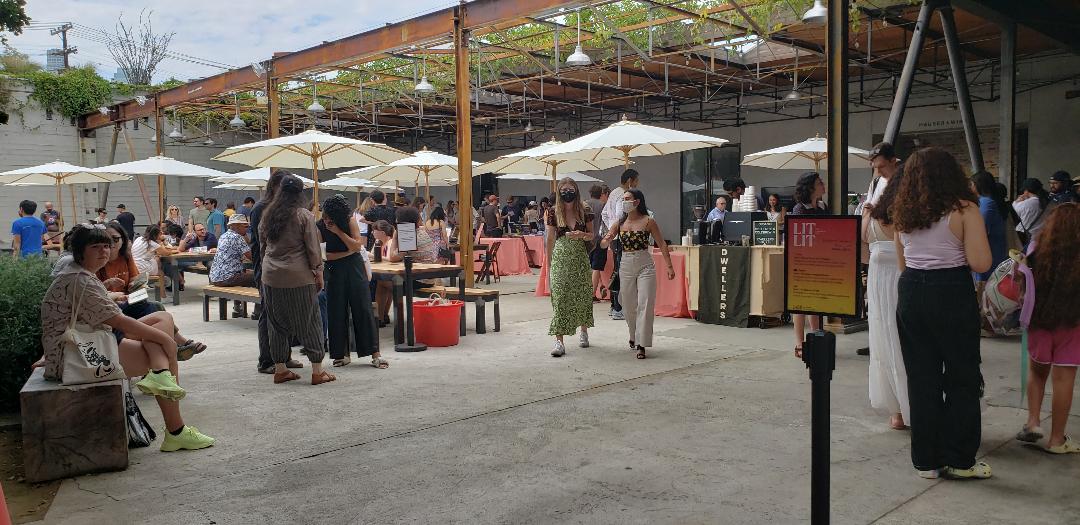
In 2019 a literary festival produced by the Los Angeles Review of Books (LARB) was hosted at Hauser & Wirth Los Angeles. It grew out of a 2017 summer program LARB ran. It was an intimate festival that the art gallery and exhibit space, in the Arts District, provided for. Visitors were able to meet independent publishers and authors and browse the books they produced. There were several panel discussions with publishers, vendors and authors. They were all mostly local, visitors able to explore the world of publishing in Southern California. It was called LITLIT, The Little Literary Fair.
The eight months later, the country shut down. COVID-19 Pandemic had settled in. LITLIT was cancelled. In 2021, the country was allowed to fully open again in time for LITLIT in July. But enough people were still skittish about convening in crowds of any size and with pandemic restrictions constantly changing, a literary festival couldn’t be planned.
Then, last weekend LITLIT returned. Two days—Saturday and Sunday—at Houser & Wirth. There were 48 exhibitors, local publishers, bookstores, literary nonprofits and libraries: Alegría Publishing, Inlandia Institute, Kaya Press, The Los Angeles Press, World Stage Press/Community Literature Initiative (CLI), Pen America, X Artists’ Books.
I attended Sunday. Attendance was strong, but with enough room to breathe. Exhibit tables lined both sides of the hallway and wrapped around the Courtyard. Directly across from the Courtyard, the garden hosted panel discussions. The temperature was high. I didn’t attend the three panels, but I could see they were well attended.
It was apparent that L.Á. independent publishers and literary organizations were alive and kicking.
I stopped first at the Los Angeles Poet Society table to say hi to its founder and poet Jessica Wilson Cardenas, and to member, poet and Sims Library of Poetry Librarian Karo Ska. In line with the more intimate nature of the festival, I was able to sink into a conversation with Ska before CLI graduate and poet Daniel Anaya stopped to say hi to Karo and we both introduced ourselves. Anaya, who grew up in El Paso’s El Segundo Barrio, engaged me in a conversation about poetry that eventually led to a discussion about Walt Whitman’s racist nativism, that teachers and critics tend to ignore or overlook. We then shared out poetry, my chapbook and his galley copy.
Before I left the Los Angeles Poet Society table, poet and World Stage Press author Alex Petunia stopped by, having manned the World Stage Press/CLI table. We fell into good conversation, catching up, talking about life and Chicago, Petunia’s hometown and my one visit there a decade ago, that I lost track of time.
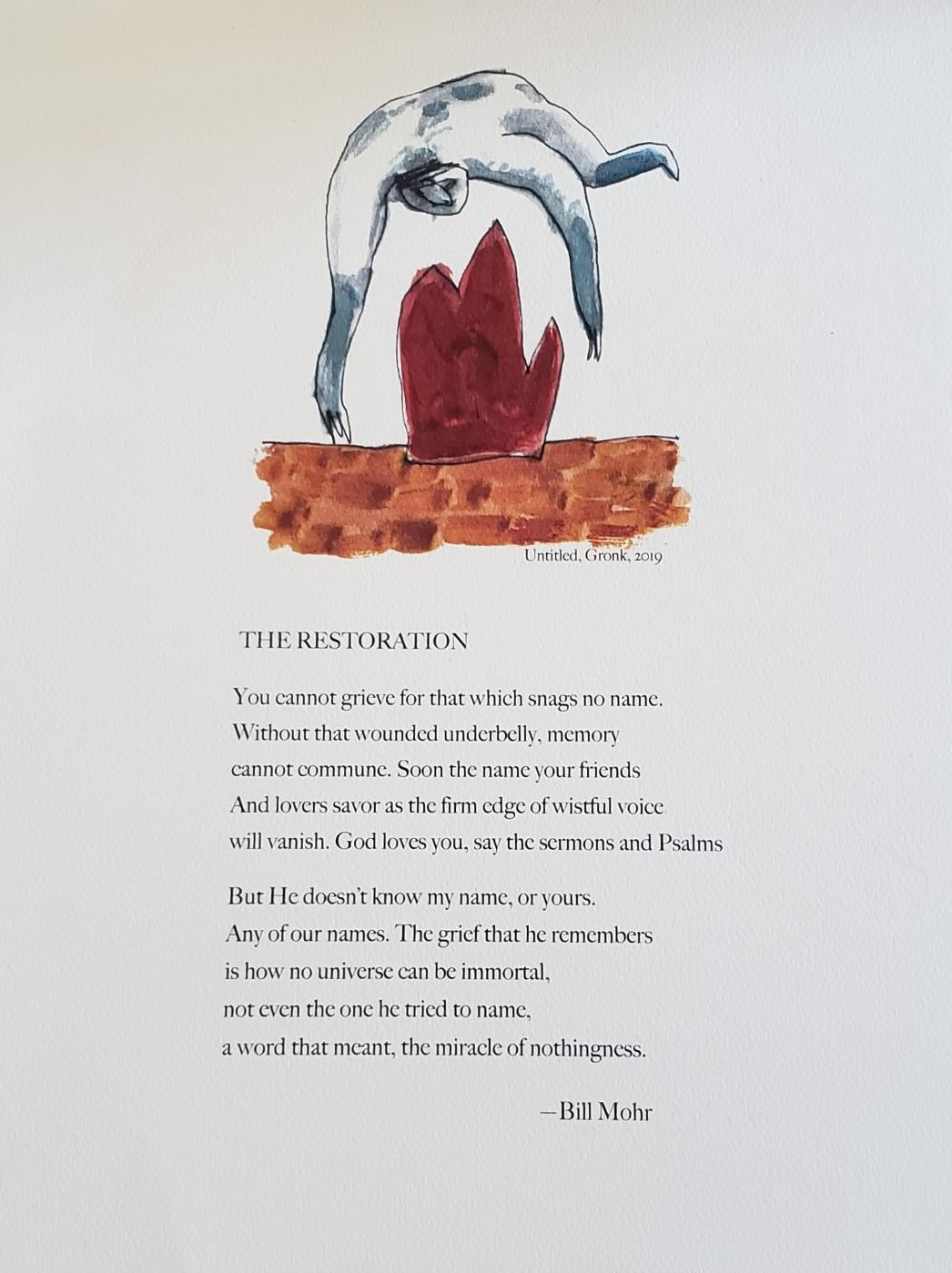
I then stopped at the What Books Press table, a press founded in 2009 by writers and artists in Los Ángeles to publish “groundbreaking fiction and poetry” according to its website. I spoke to one to the two women manning the table, chose a broad sheet by Bill Mohr and gave both women my business card.
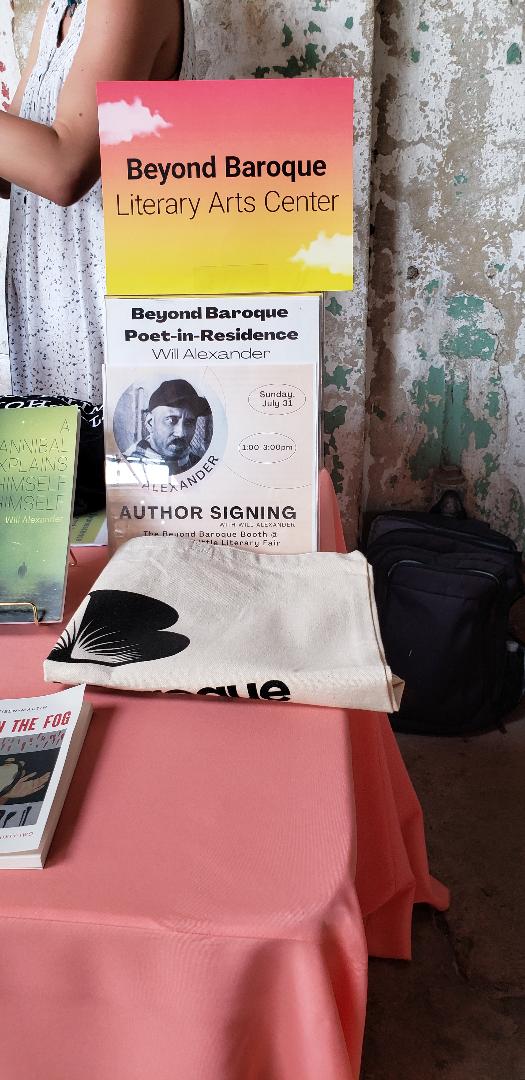
Before I left for the day, I stopped at the Beyond Baroque table where San Fernando Valley poet and Beyond Baroque Program Coordinator Iván Salinas manned the table. It was great to hear how Salinas recently got his job at Beyond Baroque, stemming from his internship there. He also said he’s putting together his debut poetry collection, but in the meantime, he’d put together a small bilingual zine of his poetry and generously gave me a copy.
Before I left the table, I noticed writer, poet, visual artists and L.Á. native, Will Alexander sitting next to Salinas, alone, signing books. I spoke to him about the writing life and the philosophy of writing poetry. I had met Alexander twice before, but here we had the space and time to converse. He spoke softly, forcing me to pay extra attending to his words, emphasizing that writers should not pay attention to what others say. His words held a weight and importance from his successful three plus decades of publishing. Before we parted ways, Alexander invited me to his reading at Beyond Baroque the following weekend.
By the time I headed home I knew I had made connections. Was able to connect with community, books, publishers. From the crowd I saw last Sunday, the literary community welcomed the return of a more intimate literary festival.

 Los Angeles Literature