
By Brian Dunlap
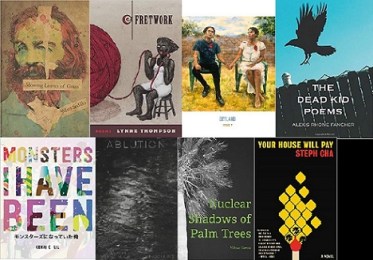 As 2019 comes to a close, it’s clear that Los Ángeles writers explore a diverse range of topics, themes, and ideas. As the months went by, writers published novels, essay collections, poetry collections/chapbooks or announced their books had been accepted for publication in 2020. Their writing ranged from exploration of children lost too soon, to a celebration Los Ángeles, to the love of a neighborhood always reduced and racially stereotyped, to the generational trauma of people of color.
Other writers published short pieces, such as essays, journalism, book reviews, short stories and individual poems in publications like Lit Pub, L.A. Parent, Cultural Weekly, Dryland, Zyzzyva, Boom, L.A. Review of Books and CNN, among others.
In 2019, local poets such as Mike Sonksen, Nikolai Garcia, Jenise Miller, novelist Chip Jacobs, Nikki Darling, Susan Straight (who published a memoir), Steph Cha, LARB Books Classics (A STAB in the Dark) and others published books that explore place in greater L.A. from how we make a home here, how this place has shaped us, what this place really is beneath the stereotypes, what our families brought with them (culture, history) when they originally moved to greater L.A. Most are written by people who are native to this place or near natives (moved to greater L.A. at a young age), but a few, like A STAB in the Dark by Facundo Bernal, are written by nonnatives, who lived here only a short time. A large percentage of these books about L.A. are written by writers of color (Chicanxs, Blacks, mixed race, Korean). The white writers like Mike Sonksen and Susan Straight, portray people of color in their narratives with agency and authenticity
Plus, political poetry continues to be penned by L.A. poets from Matt Sedillo to LA Poeta Violeta, Karo Ska, Bridgette Bianca and other powerful unpublished pieces heard at various open mikes and readings this year. They speak to the current political moment in various ways, some like Matt Sedillo and Bridgette Bianca’s, situating it in the context of America’s racist history.
Other L.A. writers such as Fresno native and L.A. resident Sara Borjas, Shonda Buchanan and the forthcoming essay collection by Victoria Chang, explore family history and generational trauma and the intersection of the two. They explore how they came to understand their families and their trauma, in the process of writing their narratives (essays, poetry, memoirs), how the trauma was internalized due to racism, sexism, cultural expectations and norms, and in some cases how they are using this knowledge to heal and break the cycle of trauma. For example, Victoria Chang says in her essay “Dear Daughters, Dear Linda:”
I have spent a lifetime believing that the only thing that mattered
was being smart. I have spent your lifetime, just 12 years, finding
an exit within this corridor…Daughter, each day I am exhausted thinking about intelligence.
Each day I am exhausted worrying about intelligence. And I hate
myself for worrying. I hate my obsession with intelligence. You
have to do better than Americans, than men, my mother always
said.
Other writers such as Brian Dunlap (Litpub), Karo Ska (Dryland), Don Kingfisher Campbell Lummox, Subterranean Blur Poetry, Zo Magazine), Vickie Vértiz (Dryland), Erin Aubrey Kaplan (L.A. Times), Lynell George (L.A. Times, Alta), Xochitl-Julisa Bermejo (LA Review of Books), Yxta Maya Murry (Santa Monica Review), David Ulin (L.A. Times), Ron Dowell (Smoke Blue Literary and Arts Magazine, The Blue Monkey, Writers Resist), Jo Scott-Coe (Riverside Press-Enterprise), Ruth Noland (Riverside Press-Enterprise), Michael Jaime-Becerra (ZYZZYVA), Michelle Latiolais (ZYZZYVA), Glen David Gold (ZYZZYVA), Vanessa Angélica Villarreal (Poetry), William Archila (Poetry) and La Poeta Violeta (CNN) have simply published short pieces or poems in literary journals and magazines.
What follows is a list of books published this year by the L.Á. literary community and books members announced they are publishing next year. If I have left anyone and/or their books off this list I apologize. Congratulations to everyone’s publishing success in 2019. I’m looking forward to more publishing success from the community in 2020.
Published in 2019
Heart Like a Window, Mouth Like a Cliff (Noemi Press) by Sara Borjas
The Fresno born poet who now calls L.A. home—Sara Borjas—released her debut collection Heart Like a Window, Mouth Like a Cliff, back in March. The Amazon description of the book reads: “This collection is a transgressive, yet surprisingly tender confrontation of what it means to want to flee the thing you need most. The speaker struggles through cultural assimilation and the pressure to “act” Mexican while dreaming of the privileges of whiteness. Borjas holds cultural traditions accountable for the gendered denial of Chicanas to individuate and love deeply without allowing one’s love to consume the self. This is nothing new. This is colonization working through relationships within Chicanx families–how we learn love and perform it, how we filter it though alcohol abuse–how ultimately, we oppress the people we love most. This collection simultaneously reveres and destroys nostalgia, slips out of the story after a party where the reader can find God ‘drunk and dreaming.’ Think golden oldiez meets the punk attitude of No Doubt. Think pochas sipping gin martinis in lowriders cruising down Who Gives a Fuck Boulevard.” In poems that span the alfalfa field, to the kitchen, to the backyard garden or the local dive bar, Borjas writes to her hometown of Fresno. These poems are elegy to her family, and to herself, exploring the rich yet depleted soil of the back yard in which her father religiously grows tomatoes, the tangled roots of her Mexican-American identity, the legacy of having “twice inherited one language and lost another.”
BOAT/BURNED (Yes Yes Books) by Kelly Grace Thomas
For years Kelly Grace Thomas was fixture in the Los Ángeles literary community, reading her poems at events all across the Southland and working hard to inspire the next generation of poets with her work at Get Lit. Last year she departed L.A. for the Bay Area. However, this year Thomas released BOAT/BURNED from YesYes Books. It examines the relationships one is forced to vessel, to family, to faith to femininity; compares the female form to boat. It interrogates the ways we are taught to woman, questions the model that has been passed down, recounts what the body carries and how the body carries us. It asks what happens when you outgrow both the love and loyalties you were raised to obey and set fire to old identities and beliefs.
This collection explores and echoes themes of: hunger, divorce and distance. Asks why we altar what is absent, how we allow silence to continue to wound. It navigates and interrogates outdated narratives through the role of gender and exposes the complex, often shameful, relationship to one’s body. It examines the ways women have reached outside themselves for power by perpetuating patriarchal structures.
Cruising (Unnamed Press) by Alex Espinoza
Alex Espinoza takes readers on an uncensored journey through the underground, to reveal the timeless art of cruising. Combining historical research and oral history with his own personal experience, Espinoza examines the political and cultural forces behind this radical pastime. From Greek antiquity to the notorious Molly houses of 18th century England, the raucous 1970s to the algorithms of Grindr, Oscar Wilde to George Michael, cruising remains at once a reclamation of public space and the creation of its own unique locale―one in which men of all races and classes interact, even in the shadow of repressive governments.
In Uganda and Russia, we meet activists for whom cruising can be a matter of life and death; while in the West he shows how cruising circumvents the inequalities and abuses of power that plague heterosexual encounters. Ultimately, Espinoza illustrates how cruising functions as a powerful rebuke to patriarchy and capitalism―unless you are cruising the department store restroom, of course.
Paperback L.A. Book 3 A Casual Anthology: Secrets. SigAlerts. Ravines. Records. (Prospect Park) by Edited by Susan LaTempa
In Paperback L.A., A Casual Anthology Book 3, our contributors deftly command fiction, nonfiction, playwriting, magazine writing, memoir and other forms to conjure up visions of a Beverly Hills Wonderbread factory, the founding of the first sustained gay rights organization in the country, early 20th-century wagon-train settlers in Dodger Stadium area, a late 20th-century DTLA traffic tie-up that becomes a kind of symphony, a humorous 1940s novelty song whose refrain buoyed civil rights activists, the 1990s outrigger-team apprenticeship of a Tongva youth, the horrors of the dating life in Silver Lake—and more. Plus, photo essays on “Quiet L.A.,” “Delivering Flowers to Grandpa Jack in Long Beach,” and “The Gents of Blues and Protest.”
Dead Extra (Prospect Park Books) by Sean Carswell
The early forties have been a tough time for Jack Chesley. His plane was shot down over Germany and he spent two years in a brutal POW camp. During that time, his wife fell in the tub and died.
Prior to her death, the early forties were even tougher for Jack’s wife, Wilma. After Jack was mistakenly presumed dead, she went on a bender that ended with her wrongful commitment to the Camarillo State Psychiatric Hospital. While there, she took up with an alcoholic socialite, a junkie pianist, and a shady hospital employee who promised her a way out. Only that way out set her on the path to the end of her road.
Now Jack’s back in Los Ángeles. His sister-in-law and Wilma’s twin, Gertie, hunts him down to tell him Wilma’s death was no accident: she was murdered. Gertie’s first efforts to find the truth earned her a bullet to the collarbone. But that doesn’t mean Gertie is ready to give up. She knows the right places to look and the right people to ask. She needs Jack, who was a cop for a short time before the war, to stick his nose into these places and ask these questions so that, together, they can figure out who killed Wilma, and why.
In the Country of Women (Catapult) by Susan Straight
In the Country of Women is a valuable social history and a personal narrative that reads like a love song to America and indomitable women. In inland Southern California, near the desert and the Mexican border, Susan Straight, a self-proclaimed book nerd, and Dwayne Sims, an African American basketball player, started dating in high school. After college, they married and drove to Amherst, Massachusetts, where Straight met her teacher and mentor, James Baldwin, who encouraged her to write. Once back in Riverside, at driveway barbecues and fish fries with the large, close-knit Sims family, Straight―and eventually her three daughters―heard for decades the stories of Dwayne’s female ancestors. Some women escaped violence in post-slavery Tennessee, some escaped murder in Jim Crow Mississippi, and some fled abusive men. Straight’s mother-in-law, Alberta Sims, is the descendant at the heart of this memoir. Susan’s family, too, reflects the hardship and resilience of women pushing onward―from Switzerland, Canada, and the Colorado Rockies to California.
A Pakistani word, biraderi, is one Straight uses to define a complex system of kinship and clan―those who become your family. An entire community helped raise her daughters. Of her three girls, now grown and working in museums and the entertainment industry, Straight writes, “The daughters of our ancestors carry in their blood at least three continents. We are not about borders. We are about love and survival.”
Black Indian (Wayne State University Press) by Shonda Buchanan
Black Indian, searing and raw, is Amy Tan’s The Joy Luck Club and Alice Walker’s The Color Purple meets Leslie Marmon Silko’s Ceremony–only, this isn’t fiction. Beautifully rendered and rippling with family dysfunction, secrets, deaths, drunks, and old resentments, Shonda Buchanan’s memoir is an inspiring story that explores her family’s legacy of being African Americans with American Indian roots and how they dealt with not just society’s ostracization but the consequences of this dual inheritance. Buchanan was raised as a Black woman, who grew up hearing cherished stories of her multi-racial heritage, while simultaneously suffering from everything she (and the rest of her family) didn’t know. Tracing the arduous migration of Mixed Bloods, or Free People of Color, from the Southeast to the Midwest, Buchanan tells the story of her Michigan tribe — a comedic yet manically depressed family of fierce women, who were everything from caretakers and cornbread makers to poets and witches, and men who were either ignored, protected, imprisoned, or maimed — and how their lives collided over love, failure, fights, and prayer despite a stacked deck of challenges, including addiction and abuse.
Ultimately, Buchanan’s nomadic people endured a collective identity crisis after years of constantly straddling two, then three, races. The physical, spiritual, and emotional displacement of American Indians who met and married Mixed or Black slaves and indentured servants at America’s early crossroads is where this powerful journey begins. Black Indian doesn’t have answers, nor does it aim to represent every American’s multi-ethnic experience. Instead, it digs as far down into this one family’s history as it can go sometimes, with a bit of discomfort. But every family has its own truth, and Buchanan’s search for hers will resonate in anyone who has wondered “maybe there’s more than what I’m being told.”
Ablution (Self Published) by Ingrid M. Calderon-Collins
Ablution takes readers through the early days of love and beyond…The narrative built within these poems, traverses the relationship between these lovers (the author and her eventual husband, John) with a close lens, many titled with just a month of the year. The poems in this collection are very intimate. Readers continue to live side by side with these lovers, so too will they pick up on the hint of another character in these lives: the city of Los Ángeles. And in much the same way, the apartment of these lovers serves as a reflection of their relationship and love as it grows and changes.
A Second Birth (Black Opium Press) by Ingrid M. Calderon-Collins and Katie Doherty
A Second Birth is a collection of essays each of the two writers’ work consisting of half the book. This is a collection that touches on childhood, creativity, love, and identity; through this purification come A Second Birth.
Arroyo (Rare Bird) by Chip Jacobs
Set against two distinct epochs in the history of Pasadena, California, Arroyo tells the parallel stories of a young inventor and his clairvoyant dog in 1913 and 1993. In both lives, they are drawn to the landmark Colorado Street Bridge, or “Suicide Bridge,” as the locals call it, which suffered a lethal collapse during construction but still opened to fanfare in the early twentieth century automobile age. When the refurbished structure commemorates its 80th birthday, one of the planet’s best known small towns is virtually unrecognizable from its romanticized, and somewhat invented, past.
Wrought with warmth and wit, Jacobs’ debut novel digs into Pasadena’s most mysterious structure and the city itself. In their exploits around what was then America’s highest, longest roadway, Nick Chance and his impish mutt interact with some of the big personalities from the Progressive Age, including Teddy Roosevelt, Upton Sinclair, Charles Fletcher Lummis, and Lilly and Adolphus Busch, whose gardens were once tabbed the “eighth wonder of the world.” They cavort and often sow chaos at Cawston Ostrich Farm, the Mount Lowe Railway, the Hotel Green and even the Doo Dah Parade. But it’s the secrets and turmoil around the concrete arches over the Arroyo Seco, and what it means for Nick’s destiny, that propels this story of fable versus fact.
While unearthing the truth about the Colorado Street Bridge, in all its eye-catching grandeur and unavoidable darkness, the characters of Arroyo paint a vivid picture of how the home of the Rose Bowl got its dramatic start.
An Old Man’s Game (Prospect Park Books) by Andy Weinberger
When a controversial celebrity rabbi drops dead over his matzoh ball soup at the famed Canter’s Deli in Los Ángeles, retired private eye Amos Parisman— a sixtyish, no-nonsense Jewish detective who lives with his addled wife in Park La Brea—is hired by the temple’s board to make sure everything is kosher. As he looks into what seems to be a simple, tragic accident, the ante is raised when more people start to die or disappear, and Amos uncovers a world of treachery and hurt that shakes a large L.A. Jewish community to its core.
This Storm (Knopf) by James Ellory
Ellory was born in Los Ángeles in 1948. Spent time in El Monte. The jacket copy on Amazon for this mystery writer’s latest book set in L.A. says: “It is January, 1942. Torrential rainstorms hit L.A. A body is unearthed in Griffith Park. The cops rate it a routine dead-man job. They’re grievously wrong. It’s a summons to misalliance and all the spoils of a brand-new war.
Elmer Jackson is a corrupt Vice cop. He’s a flesh peddler and a bagman for the L.A. Chief of Police. Hideo Ashida is a crime-lab whiz, caught up in the maelstrom of the Japanese internment. Dudley Smith is an LAPD hardnose working Army Intelligence. He’s gone rogue and gone all-the-way Fascist. Joan Conville was born rogue. She’s a defrocked Navy lieutenant and a war profiteer to her core.
They’ve signed on for the dead-man job. They’ve got a hot date with History. They will fight their inner wars within The War with unstoppable fury.”
(the Other House) (Civil Coping Mechanisms) by Rocio Carlos
(the other house) is a book, a poem, a book of poems, that is also ghost document and prenatal correspondence. It was written as the author read through the draft of a manuscript for The Yellow House, by her friend, the poet Chiwan Choi. Ghost because it is a letter of the dead to the dead, but prenatal because the manuscript it addresses hadn’t been published yet. Her notes and questions eventually became a conversation with the text itself, with the speaker of the poems, with no one in particular, with the dead, with old lovers, with her own work, and with the author herself. This book is a response, a map, a thread of hauntings, a reconstructed memory of loss and the body, language and desire.
The Dead Kid Poems (KYSO Flash) by Alexis Rhone Fancher
The stunning sequel to State of Grace: The Joshua Elegies. Both collections speak of devastating loss, and love that endures beyond death. The Dead Kid Poems chronicles as well a bittersweet journey of complex familial relationships, and offers solace for those whose hearts are pierced by grief, personal and/or collective.
Star Chasing (Los Nietos Press) by Thomas R. Thomas
Thomas R. Thomas was born in Los Ángeles, CA, and grew up in the San Gabriel Valley east of LA. Currently he lives in Long Beach, CA. The poems in his new collection are about family, growing up, love, and reflections on life. Well, sort of. They are also about an individual, and how so many times, in so many aspects of our lives, it seems that we are alone in the universe, trying to find our way through space and time.
Nuclear Shadows of Palm Trees (DSTLArts) by Nikolai Garcia
Los Ángeles-based poet, Nikolai Garcia, presents through his poetry an incredible portrait of the city he calls home. Thanks to a sensibility that clearly shows his love, and sometimes disdain, for the city and the people in it, we get to understand what it really means to be an Angeleno. In the end, Nikolai shows us what it means to really be in love with the City of Angels.
The Blvd. (DSTLArts) by Jenise Miller
From the mamas who cook and watch over the community to the braiders and the Trinas, The Blvd celebrates a neighborhood and its people, who face hardship with grit, gratitude, and grace. It offers a distinct narrative of Compton’s past that maps the joy and pride held by those who call this place home. The Blvd is the first poetry collection by Jenise Miller and the first collection developed and published through the DSTL Arts-Poet/Artist-in-Residence Program.
Knife Me Split Memory (Self Published) by Cindy Rinne
In her new chapbook Knife Me Split Memory Cindy Rinne says:
Trapeze
We try to cross the spider web bridge.
Her foot slips. I grab her hand
and fling her like a trapeze artist.The survivor flips and lands on her feet.
Drops dance off the web onto singing grasses.What happens next on the dream catcher?
Cindy Rinne creates fiber art and writes in San Bernardino, CA. She was Poet in Residence for the Neutra Institute Gallery and Museum, Los Ángeles, CA. She has created fiber art for over 30 years, exhibiting internationally. Cindy collaborates in Performance Poetry using her own costume creations based on her books. Cindy is the author of several books: Letters Under Rock with Bory Thach, (Elyssar Press), Moon of Many Petals (Cholla Needles Press), and others. Her poetry appeared or is forthcoming in: Anti-Herion Chic, Unpsychology Magazine, MORIA, several anthologies, and others.
Letters To My City (Writ Large/The Accomplices) by Mike Sonksen
Together we are alive in a city of destiny.
I am still alive in Los Angeles!
The poems and essays in Letters to My City combine two decades of field experience, research, personal observations, and stories told to the author, a third-generation Los Ángeles native, by his grandfather and other family members, to interrogate all sides of Los Ángeles, its streets, its people, its neighborhoods, as a means to examine the postmodern metropolis.
Your House Will Pay (Ecco) by Steph Cha
In the wake of the police shooting of a black teenager, Los Ángeles is as tense as it’s been since the unrest of the early 1990s. But Grace Park and Shawn Matthews have their own problems. Grace is sheltered and largely oblivious, living in the Valley with her Korean-immigrant parents, working long hours at the family pharmacy. She’s distraught that her sister hasn’t spoken to their mother in two years, for reasons beyond Grace’s understanding. Shawn has already had enough of politics and protest after an act of violence shattered his family years ago. He just wants to be left alone to enjoy his quiet life in Palmdale.
But when another shocking crime hits LA, both the Park and Matthews families are forced to face down their history while navigating the tumult of a city on the brink of more violence.
Fade Into You (The Feminist Press) by Nikki Darling
In the glorious wasteland of 1990s Los Ángeles, Nikki Darling alternates between cutting class and getting high, falling into drugs, crushes, and counterculture to figure out how she fits into the world. Running increasingly wild with other angst-ridden outcasts, she pushes herself to the edge only to find herself trapped in the cyclical violence of growing up female.
Written in dreamy, subterranean prose, this debut novel captures the reckless defiance and fragility of girlhood.
A STAB in the Dark (LARB Books Classics) by Facundo Bernal
Facundo Bernal’s A Stab in the Dark (Palos de ciego) is a poetic chronicle of the struggles and joys of the Spanish-speaking community in Los Ángeles and in the burgeoning border town of Mexicali in the early 1920s. Sharply satirical, yet deeply empathetic, Bernal’s poems are both a landmark of Chicano literature and a captivating read. Anthony Seidman’s energetic translation — the first into English — preserves the prickly feel of Bernal’s classic, down to the last stab.
Facundo Bernal was a poet and journalist. He grew up in Hermosillo, Mexico during a time of political and social conflict, coming of age just before the Mexican Revolution. With his brother Francisco, he is representative of the bohemian Mexican literature of the era. He died in 1962.
Dead Letter Box (Moontide Press) by Terri Niccum
Terri Niccum is a former journalist and special education teacher. She lives in Southern California where she continues to advocate for children with special needs. The poems in Dead Letter Box are not about the postal service, although a postman does appear as a character in one poem. Neither are the poems so much about death as they are about how death colors our lives. Some of the poems in the book celebrate those moments when the narrators feel the world has shifted into just the right place, when they feel most alive. Without these moments — when we feel able to grab life with our bare hands and experience those brief trills of victory — death holds no tragedy. These poems aim to provide different takes on death woven through with strands of life. And somewhere within these poems, the poet hopes the reader may find rescue.
At the Table of the Unknown (Moontide Press) by Alexandra Umlas
Originally from Long Beach, current Huntington Beach resident Alexandra Umlas’ debut poetry collection At the Table of the Unknown confirms that the possibility for poetry is everywhere. These poems are clear, open-eyed, and harvested from two decades of writing about everything from the echoing feeling of loss to the gritty strangeness of parenthood. Here, language is harnessed, sometimes by formal elements, and sometimes by its own energy, to explore what it means to be alive today.
Monsters I Have Been (Alice James Books) by Kenji Liu
Using an invented poetry method called frankenpo (frankenstein poetry), Liu takes existing texts and remixes them, creating multi-faceted poems that investigate the relationship between toxic masculinity and forms of violence plaguing our modern society. It also explores the male-male erotic and marginalized masculinities that are urgently needed as a counterweight to today’s dominant hypermasculinity.
Iced in Paradise (Prospect Park Books) by Naomi Hirahara
Leilani Santiago has left her post-collegiate life in Seattle to return home to the Hawaiian island of Kaua’i. Her mom’s been diagnosed with MS, and she wants to help keep afloat the family business, a shave ice shack. When Leilani arrives at work one morning, she stumbles across a dead body, a young pro surfer who was being coached by her estranged father. As her father soon becomes the No. 1 murder suspect, Leilani must find the real killer and somehow safeguard her ill mother, little sisters, and grandmother, while trying to keep the long-distance relationship with her boyfriend alive.
Hermosa (Not A Cult) by Yesika Salgado
Hermosa is the path to becoming one’s own home. A thread pulled when Salgado thinks about who she is and who she has been. Beyond the survival, grief, and fight, Hermosa lives in small moments hidden beneath it all. A journey of firsts, of mistakes, of celebrations, of love, the crush, the disaster, the rebuilding, and the never-ending cycle of growth.
Crossing The High Serra (Cholla Needles) by John Brantingham
John Brantingham is Sequoia and Kings Canyon National Park’s first poet laureate. He and his wife, Ann, teach poetry, fiction, and art classes in Sequoia and Kings Canyon.
Little Million Doors (Nightboat Books) by Chad Sweeny
Written during an autistic breakdown after his father’s sudden death, Sweeney’s visionary elegy for the living occupies the voice of the newly dead. Through shifting identities, genderless, omnigendered, bereft and haunted, this work affords an intimate mapping of grief—and a vision of what consciousness remains after the body. Sweeney coordinates the Creative Writing program at Cal State San Bernardino.
Fretwork (Marsh Hawk Press) by Lynne Thompson
With Lynne Thompson’s new collection Fretwork, one feels spurred on by the cherished care of the American emigrant story, which is to say, the buttressing and fortifying of the dream with all of its inglorious and joyous plots and twists. In mapping her supreme truths, imaginatively rendered here in measured lines, embedded in the familial tales, and felt music of her people, she embraces that light that emanates from language that aligns memories to myth.
The Heart Beat of Wooded Knee (Riverhead Books) by David Treuer
The long-held idea was that Native American life essentially ended with the U.S. Cavalry’s 1890 massacre of more than 150 Sioux at Wounded Knee. Melding history with reportage and memoir, David Treuer, professor at USC, uncovers a different narrative, in which the depredations of each era also spawned new modes of survival: The seizures of land gave rise to increasingly sophisticated legal and political maneuvering. The forced assimilation of children at government-run boarding schools incubated a unifying Native identity. Not despite but rather because of American Indian’s intense struggles to preserve their tribes, their cultures, and their very existence, the true story is that of a resilient people’s unprecedented resourcefulness and reinvention.
The Autograph Book of L.A.: Improvements on the Page of the City (Angel City Press) by Josh Kun
“The autograph is the premise for a dream: maybe, just maybe, the autograph hunter will become the autograph hunted, maybe the autograph will double as a magical transfer of renown, and by receiving the signature, one day you will be signing your name when someone asks.” So surmises Josh Kun in the pages of The Autograph Book of L.A., the third in his trilogy of books sponsored by the Library Foundation of Los Ángeles and based on the Special Collections of the Los Ángeles Public Library. Kun looks at Los Ángeles, his hometown, and sees the stamp of other people who also call it home. Suddenly imagery, graffiti, and, yes, “hand-written names” become the signature of a new Los Ángeles.
From Rufio to Zuko (Not A Cult) by Dante Basco
From Rufio to Zuko is a personal examination of the upbringing, culture, and work of Dante Basco. Basco ruminates on the formative power of his Filipino-American heritage, his family, the dynamics that evolved throughout his career, and his experiences behind playing a couple of America’s most popular characters.
Mowing Leaves of Grass by (Flower Song Books) Matt Sedillo
Matt Sedillo’s poetic work is full of history, struggle, tragedy, anger, joy, despair, possibility and faith inthe struggles of working class people to overcome the forces of capitalism and racism. If PatriceLumumba, Rosa Luxembourg, Emiliano Zapata and Ella Baker were alive today, they would all be readingand sharing Matt Sedillo’s work with their comrades in service of organizing the next revolution. He istruly the poet laureate of struggle, says Paul Ortiz of Sedillo’s book.
L.A. Writers Releasing a Book in 2020
be/trouble(Writ Large/ The Accomplices) by Bridgette Bianca
The story goes that L.A. poet Bridgette Bianca walked into a bar, read some poems and poet and publisher of L.A. based Writ Large Press, Chiwan Choi, asked her on the spot if he could publish her manuscript. As a small press, Writ Large will be publishing Bianca’s book in early 2020. Her poems force the reader to confront the difficult and painful racists history and legacy of America from the point of view of a strong black woman.
Read Me Los Angeles: Exploring L.A.’s Book Culture (Prospect Parks Books, March) by Katie Orphan
Read Me Los Angeles is a celebration of all things bookish in L.A. past and present, including interviews with current L.A. writers; day drips in search of favorite fictional characters, from Marlowe to Weetzie Bat; author quotes galore; curated lists of the must read L.A. books…and insight into the city’s book festivals, bookstores, publishers, literacy nonprofits, libraries, and more. Orphan lives in Los Ángeles, where she always finds new places to explore.
Erotic (N/A) by Alexis Rhone Fancher
Alexis Rhone Fancher uses sex in her writing to explore power, to “write for women who are like her.” Erotic is her new forthcoming collection of erotic poetry.
My Ministry by Ingrid M. Calderon-Collins
A new collection of poems, written last spring, when Calderon-Collins was going through withdrawals from quitting smoking.
Let the Buzzards Eat Me Whole (Another New Calligraphy) by Ingrid M. Calderon-Collins
Let the Buzzards Eat Me Whole is Ingrid M. Calderon-Collins’ poet memoir about being born and raised amidst the war in El Salvador in the early 80’s before she immigrated to the United State with her family when she was in elementary school. A refugee of the Salvadorian civil war. It’s about the trauma she experienced growing up Mormon, about the sexual abuse she experienced. She remembers her family’s escape, the first meal she ate after arriving in America: McDonalds. She gets deported, then returns to the States. And Let the Buzzards Eat Me Whole is about a whole lot more.
The Perishing (Counterpoint) by Natashia Deón
Part speculative fiction, part realism, L.A. novelist Natashia Deón’s second book is set in Los Ángeles. It’s about a young black woman who suddenly finds herself in 1930s Los Ángeles, and through flashes forwards and back in time comes to believe she may be immortal, only to find a love, and a city, worth dying for.
From Our Land To Our Land (Seven Stories Press) by Luis J. Rodriguez
Essays on race, culture, and identity, Native Americans, the Latinx community, and more from the prolific writer, activist, bookseller, and LA’s poet laureate.
A collection of powerful pieces on race, culture, identity and belonging and what these all mean and should mean (but often fail to) in the volatile climate of our nation. Rodriguez has a distinctly inspiring passion and wisdom in his approach as he writes about current political and cultural unrest, about his own compelling background, and about his vision for America’s future. Ultimately, the book carries the message that we must come together if we are to move forward. He reminds us in the first essay, The End of Belonging, “I’m writing as a Native person. I’m writing as a poet. I’m writing as a revolutionary working class organizer and thinker who has traversed life journeys from which incredible experiences, missteps, plights, and victories have marked the way…. I belong anywhere.” The pieces in From Our Land To Our Land capture that same, fantastic energy and wisdom and will spark conversation and inspiration.
Behind the Red Curtain (Los Nietos Press, April) by Hồng-Mỹ Basrai
Behind the Red Curtain begins in 1975 as South Vietnam falls to the Communist North Vietnamese. In the voice of a young teenager, the author unfolds the story of her family in a world turned upside down with the political re-making if the country. Hồng-Mỹ writes about the gradual disappearance of all aspects of her former life and the impact it had on all those around her. The family’s struggle to survive, their several attempts to escape and the imprisonment that they experienced is laid bare…the connection to the universal themes of dislocation and the will to struggle for survival are never lost. She is a member of the Writers Club of Whittier.
I’d Rather Be Lightning by Nancy Lynée Woo
Long Beach poet Nancy Lynée Woo announced earlier this year the title for her first full length poetry collection. Just one problem: Woo still needed to write the poems.
The Terrible Crystals (Milkweed Editions) by Victoria Chang
A collection of essays, written as letters addressed to her 12 year old daughter.
Obit (Coper Canyon, April) by Victoria Chang
After her mother died, poet Victoria Chang refused to write elegies. Rather, she distilled her grief during a feverish two weeks by writing scores of poetic obituaries for all she lost in the world. These poems reinvent the form of newspaper obituary to both name what has died and the cultural impact of the death on the living.


Some great books here and love that you feature local authors. “Behind the Red Curtain” sounds especially interesting. Is it more of historical fiction or a memoir?
LikeLike
Thank you so much for your kind words. Featuring local authors that don’t get the press attention they deserve is one of my gosls. To answer your question, according to the publisher Los Nietos, “Behind the Red Curtain”, is “a book length memoir.”
LikeLiked by 1 person
It is nice that you are taking the time to bring some well-deserved attention their way. Okay, great thank you for getting an answer to my question. I look forward to more posts and recommendations from you in the future.
LikeLike