A Los Angeles poet’s revolution of everyday life
by E. Tammy Kim, From http://www.america.aljazeera.com
As gentrification sweeps the city, Sesshu Foster has quietly become the poet laureate of a vanishing neighborhood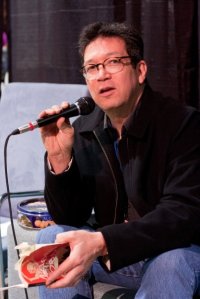
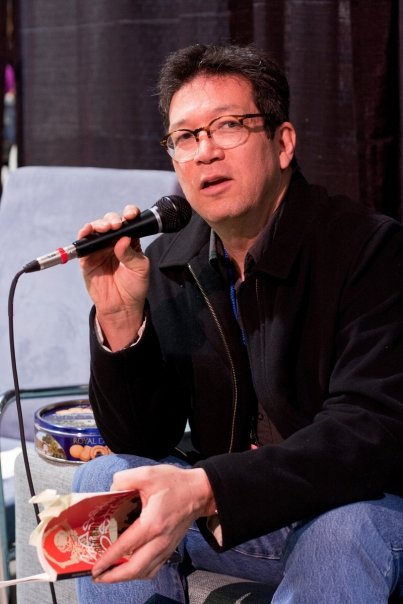
LOS ANGELES — In this high-turnover city, the Eastside, more than the moneyed west, has
seemed to hold on to its past. There are eccentric bungalows and blanched murals, and shopping corridors with the foot traffic and feel of a village market. Neighborhoods such as Lincoln Heights, El Sereno and City Terrace have thus far escaped the peculiar affliction of the upscale coffee shop. Their residents and business owners are still predominantly Latino and Asian, and largely working class — though perhaps not for long. According to trend-spotters, East LA is the molten core of gentrification, full of hipsterpreneurs with backing from friends in venture capital.
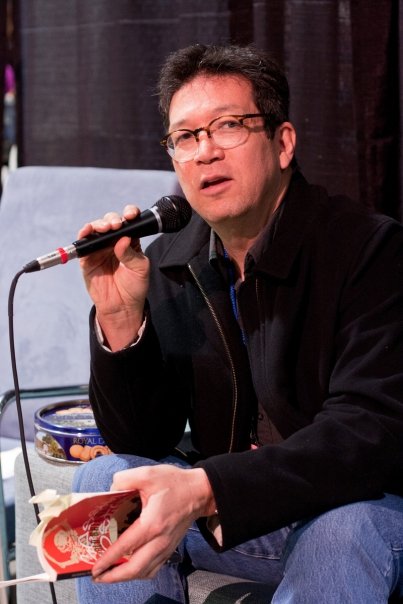
To see the real Eastside, ask the writer and teacher Sesshu Foster to take you on a little tour. He’ll pick you up downtown in his Toyota SUV, air conditioner whooshing, a Ry Cooder track pulsing. You’ll cross the LA River — thin puddles in a long concrete ditch — and keep going down Cesar Chavez, originally named Brooklyn Avenue by Jewish émigrés. Every few blocks, you’ll glimpse a faded mural and Foster will explain the story behind each one. If there’s graffiti, he’ll denounce the taggers’ “total disregard for their grandparents’ social art” in his unhurried Angeleno drawl.
Foster, 58, the author of four award-winning books of poetry and prose, is an encyclopedist by nature, the Diderot of the neighborhood. His writing is political, experimental and consistently local, even unfashionably so. A family man and full-time public school teacher, he’s never focused on self-promotion, yet he is praised within literary circles and counts U.S. poet laureate Juan Felipe Herrera, novelist Karen Tei Yamashita and poets Claudia Rankine and Amy Uyematsu among his friends and peers. Herrera says Foster might be better known if not for the day-to-day “pressure [on] working-class writers, writers of color… writing for the community.”
Continue reading “A Los Angeles poet’s revolution of everyday life”


 . Step up to the mic. Imagine a different kind of open mic, in a listening room so you can hear the music and have your music heard.Why just imagine it? We close the front door and sign-up sheet at 7:05. After 7:05 please enter through the door down the hall and around the corner. If there is room on the list, we will reopen it during the 10 minute break beginning sometime around 8:15. We are limiting the list to 20 signups and only guaranteeing the first 17 that they will get to perform. The last three will get up if there is time. Info for performers: This is a music and poetry open mic. We have a state-of-the-art sound system with a stage monitor. We have an electronic keyboard. If you want to use a backing track, the sound system has a cable with a mini jack plug that works with almost any phone, tablet, computer or CD player. We welcome light percussion (e.g., cajon, djembe, snare with brushes) but, out of respect for our neighbors, we do not allow full drum kits. No bagpipes. Material will need to be appropriate for the audience. We don’t really expect children, but have something ready just in case.


 noir. That might sound overly niche, but it isn’t. Her