
Los Angeles Literature Events 3/13/17 –3/19/17
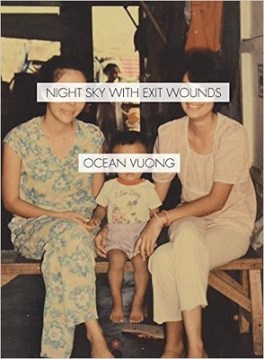 Ocean Vuong at ALOUD Reading Series, Central Library
Join us to hear award-winning poet Ocean Vuong, in conversation with Pulitzer Prize winning author Viet Thanh Nguyen, read from and discuss his debut full-length collection, Night Sky with Exit Wounds. Hailed by critics for its powerful emotional undertow, sincerity and candor, Vuong’s poems navigate the overarching worlds of history, sexuality and humanity with startling precision. Reflecting on what it means to write as a Vietnamese refugee in the contemporary space, he reads and discusses his work with Viet Thanh Nguyen, whose writing also often explores the Vietnamese American experience.
FREE / Reservations recommended.
The reading and Q&A starts at 7:15 pm; stand-by seating at 7 pm.
Where: Mark Taper Auditorium, Central Library
Date: Monday the 13th
Time: 7 pm
Address: 630 W. 5th St., Los Angeles, CA 90071
Website: http://www.lapl.org/whats-on/events/night-sky-exit-wounds
Continue reading “Los Angeles Literature Events 3/13/17 –3/19/17”

 In honor of Black History month (a few days late, I know), I am highlighting many of the powerful African American authors of Los Angeles literature. Their voices tap into a Los Angeles rarely portrayed, much less portrayed honestly. Nonetheless they tape in to an essential Los Angeles of a good, strong community struggling to survive among the racist realities of the LAPD and redlining that relegated most of them to the South Central/Watts neighborhoods of Los Angeles. In their writing you can hear the ancestral griot, telling their collective stories, as Kamau Kaaood has done for decades with his spoken word poetry. You can experience their witnessing that such writers as Michael Datcher in his Memoir Raising Fences does, when he first moves with his family from Indiana to South Central Los Angeles in 1977 at 10. Here he witnesses and experiences police brutality against Blacks. He was “returning from Gaffey Street Pool” with his cousin Jeff and two friends. “A white man leaped out [of the cop car], clutching a gun in both hands, arms stretched out forward and stiff…he had to squat down to line up the bridge of my nose.”

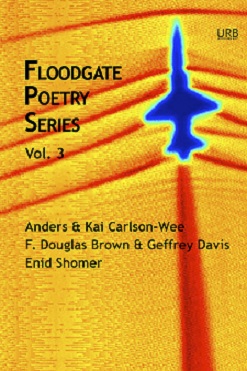 When poets Geffrey Davis and F. Douglas Brown first met at a poetry retreat in 2012, they instantly connected in discussing fatherhood and the poetry that sprang from that experience. Over time, that relationship grew, and they began writing poetry that came directly out of their conversations. Soon, they were even borrowing each other’s lines or writing stanzas or whole poems back and forth, as a kind of call and response.
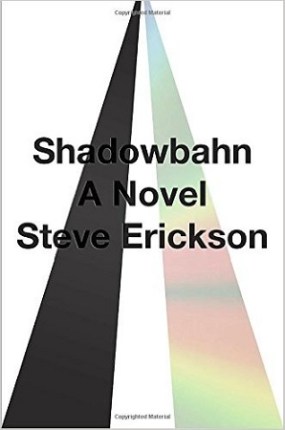 Steve Erickson was post-millennial long before the millennium ever got here. Like those of a Southern California Ballard or Beckett, his novels are filled with a wide variety of end of time-like calamities, both personal and political: suicide cults, alternate-history Hitlers, urban conflagrations, unpredictable weather storms and — most terrifying of all — the endlessly recurring (and continually unbelievable) presidential election cycle. Over several decades of feverish literary production (his first novel, the absorbingly recursive “Days Between Stations,” was published in 1985), he has written consistently and obsessively about people seeking a way out of their own cultural history. Sometimes they’re successful; sometimes they’re not. But one way or another, as soon as they wake up the next morning, they’re lost.
 Stephen Kinzer at Vroman’s Bookstore
 Los Angeles Literature