

Why You Should Ask Writers Blok if Black Lives Matter
FROM: Medium
 An open letter to the white members of Writers Blok:
Continue reading “Why You Should Ask Writers Blok if Black Lives Matter”
An open letter to the white members of Writers Blok:Continue reading “Why You Should Ask Writers Blok if Black Lives Matter”
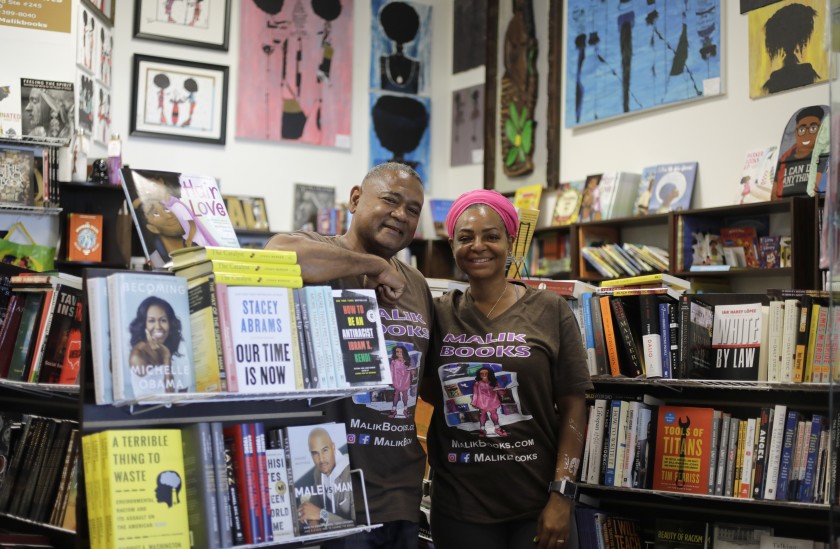
 On June 23, author Carmen Maria Machado announced she had canceled her virtual event with Tattered Cover, Denver’s oldest independent bookstore. “Unlike the owners,” she wrote, “I know that choosing neutrality in matters of oppression only reinforces structural violence.”
Continue reading “L.A.’s Independent Bookstores Reckon With Diversity (or the lack of it)”

 FROM: Cultural Weekly
Cultural Weekly’s 8th Annual “Jack Grapes Poetry Prize” is open for submission. This contest is FREE to enter.
By Vallarie Wallace
FROM: Electrict Literature
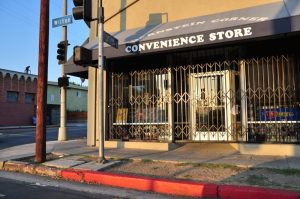 After several grueling hours of protesting against systemic injustice (no one can prepare you for long hours on your feet, long hours screaming for recognition of your humanity), we stood with our signs tucked safely under our arms as the organizer introduced some parting words. The speaker was an older Black man, the weariness of the movement evident in his face and in the way he leaned against a streetlamp for support. But his passion was clear in his speech as he declared that we were not the first to fight for our rights, and we will not be the last: he was protesting in the streets back in his early adulthood, the same way we were today. It was then that I looked at the faces of the people around me; some couldn’t be older than sixteen, and some as old as the speaker, or older. It was in the aftermath of being surrounded by these people, all aligned in our goal for the abolishment of the systemic injustices that cause Black oppression, that Nina Revoyr’s literary crime novel Southland came to mind.
Continue reading “The Novel That Shows Us How to Face Our Past to Change Our Future”
By Brian Dunlap
 The United States is now in the midst of its strongest push for racial equality since the Civil Rights era. Civil unity and protests sprung up instantly after George Floyd’s death at the hands of police last month in Minneapolis. The calls for police reform have been loud and wide, including calls for justice for Breonna Taylor who was killed by Louisville police as she slept.
Continue reading “The Need For Racial Equality Hits the L.Á. Literary Community”
By Brian Dunlap
FROM: Beyond Baroque

Yesterday, Beyond Baroque, Los Angeles’ oldest literary venue, hosted numerous acclaimed scholars and artists for an outdoor community talk and vigil addressing racism & Police violence.
 The National Beat Poetry Foundation, Inc. (NBPF), a not-for-profit organization founded in 2016, has selected Rich Ferguson to serve as the State of California Beat Poet Laureate for a two-year term from Sept. 2020 to Sept. 2022.
By Brian Dunlap
 During this time of social unrest, the country visibly upset over the continued killing of innocent black men and wemen at the hands of police, the Los Angeles Poet Society has issued a submissions call for social justice poems. On Facebook they announced:
Continue reading “Los Angeles Poet Society Call For Submissions”
By Brian Dunlap
 For Asain/Pacific American Heritage Month, Los Āngeles Literature is recommending books about Asian L.Á. written by Asians and books written by Asian Angeleños. This history of the city’s Asian American literature extends at least as far back as the 1920s, as historian Valerie J. Matsumoto chronicles in the chapter “Sounding the Dawn Bell: Developing Nisei Voices” from her book City Girls. Continue reading “Recommended Los Ángeles Literature For Asian/Pacific American Heritage Month”
By Myriam Gurba
FROM: Electric Lit
 Amado Vazquez, a Mexican botanist, named an orchid after Joan Didion. While that was a chic gesture, I don’t think of her as an orchid. I think of her as an onion. She’s very white, very crisp, and she makes people cry.
Continue reading “It’s Time to Take California Back from Joan Didion”


