
Los Angeles Literature Events 10/10/16 – 10/16/16
Rodrigo Toscano at Pomona College
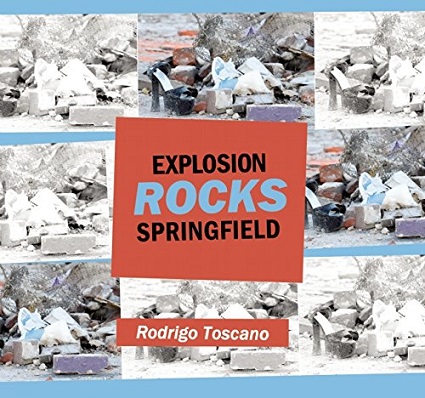 Join us for a public reading by Rodrigo Toscano, poet and author of Explosion Rocks Springfield. Raised in southern California, poet, playwright and labor activist Rodrigo Toscano’s experimental work often takes the form of conversation and physical movement that interrogates, and crosses borders: the border between poetic and political action, between the made thing and its making, between speech and theater, between languages, between social change and its provocation.
Where: Pomona College, Crookshank Hall Room #108
Date: Monday the 10th
Time: 4:15 pm – 5:30 pm
Address: 140 W. Sixth St., Claremont, CA 91711
Website: http://www.pomona.edu/events/literary-series-rodrigo-toscano
Continue reading “Los Angeles Literature Events 10/10/16 – 10/16/16”

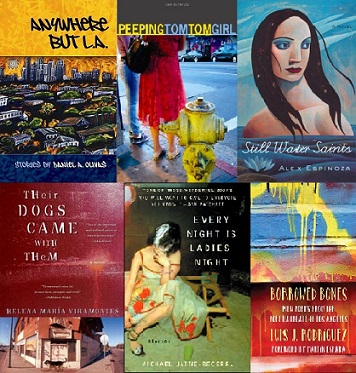 In honor of National Hispanic Heritage Month, the following is a celebration of Los Angeles’ rich Latino literary tradition. These are writers that have called El Pueblo de Nuestra Señora la Reina de los Ángeles del Río de Porciúncula home. They have explored its streets from Pacoima to, East L.A., to Commerce, to El Monte and Hollywood and Pershing Square. These writers usually write about a Los Angeles completely alien to Hollywood, the movie industry, to the famous neighborhoods like Brentwood, Bel Air, The Hollywood Hills, etc., the famous L.A. landmarks (Hollywood sign, Venice Beach, Pinks Hot Dogs, celebrity sightings, etc.) and capture the everyday of working class Latinos/as living in the Barrios. Away from depictions of cholos and cholas, gang violence and “illegals.” As the seminal anthology of contemporary Latino/a Southern California literature says: “Spanning sixty years…brings to life [a] complex and diverse group of people who are the Latino denizens of Los Angeles…young and old, gay and straight, rich and poor, the newly arrived and the well established.” The following authors speak to this breadth of experience proving they are not a monolith, stories that are often hidden in plain sight amidst the famous Los Angeles stereotypes of Hollywood, reinvention, dreams deferred, paradise etc. that proliferate around the world.
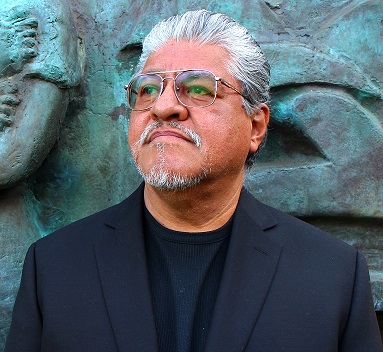 The poet laureate of Los Angeles had just taken a seat at a Pacoima cafe when he was approached by two young men.
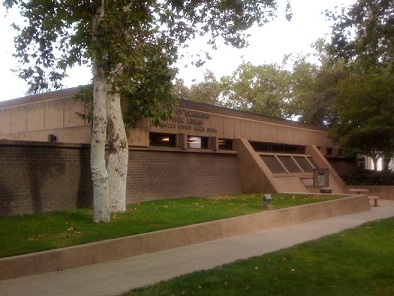 Ross Gay at Claremont Public Library
 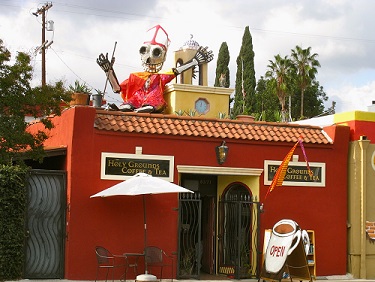 A busy industrial thoroughfare is an unusal place for an enchanting coffee house but that’s not the only distinguishing feature of El Sereno’s Holy Grounds Coffee & Tea. The garden, a splashing fountain, a tiny performance stage, add to the oasis-flavored ambience for this week’s Hitched reading.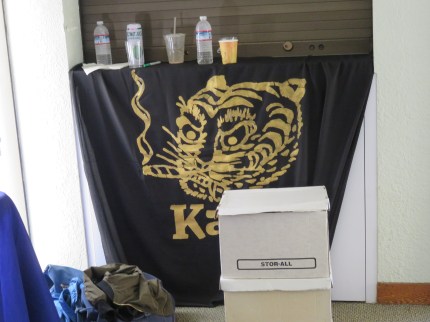
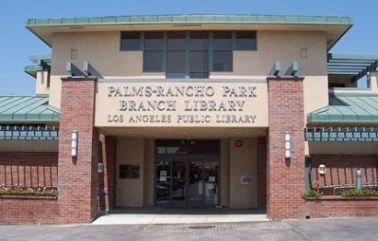 Author Barbara Kraft will speak about the Romanian-French playwright Eugene Ionesco who was one of the foremost figures of the French avant-garde theater, and helped to inaugurate a new type of theater which came to be known as “theater of the absurd.” He believed that the king of the “theater of the absurd” was Shakespeare.
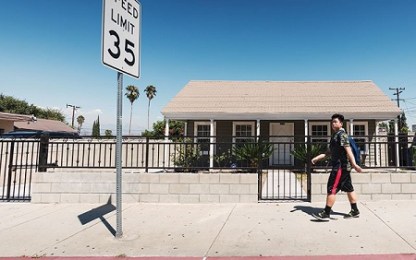 I was born in Tijuana, in an unnamed colonia atop a muddy hillside above the city. After my siblings and I received our green cards, we crossed the border with
our mother into Southern California. I was raised in La Puente, which borders the City of Industry, a place known for its many warehouses and factories. As kids, my friends and I played in empty fields sandwiched between loading docks owned by multi-million-dollar companies. Our fathers disappeared into the cavernous bellies of these plants. They came home exhausted, kicked off their work boots, cracked open beers, and told stories about feuds along the assembly line, about angry machines that ripped off fingers and arms, about chemicals that could melt skin away, about broken spines and permanent hearing loss. We were a community of immigrants from Mexico, Guatemala, and El Salvador. We arrived seeking shelter from poverty and civil unrest and instead found ourselves confronting a society that had all but abandoned the mythical American dream.
I was born in Tijuana, in an unnamed colonia atop a muddy hillside above the city. After my siblings and I received our green cards, we crossed the border with
our mother into Southern California. I was raised in La Puente, which borders the City of Industry, a place known for its many warehouses and factories. As kids, my friends and I played in empty fields sandwiched between loading docks owned by multi-million-dollar companies. Our fathers disappeared into the cavernous bellies of these plants. They came home exhausted, kicked off their work boots, cracked open beers, and told stories about feuds along the assembly line, about angry machines that ripped off fingers and arms, about chemicals that could melt skin away, about broken spines and permanent hearing loss. We were a community of immigrants from Mexico, Guatemala, and El Salvador. We arrived seeking shelter from poverty and civil unrest and instead found ourselves confronting a society that had all but abandoned the mythical American dream. Poetry Reading at Pomona College
 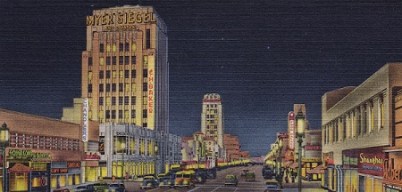 Los Angeles still comes to mind for most as a place of palm tree-lined streets, movie stars, and perhaps, a cultural wasteland. In a vastly diverse city of millions, those images have their space, but there’s room for so much more. If you find yourself in Los Angeles for a weekend, there is plenty of literary tourism to embrace. It’s a city not only written about, but written in, so there are landmarks a plenty. So much so, that I’m confining this weekend to the Eastern sides of Los Angeles.
