
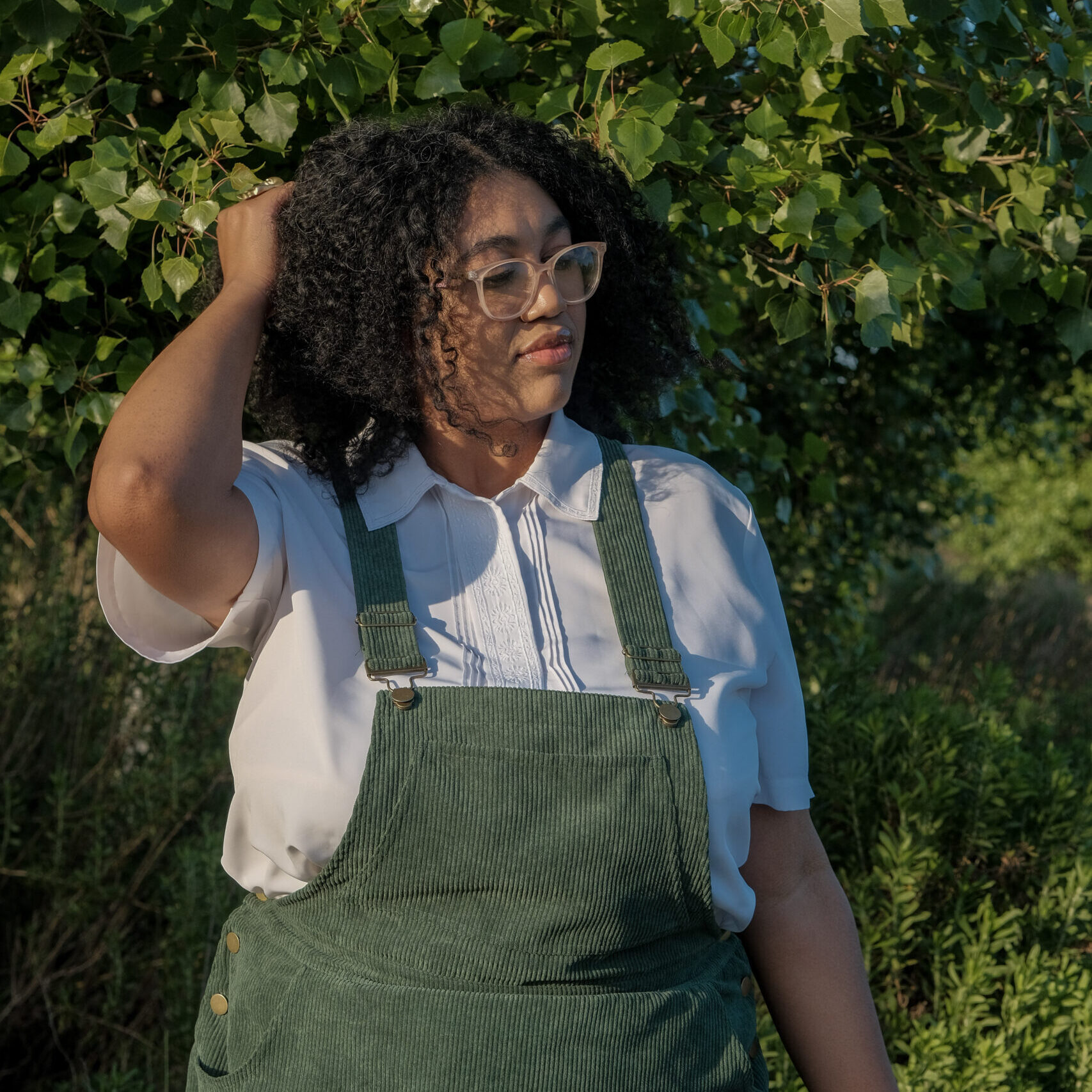
Bri Stokes began taking her poetry seriously in 2020, when the pandemic provided uninterrupted time to fully commit. During this period, she undertook the challenging work of strengthening her belief in her skills and voice, learning to quiet the impostor syndrome that often held her back so she could feel comfortable being “seen.”
“I struggled to be vulnerable (both with myself and others), to trust other people…and show up as a more authentic iteration of myself,” Stokes said in a VoyageLA interview.
To achieve a sense of ease in being seen, she found it incredibly beneficial to maintain a sense of self-awareness through consistent journaling, therapy, spiritual practices, and the support of a strong community.
Stokes learned—and always reminds herself—that growth is meant to be uncomfortable.
“As a trauma survivor with PTSD, the first half of my life was fraught with a really intense drive to protect myself,” Stokes said in the same interview. “I was in survival mode…The idea was that—if I conformed to others’ desires and expectations, rather than allow myself to be “seen”—I would be loved and safe.”
Not only has Stokes’ work at self-improvement caused her to grow as a writer and artist, but her writing has also caused her to grow as a person. Her words have given her the gift of self-actualization, and through them, she hopes they can help others embrace their vulnerability, to trust their own voice and to grow into their most authentic selves.
By becoming a more confident person, Stokes has written about love, heartbreak, mental health, the esoteric relationship she shares with nature and “power—how it is stolen, how it’s manipulated, and what it means to fear its existence within you,” she said in a Seventh Wave Spotlight Interview.
While Bri Stokes’ personal growth has been a powerful force in shaping her work, I recently asked her about the external influences on her poetry and writing and her views on the Greater Los Ángeles literary community.
Brian Dunlap: Who were your original influences on your writing? Poets, writers, maybe even musicians? Teachers? Why and how have they influenced your writing?
Bri Stokes: My earliest creative influences were pretty far-reaching. I grew up as an only child and subsequently took in a lot of media as a kid, because it made me feel a little less lonely. So, I found myself inspired by a lot of fantasy and sci-fi films from the 1970s and 80s—Labyrinth, The Never Ending Story, Star Wars, one-off clips of operas and ballets that I would catch on PBS,to name a few. Films that were able to access a dimension of storytelling that felt fantastical and escapist. Lots of comics (Batman was a favorite of mine). Anything that could fully transport me to a different realm felt like a magic trick I wanted to learn how to do.
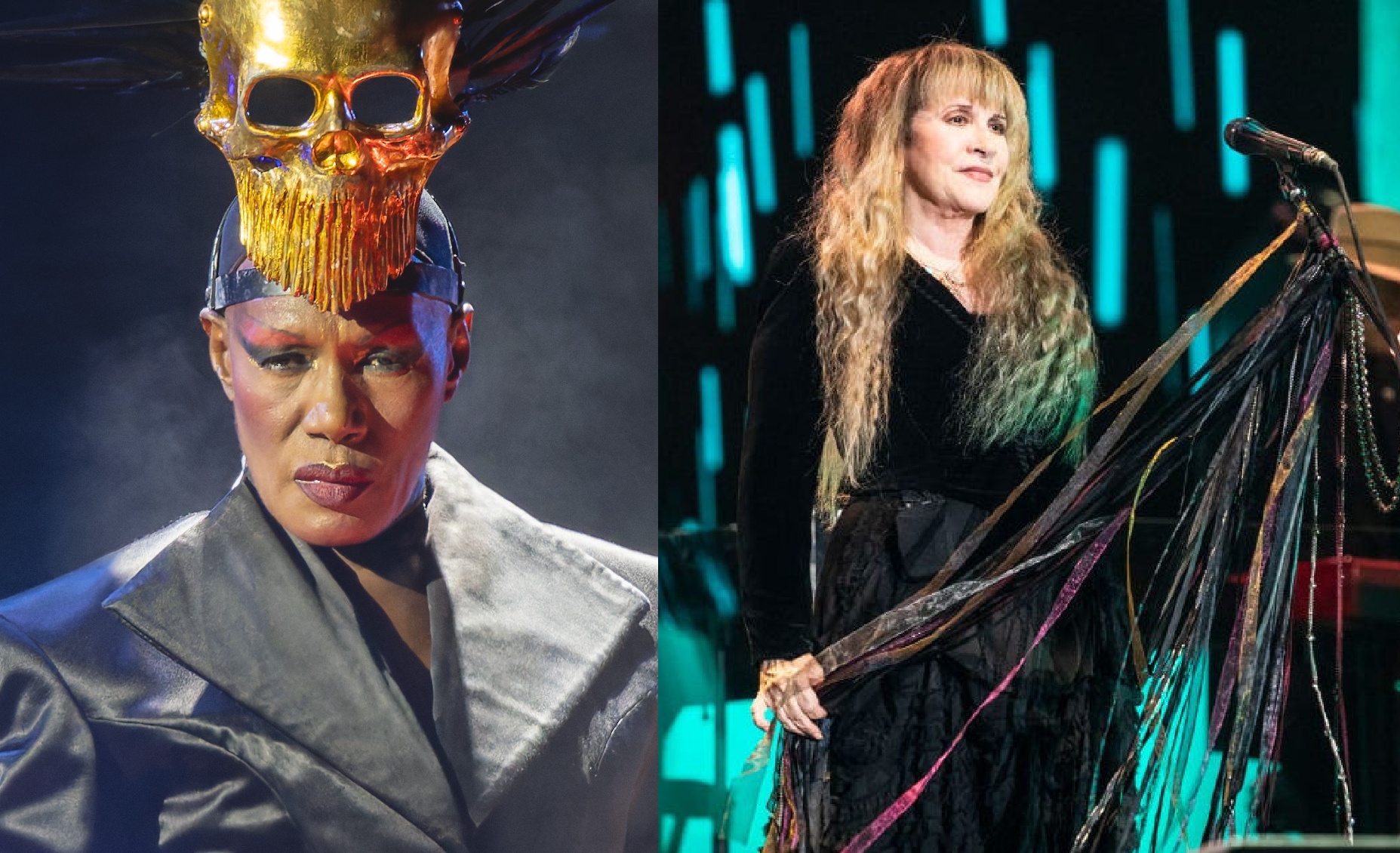
There are also several musicians whose lyrics I adored, because they were able to communicate, through words, that aforementioned sense of otherworldliness: David Bowie, Stevie Wonder, Lady Gaga, Grace Jones, and Stevie Nicks immediately come to mind. My family also played a lot of Parliament-Funkadelic, George Clinton, and Bootsy Collins when I was growing up, and I think I was always drawn to the lyrics of that music; words that could communicate something that was largely symbolic but no less resonant or stirring.
And as far as literature is concerned, my earliest influences came in the form of fairy tales, folklore, and Greek mythology.
I find that symbolism, [found in such tales], is the best tool to establish what bell hooks called a “poetics of soul,” to speak to something beyond the immediate, the physical. Most of my poems, for instance, reference mythological figures, locations, and motifs, and are less direct in their examination of experiences or subjects, and more about capturing the sensation of falling into those things, to the extent that (I hope) the reader is transported to a different place.
Much of the prose I write is very atmosphere-forward. I really like working with nature as a site of escapism as well. There’s a kind of mysteriousness to the natural world that lends itself nicely to the spirit of “otherness” I try to capture when I write.
And I’ve recently started piecing together that I’m probably stirred by [these otherworldly, symbolic, and immersive modes of expression] because I’m attempting to speak to the experience of exile. hooks and Cornel West often said that the story of Black Americans is, fundamentally, one of exile. I think when I’m leaning into or drawing inspiration from these elements of escapism and distance and symbolism, I am endeavoring to express that bewildering feeling of exile, of being both of the world around you and not of it, of a desire for homecoming. I am trying to untangle that and, through these elements, alchemize it.
Dunlap: What local writers, past or present, have been influential to your writing and/or you’ve fallen in love with? In what ways have they been influential in your writing and/or in what ways have you fallen in love with their work?
Stokes: Octavia Butler. Her creativity was not only boundless but so intentional. She offered readers snapshots of ways of being and thinking and living and loving which were counterhegemonic and felt, at times, prophetic. You can see the influences of many of her ideas unfolding today. I think all great speculative writing should accomplish something similar, to push culture forward in that regard, and I hope I can do the same in my own work. Whether through fiction or poetry, when people approach my writing, I want them to feel like they’ve been dropped into a kind of dream-world where systems of oppression and hegemony can be unraveled.
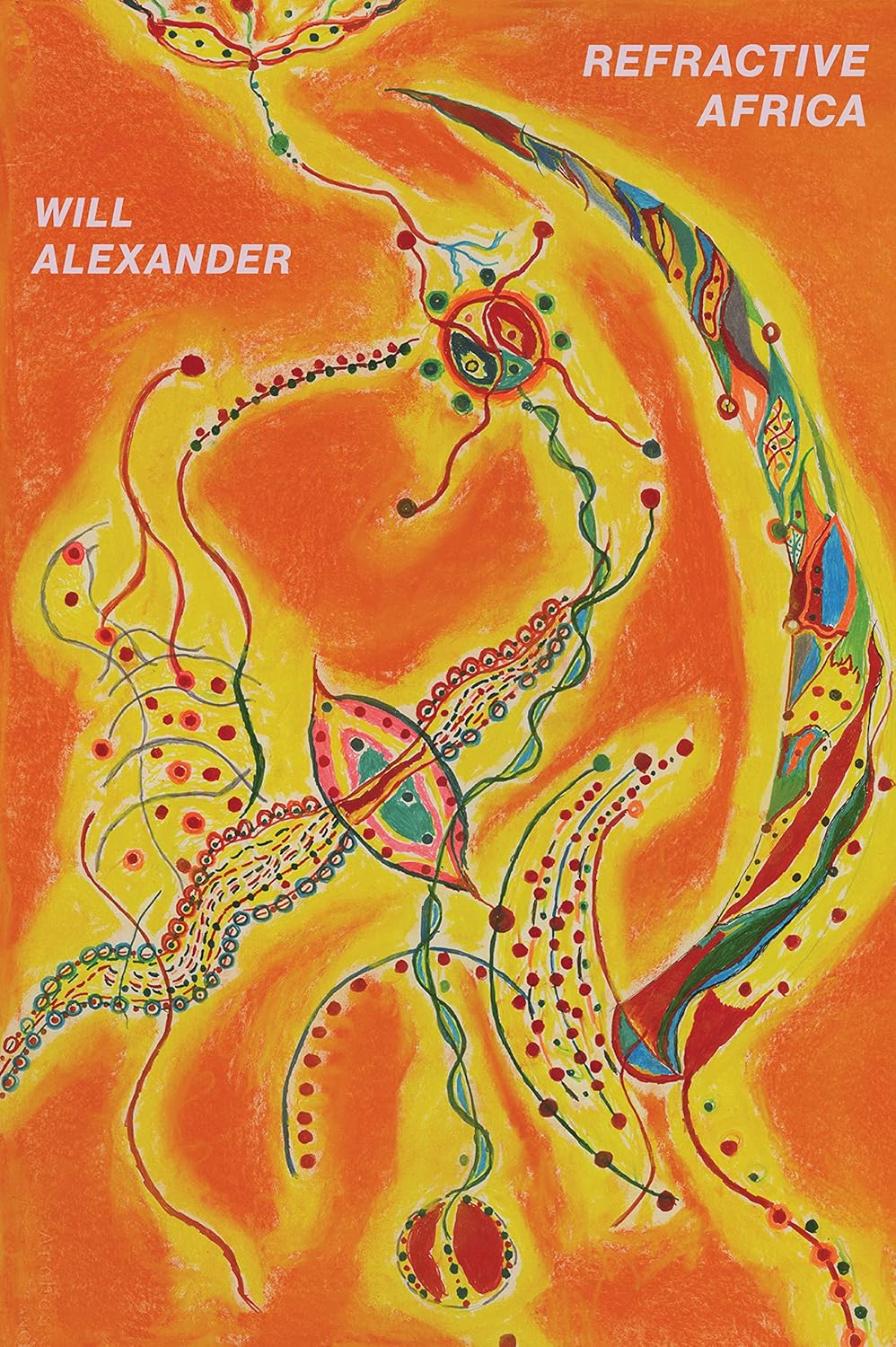
I really enjoy Will Alexander’s poetry (particularly Refractive Africa) for similar reasons. I’m in awe of his ability to, through words, conjure an entirely new vision of reality, wherein the “rules” of colonialism are nonexistent, rendered meaningless in the face of the magic conjured by the work.
Dunlap: What writers do you read today, whether poets, essayists, novelists, or others? What draws you to their work?
Stokes: James Baldwin is my eternal North Star—not just in terms of the kind of writer I want to be, but also as an individual, as a queer Black person trying to survive in America and understand where it ends and I, the human being, begin. His commitment to truth-telling and introspection, even when it’s not necessarily comfortable, really inspires me, both as a method of artmaking and as a daily practice.
Likewise, I adore Toni Morrison, bell hooks, and Alice Walker (Walker’s essays, in particular!). All mystics, in my eyes, peering into the soul of humanity with a sharp empathy and optimism that moves me on a cellular level.
[However,] a lot of [Walker’s] personal writings were about reclamation—recovering the parts of ourselves lost to the traumas of existing under capitalism, patriarchy, and white supremacy. I find that really empowering. We’re living through the inflection point of these systems, and very few things in the modern world feel “real” (from how we communicate and form relationships, to the prevalence of AI and social media, to the kinds of art we’re sold, to the ongoing political circus, and so forth). It’s like we’re forgetting our humanity, or actively trying to distance ourselves from it. And in many of her essays, Walker was insistent that no aspect of our humanity, no matter how joyful or painful, should be discarded or ignored or suppressed, no matter how staunchly the systems that govern and condition us insist otherwise.
It is not only acceptable to be sensitive, to desire and seek out a more spiritual or mythic dimension of life, but that, for the writer, it’s essential. I agree. I think the writer’s job, in part, is to absorb everything and reflect it to the world. The writer is the person who asserts that, [and] yes, it really is that deep.
[Also,] Sylvia Plath wrote with a kind of mysticism and reverence for the unseen, unnoticed world that I admire and seek to emulate. I also love Anaïs Nin; I feel that I’ve learned a lot about being an artist and a woman from reading her diaries, and I’m inspired by the rich, evocative quality of her prose. Similar to Walker’s writings, Nin’s diaries, for me, are a direct appeal to the human spirit. She frequently wrote about the necessity of allowing yourself to be consumed by your experiences, good or bad, because it’s within those experiences that you can excavate the necessary territory to write. She was so unapologetically present and alive, and, again, I think we’re losing the capacity to be that way.
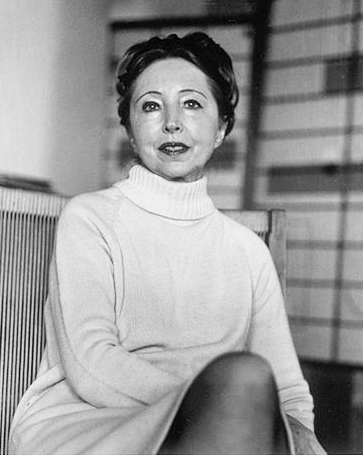
A writer needs to practice this because our ability to express all the varying dimensions of being alive is our bread and butter. But it’s also a liberatory space to step into as a woman (and it was radical for Nin to do so during her time), to be able to say, “I want to know all of myself, good and bad, and there’s no part of me that I’m hiding from, that I’m ashamed of.” I don’t know if I’m completely there yet, but seeing Nin model that radical embrace of life has helped set me on the path. Telling stories about women who find ways to liberate themselves from systemic constraints, who can’t be boxed into them, or writing poetry that explores the depths of my own sensitivity, without shame, continues to light up the path for me, and was certainly inspired by her work.
And I think N.K. Jemisin [whose fiction includes a wide range of themes, notably cultural conflict and oppression,] is the greatest speculative writer of the modern age.
Dunlap: From your engagement in the local literary community, what are your honest thoughts and opinions about this community, good, bad, or otherwise? Its issues, its positives, and anything else?
Stokes: Writing, by its very nature, is a highly intimate art form. It requires a consistent ethic of vulnerability and the ability to hold attention, both for yourself and others. Attempting to bridge that fundamental intimacy with the sheer scope and pace of life in Los Angeles can be really challenging.
There’s a lot of care and respect amongst writers here, but the community can certainly feel a bit fragmented. Folks tend to stay in their own pockets, and it can feel like there are seldom avenues for deeper engagement and connection across different communities throughout the city. I’ve been fortunate enough to read work in several different neighborhoods, and I see this a lot.
I also recognize that there are plenty of folks actively doing the work to bridge those gaps and create greater points of access and connection between all of us. There are so many brilliant independent presses, magazines, mics, and cultural workers doing their part, and the city seems to be in the midst of a kind of artistic and cultural renaissance. I’m excited to see this continue to build and expand, and I’m truly grateful to be a part of it.

 Los Angeles Literature