
In 1978 I floundered.
I quit work in a steel mill I had been at for several years, although ending up in a lead foundry, a refinery, and as a carpenter until I could shift to another kind of life. I felt lost, unmoored. I split from my wife and two kids. She had been my “high school sweetheart,” just two months out of Garfield High School in East Los Angeles when we married in 1974. Also, industry in Los Angeles, like most of the United States, was leaving due to automation but also outsourcing of jobs to cheap labor markets in Mexico, Central America, and Southeast Asia. By 1984, the L.A. area lost over 300 factories, mills, and other industry—including that steel mill.
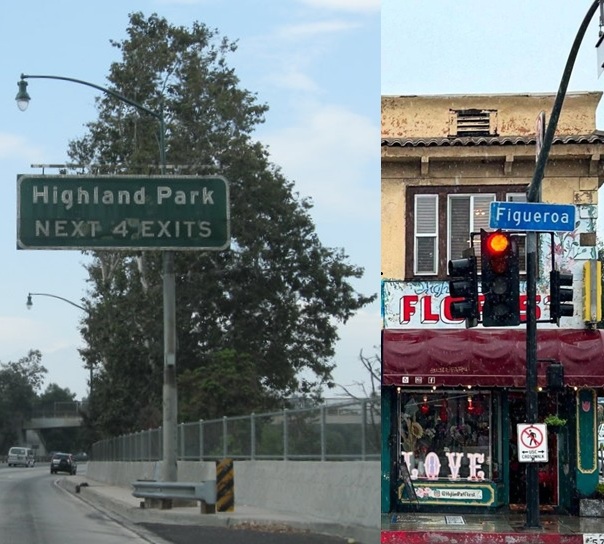
One day in my basement apartment in City Terrace, I read an ad in a community newspaper about a Los Angeles Latino Writers Association (LALWA) meeting in Highland Park. I went with no idea what to expect. I longed to tell stories, to put images and feelings on paper. I entered a second-floor brick structure on Figueroa Street. I met other Chicano/a writers also searching for the power of the word. We sat in a circle. Writers shared their poems, short stories, reporting, or just thoughts. Raw but vivid words. I recalled holding back. Listening and taking all this in. Everyone kind to each other. But also, good critique. Participants shared better ideas or ways of expressing. I felt welcome, even though nobody knew who I was or what I did. They were glad to see a writer-in-waiting. Glad to help engender a new and unique voice.
That meeting changed my life. I was 24 years old.
As many people know, I wrote as a troubled teen but let this go when I entered industry and construction. But the “song” inside wouldn’t die. I needed to see if I could become a writer, an almost fruitless endeavor, with no support in my family or precedent in community. Nonetheless, this calling stirred inside like a continually rising storm.
The Chicano Movement birthed me.
The largest population of Mexicans in the United States is Los Angeles’ Eastside, which included unincorporated East Los Angeles and communities like Boyle Heights, Lincoln Heights, City Terrace, and El Sereno. Just outside this area were barrios of northeast L.A. such as Highland Park, but also the San Gabriel Valley (SGV), which since the 1940s drew Mexican migrants to work orange and walnut groves, railroads, and the growing Los Angeles industry.
Although I first lived in Watts as a child, my family moved to the unincorporated community of South San Gabriel when I was nine. In those days the groves were gone. Surrounding around a hundred Mexican poor barrios in the SGV were mostly well-off white suburbs. South San Gabriel—most of it known as Las Lomas (The Hills)—had dirt roads, no sidewalks, no streetlamps, or adequate sewage. We were treated as second class people. The sheriff’s department was the army the powerful white communities used against us. And inter-barrio warfare, between the various Mexican neighborhoods, led to many deaths. There was also access to high-end drugs like heroin. Not by accident but design.
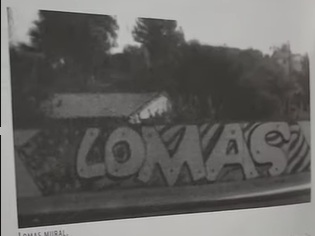
Unfortunately, too many of us “played ourselves.” As a teenager I got caught up in the violence, street crime, and drug addiction.
Then in the 1960s, the Chicano Movement exploded out of the Eastside, alongside the Black Civil Rights struggles for better education, housing, jobs, labor pay & conditions, and dignity. The United Farmworkers Movement also galvanized what some people called “sleepy” communities. They became awake and fierce. Besides the 1965 Cesar Chavez-led farmworkers strike, there was the 1968 “Blow-outs” in which some 20,000 students walked out of Eastside schools with support from teachers and parents. In 1970, the largest anti-war protest in a community of color, The Chicano Moratorium Against the Vietnam War, brought 30,000 people to march and rally in East Los Angeles. Attacked by sheriff’s and LAPD, this led to the so-called East L.A. riots in which sections of the main drag, Whittier Boulevard, burned down with millions of dollars in damage. Law enforcement officers killed three people, including the only Chicano voice in mass media, Ruben Salazar.
At the same time, the Eastside churned mightily with art, music, and poetry during the 1960s and 1970s. A community center in South San Gabriel offered a youth center. Government funds for equipment, alternative schools, and job resources also provided arts and cultural expression. From my most desperate circumstances—homeless, on heroin, in and out of jails—a youth worker at this center helped me when nobody else did. In time with his guidance and others, including teachers, a principal, and counselors, I returned to school (obtaining my diploma), learned to paint murals, did photography, and eventually left the drugs, crime, and jails by age 19 when I met that high school girl who would become my first wife.
Writing from the Inside Out
The Chicano Movement helped many youths like me. It also stopped much of the gang wars and drug use. But, when Nixon became president, cuts in the arts, youth jobs, and community services proved devastating. Soon those programs were gone in the poor inner-city communities. Without funds to support youth empowerment and resources, while guns and drugs continued to proliferate, barrio warfare reached new levels. And the Nixon anti-Drug wars eventually led, over decades and other presidents, to more drugs (PCP, crack, Cystal Meth, fentanyl, Tranq) and greater policing and incarceration. Our communities faced a perfect storm that depleted many of our youth, reaching a height from 1980 to 2000 when an estimated 15,000 people died in gang-and-drug wars in Los Angeles County.
Back in 1978, I found a community of writers on the Eastside who wanted to change all this. LALWA had the Barrio Writers Workshops in Highland Park as well as Echo Park and East L.A. They later had an office in downtown L.A., and I even rented a room for $60 a month at the Eastern Columbia Building on Broadway that now has million-dollar lofts.
LALWA also put out the Chicano/a literary art magazine, ChismeArte. And we sponsored the Raza Reading series bringing renown writers such as Jose Montoya, Lorna Dee Cervantez, and Gary Soto.
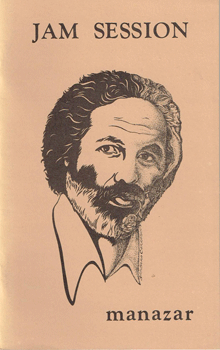
poem, “Jam Session.” via Martin Rodriguez,
https://faculty.ucmerced.edu/
mmartinrodriguez/index_
files/vpOlmeca.htm
I found a mentor in the incomparable Manual “Manazar” Gamboa, who had done seventeen years in prison and had been a heroin addict for twenty. He was clean & sober when I met him at LALWA. He had tight curly hair, a beard, and hard prison-bred eyes. But with a heart of a poet. He helped a struggling bad poet like me (I know, I got better over time) to want to continue and not give up. If he didn’t, I wouldn’t. Twenty years older than me, and without using such words as “mentor,” he guided me in my first writing forays.
In the early 1980s. I became director of LALWA and co-editor of ChismeArte. I felt unworthy, as I tended to feel in those days—my skill levels were rudimentary at best. I also appreciated the trust others had in me to at least try. We had great writers like Victor M. Valle, Helena Viramontes, Roberto Rodriguez, Mary Helen Ponce, Naomi Quinonez, and Marisela Norte, among others. We worked with the powerful Chicana artist Barbara Carrasco and artist/designer Guillermo Bejarano. We interacted with the people of ASCO, including Gronk, Harry Gamboa, Pattsi Valdez, Diane Gamboa, and Willie Herron.
We also knew and worked with the so-called “Cholo” punk band movement of Teresa Covarrubias and The Brat, Los Illegals, and The Plugz.
In 1981, Manazar invited me to help facilitate writing workshops at Chino State Prison, something I’ve now done for forty-four years in prisons, juvenile lockups, and jails throughout California, the U.S., Mexico, Central America, South America, and Europe. A guidance I didn’t know I needed but proved to be life-affirming.
Around that time, I also became Poetry Curator for Manazar’s brainchild, the first art & performance space in Echo Park (pre-gentrification) on Sunset Boulevard called Galeria Ocaso (Sunset Gallery). We featured Chicano/a artist, poets, musicians, and such, but also Black, Asian, and White artists and performers. We rocked Echo Park when it was still barrio. I remember once we asked Gronk to display his art. He painted a mural across the walls of people on the sinking ship Titanic. A living art exhibit. Poets performed. Singers threw their voices out. Bands of all kinds brought harmony and dissonance, but always an audience, to the place. Unfortunately, in a few years it closed due to rent hikes and other rising costs.
In 1982, Sister Karen Boccalero, founder of the venerable Self-Help Graphics of East L.A., invited LALWA to do its programming there. That summer I had a small office on old Brooklyn Avenue (now Cesar Chavez Avenue). We had public events including one where we read poetry on the rooftop of a Little Tokyo restaurant, shouting out to the “westside” of the city that had dismissed Chicano/as and other communities of color for years. The Chicano/a punk band the Brat shouted out with us. We were creating a scene, not imitating or following others. We always had our own style, our issues—art, music, poetry on our terms.
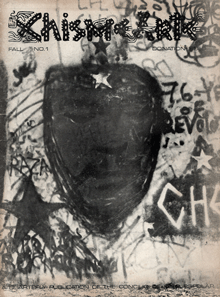
ChismeArte. viia https://faculty.ucmerced.edu/
mmartinrodriguez/
index_files/
vjChismeArte.htm
And ChismeArte magazine became a beacon of art & literature for the barrio. There were few publications doing this for Chicanos/as. With words and art, we shone a light to what the future could be for the community. We were invisible most anywhere else. But here we were for the world to see! I edited or co-edited several issues before funding became increasingly harder to obtain, and unfortunately, we had to shut this project down as well.
Yet, despite government cuts and lack of resources, we found our way, our own resources, and somehow continued to spread the word about the word. During that time, I also became a journalist for East L.A. weekly newspapers, then the San Bernardino Sun daily newspaper, and a union organizer and freelance reporter. I found my footing in the literary arts because of LALWA, with people like Manazar, and the great community of writers, artists, and musicians of the vast Eastside.
I left all this in 1985 when I moved to Chicago, later becoming a writer-reporter for CNN, Westinghouse, and NBC, as well as a leading poet and organizer in the Slam Poetry movement that began there. Chicago is where I founded Tia Chucha Press, which is now the publishing wing of Tia Chucha’s Centro Cultural & Bookstore that my current wife Trini and I established twenty-four years ago in the northeast San Fernando Valley (another story for another time).

 Los Angeles Literature