
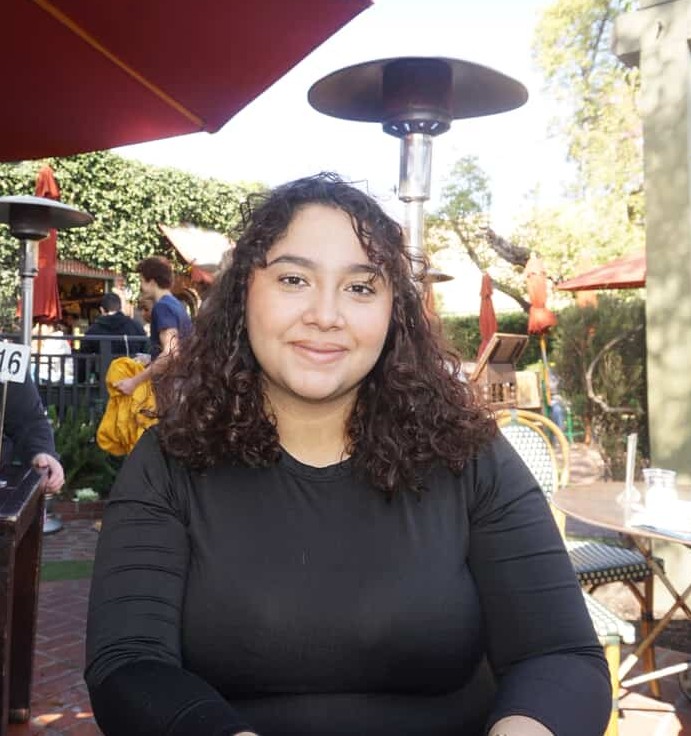
Salvadoran American poet and author Kathrine Preza Leonor is a San Fernando Valley native whose culture, community and city have indelibly shaped her into the socially conscious person she is today. This began when she was 12 as a way to deal with her depression that stemmed from the rampant addiction in her community and in her family.
Writing became a form of therapy.
At the same time, Leonor was growing up as an observant child, socially aware, coming to understand the systemic erasure inflicted upon her community and Central Americans like herself. It resulted in her desire to share both the highs and lows of her culture, “so it could survive for as long as possible,” she said in an Into Hinterland Literary interview.
What drove Leonor to finish her debut collection, Russeting Fruits, started in 2023, was the re-election of Donald Trump, which caused her to be in constant “fear for my own family, and feel[ing] unwanted in [the] country I was born in” to skyrocket. It took a book already exploring why her alcoholic dad left her family; why addiction is so prominent on her paternal side; the pressure, both emotional and psychological, to succeed as the first person in her family to attend college; and the Catholicism that helped her climb out of the storm she was in, to become a broader narrative about immigration, political oppression, and the struggle to maintain identity amid the hyper systemic polarization in the United States.
But through all the racist hate swirling around the country, Leonor remains a moral optimist, someone who cares deeply and sees the dignity of those whom the world tries to erase.
Recently, I asked Kathrine Preza Leonar about her influences on her poetry and writing, local and otherwise and her thoughts on the Greater Los Ángeles literary community.
Brian Dunlap: Who were your original influences on your writing? Poets, writers, maybe even musicians? Teachers? Why and how have they influenced your writing?
Kathrine Preza Leonor: I derive a lot of my influence from boleros and mariachi-inspired music from the 60s. I almost exclusively listen to these genres while I’m writing because I like connecting with my Latine roots as I write. I find it to be important since I try to revive experiences my family faced in their home-country (El Salvador) to have as a collection of history for future generations. I also find it important to write about the intersectionality between being a woman of color in the United States and being a first generation American told they need to still abide by the standards of my parents. Musicians such as Los Panchos, Julio Jaramillo, and Los Iracundos are always on repeat as I write because it helps me keep a flow of my thoughts and keep a consistent relationship with my writing. I find that I mainly write in Spanish then I translate it.
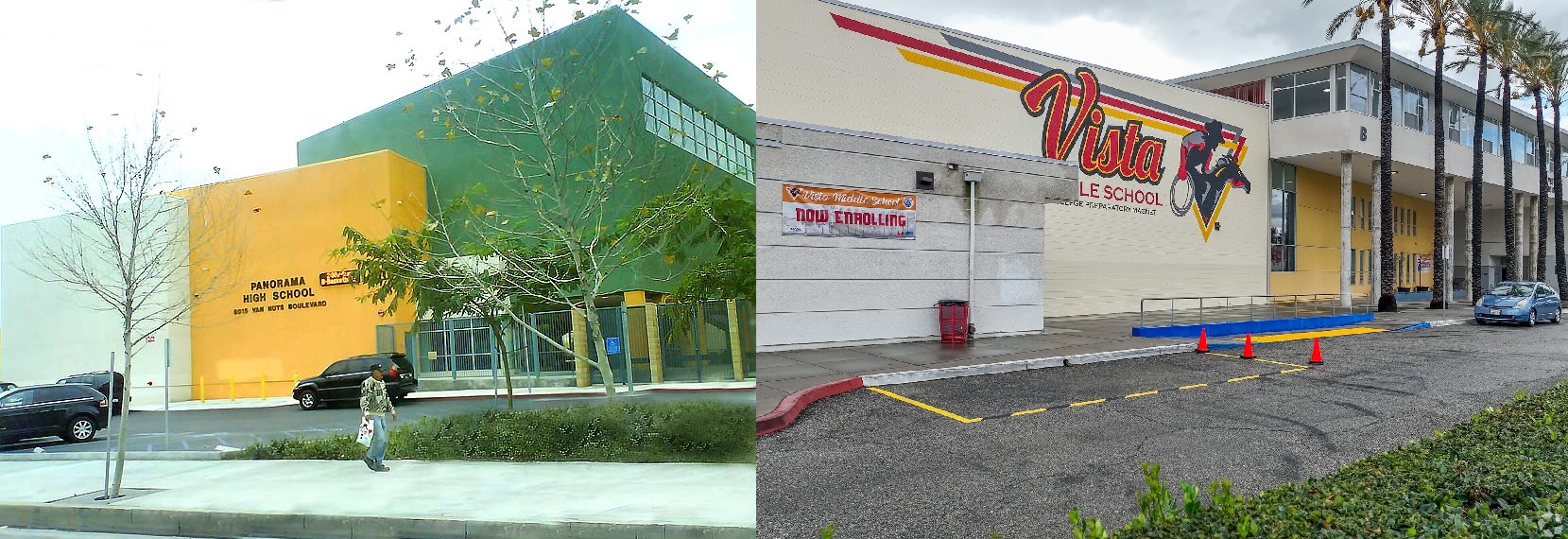
Teachers that have heavily influenced me were my 8th grade English Teacher, Adolfo Carcano from Vista Middle School, and my 9th grade English teacher, Paul Tran from Panorama High School. They encouraged me to keep on writing because they saw a talent I was too shy to express at such a young age. Mr. Tran was always encouraging me to dig deeper into writing and I particularly remember having a lot of fun in his class when he introduced poetry and gothic fiction. He gave me the privilege of finding genuine joy in a classroom. Mr. Tran helped me through many of the challenges I faced growing up in a low-income community (Panorama City) and instances of terror as more people in my community struggled with substance abuse.
As a bilingual author, I have found inspiration in poets such as Pablo Neruda, Maya Angelou, and Sandra Cisneros. Pablo Neruda helped me understand my own voice when it spoke in Spanish and he inspired me to paint a picture with words every time I wrote. I’ve never been huge on romance but whenever I read my favorite collection of his 20 poemas de amor I can’t help but write to a love I hope to receive one day.
Dunlap: What local writers, past or present, have been influential to your writing and/or you’ve fallen in love with? In what ways have they been influential in your writing and/or in what ways have you fallen in love with their work?
Leonor: I met Jessica Wilson when I was in 10th grade because she was the supervisor of the Poetry Club at Panorama High School. She gave me the amazing opportunity of interning for her non-profit organization in 2021, Los Angeles Poet Society, and since then she has helped me so much to grow my political voice and explore different forms of poetry. She’s been extremely influential because she took me in during a time that I was growing uninspired to write because of the abandonment of my father during the coronavirus pandemic. But with her motivation and the vision she helped me cultivate for the direction and intention of my writing, I have been able to amplify my voice. Recently, I have become more into poets such as Peter Lechuga and have been reading a lot of pieces by Sandy Shakes and Michael Robinson. I love the rawness of their voices with the mixture of their fierceness and ‘won’t take any bs’ attitudes.
Dunlap: What writers do you read today, whether poets, essayists, novelists, or others? What draws you to their work?
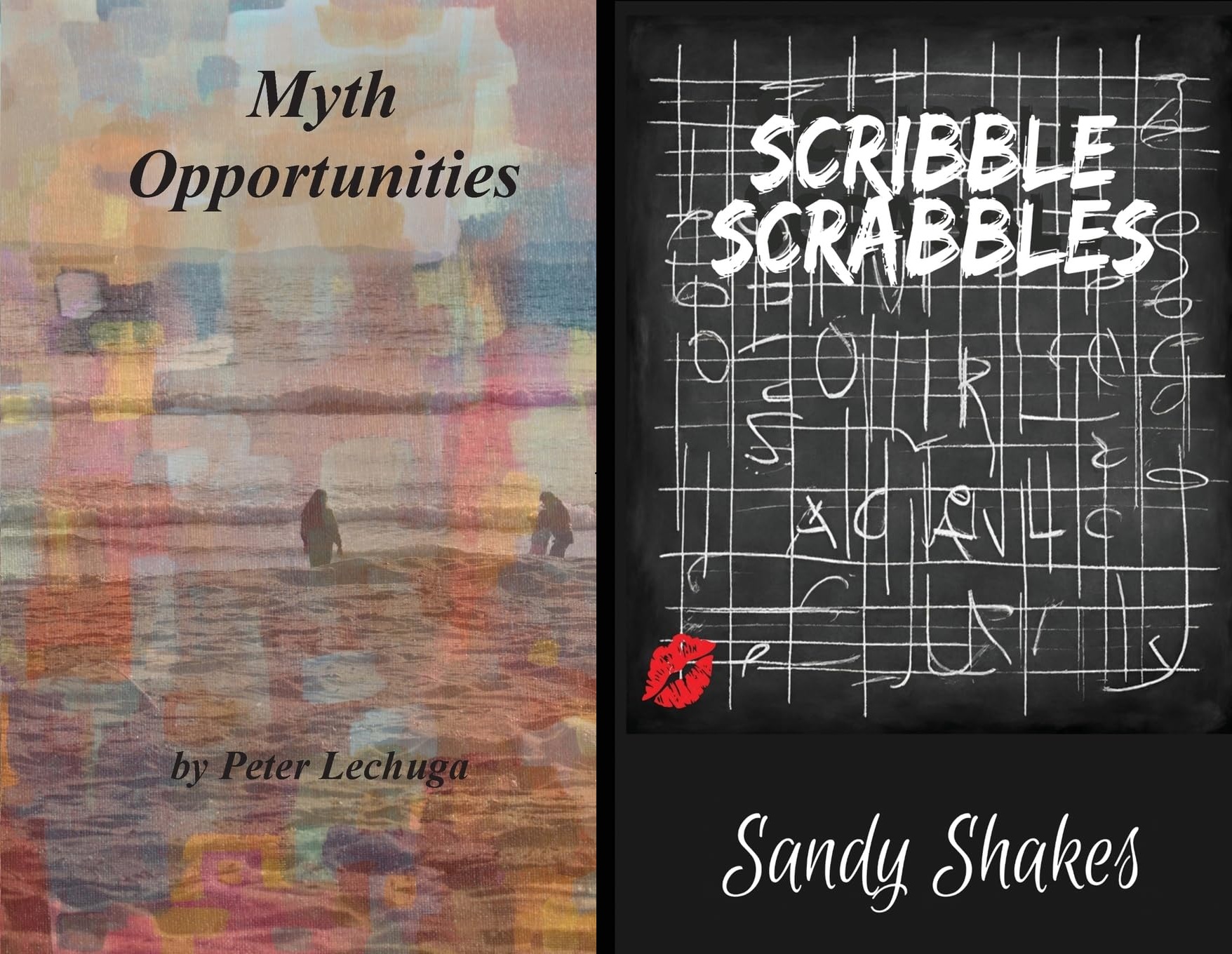
Leonor: As stated before, I read a lot of Peter Lechuga, Sandy Shakes, I wait for updates on Michael Robinson. My most recent read would have to be Memorias de Mis Putas Tristes by Gabriel Garcia Marquez, as I’m trying to read in Spanish more and learn the different writing rules of the Spanish language. Through online sites such as Instagram, I appreciate things about these youth poets that are being published by Into Hinterland Literary, Apotheca Journal, The Shuffle Mag, Cherrypicked Magazine, and The Cove Magazine. Having these digital journals makes publishing more accessible to artists from underrepresented communities, low-income situations, and in countries that are currently experiencing war because we need to speak out on problems that others are trying to silence in the media. We cannot be erased.
Constantly standing up for what we think should be recognized is a protest to the governments who see us—whether it be Latinos, women, other women of color, or people in the LGBTQ community—as inferior or extraterrestrial. On top of this, I am drawn to their philanthropies which include environmental justice, media literacy, political literature, and healthcare.
Dunlap: From your engagement in the local literary community, what are your honest thoughts and opinions about this community, good, bad, or otherwise? Its issues, its positives, and anything else?
Leonor: I love that I am in Los Ángeles because we have such a vibrant, close-knit community. I feel like I know so many people and our like-mindedness and unapologetic outspokenness is so refreshing. I am constantly fascinated by how truly artistic our wider community is from music, writing, art, and photography. In the literary community specifically, I am grateful that we have non-profit organizations such as the Los Angeles Poet Society and other resources such as our multiple small press companies and CLI (Community Literature Initiative). Everyone is so welcoming and is uplifting.
I remember the very first time I showed up to open mics, I was such a nervous mess, but people kept hyping me up and it slowly made me more comfortable in my own skin while on stage. There’s always something going on in LA! Open mics, book festivals, poetry on demand, zoom events, etc.! And people are always happy to plug you into these events as features so that you can become more involved.

 Los Angeles Literature