
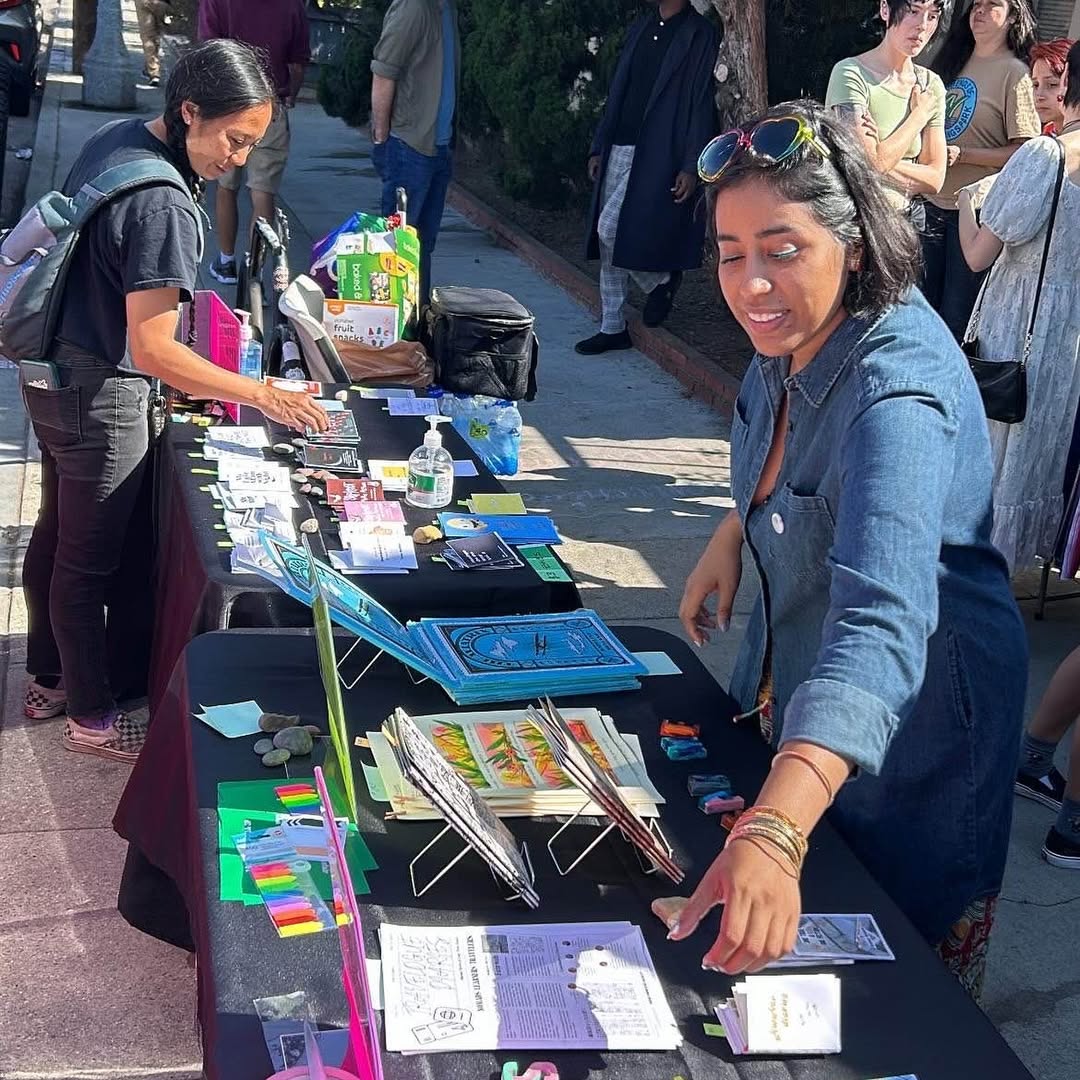
Long Beach memoirist, poet and activist, Ra Avis, is in love with zines. The publishing power it puts back into the author’s hands.
“Zines are magic,” she said in an email. They “are always achingly human…I love how the zine community is radical, and brave, and honest, and scratching away at every border that hems creativity in.”
That’s why early last year Avis sat down with her friend and artist, Evan Chelsee, as a client for their consultation services to discuss how Avis’s work could “reflect [the] idea I was calling ‘achingly human,’ and we made a plan.
What she loved most about zines was how deeply they embodied that very idea.
This consultation occurred before the issues with her brain were determined to be terminal. Residual neurological issues that resulted from Avis being a stroke survivor.
“Neurological problems are strange,” she said in the same email. They are “more hit-n-miss than people realize.” However, as a person who’s had their share of health issues, both mental and physical, she knew she could bring her vision of a zine fest to fruition anyway.
It was after she tabled at last years LA Zine Fest, that the details for the Biggest Little Zine Fair (BLZF) come together.
She found it an overwhelming, but amazing experience. “It presses you into the fold of this county that is just making stuff about what they care about, with what they have.”
“The application for LA Zine Fest, like most fests, asks a lot of questions about experience and readiness, and the tables cost money.” Avis knew she needed a version for her home, Long Beach, that wasn’t as intense and eliminated every barrier to participation. She wanted to “create something…I could take to the poets I perform alongside and say “Hey, turn that poem into a zine. And show it to people so they know what you love doing!”
With past experience founding Kites Library, a free archive of resource-sharing mini zines designed to support impacted people, their families, educators and organizers as they navigate the realities of U.S. incarceration and her deteriorating health, where her neurological problems made it so she was failing cognitive tests that an 8-year-old could pass, but also clocking into work and writing research reports, Avis knew she needed to build a strong team of like-minded community members that fit each role and supported each other like the pieces of a mosaic.
Avis decided to reach out to Chris Giaco, owner of Page Against the Machine, “about the possibilities of revitalizing the zine scene in Long Beach.”
She knew that Giaco loved zines and zine makers and “the way that particular art form reaches into almost every possible demographic and marginalization, and produces creativity that breezes past any expectations,” in the same way she does,. But with such a small bookshop on 4th street, with limited sidewalk space, they were forced to brainstorm how exactly a zine fest would work there. They settled on the idea of shared tabling, where possibly two tables could host up to 30 zine makers. But as they brainstormed, they specifically discussed the “one demographic that I didn’t see much of—newbies, or one-off zine makers, or people whose primary art form was something else entirely.”
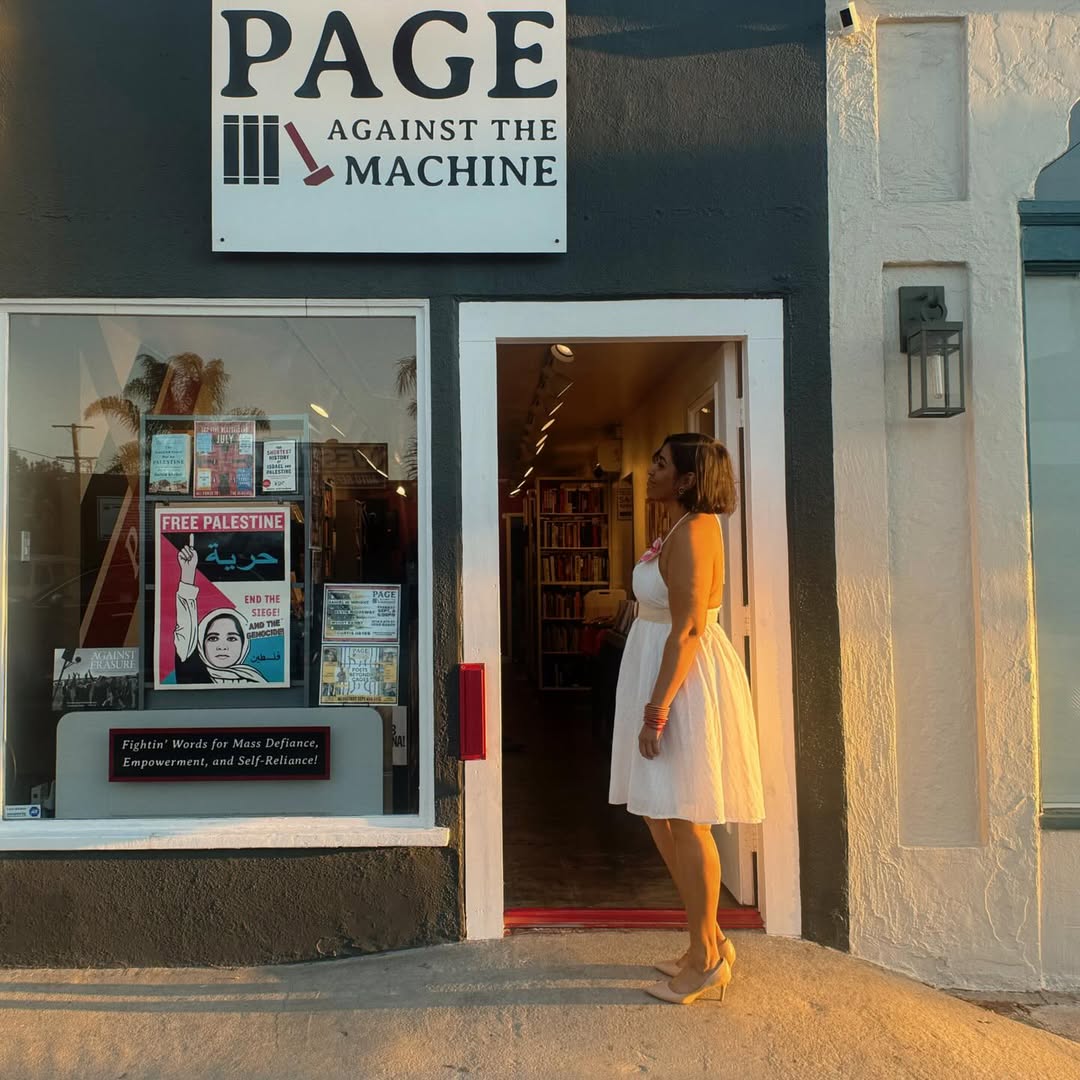
Their conversation ended with Giaco’s commitment to support any project that came his way, and “my commitment to keep an eye out for someone who wasn’t sick to manage it all.”
Ra Avis always had this deep commitment to community. To people. A gentle, but deep understanding about how precious life and humanity are.
In our email conversation, Avis impressed upon me how BLZF is a collaborative project, a team effort. Everyone involved are “all whimsical artists who love people.”
“Bringing together the work of a bunch of artists and creative people was such an easy yes—I agreed basically on the spot, no questions asked,” fellow Founder, organizer and fellow Long Beach resident, Evan Chelsee, said in an email. “And once we really started working on it and the event started to take shape, it was fun and the right kind of challenging and felt like the perfect blend of my skills and interests.”
As a multidisciplinary artist, with a special affection for zines and podcasts, they were looking for ways to create art communities and engage in physical, tangible art. One way was to “lead our zine making workshops.” In this process of engaging with the Long Beach community, Chelsee noted, “In some ways, the goal was just to create the space—to make a container for people to join in. [T]he goal will always be providing a space for writers and artists and activists and weirdos,” and “one that encourages people to make art.”
But, before Chelsee signed on, Avis told her friend Ng what Giaco had in mind and Ng reached out. As an artist and explorer, Ng had been traveling in Japan where she developed an interest in zine making and was looking to get experience organizing a fair or fest.
When Chelsee named the project, Ng was able to use her talent to create a cute logo/mascot they named “Inky the Inkblot.” Still, Avis knew “we’d need media support to help reach people outside of our networks.”
Though she had just met Theron James, as a poetry organizer, photographer and videographer, she had to reach out to him anyway. Despite the fact he was traveling at the time, he agreed. That made “[e]veryone on the team…either an entrepreneur, a communications professional, a business development professional or some combination of these things.,” Avis said.
Avis kept telling her team that they needed to plan for when she was no longer around. That meant she couldn’t put out calls for help or uplifting or supplies on her own social media pages—“knowing that it wouldn’t be sustainable on year two when I wasn’t here,” she said in a Facebook post.
While Avis was still here, there were still many steps that needed to happen in order to bring the zine fair to fruition. With BLZF’s unique structure, they needed more steps than most.
The team tapped into their business talents to get really clear and specific about their mission and scope. Though they’ve refined it over the first year, their commitment was to “celebrate unique handmade zines that uplift diverse voices, social justice, local creators, niche creators and DIY culture…to make publishing and selling easy, no matter your experience level,” it says on their website. It helped them to manage the entire process.
“The Biggest Little Zine Fair works distro style,” Avis said in her email, specifically about “our mini fair.” They also organized virtual fairs and a holiday fair. With the mini fair they do a call for submissions, allowing everyone to submit three zine titles max, for free. They accept them, using a rubric they created to minimize bias.
After the accepted zines are mailed or dropped off at Page Against the Machine or Recreational Coffee, they sort everything, bookmark them with prices and use Airtable, a spreadsheet-database hybrid, to keep track of where they are in the process. After, they advertise and market, hosting at least one workshop before every fair to make it easier for an “absolute beginner” to learn how they can be a part of it.
At the fair, they tap into the Long Beach community by staffing it with volunteers and help attendees to buy the zines they love by using a temporary self-serve Shopify set up. Once they inventory everything afterward, they ensure they pay out 100% of the proceeds to each zine maker.
“Everyone involved knows how to build systems that don’t depend on one person or thing,” Avis said in the email. “As a stroke survivor who was dealing with residual neurological issues, this was especially a relief. I felt comfortable pouring in what I could, knowing that if I couldn’t, we would have a system that took care of everyone.”
Avis began to write poetry after she was released from her 437 days of incarceration in 2016, to process her experience. What resulted was her debut collection Sack Nasty: Prison Poetry, centered around her incarceration, exploring the illusion of dignity, the malleability of justice and the fluidity of the human condition.
As part of her experience, she suffered an injury that followed her back outside into the world. “What began as unhappy blood gathered by a hip injury exploded like tiny stars into her brain,” causing, “what doctors [called] mini strokes,” it led to the high-risk neurological systems that put the zine fair team on alert.
“Our volunteer team was made up of friends,” Avis said in the same email. “I was losing my eyesight much of that first year, struggling to remember things, and experiencing a lot of pain. I needed someone with me at all times, and all my work needed some level of proof reading.” They made a quick check-in system, some stayed longer than they needed to and everything was fine.
“I’m glad to say I was part of that community care.”

It was the team’s business gifts of systems building, space management, risk management, brand design and communication, data tracking and reporting, automation, curriculum design and resource coordination implemented through a creative and community lens, that ensured BLZF maintained its aspect of creative community empowerment. To shift peoples focus from the product itself to the impact the story or poem has and how the creative, the writer, wants to convey that impact outside of the expectations and gatekeeping of the literary industry.
“We put together a basic impact report,” Avis said in her Facebook post, “but the impact stretches far beyond numbers.”
Throughout this time, Ra Avis was also planning for the end of life. “My brain was shuttering,” she said in a Rarasaur blog post. “…the doctors were kind,” and “I reminded my roommate that I wanted to be cremated in my dinosaur suit.”
She met with a friend, “asked his business to carry” on a part of what she’d leave behind and scheduled a blog post.
Miraculously, doctors identified the cause of her neurological symptoms and the treatment finally worked.

 Los Angeles Literature