

Marc J. Cid is a Filipino American spoken word poet from Downey, California who uses humor as a device to engage audiences with the heavy themes he explores in his work, including suicidal ideation, bereavement and the human experience in terms of interpersonal relationships and emotional consequences. This approach is clearly on display in his performance of the poem “Never Date a Poet,” where he employs witty observations and playful exaggerations to explore the quirks and challenges of being romantically involved with a poet.
At one point Cid says, “does that sounds like fun to you, shouting ‘what’ after everything I say?” — a nod to how audiences shout that same question after every pause wrestler ‘Stone Cold’ Steve Austin takes during his in-ring speeches. Immediately, the audience joins in, repeating the question each time Cid pauses. They are now invested in the creation of the poem so when they laugh after saying “what?” when it follows a line like “never skip leg day,” an absurd out of place piece of advice, they help to highlight how the advice to never date a poet falls into the same category of overused, meme-like advice.
When I first saw Cid read, I was put off by his use of humor, feeling that it undercut the importance of the heavy themes I thought people didn’t engage with often enough. But as I listened, I realized the humor didn’t weaken his heavy lines—it made them hit harder. I noticed after hearing such a line, that I wanted to sit with its impact and its meaning. I noticed how thoroughly he understood the way humor and seriousness worked together and played off each other, creating poems that were deeply complex yet somehow still easily accessible.
Watching his performance of “Never Date a Poet,” it’s obvious that through his relatable humor—with lines like “catches shit talk like a Pokémon master/you’re gonna catch them all” and “I hope I got my shades on me…/steampunk goggles/with a padding I use for snowboarding/on warmer winter days”—Marc J Cid creates an interactive atmosphere that is both warm and inclusive, that brings a communal energy to his words.
Recently, I asked Cid about the influences that shaped his unique way of blending humor and seriousness in his poetry, local and otherwise and his thoughts on the Greater Los Ángeles literary community. The interview has been edited for both length and clarity.
Brian Dunlap: Who were the original influences on your writing? Poets, writers, maybe even musicians? Teachers? Why and how have they influenced your writing?
Marc J Cid: The earliest influences on me would be the authors that got me reading for fun in the first place, J. R. R. Tolkien and Phillip Pullman. Pullman showed me that you could write a story about deathmatches between sentient armor-clad polar bears, that’s actually about the personal and societal harm caused by organized religion. Tolkien validated my creative spark when I had few other sources of that. I took a literature class centered on Tolkien back in college and, his essay, On Fairy-Stories, was the first time I came across a grown person who took works of fantasy seriously.
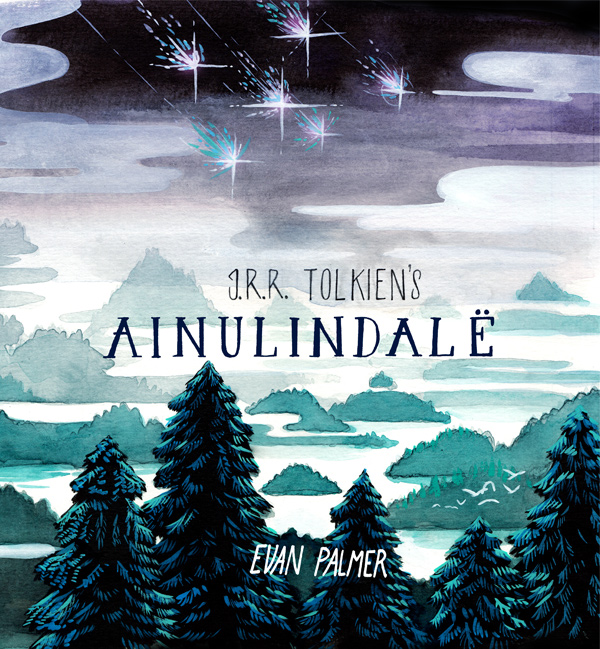
Tolkien wrote of the concept of sub-creation, both explicitly and within the themes of Ainulindale. It was a radical concept for me, not only the idea that creative endeavors for their own sake are a natural aspect of being human, but that there were people older than my [immigrant] parents and grandparents out there, who not only tolerated the creation of imaginative art with a notable absence of scorn, but who were as genuinely fascinated by it as I was.
The first poets I ever enjoyed were Emily Dickinson and Sara Teasdale, back in high school. Dickinson was mostly confusing, but she was confusing and interesting, instead of confusing and boring, which was how I saw most poetry at the time. My enjoyment…was purely a matter of spontaneous response, and I haven’t tried to analyze that since then. [However,] I remember she felt like a breath of fresh air (compared to the likes of Whitman, Wordsworth, Williams, Pound and Eliot, for example, who did nothing for me back then).
While the majority of my poems do not use rhyme schemes, sometimes I read one of Austin’s poems, and feel as though her and I have written from identical prompts. [Also,] I admire how she has a distinctive and consistent poetic voice, but she decides to use it to write a poem about how people fall from grace and hit rock-bottom (“Crumbling is not an Instant’s Act”), and also to write a poem about how weird mushrooms are (The Mushroom is the Elf of Plants). It give me the impression that Emily Dickinson had a lot of thoughts and poetry was her go-to method of processing them.
In college my textbook favorites were Langston Hughes and Shakespeare. Matsuo Basho and Kobayashi Issa were also influential for me, in terms of juxtaposition and humor. Regarding humor and juxtaposition, I realize it’s more specific to mention the literary technique of bathos—the juxtaposition of the commonplace/mundane/banal with the grand/profound/lofty, which can be used for humor and poignancy. Most people I know think of traditional haiku as being about nature imagery, or having to do with Zen Buddhism. The Haikus that inspired me the most do indeed have those elements, in addition to an unflinching commitment not to edit out any corner of the experience of their reality that would impinge upon a remanticizable image.
[For example,] I have a poem I wrote [,“Never Date a Poet”,] where I spend approximately a third of it discussing the technique of grey-rocking (a response to managing interactions with abusive or manipulative people), the themes of Jane Austen’s writing and the character of “Stone Cold” Steve Austin (along with certain topics common in professional wrestling). I probably would not have thought to put all those things in a single poem, if I hadn’t seen how Basho and Issa incorporated the subject of human waste into a poem.
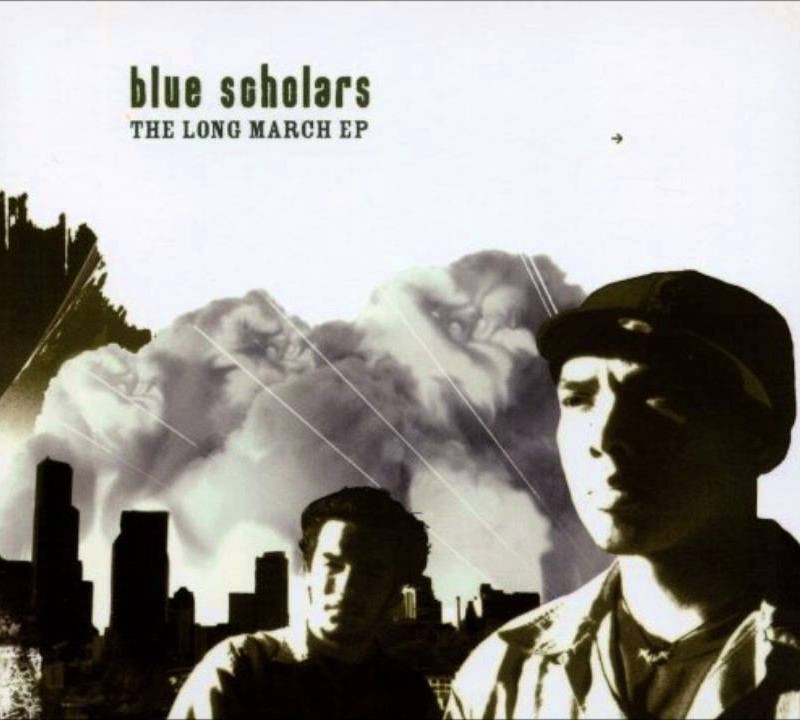
On the music side, Flobots, Aesop Rock, Blue Scholars, and Typical Cats are among the many inspirational hip-hop artists whose lyricism and flow I enjoyed for years, long before I wrote my first poem. They showed me that art does not have to choose between being entertainment, and being empowering.
As far as teachers, the workshops of Eric Morago and Nancy Lynée Woo got me to read other poets, and learn form poetry, and other aspects of the craft I wouldn’t have looked into if left to my own devices. [That’s because] the oral tradition was more familiar and learning more about form poetry was necessary for me to consider how my own writing looked on the page.
Dunlap: What local writers, past or present, have been influential to your writing and/or you’ve fallen in love with? In what ways have they been influential to your writing and/or in what ways have you fallen in love with their work?
Cid: I’m sure I could double or triple this list if I had more time to think about it, but Steve Ramirez, Gahl Liberzon, Christian Perfas, Nicole Connolly, Brendan Constantine, Matt Rouse, Joe Limer, Greg Thorpe, Terri Niccum, Ra Avis, and G. Murray Thomas all spring to mind.
Now that I look at this list, I see that these poets are all incredible at meeting horror with humor. When someone’s laughter in the face of despair becomes contagious, there’s an art in its composition, and in the fact that it makes necessary connections possible. And since in terms of style and pitch they’re all so different, I’ve learned a lot about what my writing is, and what I want it to be, and the kind of writer and community member I’d like to be, through comparison and contrast.
Nicole Connolly has a poem (whose name I can’t recall, unfortunately) about messing around in the character creation portion of an MMORPG with a friend, and trying to help her friend make the most monstrous, intimidating and grotesque abomination that the game will allow. It has a gleeful, irreverent and overall fun tone. But a later part of the poem reveals that not too long before, the speaker had helped that friend escape an abusive living situation with a violent man. It adds a new dimension of meaning to the first part, and shows that sometimes, you can work through things in a way that unmoors them, if temporarily, from the painful memories they come from.
I think a number of my poems follow a similar structure. Starting with a seemingly-innocent, light topic, then adding recontextualizing information. It allows me to ease readers in, before hitting them with the sharp bend in the poem. Part of me suspects that if I don’t, people won’t read it. Another part thinks the twists and turns are the main reason to ride it. But it’s a thing I often find myself doing when writing about heavy topics.

The poets I named above became friends or at least friendly fixtures, who often tipped the scales on my choices to check out a new open mic, or join them at a reading with a feature I never heard of. They encouraged me to write contrapuntals, and compete in slams, to co-host open mics and workshops. [It’s their] presence at events and within the community [as] generous, gracious, wowing people on stage and connecting with others off it. I guess I remember to wonder how I come across in the community, because I’d hope to be akin to them, rather than someone who clashes with that. The poetry communities have actually been a pretty significant part of my resocialization process, so I’d like to help make the ones I’m at feel as welcoming, safe and inspired as these poets have helped me.
Plus, the peer pressure of everyone else has published a book, why not you? aspect that I seem to have opted into.
Dunlap: What writers do you read today, whether poets, essayists, novelists or others? What draws you to their work?
Cid: Matthew Olzmann wrote a poem called Epithalamium That Refuses to Ignore the Possibility of a Zombie Apocalypse, and I would unironically ask someone to read it at my wedding. It’s the person-to-person tenderness set against the worries of a collapsing civilization. The vow to show up and help you find safety, when there’s so much out there aiming to isolate and then consume us. And comedy and horror are closely related [because] punchlines and jump scares often have similar progressions.
Beth May writes about mental health, and pulls off run-on sentences and these things that sound like they’re becoming tangents but are actually totally relevant, all of which is right up my alley, or an alley I aspire to cross through to arrive at poetry.
[Jessica L.] Walsh is the most recent poet I’ve been reading and I’m still trying to wrap my head around what she is doing craft-wise to create effect. I like the way Jessica L. Walsh writes about herself. It’s unapologetic, but while I’m reading her poetry, I forget that the urge (and the urging) to justify oneself is even a thing. The feeling I get is of what comes after a hard-fought battle for authenticity, as it becomes one of those things so profoundly true that pointing out its existence is both obvious and surprising. Like, did you know that the national animal of Scotland is the unicorn? I didn’t know that was allowed. But if I grew up in Scotland, I’d probably sometimes find myself taking for granted the fact that no other country has chosen a mythological creature to be its national animal.
[At the same time,] my half-formed thoughts on her writing go something like: “I have yet to earn that level of confidence.” I have a knee-jerk avoidant response to the prospect of taking myself seriously, because I’m afraid of stumbling into the deep end and becoming one of those people who takes themselves too seriously and don’t even know it (assuming I’m not that already). And then I read Walsh’s work and wonder how high I’d score on some psychometric measure of neurosis.

most personifies death. via Amazon
Terry Pratchett is always a treasure to return to–his particular blend of biting satire (though it goes through periods of nibbling and gnawing for the sake of variety) and affectionate play with genre and narration. But for all I love his style and sense of humour, it’s the themes that run through his many books that keep me coming back–the interplay between cynicism and idealism, the existential philosophy that arises in a setting where the personification of Death begins to like humans and trys to understand and even imitate us, and Pratchett’s concept of militant decency.
Dunlap: From your engagement in the local literary community, what are your honest thoughts and opinions about this community, good, bad or otherwise? It’s issues. It’s positives and anything else?
Cid: It’s difficult to generalize, because each space is different, which means there’s something for everyone out there. I like a space where developing the craft of writing is encouraged, but excellence is not demanded. Elitism, favoritism, and stylistic homogeneity are examples of things I would not want normalized in any community I’m a part of.
I’ve seen conflicts arise at events, often due to misaligned expectations and emotionally-turbulent atmospheres. There are no universal rules or regulations at poetry events, and navigating uncharted waters comes with risk and confusion. I think the question of whether or not a particular community is safe should not be an afterthought. If Building Safe Communities was a panel discussion at a conference, I would want to attend as an audience member, but I’m afraid I don’t have a solid answer right now.
A place where polished, high-energy pieces are the norm can be intimidating. A place with a bunch of confessional poets sharing their first drafts can become vicariously traumatizing in the aggregate. A place with a bunch of impassioned poets speaking out against social injustice is an increasingly brave and endangered thing.
And in this time, when troll-tongued demagogues water down words, mangle their meanings, and burn effigies of truth, to keep the hateful and callous entranced and goose-stepping to their whistles and drums, I’ve grown increasingly grateful for the wider literary community. Going out into the world and elevating language is a brazen and necessary thing to do. It always has been.

 Los Angeles Literature