

As an active member of the Greater Los Ángeles poetry community I have come across dozens, if not hundreds of chapbooks. All the chapbooks I’ve seen look and sound like chapbooks, meaning they usually have 10 to 20 poems. They are 20 to 30 pages long, they either have one central theme or are just a mish mash of poetry, they are usually stapled and are about as thin as a flour tortilla. which is perfect standard for a chapbook.
However, when I was asked to review this chapbook, Scribble Scrabbles by Chicana poet Sandy Shakes, it didn’t feel like one of those regular chapbooks. It felt like a full-length book. What I mean is this: this chapbook sports a very stylish matte cover, it has an actual spine, it has a foreword written by a distinguished artist, writer and filmmaker Ms. Elvia Susana Rubalcaba, it contains a table of contents, it has an acknowledgements page, contains artwork, it has a blurb written by a poet laureate, and it is 73 pages long. For these reasons and despite its 11 poems and small size, this collection is more than a chapbook.
Scribble Scrabbles spoken truth stories by Chicana poet Sandy Shakes is not just a poetry collection, it is a body of work that takes the reader on a roller coaster ride within the privileged neighborhoods and underserved barrios of modern-day Los Ángeles.
This collection challenges the stereotypical depictions of a cultureless Los Angeles by presenting poetry that honors and promotes the culture of Mexican American Angeliños who’ve had a major presence in the city since its founding in 1781, before California became a state. This body of work expresses humbly Shakes’ experiences as a woman of color and a Boyle Heights native, in Los Ángeles, through her heart, eyes and tongue. This does not only add a firsthand voice of authenticity to the work, but it also lends itself to a firsthand review as well.
When the public thinks of Los Ángeles we mostly visualize Hollywood, Beverly Hills and associate celebrities and the glamorous life. Rarely does the media tell the stories of the city’s working class, the backbone of Los Ángeles. While most Mexican characters in film are usually the stereotypical gang member with a limited vocabulary or the immigrant street vendor with nothing to add to the plot, Scribble Scrabbles does the opposite by entering inside the lives of these everyday characters and presenting them in an intimate, vibrant and colorful true form.
With a title like Scribble Scrabbles I didn’t know what to expect from this Boyle Heights poet; a title suggesting an informal collection full of Shakes’ thoughts. But I soon found out as the first poem “Dear Diego,” is a comedic ode about the artistic duo of Frida Kahlo and Diego Rivera.

This piece is a persona poem from the perspective of Frida’s divorce attorney, but as if he’s reading Frida’s own words. Shakes uses Frieda’s words to take back the power from Diego, to show the collection is one that challenges traditional gender dynamics of women of color as passive or subjugated. The poem establishes the creative wittiness of Shakes with lines that urge Diego to “swear under oath…/ that FRIDA KAHLO was the/ missing brush stroke in your masterpiece.” Though the tone is comedic, the language manages to be powerful and drenched in truth with lines like “It is no surprise that FRIDA was able to/ seduce your favorite prostitute…” Its one-sided monologue gives “Dear Diego” a theatrical feel to it, almost like a one-woman play, challenging the situation’s traditional male point of view. With such layered poems, one theme that remains consistent throughout Sandy’s work is the promise of hope and she makes it clear with lines like:
	Thanks for the celebration dinner after I failed my
	driving test, 1, 2, and 3 times…

	I’ll never forget your, ‘Fuck them Mija, who
	needs a license anyway.’

	And that was the only blessing I
	ever needed.
This hope may be at odds with how the media has convinced you that in L.Á. gangs and violence are rampant. However, the women Shakes depicts are much tougher than they seem. In her second poem, Carmen, Shakes introduces her grandmother, Carmen, who “has the power to kill scorpions with her/ fingertips.” It’s easy to see where Sandy gets her strength from as she describes her grandmother as a child who, “put a stop to her Mother’s daily beatings…told/ her father it was the last time he disrespected/ her physically.” The stereotypical Mexican woman as being submissive and docile is contradicted as Shakes paints her as the radiant wonder woman who, personally, carried her lineage into the 21st century. But women are not the only brown colored heroes she mentions.
Usually, we only hear one side of the story: the man who abandons his wife and children. But what about the men who take on the role of Stepparent? Sandy gives flowers to the stepfathers of L.Á., who raise other people’s kids, in her poem titled, Para Todos Los Padres. In this poem, Sandy credits her own stepdad when she writes, “you heal the broken. You are my favorite Neosporin,” and “Men who pick up an/ entire VILLAGE…/ AFTER it’s been looted.” This poem really hit home because so often men are depicted as villains, and hardly do we get credit for picking up where others left off. On behalf of all the men who have been at one time or another, stepfathers to other men’s children, thank you Sandy.

Another aspect to love about Scribble Scrabbles is the way Shakes highlights the role of immigrants in the United States of America and specifically in Los Ángeles. While some politicians will tell you that immigrants come here to take from this land and to leech off the system, Shakes tells the silent truths about foreign labor and how it has been an integral part of the foundation of this nation and to her neighborhood of Boyle Heights. In her poem, Personas de Bajos Recursos, Shakes reminds us of the forgotten role that Mexican immigrants have played in building the country’s wealth. She describes the toils that her pension-less grandfather had to endure as part of the infamous Bracero Program. This hits home as my father and grandfather were also part of that same program that used the bodies of brown men for little to no pay until said bodies were considered useless. Shakes corroborates this notion of exploited foreign labor when she writes:
	My grandpa made the journey, left his family
	and worked under the scorching sun...
	got paid insulting wages...

	his hands...
	were permanently deformed...

	the cost of his labor of love.
To those who may not be aware, immigrants are not only selling tacos out of taco trucks or oranges on freeway exits, as famously seen in Los Ángeles, as Shakes most poignantly states, “immigrant drops of sweat, blood and grains/ of hope mixed in the building materials/ of some of America’s oldest institutions.”
In the same poem, Shakes takes a jab at the corrupt judicial system in America when she compares the excessive amount of years a young brown youth will receive in prison in comparison to some well off exec who gets off with a slap on the wrist when she states that, your “crimes will be pardoned if your skin looks/ PRESIDENTIAL.” More evidence of what Shakes refers to as the “American tradition of injecting nightmares” into the lives of people of color.
Scribble Scrabbles isn’t just a well-orchestrated book of poems, it is also a reflection of our current political landscape. By directly exploring politics, Shakes includes more than one central theme, adding more depth to the collection than a typical chapbook. She combines the politics about the failures of leadership with political activism to express her and her community’s anger at the lack of true change. She writes “tell us we were right to turn our backs/ on you…submit your resignation letter and/ recommend us a leader that we can believe/ in again.”
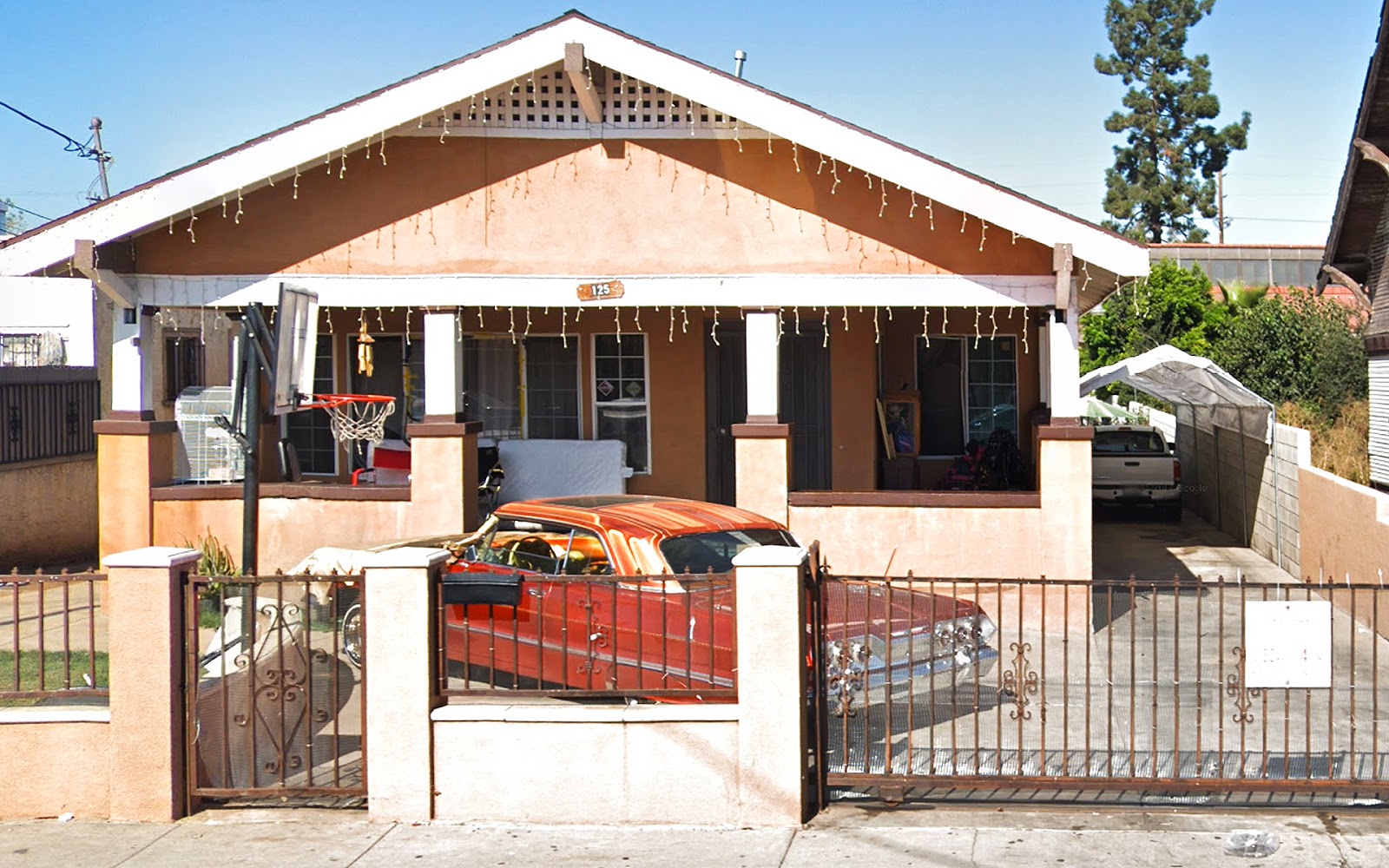
Scribble Scrabbles encapsulates the heartaches of a first-generation daughter, a Chicana single mother and an average human being with a love for her city and community with losses and blessings dealing with the beautiful and the hideous aspects of society. Shakes encapsulates the deep, beautiful ties she has with Boyle Heights through the knowledge of her community’s history.
	These were small immigrant homes. These
	were where a mouse named “Fievel” could go
	west and rest…if he was Mexican or Japanese
	or of jewish decent.
Another thing I loved about Scribble Scrabbles is its size. This book fits in the palm of my hand and in my back pocket. It is almost the size of an average phone, yet the font is the same size as a standard book (6” x 9”) which makes it perfect for a quick read during lunch. The size of the book is something I have not seen before in the Los Ángeles poetry scene and it really works, as a dose of truth on the go.
Overall, Sandy Shakes has created a classic. An original body of work that flows from start to finish. Scribble Scrabbles made me laugh, ponder, and even shed a tear with its beautifully composed stanzas and straight forward language. Scribble Scrabbles is a book I recommend to readers young and old from all levels of society. Sandy Shakes says it best. She “invented a new suspense for me…and I was ready to baptize in this experience.” If you support or are intrigued to know more about authentic Mexican American culture in Los Ángeles, Scribble Scrabbles: spoken truth stories by Sandy Shakes is definitely an accredited source.
 Los Angeles Literature