
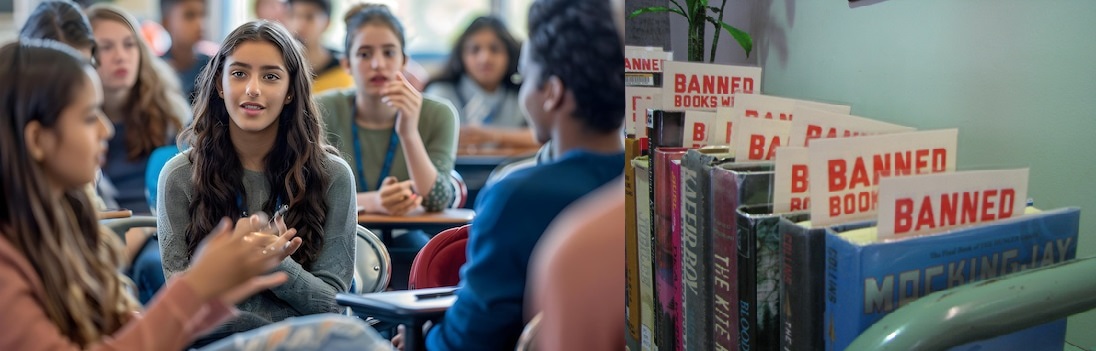
Since 2020, over 300 different bills have been proposed during the legislative cycles that directly target the teaching of topics involving race, gender, LGBTQIA+ identity, and American history. But the effects of this disturbing statistic are not just isolated to southern states such as Texas or Florida.
When professor Wayne Au was invited to present at school conferences in the San Bernardino and Riverside K-12 districts, he didn’t expect there to be any issue with his material—however, the night before he was scheduled to present, he received a message from the assistant superintendent of the district. Au was told to cut the slides in the presentation about the recent retaliation against teaching critical race theory (CRT) in schools, as well as the slides about the attack on LGBTQIA+ books and content in the classroom in multiple states. Ultimately, his presentation was canceled for the following reason: “that the content could possibly upset or offend parents and the board members.”
The current movement of classroom censorship can be traced back to at least 2020 following the Black Lives Matter movement and the murder of George Floyd that sparked the racial reckoning of the country’s history of systemic racism. To block CRT and education about racial injustice, over 40 states proposed bills that would disallow teachers in various ways to talk to their students about anything related to the country’s racial history and diversity. These “gag bills” or “gag orders” were approved in over 15 states but were not limited to the state level. Locally, school boards, administrators, and parents also pressured faculty. One local example is “Moms for Liberty,” a group of conservative parents who created a hotline where people can report teachers violating laws or policies regarding the teaching of CRT, LGBTQIA+ and other related topics deemed “sensitive.
”Yet, school is where children are supposed to learn the skills that will translate into meaningful livelihoods, and ideally, it is a place where they can grow, learn, and be challenged. At its core, education is where children learn to practice sensitivity and empathy for themselves and others. Silencing presentations like Au’s undermine efforts to educate children about systemic discrimination and the importance of having a voice. Teachers have the most important job and consequently the most demanding task in the educational process: caring for each student’s well being while also drawing out their potential and guiding them to excel academically. While this is already a sizable challenge, the past three plus years have added unprecedented societal, cultural, and technological pressures to being a teacher even in Southern California.

Due to teachers being caught in the crossfire of a cultural and political war escalated by COVID-19, they have become forced to teach in spaces with varying levels of restriction on what exactly they are allowed to say and teach. At a nationwide level, the amount of current teachers has dwindled with 300,000 resigning from 2020 to 2022 according to the Bureau of Labor; this decrease is cited towards the lack of support in the profession, low morale, and low pay. And, according to an analysis conducted by the Washington Post, 160 teachers in the U.S have been let go from their position in the past year for talking about “controversial” topics either inside the classroom or in their personal lives. These flagged activities included one teacher attending a drag show on the weekend, and another who hung a Black Lives Matter poster in their classroom.
While these cases most directly affect the lives of the teachers involved, such unjust firings affect POC and LGBTQIA+ students severely. Having an adult be a source of support and understanding for students who identify as part of a marginalized community can give that child confidence, and a sense of security and sanctuary. Grace Charles, an aspiring high school screenwriter, feels strongly that while Los Ángeles in itself is extremely diverse, the representation of different identities in its education system can be inconsistent. “Being a black female screenwriter, I strive to make my scripts include characters that reflect the underrepresented black communities in L.Á.—at school, I felt a lot that the books we read, movies we watched etc., never truly portrayed black communities.” Charles also remarked on how she believes censoring certain stories can negatively affect a child’s self-worth. “When you are teaching kids about the world around them and themselves, they internalize everything—not seeing themselves on the page or on screen, kind of creates this idea that they are ‘less than’…invisible basically.” Visibility in books, movies, and other learning materials can be educational for some students and validating for others. “Seeing ourselves” gives us confidence and understanding.
As a student who transferred from a public school to a private one, Charles felt there was a more diverse and comprehensive curriculum at her new school. As private institutions are not funded by the national or local government, they usually operate under their own independent bureaucratic system. In many cases, this difference allows for more “in-house” decisions regarding curriculum and permitted content.
Charles’s current school, Crossroads Private School for Arts and Sciences located in Santa Monica, has taken a particularly strong stance against censorship in the classroom. Crossroads teachers are allowed to bring in materials spontaneously to enrich their lessons, as well as talk about sensitive topics with their students.
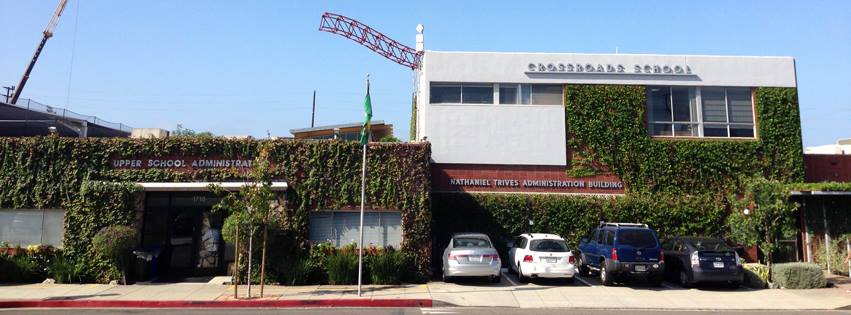
One English teacher there in particular, Nika Cavat (who has taught at Crossroads for over 30 years), described the joy of her job existing in the engagement evoked by being able to use diverse materials. “To bring the world into the classroom, and have it be manageable, digestible, curious, and sometimes even anger producing for the students is quite empowering.” Cavat’s freedom to choose her teaching sources directly reflects on what her students reap from their learning; they are able to ruminate on difficult topics in a curious space confidently.
Celeste Molina, a seventeen-year-old writer and art critic, was one of Cavat’s English students last year, who feels she greatly benefited from Cavat’s choices of teaching materials. “Nika’s English class last year was easily the most enriching one I’ve taken yet—I attribute its value in no small part to the challenging literature and media that we engaged with daily.” After the class read a chapter of Beloved for homework, Cavat would open the class to discuss what questions or connections her students had that were evoked by the novel.
As Crossroads is overseen and governed by a board separate from the government, the school is at liberty to teach challenged material and protect their teachers and their methods.
As a humanities professional, Cavat greatly prioritizes treating any text with respect and a close eye; for the first time in 15 years, she taught Molina and the rest of her class Toni Morrison’s Beloved, which recently ranked as one of the sixteen books removed from hundreds of Florida libraries this past year according to Time Magazine. Molina found this book to be the most impactful she had ever encountered: “Beloved was incredibly dense and layered with disturbing imagery, allusions, and themes that covered topics of generational racism, cruelty, and infanticide. While reading this kind of a novel was hard, the opportunity to absorb such powerful concepts in a controlled setting let us learn how to engage with them in our lives, and how these themes apply to our greater American history as well.” By not shying away from strong texts that dive into perturbing ideas from non-normative perspectives, Cavat’s students are trusted both to create their own meanings, and to truly engage with humanity in some of its rawest forms. While the topics that Cavat introduces might upset or inspire different perspectives, that is the very core of her method: coaxing a sense of individualistic opinion and thought from her students through relevant issues.
Regarding the recent educational and literary censorship in Florida and other moderate and conservative states, Cavat offered an insightful perspective on how we should see the recent purgings of Florida libraries, and the persecution of its public school teachers for teaching works by black authors that address topics like the history of slavery in the United States and police brutality.
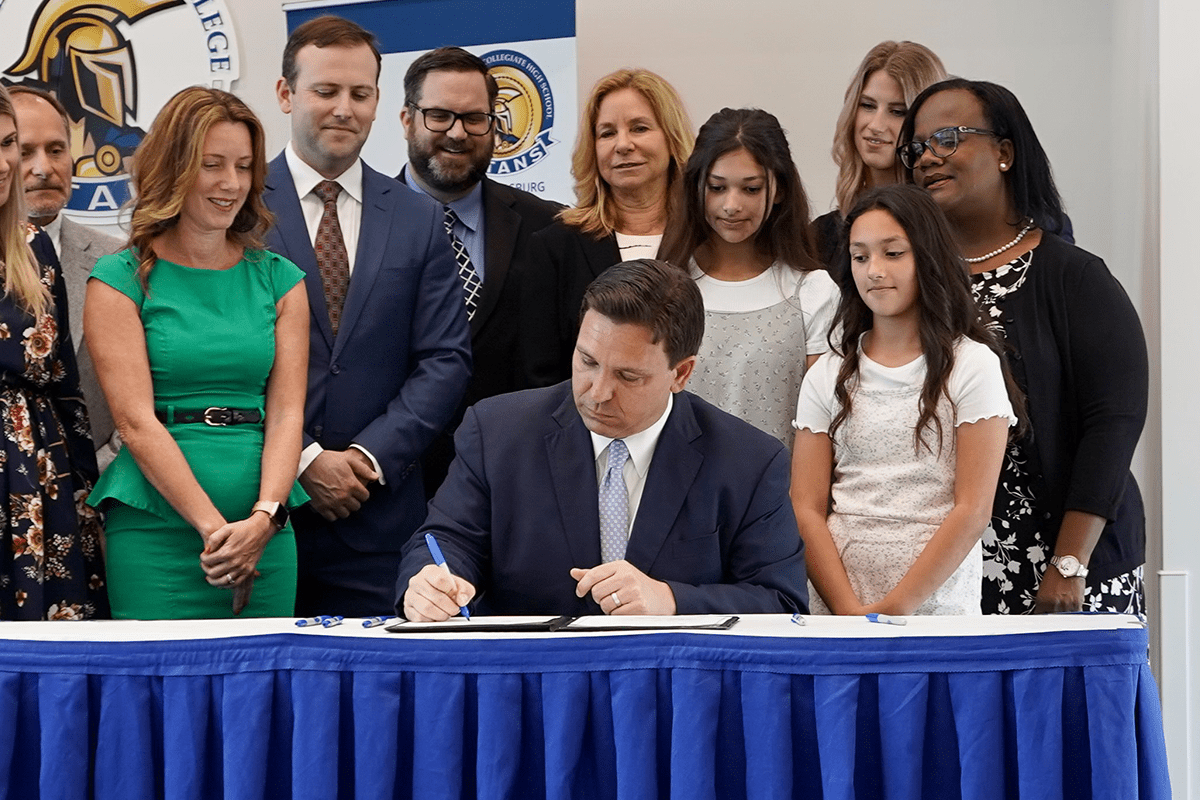
State and local politicians, parental groups, organizations, and school boards often engage in fear-mongering to rally support for legislation like Florida Governor Ron DeSantis’s Stop W.O.K.E. Act (Wrong to Our Kids and Employees Act) and the “Don’t Say Gay” law. Both bills are examples that restrict discussions of sexual orientation and gender identity in Florida K-12 classrooms as other bills aim to ban the teaching of CRT.
While Cavat’s teaching method is the antithesis to these laws, she believes that the Florida politicians responsible for the challenges to more than 2,700 books are inarguably human at the end of the day. She doesn’t view the “book banners” as the enemy, but as a group of people enforcing a xenophobic ignorant ideology motivated by fear and ulterior political aims.
In addition to the steady encroachment of censorship in school libraries and English classes, teachers are also having to contend with another stressor. Artificial intelligence, or AI, recently popularized through the generative web tool ChatGPT, has not only redefined the possibilities of plagiarism, but its popularity among students has become another element for teachers to monitor. Whereas book-banning threatens the erasure of important perspectives in the classroom, AI could take away a student’s original voice. As the software can generate a written answer to a prompt in a matter of seconds, children lose their learning. They aren’t developing their voice. Teachers don’t assign work just for it to be completed; they assign work so that their students can critically think and exercise their skills of critical thinking and personal narrative.
According to a study conducted by the Pew Research Center, 1 in 5 students say that they have used the chatbot for schoolwork in the past year. For many teachers, originality in their students’ work is paramount; there are no learning benefits to written homework or in class work that is done by a chat bot. Thus, many teachers have responded by quickly demonizing ChatGPT and prohibiting their students from using it at all. In both censorship and artificial intelligence, there is a loss of different points of view for what the students absorb and what they share.
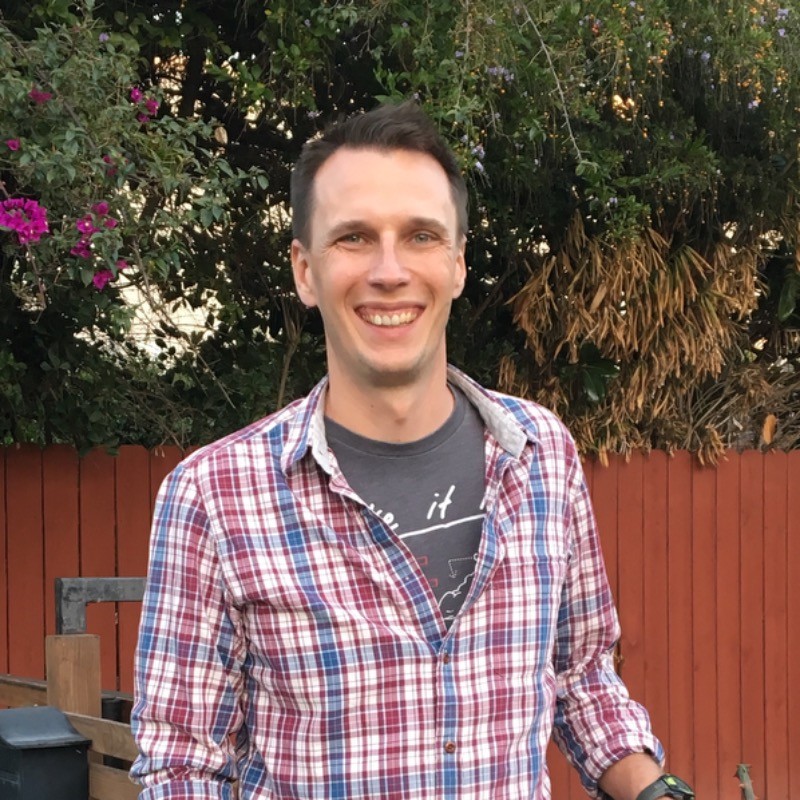
Local creative writing teacher Alan Barstow, who teaches 11th and 12th grade, is one educator who has approached the use of AI and the growth in plagiarism with caution and curiosity. “Right now I am still teaching how I would, just in different ways…I can’t just assign prompts to my students that AI can interpret—I have to change my prompts so that they are not easily produced.” Barstow spoke about a project where poets used AI to generate words that they then used to create a poetic piece independently. By doing so, the writers reconfigured the generated data and flipped concept AI. While he didn’t put this project into practice amongst his students, he made them aware of how they can use the software in a way that isn’t dishonest or plagiaristic. Using this same concept, Barstow has put his belief into practice by asking the question: what can we do with AI where it can still be original work?
For some Los Ángeles teachers, ensuring that children have a voice is the most valuable part of their job. Originally from Cleveland, Ohio, English teacher Brenden Whitt has a great passion for empowering young writers and thinkers by embracing multiple different perspectives in his teaching. “I want my students to be knowledgeable about what is outside their ‘bubble’—at the end of the day, different viewpoints, different backgrounds, different life experiences. Seeing all of it makes you not only a well rounded writer, but a well rounded person too.”
At 13, Whitt won the “Power of the Pen” poetry competition in his school district, a competition for youth. As an upcoming young writer new to the field, Whitt moved from Cleveland to Los Ángeles as an aspiring journalist. He expected the writing community of Los Ángeles to be radically more “out there” and liberated than that of his hometown—but he quickly realized that there was still a similar “closed mindedness” both in his writing education and the media he consumed.
The greatest issue with censoring literature and media within the classroom, Whitt emphasized, is how it narrows the perspective of students. But, he believes that regardless of how a young writer might be cramped by the norms of their learning environment, they should still write as much as possible. “A transgender teen in Los Ángeles can go and write an op-ed about their experiences, and another transgender teen in Iowa can access it. The most important thing is to not worry about restrictions and censorship—if it gets in your way as a writer at school, resist as much as you can and break those ‘restrictions’ by continuing to write. This connection between writer and reader cannot happen if we abide.”

Southern California can be an exemplary place to have a teaching career for so many reasons, but at times it can suffer from the same issues of censorship and technology that every other city and the world as a whole, faces—different regulations and laws between schools, school districts and jurisdictions—determining what curriculum teachers can teach and the content they can share with students. This disparity in education creates a divide in the access of information, ideas and intellectual and emotional growth. The varying levels of control teachers in Southern California are given, at times, over their curriculum decides how much or how little their students will gain and grow. And these decisions are not determined by the experts themselves.
Leading a class without fear is how Cavat, Whitt, Barstow, and hundreds of others, in their own ways, have resisted complex teaching conditions. By not fearing artificial intelligence, or ignoring important literary voices, the future generation can be exposed to various communities and experiences. In their own ways, Los Ángeles teachers, and students and student writers are actively resisting censorship and artificial intelligence from taking away their voice. But, we cannot do it without the support of political leaders.
In September of 2023, Governor Gavin Newsom signed AB 1078 into action. The bill works to “ban book banning”. Applying to over 10,000 schools in California, AB 1078 ensures that the Superintendent of Public Instruction can interfere if a school board or district fails to provide diverse materials for its students. The current State Superintendent Tony Thurmond gave this remark about the bill: “AB 1078 sends a strong signal to the people of California—but also to every American—that in the Golden State—we don’t ban books—we cherish them.”
While some California politicians like Newsom have outwardly denounced and acted against book-banning, other state and local officials have been just as passionate about pulling books from their shelves and teachers from their classroom. Our future shouldn’t be one built on the silencing of diverse literature and content. Erasure of POC and LGBTQIA+ communities is not something happening solely in the current political climate of conservative or moderate states—it’s even happening in Southern California amidst the state’s laws for a more inclusive education.
Teachers deserve the freedom to educate how they wish, and students deserve the right to learn about communities and perspectives that aren’t their own.

 Los Angeles Literature