
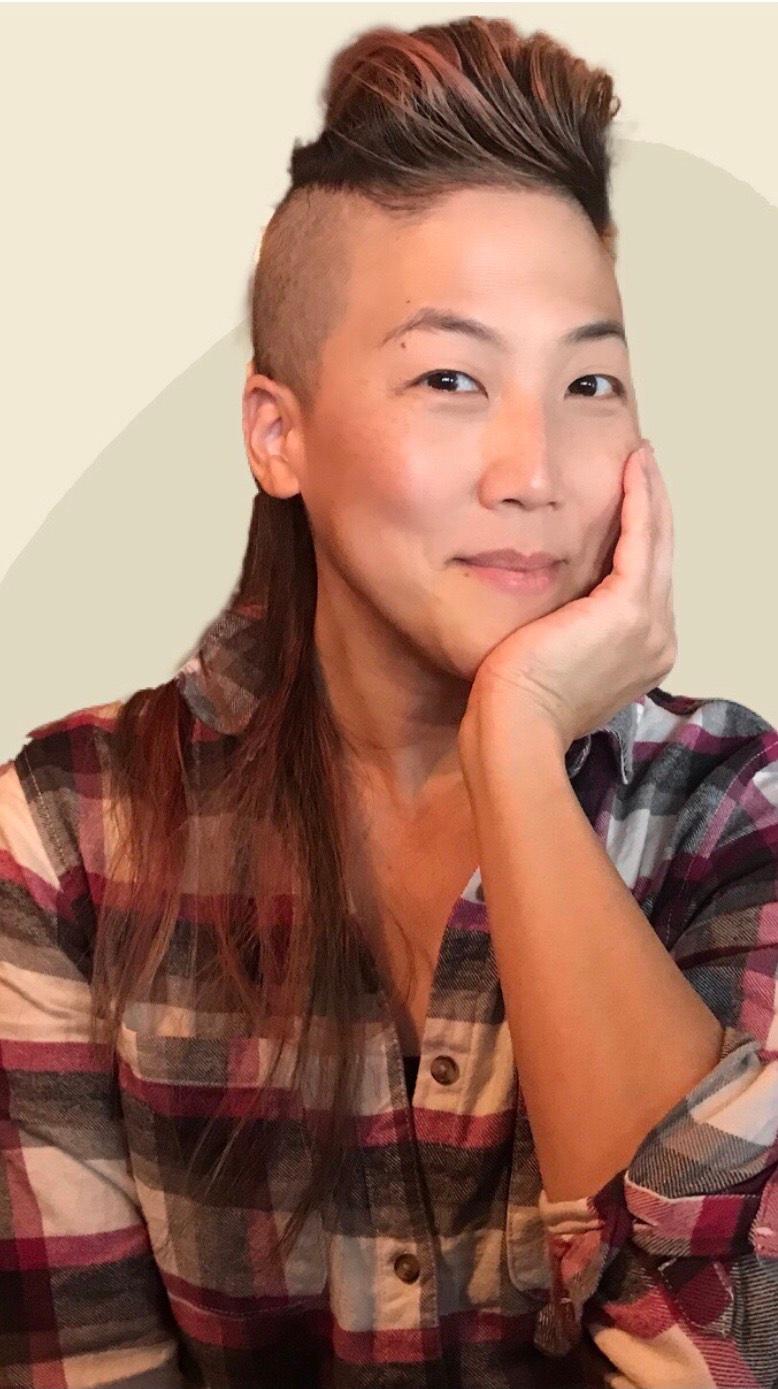
traci kato-kiriyama has always called Southern California home. It’s the place that courses through their veins, where they’ve built their entire life as a poet, performer, cultural producer and community organizer in the Japanese American community. Working with the East West Players, fighting to preserve Little Tokyo, the Director/Co-Founder of Tuesday Night Project—presenter of the Tuesday Night Cafe series and publishing her poetry collection Navigating With(out) Instruments.
Southern California is the place that’s helped shape their understanding of the world.
It’s also kato-kiriyama’s multiple identities shaped within this home—Japanese American, LGBTQIA+, Sansei, Gen X, Californian, Female, etc.—that’s made her who she is.
That’s why they were excited when Edgar Award-winning, Pasadena writer Naomi Hirahara agreed to blurb their book. That’s why they looked up to activist, educator, UCLA grad and poet, Amy Uyematsu. And why they’ve lead tours of Little Tokyo, sharing with the tour groups the history of the local Japanese American community and of Little Tokyo itself.
But how exactly have these influences affected the art—the literature—they make?
Recently, I asked traci kato-kiriyama about the influences on her writing, local and otherwise and what her thoughts are on the local literary community.
Brian Dunlap: Who were the original influences on your writing? Poets, writers, maybe even musicians? Teachers? Why and how have they influenced your writing?
traci kato-kiriyama: My mom was definitely one of my earliest influences in writing, and reading, for that matter. I consider her my first English teacher. Both my parents were teachers for LAUSD. Mom taught English and my pops taught History. As a kid, during the summers, my mom would have classes in our living room for us and kids in the neighborhood. In hindsight much later, I realized that I learned to love writing and reading at an early age largely because of her. She’d give me tons of books to read or listen to on a little record player. She’d give me feedback and ask me questions about stories I was writing.
When she was younger, she’d written plays and short stories and never stopped writing, moving more towards articles for the local paper to educate folks on various current issues or to promote a program she and my dad were hosting through their Japanese American Historical Society (of Southern California).
My dad plays a role in this, too, because he and my mom taught me that the study of history doesn’t have to be “boring” and that I’d find that out the more I studied outside of the textbook given to me at school. He took me to my first Asian American films and theatre, and to see Sansei performance artists like Jude Narita and later, Denise Uyehara.

Well before college, this context of artists who are Asian or Japanese American and writing and performing their own material was in my subconscious. It affected the way I looked at myself as a potential writer. And then I was invited to submit my writing to the Rafu Shimpo for a column called Through The Fire, which included a number of writers speaking through text from more progressive and left perspectives in the community.
Throughout all of this, I was often at the library or bookstore in the poetry sections, soaking in authors (for free!) for hours at a time—Sylvia Plath, C.K. Williams, Rumi, Langston Hughes, Neruda, Yehuda Amichai, Allen Ginsberg…I mean, we can just keep going on and on here, right? I remember stumbling onto and being particularly stirred by Nikki Giovanni’s Black Feeling, Black Talk, Black Judgement and it also felt like a revelation to find anthologies of Indigenous writers and Black writers and other writers of color. It made me crave anthologies! It was insight not only into a wider swath of writers but also into the world of publishing itself – seeing all these writers with lesser known names or without their own full collections on the shelf next to the poets I could find practically anywhere I went.
And at that time, independent or academic anthologies (like Disorient Journal out of UCLA) were pretty much the only place I found Asian American writers.
That brings me back to my parents—I was introduced by them to a whole host of writers in my own Nikkei community! Amy Uyematsu, Wakako Yamauchi, Mitsuye Yamada, Valerie Matsumoto, Janice Mirikitani!
As I was studying and organizing for Asian American Studies on my own campus at Cal State Fullerton, the theme of self-determination moved from my upbringing and subconscious to the forefront of my curiosity and passion.
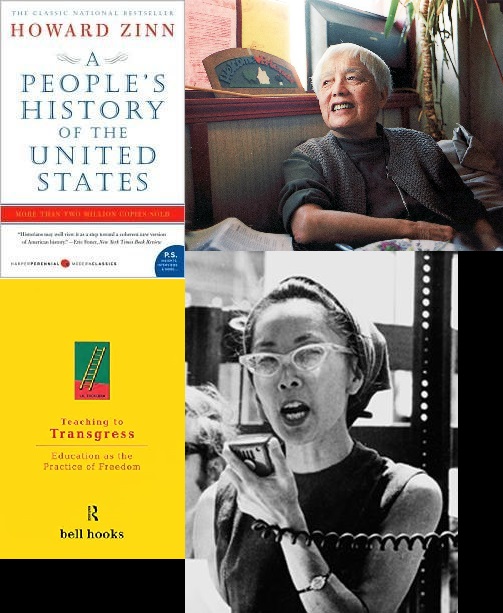
Reading bell hooks and Howard Zinn and Noam Chomsky and Bruce Lee, reading and listening to my CD of Malcolm X speeches, and meeting Yuri Kochiyama and Grace Lee Boggs and having conversations with them – all of this most surely made a deep impact on my writing, on my psyche!
In turn, this journey led me to more of my favorite writers—Audre Lorde, Pat Parker, Rita Mae Brown, June Jordan, Adrienne Rich…
I felt challenged and in constant wonder—What would it mean to write and tell my own stories? What would that practice be? What did I need to explore and excavate in order to process my and my family’s history here? Why was I always so drawn to and moved to action, to write because of Lesbian and queer writers and writers of color I could often only find in those anthologies or random used bookstores or local festivals?
I realize how long this answer has gotten, and I could go on and on from here, but I should probably pause for now!
Dunlap: What local writers, past or present, have been influential to your writing and/or you’ve fallen in love with? In what ways have they been influential to your writing and/or in what ways have you fallen in love with their work?
kato-kiriyama: please see the answer above 🙂 [traci kato-kiriyama answered this question in their answer to the previous question.]
Dunlap: What writers do you read today, whether poets, essayists, novelists or others? What draws you to their work?
kato-kiriyama: This is another endless list. Mostly poetry and nonfiction at this time. As an audiobook narrator, I do get the opportunity to read some great fiction, too.
I have two active stacks and two “active squares” in my main office bookshelf—I’ll name several of the authors and titles from these since it’s what’s I’m literally reading and re-reading right now and this season: Danez Smith; Michelle M. Jacob; Christian Cooper; David Mas Masumoto; Diana Khoi Nguyen; Ross Gay; Xochitl-Julisa Bermejo; Imani Tolliver; Susan Lieu; Brandon Shimoda; Jessa Calderon; Clint Smith; Lynne Thompson; Jaha Zainabu; SASSpeedis; Frankie Tan; Jesmyn Ward; Cherríe Moraga; Tanzila Ahmed; Mia Ayumi Malhotra; Christine Kitano; Mike Sonksen; F Douglas Brown; bridgette bianca; Marcus Anthony Hunter; Hollie Hardy; Brynn Saito; Bruce Lee; Thich Nhat Hanh; Teresa Mei Chuc; Amy Uyematsu…
The Art of Dramatic Writing by Lajos Egri; Letters To Palestine by Vijay Prashad; Apartheid in Indian Country? by Hannibal Johnson; Excluded; This Bridge Called My Back eds. Cherríe Moraga and Gloria Anzaldúa; Captive Genders eds. Eric A. Stanley and Nat Smith; Perpetual Slavery by Ciarán Finlayson; Writing Backwards by Alexander Manshel; Healing Justice Lineages by Cara Page and Erica Woodland; Built From The Fire by Victor Luckerson; America’s Black Wall Street by Chief Egunwale Amusan; Make A Poem Cry eds. Kenneth E. Hartman and Luis J. Rodríguez…
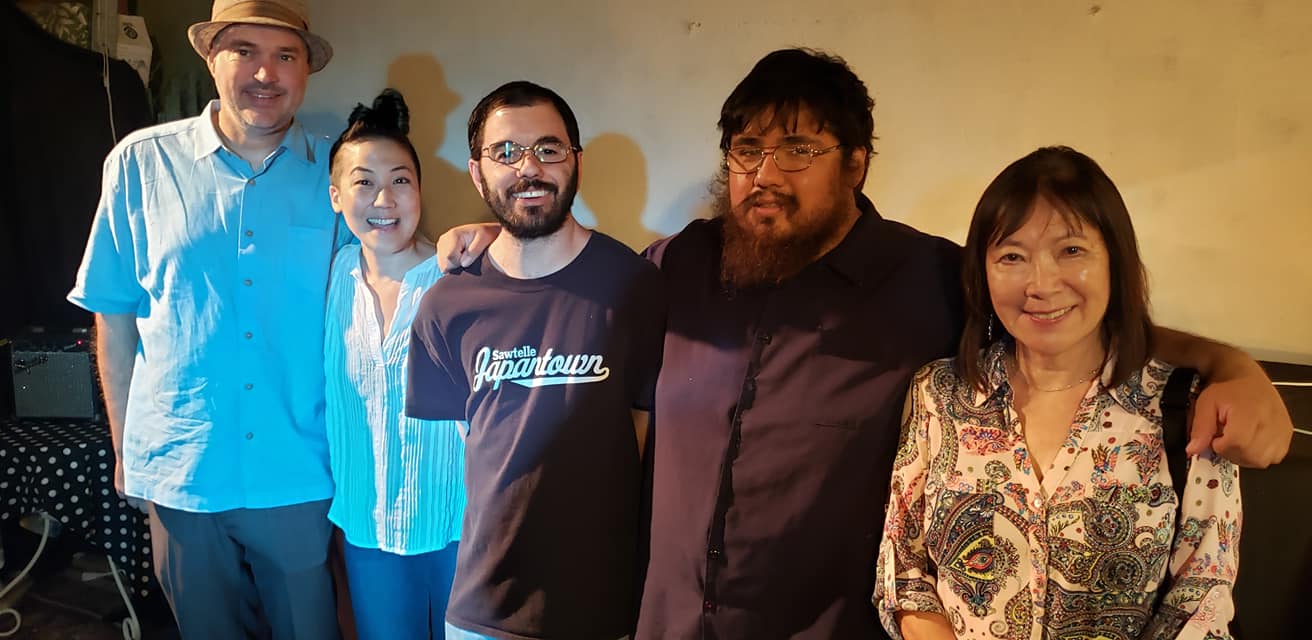
What draws me? I may have heard them at a reading I was in or attended—I always purchase the other authors there, either immediately or I order them soon after. Or I heard them speak on a specific issue at a conference or gathering I was invited to or participating with virtually.
But what really draws me beyond circumstance of meeting?
Sometimes I hear one poem or excerpt and I’m instantly curious and craving more of that person, not just their writing, but the people themselves.
And more than anything—the raw truth of a person, of a community, of a history, of a complex set of intersections and contradictions…the brilliant crafting of vision, story and memory as tied to their honest or critical (or desperate even) attempt at excavation, of experimentation and play, of deep curiosity and desire to be open, useful, wild, revolutionary, free.
…the deep, internal need of a person surfacing on the page and I can hear it in their voice when they read or as soon as I crack open their literary offering.
Dunlap: From your engagement in the local literary community, what are your honest thoughts and opinions about this community, good, bad or otherwise? It’s issues. It’s positives and anything else?
kato-kiriyama: Whoa. Great question. This is a big one. Let me attempt a brief answer so as to request more conversation with you and whomever might want to engage further.
Our local literary community is vast and for the most part, I think those most active feel well-connected to many other writers and circles of writers. “Vast” is sort of a key word here for me—in that, I know I’m extremely lucky to be invited into a wide variety of spaces to read and share, and thus be exposed to countless circles of great writers. It is such a privilege. At the same time, it is such a large community spread out over so many dozens of miles, I sometimes feel like I can’t possibly hustle enough to keep up with the writers and events and festivals, etc., in just our communities in L.Á. and OC alone, much less California and well beyond. This is ultimately a wondrous “problem” to have. And the pressure is real, the hustle is real. That’s why it’s so critical to have consistent, long term and ongoing spaces for folks to have access to the literature and more importantly to each other.
Women Who Submit, the Anansi Writers Workshop and the whole of The World Stage, the circles of writers and hosts from West Hollywood to Beyond Baroque in Venice to bookstores and libraries all around us in Pasadena, East L.Á. and Boyle Heights, South Central, and Long Beach, and so forth. Even our space at the Tuesday Night Cafe in Little Tokyo where we host multiple disciplines, and the same for Sunday Jump in Historic Filipinotown—all these spaces are critical for bringing writers together and bringing community to the writer.
The spirit of L.Á. is also a great attribute for our literary community in that we have a creatively experimental and open approach to the study and practice of varying disciplines. There is a real spirit here of hybridity, collaboration…a kind of “let’s try it, even if it’s not going to become my main professional creative field.” As a multidisciplinary artist, I’m not made to feel lesser than in the literary space even though my principal focus as an artist is not on poetry alone.
I think the same applies to the spirit of publishing. We don’t have as many hangups about independent, micro, and self publishing. (Or so it seems?)
We’d been under the shadow of an “East Coast complex” for so long (like so many art spaces and disciplines in L.Á.), it’s been relieving and nice to see some of that being shed over the past couple of decades (or 12 years+) as micro and self publishing has made a courageous rise.
The spirit of L.Á. is also a great attribute
for our literary community…
we have a creatively
experimental and open approach
to the study and practice
varying disciplines.
Not to say, however, that I don’t witness or even feel myself at times, the residue of the East Coast complex, by which I mean the attachment to being published by The Big Five and relying on or craving affirmation from old awards systems that do not fare well for micro publishers who don’t have the capacity for consistent or comprehensive entry into those systems. (“Old” in that they haven’t changed much and privilege extremely short, calendar year or other strict publication date time frames or other restrictive or exclusive, insider lanes for eligibility. This hasn’t kept up with the changing times of newer or less-heard voices robustly emerging beyond/outside of academic tracks; of “long releases” that we’ve experienced through the pandemic; and this system always wants what is “new” or “first”—all of which is ultimately driven by a capitalism-intersecting-with a colonial mindset…imho!)
Again, I’d be so curious to engage in this question further with others of varying communities, generations, and regions of L.Á. There must be multiple and simultaneous experiences in all kinds of directions away from and towards what I’m expressing here.

 Los Angeles Literature