
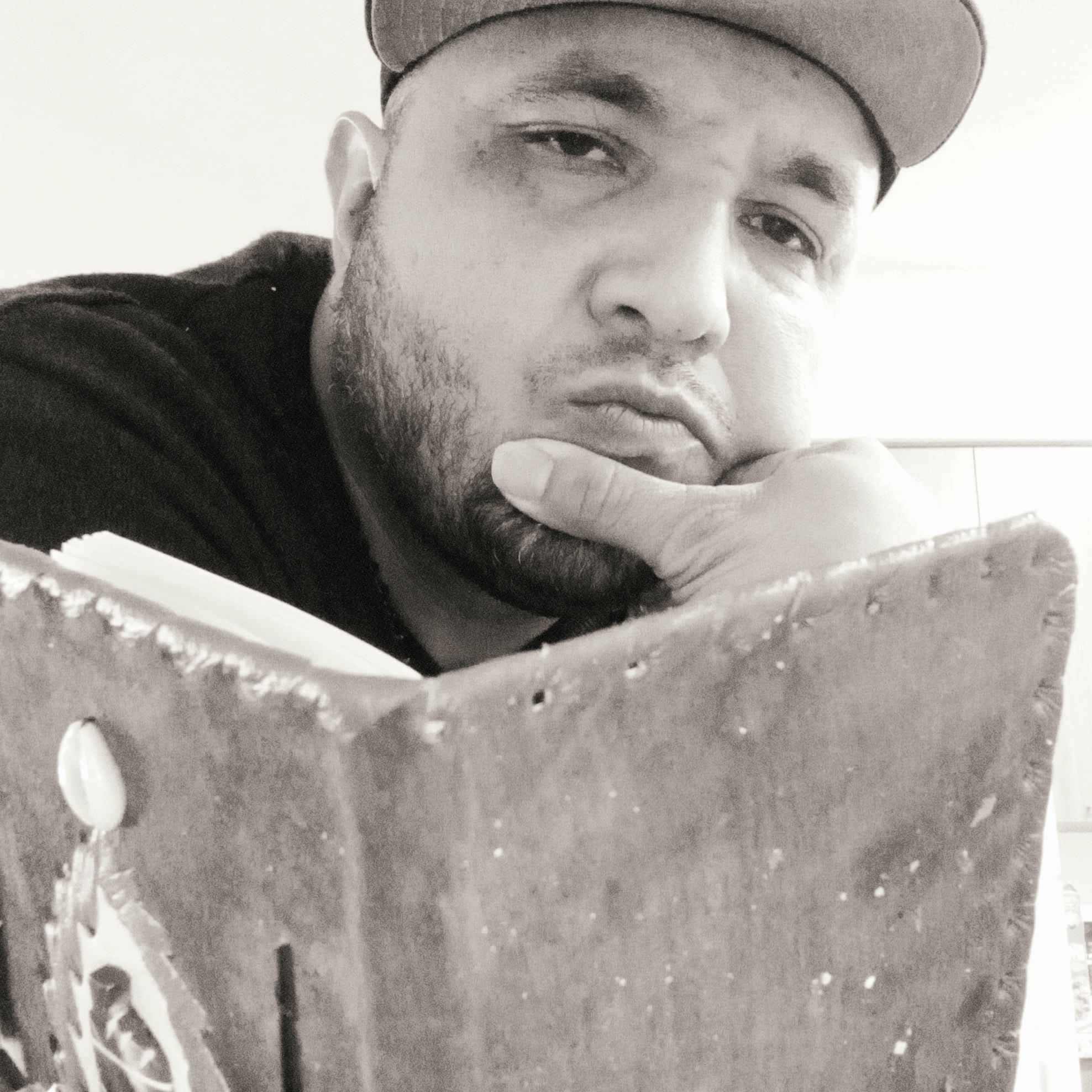
There have been very few times in my life as a writer that I have had the honor of interviewing a TRUE poetic Renaissance man. Carlos Ornelas’ ability to create a strong brown trensa out of poetry, melodies, music production and contagious cadence catching verbiage is unheard of. Now on his second book, Villains Vernacular (Riot of Roses Publishing House), he retains the ability to take the reader through colorful neighborhoods and gift a front-row seat to the dysfunction of growing up Mexican in the 80s and 90s. He is a maddening lover of poetry lending countless hours to the art form until birthing a genetic code of authentic Chicano veins. Veins that will forever run through the minds of young readers of color that never knew immigrant children were allowed to write like they were finally home. It always feels like home when this poetic voice shares a stage with me…it is my honor to introduce my pen partner and press mate:
Carlos Ornelas.
Sandy Shakes: So, Carlos let’s begin with your origins, where were you born and raised?
Carlos Ornelas: Hello Sandy, thank you for your time and your kind introduction. I was born in Los Ángeles at Martin Luther King Hospital. I was raised in Jalisco Mexico. I also spent time in Northern Cali, in Texas and in Lynwood, California, where I went to high school.
Shakes: Can you tell us how you began writing and what initially drew you to poetry and literature/music?
Ornelas: I began writing in high school after a friend committed suicide. I wrote a poem called, “To whom it may concern.” It was written from my friend’s perspective, so it was like a suicide note that rhymed. It was an assignment that got me in trouble because when I turned it in and the teacher went over the poems she read my poem and assumed it was a suicide note. She told the principal the following day and they looked for me in my 1st and 2nd period classes, but I was not there. I had ditched. And so, the school staff feared the worse and called my sister to ask about me. When I finally returned to school, they called me into the principal’s office and began to ask me questions about my life at home and were being very nice to me. The principal asked me if I was having problems at home or if I had problems in my love life.
Since I didn’t have any problems at home nor did I have a girlfriend, I smiled at the principal’s questions. Then he pulled my poem from a manila folder like he was pulling out evidence in a murder case and said, “Do you want to tell us about this?”
It suddenly all made sense why they were being so nice to me. They thought the poem was an actual suicide note that was written from my perspective. That was the day I learned that I could write and I have been writing ever since.
Shakes: Okay. Thank you. Next question. Have you been published before, and if so, where?

Ornelas: Yes, I have been published in Voices of Compton, The Myriad, These Pages Speak, War for Existence, Sims Library of Poetry Journal, a few more Anthologies here and there, as well as my book Ketchup by World Stage Press and now Villains Vernacular by Riot of Roses Publishing House.
Shakes: With the rise of digital censorship and misinformation, how can poetry and the arts serve as a medium for truth-telling and fostering critical thinking in today’s society?
Ornelas: Poetry is a medium for truth. By keeping poetry relevant in society, people can have an alternative source for authenticity in the media and on the web.
Shakes: Tell us about your new book: Why did you decide to write this book and explain the title? reasoning
Ornelas: Villains Vernacular is basically the language spoken by villains. Growing up in the 90s in Los Angeles, young men that looked like me were categorized in the media as villains. Similar to how the pachucos were criminalized in the 40s. This book aims to prove that whoever the villain is depends on who wrote the story.
Villains Vernacular is a book of poems and short stories. One of the short stories, “The Bipolar Express,” is inspired by a writing prompt given by Luis J. Rodríguez. It’s a fictional story inspired by real events and it deals with issues such as gang violence, drug use, mental health issues, bullying and suicide prevention. This book is a critique against not only society but the literary canon as well. This book is a follow-up to my debut book, Ketchup and it’s a bit more edgy and creatively expressive while still serving as a literary tool in the classroom.
I wrote Villains Vernacular to highlight the fact that even in the darkest regions there is light and beauty.
Shakes: Describe the type of writing you primarily focus on. What themes or subjects do you explore in your writing?
Ornelas: My writing is focused on my surroundings and my personal experiences therefore there is a lot of struggle in my work. There is a lot of rhyme and wordplay in my work as well, since I am very passionate about poetic form and the advancement of poetry in general.
Some of the subjects in my work are serious issues such as poverty, injustice, crime, as well as other more human issues such as love, pain and comedy. I also like to write dedications and odes. I have written lots of blurbs for people too.
Shakes: Can you discuss any current projects or pieces you’re working on?
Ornelas: Currently I just completed my third manuscript, Real Good Things, and I am working on my first Spanish poetry book Pan Pal Susto.
I also work on music, specifically hip-hop music.
Shakes: In what ways have you been involved in the literary community of Los Ángeles?
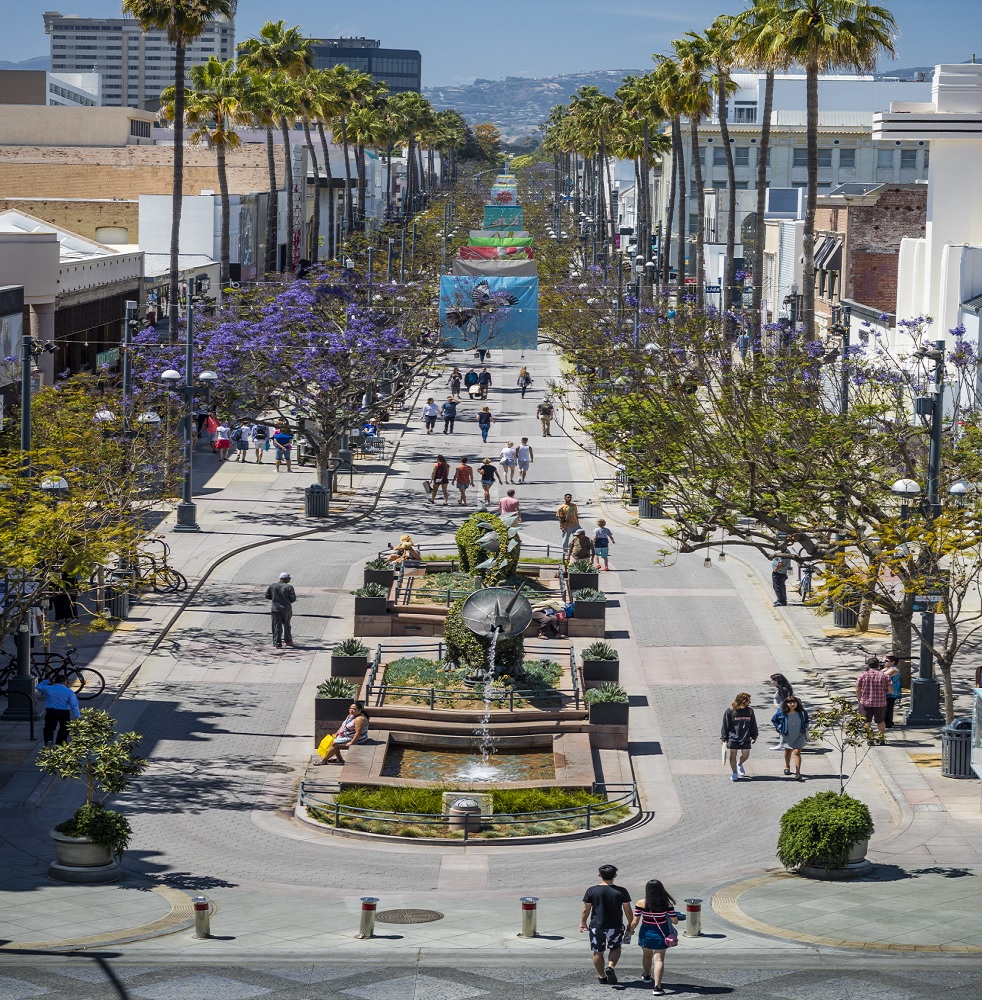
Ornelas: I have been reading poetry since 1997. I started my first reading at a slam in Santa Monica on 3rd Street Promenade at an indie bookstore called “Midnight Special.” Also, I am the former press manager for World Stage Press and I am a TA for CLI and the original first alumni of the Community Literature Initiative. I have also been Acquisitions Editor for the Sims Library of Poetry. I also was part of a program called, The Living Writer’s Series, which provided books and readings to middle and high school students from underserved communities. I am also a part of Cal Poets and teachers. I participate in open mics, book festivals, literary and writing conferences, panels, and presentations to students in the classroom.
Shakes: Are there any local authors or organizations you collaborate with or draw inspiration from? Yes, Sims Library of Poetry, CLI, World Stage, L.A. Poet Society, The Poetry Lab, Beyond Baroque, Da Poetry Lounge, S.W.A.A.M., Love Network, LA Public Library, Cal Poets, LA River Arts and a few others.
Ornelas: Growing up in Lynwood and having lived in various places like Mexico, Texas, and Northern California, how have these diverse environments influenced your poetry and music?
Living in various places has made me more aware of people’s differences and similarities. This makes me be more considerate of others when I write.
Being in various places you notice the differences between us but the similarities between people always outweighs the differences.
Shakes: You spoke about form earlier. Do you have different approaches for each form?
Ornelas: Yes, in various forms of poetry and in songwriting everything has to be meticulously calculated. I sometimes write to prompts
Or I usually do a lot of research before I write. I don’t use rough drafts, nor do I edit or workshop my poems. Sometimes I write in a specific mood or about a specific event or topic. I like to be well informed on whatever theme I am writing about so the process varies.
Shakes: How has your style and approach to writing and performing evolved over the years?
Ornelas: I took a break from poetry around 2014 when my son was born and came back around 2021. Having said that, since I came back to poetry, my style has remained consistent but my approach to writing and performing is now more disciplined and rehearsed.
Shakes: Are there any challenges specific to being a Chicano artist in today’s artistic landscape that you’ve had to overcome?
Ornelas: Yes, being published in America is not always easy for a person of color. There will always be challenges when it comes to selling your work or getting gigs in more upscale places. However, as long as you remain professional and consistent you can get through any obstacle.
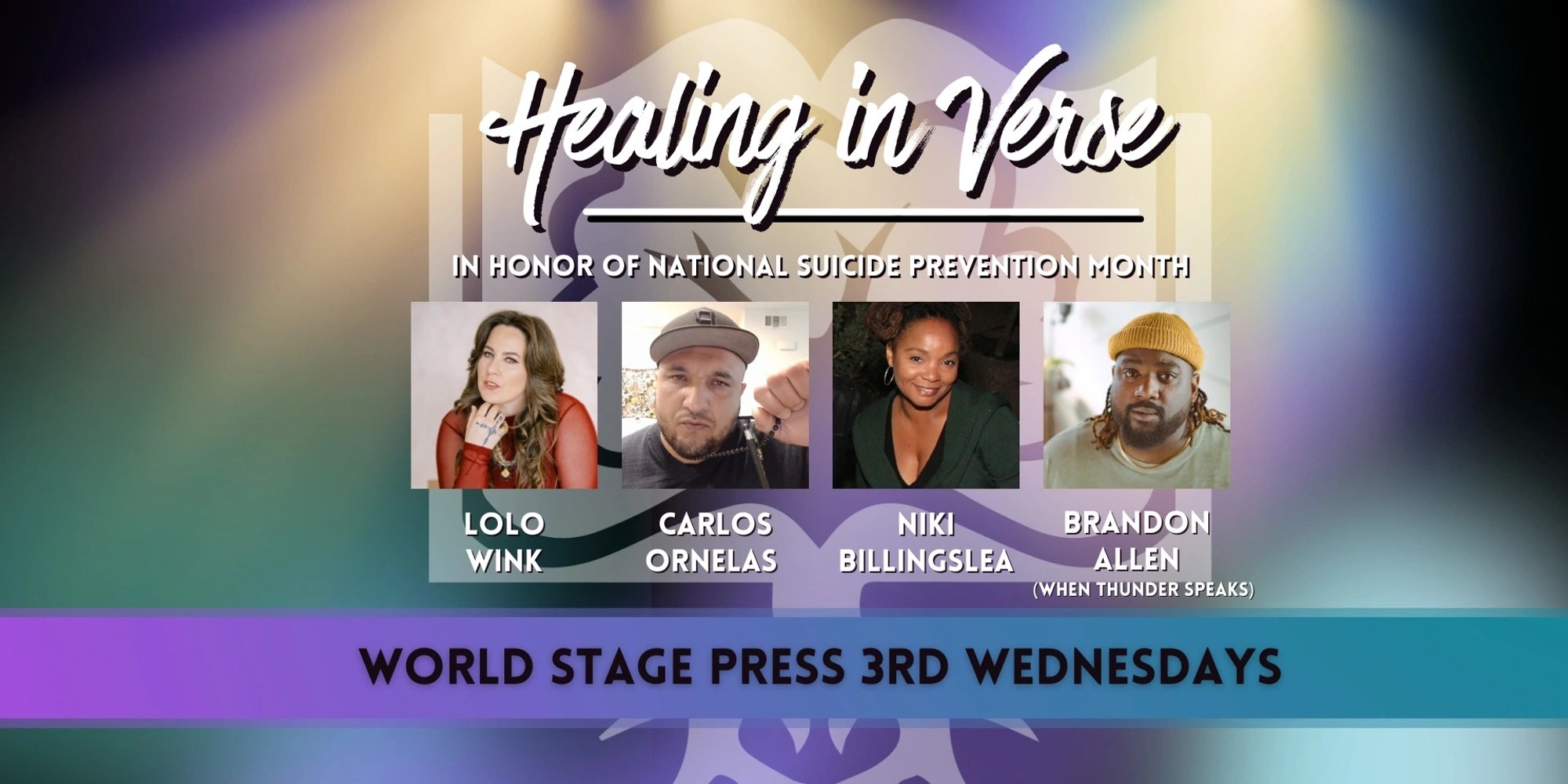
Shakes: How do you think poetry and the arts can promote mental health and well-being within communities, and what initiatives have you seen or have been involved in that address this?
Ornelas: Well, I have attended wellness fairs and self-love workshops and Zoom workshops like Alex Petunia’s “Meditation Mondays.” There are also virtual open mics that cater to specific traumas.
I think by sharing our words and our experiences it makes others more receptive and more conscious of the importance of mental health.
Shakes: With the ongoing debate over immigration policies and border tensions, how does your poetry reflect on themes of identity, belonging, and the human experience across different cultures and communities?”
Ornelas: The way my poetry reflects identity and belonging is by writing poems from different perspectives or personification and/or character poems. For example, I have a poem titled, “An Honest Woman” in which I speak as a woman. This kind of writing allows me to reflect through the eyes of someone totally different from me. This allows me to be more empathetic to causes other than my own.
All I can do is present people with aspects of my culture in order to help them better understand our differences.
Just by sharing my culture, I am contributing to the overall understanding of equality.
Shakes: Given the global shift towards sustainability and eco-consciousness, how does your poetry advocate for environmental stewardship and inspire action within your community, and what partnerships or projects have you been involved in that promote these values?
Ornelas: I have recently collaborated with the L.A. River Arts and the California Arts Council in a production that included dancers, musicians, actors and poets and was meant to promote environmental advocacy. I have also been involved with Conservation Corps and the City of Compton in cleaning up the Compton Creek and with El Nido to promote bike riding for students to and from school.
Shakes: In light of recent movements like the ‘Chicano Renaissance,’ which you’ve been instrumental in, can you share what inspired you to coin this term and how you envision its impact on the artistic landscape and identity in Los Ángeles?
Ornelas: What inspired me was the fact that after the pandemic I started attending open mics and I began to notice all these poetic voices like yourself, Cesar K. Avelar, Rudy Lopez, Juan Amador, Jesenia Chavez, Diosa X, Brenda Vaca, Soul on Fire, Neta Rodriguez, Monica Salazar, Juan Flautista, Andy Sanchez, Lili of the Valley, and you start to see Riot of Roses, Alegria Press, Raizes and El Martillo Press with Donato Martinez, David A. Romero and Matt Sedillo, and of course Tia Chucha’s and Luis J. Rodríguez.

And I began to see all these movements, all these voices were emerging with all this wonderful material from various areas of the country, but I did not see any unity between them. I felt an alliance needed to be manifested between us poets with similar backgrounds or with Chicano roots.
And I happened to say, “the Renaissance of Chicano Poetry” in one of my poems and after that I heard several other poets using that term and apparently the idea is still making its way across platforms.
I just want the founders of the Chicano Movement to know that what they began generations ago is still in the minds and hearts of Chicanos today. That what they started has not only touched us but it gave us an identity and we are continuing and evolving within that same legacy.
Ultimately, time will determine our era.
Shakes: Based on your experiences, what advice would you give to young poets and musicians who are navigating their own creative paths?
Ornelas: Be yourself. It takes a lot to be yourself and your exclusive point of view is unique and important. Build on that and try not to get caught up with or influenced by what others are doing. Developing your own voice is of the utmost importance. Do not get discouraged or impatient by setbacks. Work on your craft, explore resources, contacts, venues. Have a side gig to support yourself while you are in development. Seek unconventional ways to promote your works. Have fun and leave some inspiration for the next generation of writers.
Shakes: What do you hope God tells you when you get to the pearly gates?
Ornelas: I hope that God sees me in line at the pearly gates and points at me and says, “Hey man, can you sign my copy of Villains Vernacular for me?”
Shakes: Yes!!! Thank you very much, Carlos.

 Los Angeles Literature