

On the eve of the first full moon of 2024, I had the honor and privilege of talking poetry with one of my favorite LA poets, Voice of the Harbor, also known as VOTH. After long work days, we gathered together in virtual squares with tea brewing, incense smoke lingering, and our faces beaming in smiles. The vibrant spotlight of the rising moon glowed upon us while VOTH detailed his courageous journey as a poet, survivor, and mental health advocate.
In spring of 2021, we first met in the Community Literature Initiative Poetry Publishing zoom classroom where VOTH shared his dreams of writing a book to remind others that they are not alone in their battles. As his CLI guide, I witnessed the journey of his first poetry collection from start to finish. His commitment to his craft was evident. Week by week a kind smile logged on clad in a crisp blue work uniform ready to write. Our whole class would rattle in praise of the poems he workshopped, stirred by the rawness of his story and his unshakable resilience. I witnessed him overcome the darkness of fear and the whirlwind of life’s unexpected obstacles. He submerged deep into the abyss of his heart wisdom to write for the parts of himself that were waiting to be set free in stanzas and bellowed alive on the mic.
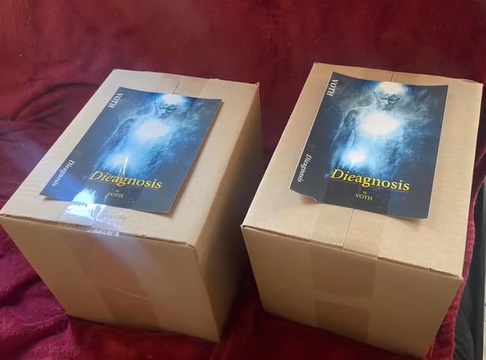
I happened to be there the moment VOTH held his book Dieagnosis for the first time. The unopened box of books rested on the trunk of Brenda Vaca’s car. Brenda, the head of Riot of Roses Publishing, grinned proudly, eager for this poet to finally fulfill his book dream. VOTH’s iconic cackle erupted into the night as he tore open the box and marveled at his creation in his hands. The aspiring writer had now shapeshifted into a published author. I will never forget how his smile lit up the night. I reminded him, “This is just the beginning, dear one.”
When I finally held Dieagnosis, I felt the energy of VOTH’s tender soul in my hands. Cover to cover, he bares his traumas and his triumphs while also inviting the reader to acknowledge their own shadows and welcome healing. The reader is never alone on this journey as moments of respite and centering radiate calm and hope along this reading ride.
I’ve been honored to witness VOTH’s poetry revive tired hearts back to life while sharing on the mic or typing poems on demand. His courage to shine truth aloud wherever he poets is an anchoring inspiration for me. Some of my favorite moments as a poet include howling with him under Central Park trees and grounding in feral giggles under the moon. VOTH truly is a living lighthouse beacon bravely guiding others to howl themselves back to life one precious breath at a time.
Alex: I will ask you more general poetry questions, questions to give us a picture of who you are as a person but also the internal experience and go external.
VOTH: Yeah no, that sounds like Dieagnosis and Prognosis combined into one.

Alex: Can you give us a taste of what’s coming up. Can you tell us first your name and your pronouns?
VOTH: Ooh. Sorry, this just got official. I am VOTH. It stands for Voice of the Harbor and I am he/him.
Alex: My name is Alex, she/they and I’m excited to talk more poetry, and your book with you, and some other writing adventures ahead. So, can you tell me, first, why writing? Why poetry? How did you get to meet the pen? When was that first time you met the pen and how did that whole journey begin for you?
VOTH: Oh, that’s a great question. I was thirteen years old, I was back in the seventh grade, and it was a difficult time because I was that kid who got bullied. I recently read this book about three types of trauma, acute, chronic, and complex. I had the complex one because the bullying experience happened for years. I’m also a survivor of suicide, and it was like every single time I just felt this huge weight on my chest and on my shoulders. Like a person who’s claustrophobic, I was encased in darkness and weight. I didn’t know what else to do because I didn’t want to die, but I also just wanted it to stop. I grew up a club kid; The Boys and Girls Club in Wilmington, a staff member, his name was Nelson. He suggested, “Why don’t you try writing?” I was like, “What?” and he said, “Yeah, write out your feelings. Maybe it’s poetry, maybe its a story, maybe it’s something.” and I was like alright. I tried it out. I notice I listen to a lot of Evanescence, gothic rock and a little bit of alternative, and so listening to music helped the flow. Poetry saved my life. It’s this wonderful gift and had I not written that first poem, I’m pretty sure I would not have been here. I think that poem is in Dieagnosis, but I’m not sure.
Alex: Wow, and with Dieagnosis, and we’ll talk more about that beautiful book. Tell me a little bit more about who is VOTH? What is Voice of the Harbor, and what does VOTH stand for?
VOTH: I love that question so much. About eleventh grade, when I was back in the San Pedro area, that’s when I started to evolve as a writer. I thought about the “what if?” What if I become bigger than I am, like Shakira or someone with a name that’s going to be remembered. So, I thought of, “Well I grew up in the San Pedro/ Wilmington area and the port is known as Heart of the Harbor. I want to do an acronym. I want to do something fun. HOTH sounds a little weird and I can’t do that. I could’ve done GOTH, Gabriel of the Harbor, but I felt a little narcissistic. Also, yes I wore black and wear black when I perform, but when you type in goth you’re going to come across the clothes, the style, the houses. You’re not going to find my book or find me. You’re going to find that, and so I thought, well what am I going to be using? How am I going to share this poetry? Then it hit me, my voice. My voice too, I never used to use my voice. I was the kid that stood away, non confrontational. I never used my voice, and so using that voice, utilizing it to share, to show strength, to show that power and not be silenced. Voice of the Harbor came to be and VOTH was born. I actually tagged it once, twice, three times. The first time was in Cudahy, there’s this bridge for trains crossing the LA river. I want to say it’s still there because they haven’t touched that bridge in years.

Alex: Thank you for sharing. When you talk about this sense of coming to your voice, tell me about a time where you stood in your power and what was that like?
VOTH: There have been so many moments, but standing up to my mom, standing up to my dad, standing up to my old boss. Again, I always used to be that person who didn’t speak up, but the more I started to speak up, the more I understood my values. I understand the worth that I have, the self-worth, and all of that great stuff and good stuff. Today, I quit my job and out of all the ways I’ve spoken up, I’ve never disrespected. So, instead of swearing, as much as I wanted to, I said, “I quit effective immediately.” Even though I wanted to add an “F” word in the middle of that “immediately,” I was like, no. You have enough dignity and preservation. Don’t do that. You have integrity. Don’t do that. You’re going to disrespect yourself if you do that. So, I stood in my voice and I stood in my power. Another great one is saying no to myself because of the darkness that was always there. When you’re inches away from the knife or the ledge, and as much as I was compelled to carry out the action, saying no to myself–-saying no to yourself—is standing up to live because you know that you can. That darkness isn’t going to be there forever. It’s the hurdle, the obstacle, the thing you have to push out of the way. Saying no to myself was and is powerful.
Alex: I love how you talk about just using your voice for maintaining your dignity and offering respect even in those times where you’re being challenged by others, or making sure you’re respecting yourself, and loving yourself with your own power, so thank you for sharing that. Tell us a little more about writing. What is your writing ritual? Do you have a favorite place you like to write? What’s that like?
VOTH: I find my favorite places to write are outside. On my off days, I visit Long Beach, Cherry Beach, Junipero Beach, Belmont Shore and first, I enjoy a walk in the morning to get the juices flowing. Then, I plot myself on the sand and I would type away on my phone or write if I had my journal while watching the waves. I was hypnotized or mesmerized by the water flowing and thought, how can this water be a part of this poem or what’s about to happen with the wind and the clouds, the sunrise. If it’s not the beach, something I used to do when I lived back at my mom’s was, I would sit out in the backyard and I would watch the sunrise. It was always something to do with the sunrise just always gave me vibrancy. I would drink my coffee and this is the size I drink. I don’t do a regular or small mug, I drink a giant mug. That was my morning routine. Poetry and music. It was piano, the strings, the guitar, violin, a harp, the cello; strings attracted me, or electronic dance music, some beats, drums. I even write at night especially if it’s a full moon. Especially if it was a full moon, the music and the pen and the moon, ugh it gives me chills.

Alex: I love all of that. It sounds like there’s percussion that calls you with the waves, the music, the sun, and the moon, so that’s really beautiful. There’s nothing like a cup of coffee with a sunrise. Thank you for sharing that. Now, let’s talk about Dieagnosis. What was your journey to writing this book, and then tell me about this publishing journey as well?
VOTH: So, Dieagnosis was written during the CLI program. I am an alumnus of the Community Literature Initiative. I began in Season 8 and ended in Season 9. I was that student who needed another chapter to finish this book because I wanted the lightness, I wanted this treatment section because it didn’t feel finished. Half of the poems or great part of the poems had already been written prior to joining CLI. They were poems I wrote when I was a kid. I wanted a theme because it is my story.
Dieagnosis is my story of battling that darkness of a comorbidity of diagnoses from medical to mental to self. Every time I think about it, this book is a creative wonder and joy. The cover is this darkness in the back and there’s this statue frozen in darkness and this light is trying to break free. Then we see these chips falling away as the light comes out more. What I love so much more, the poems interlace and connect. For instance, I have a poem in here entitled Sovereignty’s Fury and there’s a line that says “pulverized cracked skin,” and yes I’m talking about my own skin, but it’s also talking about the cracks in the statue and the chipping away.
Going back to the poems and the theme. I wanted to know the process of being diagnosed. The first step when you go to the doctors is they collect your history which is why chapter one is History. It can also be read as “His story.” Those poems I wrote when I was younger except for Mirror. Mirror is a pivotal poem as it begins the journey into my story. Chapter two is where I get a little crazier. Instead of leaving readers on cliff hangers, I broke the rules and added subchapters. So, chapter two is Evaluation because that’s the next step getting closer to diagnosis. Chapter two is like a little story of its own with three subthemes. First, we have Annihilation, then Resurrection, and lastly Transformation. All of them combined creates A.R.T. Even then this book is art.
Chapter three Consultation, gets even darker as its about intimate partner violence and physical and sexual assault. Before we get to that treatment, before we get to that light, we have to understand the darkness in depth just like in psychology. Before we can treat the new trauma, we have to go back to the beginning. There’s a poem titled “PTSD” and it’s incredibly graphic. At first my publisher, Brenda Vaca, wanted me to change the title but I thought about, what if I wanted to go to the police and report what had happened? So, it remained as PTSD, but she said we needed a disclaimer and I responded that this entire book is a disclaimer. Almost all the pages reference self-harm and trauma. So, for poems that needed it, we have a disclaimer or mention of it.
Chapter four is Dieagnosis Faces of Evil, those poems I say have more than one message. You can read them in different ways and some of them are abstract. Then chapter five is Treatment, where we start to understand the darkness, understand the shadow-self, and begin the healing process of forgiving and acknowledging. Treatment has a poem titled Whiskey with a Twist and it’s connected to Vampires in chapter one. Vampires actually connects to a lot of poems like Forbidden Temptation that was nominated for the Pushcart Prize.
After each chapter I have pages called Checkpoints where I interact with readers and on one of them I have a breathing exercise. I also have Notes that are the voices of strength or doubt. There’s five Intro’s which are introductions to the chapter like catch-up. I have one Outro as the book is ending. I also have Resources in the back for anyone who is or knows someone going through or experiencing suicidal ideation, domestic violence, intimate partner violence, and sexual assault for adults, children, youth, and teenagers.
Working with Brenda Vaca, author of Riot of Roses, founder and owner of Riot of Roses Publishing House, working with her I was terrified. The moment she said we were going to have to edit and make some changes my heart dropped and initially I didn’t want to. She was also a person who said yes to signing me after I got three to six no’s. Then I thought, she’s an experienced writer. Let me just see what happens. She said something the other day about me hounding her and it was funny. So, at your book anniversary, I saw this sign of a raven or crow hanging, and I had this poem I wasn’t going to read called A Crow’s Blessing. I was not going to read it but because I saw it as a sign and then bird statues were next to me I was compelled even further, “It’s a sign!” I’m on the stage explaining what I just experienced and then I see Brenda sitting next to Diosa X. What was funny, was that we were almost wearing the same thing. Black boots, black leggings, she wore a golden yellow blouse, and I wore a golden yellow and black plaid shirt and my hat. I was like, “We’re matching!” Afterwards, I spoke with her, “I sent you my author packet. I hope you got it.” I didn’t let off. I kept pushing a little bit and Diosa said, “Hey Brenda, you guys are matching. Maybe it’s a sign to sign him.” and I was like, “It’s a sign! Come on Brenda.” So then she said we’ll schedule a meeting in October and I believe it was October 10th or 12th. Brenda is big on signs and I’m truly blessed we met.
The editing process, I’m so happy that there were minor changes, nothing major. We cut some stanzas and what not. I was a little more relaxed about it. I noticed after talking about it or talking to someone before the anxiety and overthinking takes over helps a lot. She’s a very wonderful person to work with. She intimidates me a little bit just because she gives off that mom energy. Anastasia, too, calls her mom, so sometimes I feel overwhelmed to talk to her, like “Ugh, I have to talk to mom about this.” She’s a very easy person to talk to, gives great advice, and I’m so grateful she said yes. We’re looking out for the future stuff, of the possibilities.

Alex: Yes! Since your book has come out and even prior to that you had featured your poetry at a variety of different spaces, what have been the most memorable reading you have participated in and was there a moment or place that stands out the most as a moment where you felt like you shined onto a level you’ve never shined so bright before? What’s a moment like that where you featured your reading on the mic? Please choose one. I know you’ve read all across the country at this point, so if you can think of one or two moments where you really felt like the mic was this magical moment?
VOTH: For the first one, I would say the one with you where I featured on One Mic One Globe back in 2021. That was a great one because my mom was there and I could hear her cheering my name. I remember these kids started shouting out of nowhere. You had to kick them out. They gave me this energy and power. “Let’s keep going.”
Alex: My gosh that was the one time we got zoom bombed, and you were so gracious about it.
VOTH: I remember reading Scars and Labels during that and it is actually the longest poem I have in my book. It’s about five pages long. The second moment, ooh now I remember two more. The second one is when I featured at DiPiazza’s in Long Beach, and I read one of my newer poems called Dancing in the Stillness of Water and read it with music in the background. Shy But Fly was hosting and we worked it out. It was the very first time I read without a book or phone in my hand. One of the most difficult things for me to do is memorizing a poem because of fear, so music helps keep my memory on track. The song I chose echoes and highlights certain words and parts that it allows you to feel the water on your body, feeling the movement of the song with the poem. There were blue lights on me and it felt like a magical water moment. Then I saw Tommy Domino and that was like seeing God sitting in the back for me. Tommy Domino is a legend for me and he’s someone I look up to. I know I said my two, but this one is important. The performance at the New York City Poetry Festival. Reading poetry in New York without reading off of something and memorizing in front of a lot of people, I was anxious. I was nervous and I was the one trying to pump everyone up like, “Come on guys, we can do it!” and on the inside I was like, “Ugh! This is so terrifying!”
Alex: Yes we were all so nervous but we were in it together.
VOTH: We were. We were in it together. Before the performance, I bought a lapis lazuli and copper ring, and after that there was a gold ladybug on me. After the performance, and what makes it magical, the sun had just come out, there was a flock of birds chilling in the grass and I was walking towards them to pick a Message from the Universe. The birds flew up and came towards me but I wasn’t scared. Someone called my name because they were worried and I turned around and said, “What? It’s fine.” It was so cool though because I was surrounded and encased by birds. It felt so magical. I felt joy and warmth. I felt like a light, I felt like a beacon.

Alex: When folks are reading your book, what are three takeaways you’d like for them to leave with after they experience your book or they experience you on the mic? What are three things you hope to stir within people as you read or share your book with them?
VOTH: That’s a beautiful question. It’s funny that you bring that up. Recently when I was at the Burbank Public Library, there was an audience member and she had mentioned that she wasn’t ready for the feelings, but she was so thankful afterwards because she was a trauma survivor herself and she had thoughts too. She thanked me and we just talked. It was a beautiful moment. One of the things, I want to let people know that they aren’t alone. There is someone out there who has journeyed that, but it gets better. To be a lifeline, to be a supporter for someone who is going through a situation, and to be comfortably unapologetic about your emotions, your mental well-being, and your physical needs.
Alex: I love that notion of comfortably unapologetic. Right? Like how do we get to that place of comfort, and actually kinda brings me to a question I would love to ask you that’s not even on my list, but what does self-care look like for you as a writer? How do you nurture that writing momentum in that creativity to keep writing to these things that can often be very difficult to write about? Who or what keeps you brave with that creative power you have?
VOTH: So I finished writing a story of my childhood and now it’s writing about my adulthood and what I hope to accomplish or what I hope to become. There are so many things I haven’t written about yet. We are in the healing process where we have to reopen wounds and truly feel them and understand its purpose or understand its causality to understand the symptomology, to understand the why of it all. I also write for the victims of sexual assault. It angers me that someone went to prison or jail because she or they had to fight off their assailant. They were the ones who were sexually and or physically assaulted, but the system decided to punish them instead while the attacker either gets less time or none at all. To tell their stories too, or the happenings in the world, or– I’m a weird person, so I believe in the multiverse and the “What If’s?” because any decision we make there could’ve been a “what if?” after that. So, every decision that you have is another line or different timeline and I like to write about that too. I always have these wild, imaginative things or dreams. Sometimes my poetry is based on a dream. Someone once told me that once they hit a certain age, the creative flow just stopped and I was like, I never want that to happen to me. I don’t want to be an empty bottle. I want to continue to have and be an ever flowing fountain of creativity. I just keep with the flow and keep with the everything, and I’m so grateful that I’m a curious person.
Alex: I love that. The gratitude for curiosity.
VOTH: My partner too, I did it three times today. There’s this plant and it had purple flowers with yellow berries, and I was staring at it in wonder like a child. Then there was this other one with vibrant purple-pinkish berries and again I’m staring at them in awe. Then there was a flower and it had a lantern shape. Staring at the flower it almost looked like it had veins because they were red.
Alex: Right, isn’t it weird how nature can like, well it’s not weird, right? How we’re all so part of nature that we see it in the veins of a petal. It sounds like as a writer, you really enjoy curiosity and you’re able to see the awe in the moment. Are there other writers or spaces or communities that you write with and also connect with as a poet or performer? Tell me a little bit about that.
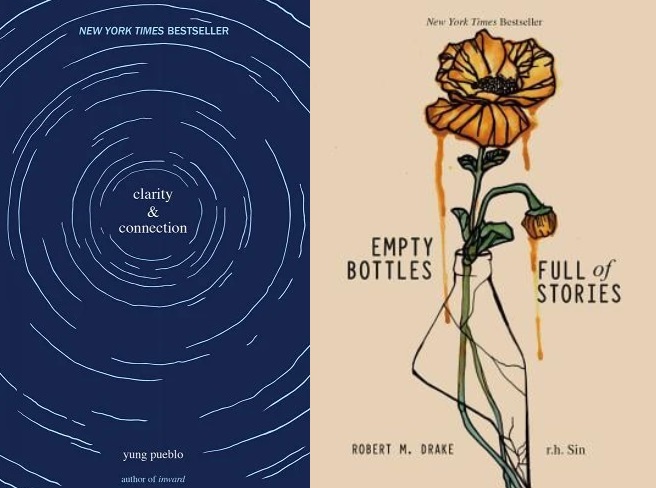
VOTH: When I first started to feel feelings or let myself feel feelings I came across an author named Robert M. Drake and I absolutely loved his books. Then he started writing with r. h. Sin, but I really fell in love with those books. That’s where I started to feel and say comfortably unapologetic of his feelings because Robert’s books exposed deep emotions of love and sadness. His words were so real and authentic. He’s actually the inspiration behind Notes, because he adds little poems before the table of contents and afterwards. Reading his books enabled me to truly write more about those themes. Sometimes I used his poetry like a prompt. If he can do it, I can do it too.
There’s another poet by the name yung pueblo. The first book I picked up by him was Clarity and Connection and it was about connecting with yourself by understanding how old wounds can impact relationships. It’s a really deep and powerful book. I read his series backwards. It’s Inward, Clarity and Connection, Lighter which I haven’t read yet, and The Way Forward which I’m currently reading now. But we’re poets, we read out of order. Connecting to those poems allowed me to dive deeper into myself and truly understand my emotions.
I call Dieagnosis, flipping the pages of my flesh. This is the outside, well what’s on the inside? What’s on the deeper level? Let’s get to those deeper parts of ourselves. I know I talk about myself as if I’m a lot of people, but it’s because I give what’s inanimate life. My organs for example, are like individual people living in a community. Like how does my heart feel? How does the light inside of me feel? How does my soul feel? Sorry, off topic. I notice all the writers in the poetry community, one of the people I look up to is Andres Sanchez. There’s a poem about being comfortable in his body, and there have been moments where I feel uncomfortable in my body. When I was younger, I often had dreams that I was a girl, or had both sex organs, and so sometimes I felt like I was in the wrong body. So, when he came into my life I had someone I could look up to and not because we were both queer kids, but I was able to connect with him on a different level.
Alex: In sharing that too, it brings visibility. What does visibility mean for you as the different identities you hold? On the back of your book, it says you identify as a gay Latino. What does that then mean to have visibility through poetry? What does visibility mean for you?
via stumbling along the spiritual path
VOTH: Visibility, so when I was younger, I feel so guilty about it. All of the bullying really came from Latinos. Growing up, I hated being a Latino. I didn’t feel like I fit in. There wasn’t machismo written on my back, I was soft. I was the sensitive kid, the one that never rebelled, but rebelled in a way that was still keeping me out of police interaction. It was a soft rebelion. So visibility now, I’m proud to be a Latino. I want to know more about my roots, I want to know my ancestry, and that’s what I bring out too is toxic masc-macs- toxic masculinity. Being bilingual sometimes curves the words a little bit. But talking about toxic masculinity isn’t just found in Latino culture. Toxic masculinity is cross cultured. It’s important to be self-aware when we come across it because when we want to communicate our emotions we want it to be effective. Allowing yourself to be self-aware invites deeper emotions of understanding. I want men to feel comfortable with who they are, who they want to become, and not the person people keep telling them to be. The visibility of being seen, being heard, that when you address an issue it will be resolved. To stand up for the whole package of who, what, when, where, why, and how you are as a person. I fought for many years trying to understand the “who”, but I already knew who I was. I needed to stop proving that to society, to others, and most importantly to myself.
Alex: Well in that, it kind of brings me to something when I was your guide through CLI and we were together with our class, this phrase creative courage about and just kept repeating in my mind every time I witnessed you all. So I want to ask, what does creative courage mean for you and your purpose for your pen?
VOTH: For me creative courage is, oooh I don’t know why but that question made me feel emotional.
Alex: You do it all the time and I’m just so in awe of you every time because I feel like it’s a part of every experience I’ve had with you. So, I was just wondering what that meant for you?
VOTH: It’s letting the words fill the pages not just with my pain but also with love, with that even though the trauma happened it’s still possible to be better and lead a different life. So, vulnerability, allowing myself to be vulnerable because if I don’t I will become the person I never want to become again. I used to be a person that kept all of the emotions in and it never worked out for me. I learned that if I shut off my emotions, I become a different person. I’m apathetic versus empathetic and I lose every bit of humanity I have. So, I keep the emotions on. I don’t like to turn them off. Once I do, I feel the little spec of ice begin to form in my chest. I know there are a lot of empaths who turn it off and on, but I don’t. I keep it on. When I hug people, I want to offer them a hug of warmth. At times when I’m embracing someone, I take a deep breath and when I exhale that’s me sharing that warmth. Sharing that light with those around me and not just who I’m hugging.

Alex: You know this world is having a lot of chaos and turmoil, but I’ve known you to be able to be in a room and fill it with laughter. I’ve also known you to be somebody who can howl in such a liberated way. So, my next question is, with these emotions and with this comfort in being unapologetically expressive with your emotions, what helps you howl, what keeps you liberated and able to expand with your poetry, and expand with your connections to others? What about poetry makes you feral?
VOTH: When I share space with those I love, friends, colleagues, you guys inspire me to write in a way that you guys would. Step out of my shoes for a moment and write about the hunt, or write about the angels in the sky, or being enclosed by trees and walking through the forest. Sometimes I’m barefoot and walk in the grass. Or I try to describe a historical landmark like Rosalilia a.k.a. Lili of the Valley. I challenge the inspiration, challenge the creative mind to expand and how not to mimic somebody, but to create it with your own mind. Detail a brick, detail a tree. How do I interpret roots? I interpret roots with the veins in my body, with my toes embedding into the soil, giving energy back to the world. I’m sorry, I forgot the second half of your question.
Alex: What about poetry makes you feral? Even in performing, and I say this because as a performer you’re very captivating too with the different tones and the voices that are used with your poems, and the volume versus the intimate moments in your poetry. How do you align poetry as it comes from a lens of being feral?
VOTH: So, I’m also that person that’s very nervous when I’m on stage. I channel, and I recently said this too. I channel that anxiety into the emotion that I’m about to captivate the audience with. It’s easy for me to remember the feeling of an emotion from the past and the moment I wrote it. I channel all of that anxiety into that significant emotion. If it’s Forbidden Temptation and I want to get a little dark and twisty, if I’m angry or want to be feral, I add that extra umph to get a little deeper, get a little darker. Not to scare but just send a few chills down their back or make them feel some type of way. Channeling adds an extra layer of ferocity in those darker poems. If I do something with a lighter tone, then I’m standing in my power and feeling it in my chest and I get in the moment so that I can connect and share my energy like a fountain of energy.
Alex: I know that you have had moments where your poetry has been shared in spaces, not just on a mic, but on a poetry wall for example, with the Sacred Heart Poetry Wall, and I witnessed a moment where a young person saw you read on the mic and then immediately their friend gifted them your poem. What has it been like to interact with folks after they’ve heard you read and how have your words connected with others in a way you didn’t expect?
VOTH: When those moments happen, I feel gratitude. I did what I set out to do and created a lifeline. I created a connection where there was support, and I remember that moment. They were looking down then they looked up and I locked eyes with them. The line read, “I need help.” and in that moment they teared up and started crying. It was one of those first moments where I started to believe in myself and believe that I can change the perspective of others who are open. Andy said it at my release and wrote it in my foreword of how I inspire him and it took me aback. How do I inspire you? I had to let myself feel it. I was connecting with someone recently about accepting the compliments. A lot of people, when we’re sharing, they’re afraid to hear the truth or scared to feel the emotions. A lot of us are like that.

Back in high school, I was a panelist for an event called Teen Police Advisory Board and the theme was bullying. There were high school students and middle school students. There was a guest panelist who was a voice actor, and he brought me back up to the stage. I had already said my piece and I didn’t know what else to say, but he wanted me to talk more. He said, “Something about your energy, something about you is inviting. Just talk.” I began with a line from The Beatles, “I am he as you are he as you are me and we’re all together.” We as humans have to be there for each other. Speak up for one another. Be brave for one another. Support one another because you’re not alone and we can do all of this together. We just have to look out for the little guy. Sometimes we have to stand up for the bigger guy because he might be the little guy on the inside. After that, a lot of students, after hearing my story, came up to me. One person specifically said, had I not spoken up, she would’ve committed suicide that night. It’s still amazing to me that I can still be this beacon for others by sharing my story. You’re going to save someone out there. This is a survivor’s guide and it’s going to be okay.
Alex: What is your commitment as an artist? What do you feel your commitment is or duty is as an artist?
VOTH: I wrote a poem called Obligation. I feel my obligation is to continue being an empath, to continue helping survivors, continue helping those who have survived traumatic experiences, to help them through and out of the darkness. I understand that darkness can feel and be a dark web where no matter how many steps you move forward, it doesn’t want to let go and it clings on. If you spiral, you get stuck again. My purpose is to help people, help them free themselves of the toxicity of darkness, the chaos of the mind, and put them back together again like puzzle pieces. Or help them find the piece that’s missing or maybe the piece isn’t missing and we just have to shine the light a little brighter.
Alex: What does it mean to be infinite? What does it feel like to have a dream and live it?
VOTH: Ugh. Loaded questions left and right. To be infinite, because if not I’m going to get off my soapbox and it’s going to go here and here and there. When I first heard infinite, it felt magical in itself. It felt wondrous because I’m twenty-nine going on thirty. I never thought I would make it to these ages. I thought my life was going to end at nine and then again at ten, again at sixteen, eighteen. I never thought I would make it to adulthood, so I never planned on going to college. I never thought of the future because I didn’t think I’d have one. Now that I’m going to be thirty, it still feels like a miracle. It feels like a miracle because whenever I did try to cut, I never bled or I bled a little, but when someone else tried, they were successful. It felt like there was this force preventing me from suicide, so it felt more like a purpose; I’m here for a reason.
To hear infinite, it’s like I have all of these dreams and things I want to do. These infinite, endless possibilities. Repeatedly seeing triple digits, four of the same kind and so forth. Sometimes it’s four 2’s, four 1’s, five 5’s, five 4’s, eights and nines. Nines I rarely see, usually right after realizing or learning something. To see signs like butterflies, hummingbirds, and yellow butterflies, it’s always little messages but to feel or be infinite is like that. It feels like endless possibilities with a group of friends, with a group of poets, a family who agrees, disagrees, argue and support each other through it all no matter what. It always felt so great.
Being infinite feels like magic, it feels like a dream in itself. So for dreams coming true and living it, being infinite is a part of it too. Living the infinite dream by living those infinite endless possibilities. Something I’ve been saying is impossible. I write these “Messages from VOTH” and in the instructions I say, “Close your eyes and take a deep breath. Think about your deepest desires, deepest hopes, and imPOSSIBLE dreams.” Each of those have a different meaning in itself too. The deep desires, all the things I didn’t know I’d want or get to have and now I want them so bad. I want a house, a cabin in the woods by a lake and all kinds of wants. For deepest hopes, my deepest hopes are to have audiobooks, and books upon books, and to travel doing book tours, and all of this great amazing stuff. I really want to headline somewhere, maybe a festival. Then the imPOSSIBLE dreams, and the reason why I write impossible this way is because impossible means something negative. It’s impossible because we create roadblocks and unnecessary challenges in front of the possibility. Until something is truly impossible and out of your control and you can’t change the outcome then it’s impossible, but if there’s a will there’s a way. So, imPOSSIBLE dreams, Dieagnosis coming to life was an imPOSSIBLE dream, me living was one too. I’ve been leaving this message around, “impossible = imPOSSIBLE = I’m possible.” Living those dreams, being on the radio was a childhood dream and I’ve been on it twice.
Alex: Tell me more about that experience.
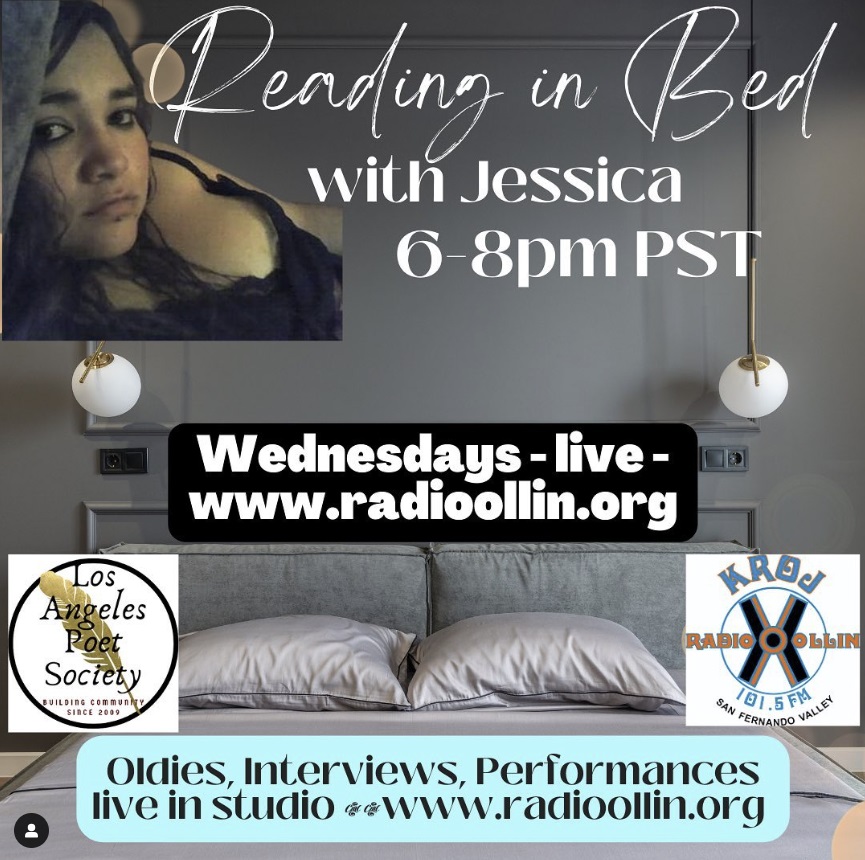
VOTH: The first time was a lot of fun with Jessica Wilson-Cardenas. I knew there were certain things I couldn’t say on the radio. I couldn’t swear, which was rather hard because every other word I say is an F-bomb. In my poetry, I also swear so I had to ask for the greenlight, or limit myself or just share poems where I don’t swear. To be interviewed by someone for the first time, that was a lot of fun. I was able to share my music taste and I answered her questions the best I could without stuttering. The moment she said I was immortalized on the radio, I felt like time slowed down so I could bask in the emotional overflow. The second time was with Brenda Vaca, Elodia Benitez, and Anastasia Fenald. Brenda called us her triplets. We were announcing to the public that we had an open fundraiser because we’re trying to get our books out in the world. Sharing the space and the mic with my press mates was really exciting. Jessica wants me to go back and perform Forbidden Temptation and to rock out with it.
Alex: Well, speaking of the Los Angeles Poet Society, what has it been like to host a regular monthly mic, and thinking on that what does it mean for you to bring the community together as a writer? What is that like for you and as a host of a mic?
VOTH: I am the host of One Mic One Globe, a virtual open mic on Zoom. When I was first asked, I was straight up nervous and scared because I didn’t want to let down the previous predecessor. I didn’t want to let you down. I was like, Alex made this space very humble and homey, so I wanted to bring that to the table but in my own way. How can I do that for folks? I had to learn patience and believe me I’m learning patience a lot. Specifically when folks have to turn in their head shot and bios by a deadline and they don’t respond or they respond late. I try to maintain that patience but also push a little bit. I love my mission and Brenda mentioned it before too. I love to create spaces that welcomes freedom of speech but is also a respectful, safe space where people are allowed to be themselves. I say this to my features, “Let yourself be vulnerable and create a connection. If you want to try something new with a poem, I encourage you. This space is yours.” A lot of folks love that I do that and say thank you. I want to create a community where it’s okay to not be okay but also to know your limits. To know your vulnerability, to know your truth and be able to express all of that. Jessica continuously tells me that she’s grateful and excited that I’m part of the team. When she gives me compliments I feel naked and exposed.
Alex: You are wholly loved by so many in the community and I hope when folks are offering you praise that you realize that yes, you’re worthy of that praise. Sometimes it’s hard to feel that but you’ve shown so much courage through this writing journey and have so much ahead too. Tell us a little bit more of what projects are ahead of you and what you’re working on next? Where are you featuring next? What’s on the horizon for you VOTH?
VOTH: So much is on the horizon. So, this Sunday January 28th, I’ll be featuring at the Melrose Trading Post. I’m really excited because when I was there last Sunday, there was a lot of foot traffic. All of these people are a huge opportunity for us. SoulStuf had the opportunity to write a poem for an actress and that was really cool! People in the music industry and all of that good stuff. Poetry has created so many opportunities, created so many doors and I can just open one. Even if it’s a brick wall, it’ll be fine because at least I tried.

I had a showcase in Lincoln Heights January 26th. I want to feature at places I’ve never been to like PoEtikLA and Da Poetry Lounge. I want to do another Gothic Poetry Night because it falls in line with Dieagnosis. I have two projects I’m brewing. One is a Visual Poetry Art Walk. I want to do this so bad. It’s combining poetry which is 2D with art that’s still 2D or is challenged into 3D. I loved hosting a workshop about Visual Poetry and sharing it with the Los Angeles Public Library. What if we add more colors, and change the shapes of concrete poetry. I would love an exhibit or a creative space. I feel people will appreciate poetry more if it was seen in a different way. The other one is Poetry on the Harbor where I’ll rent a boat and we’ll share poetry at sunset. Depending on how many people are interested will determine what can be done like food and beverages. Something else I really want to do is a Los Angeles Poetry Festival. We have Book Festivals, and there’s the poetry festival in the LA County Fair, but I want this to be exclusive to poetry and the many shapes and forms it can take.
Alex: There’s so many things you can tap into. You’ve had a lot of good collaborations so far, so I know if you dream it, it will come. It’s kind of what happens to you VOTH.
VOTH: Manifesting is powerful! They say follow the sign that allows manifestation. I learned my Mars is in Pisces. I have to feel it to will it alive. So I was like, that’s why a lot of things happen when my emotions are running high.
Alex: But hey that’s a great momentum right? What a powerful thing to know about yourself in the pursuit of your dreams. If it’s feeling and stirring within me I will, will it. My final question will be, what would you like to say to people who are just starting their writing journey? Any advice you would give them? Any words of wisdom that could keep them inspired and going with their pursuit of their creative dreams?
VOTH: Don’t think about the ten year plan. Think of the right now plan. What do you want to happen now? What needs to change now? What creative venture, what journey, what do you want and how do you want it to happen? Alway stay true to yourself. Always remind yourself of who you are. If you ever forget, take a moment, put your hands on your chest and take a deep breath. Remind yourself of who you are, why you are, how you are, what you are, your capabilities, and all of it. Remember the deepest hopes, the deepest desires, and the imPOSSIBLE dreams. Always remember that hope is alive and it all begins with you. How do you see the world? Manifest every single thing you want to do. Even if you have to write a eulogy to yourself to see all that you are and all that you will become because choosing life is a beautiful thing. I’m so happy to be here to share it.
Alex: I want to thank you for sharing your spirit, so openly and courageously as it relates to not just being a writer but being a human walking this planet having endured so much in relation to trauma and turning it into a really powerful book that is an opportunity for people to reflect and really dig deep but also empower their path forward. You’re a powerful wordsmith and beautiful brave heart and I just want to thank you for your time tonight and for this opportunity to talk about your journey with me.
VOTH: Thank you so much for being a part of this journey. You’re always in the milestone. When something major happens for me or a new venture, you’re there supporting me or offering words of wisdom. You’ve witnessed my growth and been a part of this journey with me.
Alex: This is just the beginning VOTH.
VOTH: I have a poem like that and a line reads, “My journey is the beginning and my story shall never end.”

 Los Angeles Literature