

A little late, but as 2023 is now in the rearview, it’s time for Los Angeles Literature’s 8th annual “Los Ángeles Writers Publish.” At the conclusion of each year, Los Angeles Literature publishes as comprehensive a list as possible, noting which local writers have published in the last calendar year and where.
As the months passed, local writers published essays and commentary, book reviews and poetry and even some fiction, as well as books. They published in national journals, magazines and newspapers such as the Los Angeles Times, The Southern Review, The Kenyon Review and Zócalo Public Square. They also published in local and regional publications such as LA Parent, Alta, The Los Angeles Press and The Pomona Valley Review. They published books with presses both big and small, from Grove Press to Penguin Random House, to Riot of Roses and Moontide.
What the literary community does best is write their own stories infused with their specific points of view. 2023 was no different. Poet and publisher Chiwan Choi wrote about how L.Á. can be lonely, make one feel invisible because of its vast spread-out size, like it did to him growing up in 1980s Koreatown. The city taught him to survive alone. However, “it’s what Angeleños don’t do enough in this city,” Choi says, that helped him heal from his loneliness: “[build] community.” Poet and Harbor College English Professor Christian Lozada published poems about the harsh realities of who his mix race family is (Southern white and Filipino), at times their destructiveness, and how they shaped him, in part, into who he is today. “I’m closer to White Mom than Brown Dad./My reasons were racist/not from intent/but from the evidence,” he writes in “Self-Binding.”
Myriam Gurba published her essay collection Creep: Accusations and Confessions, which explores her experiences with misogyny and violence against women and LGBTQIA identified women like herself, diving into the destructive ways society teaches people it’s ok to treat women as less than, as possessions, that boys will be boys, pointing out the fallacy of that. And queer Chinese-Korean-American poet Jeremy Ra published his first collection of poems Another Way of Loving Death, which explores, in part, what makes a singularly-unique yet societally-connected human, as he delves into his history and his own humanity.
Plus, local writers were nominated, given honorable mentions, and became finalists and winners of awards. For example, poet and publisher of Los Angeles Press, Linda Ravenswood, won the Oxford Poetry Prize. It’s awarded annually by Oxford Poetry, the oldest dedicated poetry magazine in the UK, to the best single poem written in English, with a cash payout of nearly $1,300.

Other’s such as Poet Laureate of Pomona, Ceasar K. Avelar, for his poem “The Steam Tunnel” from his poetry collection God of the Air Hose and Other Blue-Collar Poems; Donato Martinez for “We Wanted More” published in his collection Touch the Sky; VOTH’s poem “Forbidden Temptation;” Anastasia Helena Fernald’s poem “A Story From the Timeline I Still Spoke Ukrainian;” and poet Susan Hayden for her poem “The Beautiful Ugly” from her book Now You Are a Missing Person, were nominated for a Pushcart Prize.
Plus, poet Jose Hernandez-Diaz’s prose poem “Jose Emillo Pacheco’s Ghost and the Flying Jaguar” published in the Cincinnati Review, was nominated for the Best Small Fictions, Santa Ana native Sandra De Anda’s poem “Crusin’” published in The Ear, won the inaugural Linda Purdy Memorial Poetry Prize; Paul Kareem Tayyar won the Atlanta Review’s International Poetry Contest with a $1,000 award and publication in their Fall/Winter issue; and South El Monte native Caribbean Fragoza was selected for a 2023 Whiting Award, a $50,000 unrestricted grant for emerging writers.
The diversity of the literary community in Greater Los Ángeles continues to shine through, its writers supporting each other in their publication success.
If anyone’s publication(s) or books were omitted from the list, Los Angeles Literature sincerely apologizes.
Publications in Journals, Magazines, Anthologies and Newspapers
- Giovan Alonzi—Lit Stack: Without Lips Upon The Trumpet Poised To Scream For Heaven
- Lisa Alverez—Citric Acid (Issue 6): Where Do We Go from Here?; Anacapa Review: the heavy weather of childhood
- Juan Amador—Lit Stack: Facehugger
- Gustavo Arellano—Alta: Tijuana’s Beloved Market, Ask a Californian: Reputation Management
- Ceasar K. Avelar—Lit Stack: Bananas In Traffic
- Michael Jaime-Becerra—Los Angeles Times: The Dodgers are retiring Fernando’s No. 34. These songs honor his legacy; Huizache: Guillermo, Winter 1989
- Xochitl-Julisa Bermejo—Acentos Review: The High Dive, If La Llorona Had a Hashtag; Vibe: Sanctuary
- Michelle Bitting—Cleaver: For Phil; Craft (Shortlisted for Craft Character Sketch Challenge 2023): Beryl; Air/Light: Dummy Ventriloquist
- Mary Camarillo—Inlandia Literary Journal Fall 2023: How to Create A Compliant Child
- Nathan Castellanos—Lit Stack: Child Demon Avenger
- Adrian Ernesto Cepeda—A Night of Screams: Latino Horror Stories: A Night of Screams in Austin, TX; Vampires of Color: Crimson Pride: Por favor, muérdeme de nuevo; New Verse News: They Are Not Numbers, They Are…; Lit Angels 11: Horrorfolk: You Saw Me As An Ocean,” “I Killed 13 Men” and “Red Moon; Boundless 2023: the anthology of the Rio Grande Valley International Poetry Festival: Husband Putting On Blues Records
- Christina Cha—The Los Angeles Press: Volume 9/The Gold Issue: District Address to a Murder, Opposite of Murder, Magic and Murder
- Jen Cheng—The Los Angeles Press: Volume 9/The Gold Issue: Gold
- Sara Chisolm—Women Who Submit: Stories Told and Untold in the City of Angels
- Chiwan Choi—Los Angeles Times: Opinion: L.A. Can Be a Lonely Place. But I’ve Found Ways to Break the Isolation; Zócalo Public Square: Chiwan Choi’s Diaspora Jukebox Playlist
- Hector Carrillo—Pomona Valley Review: Where The Brown Buffalo Roamed: Searching For Oscar Acosta’s Ghost in East Los Angeles
- Ashton Cynthia Clarke—Women Who Submit: Drapo Vodou Art of Myrlande Constant – Traditional African Religion Meets the Colonizers
- Lisbeth Coiman—L.A. Parent: How to Survive the Holidays; Fantasy Magazine: Food For Thought; Reading and Traveling: The Sunflower Lanyard Program Helps Travelers with Invisible Disabilities; Compulsive Reader: Reading Diving at the Lip of The Water by Karen Poppy; Cultural Daily: Auto/Body: Redistribution of Power in Southeast LA; Women Who Submit: Intersect: Exploring the Longing
- Ingrid M. Calderon-Collins—Lit Stack: Everybody Is A Mask of God
- Michael Datcher—Truthdig: Let the Dead Speak, The Black Badge of Shame, A Black Voter Suppression Slap in the Face, The Battle Over Ethnic Studies in California, Ralph Yarl’s Blues, Emmett Till: Confronting White Supremacy, Can’t Breathe on the F Train, Hate and the Erasure of Juneteenth, Living While Black, in a State of Hostility, How DeSantis Helped Make the Jacksonville Massacre Possible
- Sandra E. De Anda—Citric Acid: If You See My Brother, Please Don’t Call the Police; The Ear (Linda Purdy Memorial Prize: Poetry): Cruisin’
- Jose Hernandez Diaz—Bennington Review: I Wasn’t Lionel Messi, The Insomniac; North American Review (Spring 2023): Ode to Boxing; The Southern Review: Doña Ofelia; Fourteen Hills: Abulita’s Prayers; Poetry in Voice: Pan Dulce; INSCAPE: Self-Portrait of Southeast L.A.; Quarter After Eight: A Poem Where I Try to Make Sense Out of Diaspora and Assimilation; Círculo de Poesía: The Stranger, My Life as a French Existential Novelist, The Fire Eater, Meeting Octavio Paz on the Planet Jupiter; Cincinnati Review: The Coyote Who Was Once a Dragon, (nominated for the Best Small Fictions) José Emilio Pacheco’s Ghost and the Flying Jaguar, Domesticated Beasts
- Gina Duran—Women Who Submit: Intersect: How My Summer Vacation Became My Somatic Awakening, How the Crestline Blizzard Taught Me Forgiveness
- Kim Dower—The Los Angeles Press: Volume 9/The Gold Issue: Hunger
- Brian Dunlap—Journal of Radical Wonder: A Peculiar Country
- Alex Espinoza—Alta: The Complications of Identity
- Hannah Olabosibe Eko—The Los Angeles Press: Volume 9/The Gold Issue: Jungle Cake
- Anastasia Helena Fenald—Lit Stack: a YouTube ad from the grassroots campaign
- Nikolai Garcia—Lit Stack: Can I Borrow Your Phone?
- Sarah Rafael Garcia—Westways: 10 Murals in Santa Ana that Celebrate Chicano Culture
- Lynell George—Preservation Magazine: Five Places to Experience and Explore the Art of Jazz; Truthdig: Crossing Territories: Walking and Writing with Mike Davis; Alta: The Search for Mardou Fox, A Different Way to Look at Coffee, Everyday People
- liz gonzález—Inlandia: A Literary Journal Summer 2023: The Summer Before 9th Grade
- Natalie Graham—Citric Acid (Issue 5): What’s Love?
- Ryane Nicole Granados—Raising Mothers: The Broken Crystal Ball and The Zombie Killer; High Country News: A Demonstration of Black Bodies in Nature
- Myriam Gurba—Tasteful Rude: Beautifully Ruined: A Case for Re-visiting Kate Braverman’s Lithium for Medea; Los Angeles Times: The Edgar Is All The Rage Among The Foos
- Gustavo Hernandez—Santa Barbara Independent: Refugio; Anacapa Review: Nocturne
- Donna Hilbert—Beach Chair Press: Second Day of Spring and What Bird
- Loretta McCormick Huizar—Prairie Schooner: Review: Vickie Vértiz. Auto Body
- Jonathan Humanoid—Lit Stack: This Isn’t the Apocalypse I Was Promised
- Erin Aubry Kaplan—Red Canary: Biden Time; Truthdig: A Decade of Black Lives Matter, The Existential Erosion of Black Los Angeles, The MAGAfication of California’s Largest School District, If At First You Don’t Secede; Huffpost: For Black Mayors, Any Sign of Imperfection Means The Ax; Los Angeles Times: The Undeniable Loss of ‘My Macy’s’
- Cassandra Lane—Los Angeles Times: Op-Ed: The Video of Tyre Nichols’ Murder is Unbearable. But it Shows Why We Need Stories of Both Black Pain — and Joy; LA Parent: ‘Meet Avatar: Way of Water’ Star Trinity Jo-Li Bliss; Teen Opens YA Book Store in Studio City
- Michelle Latiolais—Citric Acid (Issue 5): Saved: Objects of the Dead Introduction
- Brian Lin—Electric Literature: I Rewrite My American Story in “Everything Everywhere All at Once
- Andrew Liu—Lit Stack: The Machinery of Evening
- Jill Vassilakos-Long—Inlandia: A literary Journal Summer 2023: Once Last Chapter
- Joe Lopez—LibroMobile Voices: Plastic Spoons in the Inland Empire
- Christian Lozada—34 Orchard: I Once Worked There; Impossible Task: There Is a Judgement, The Second Marriage Was for Love and Unforgivable, Self-Binding, Survival to Where?; Scrawl Place: Allowed in the Temple
- Maestro—Lit Stack: You Haven’t Paid For A Title
- Donato Martinez—The Los Angeles Press: Volume 9/The Gold Issue: I Need Lines of Happiness
- Kate Maruyama—Women Who Submit: Intersect: The Community of Submit 1
- Jenise Miller—Kenyon Review: Labor of Memory; High Country News: Tending A Remnant of Home
- Mauricio “Soul on Fire” Moreno—Lit Stack: Urgent Care Poem
- Yxta Maya Murray—The Southern Review (Summer 2023): All Systems Go
- Bibinaz Nami—Inlandia: A Literary Journal All Teen Issue Spring 2023: inhumans and Ten-Thousand Hours Is Enough
- Terri Niccum—Pomona Valley Review: I Will Build You The Heaven I deny Myself and It Will Be Furnished With Things You’ve Loved
- Viet Than Nguyen—The New Yorker: A Departure From Reality
- Wendy C. Ortiz—BOMB: Diastole 1
- Michelle Park—Inlandia: A Literary Journal All Teen Issue Spring 2023: The Golden
- Victoria Patterson—Santa Monica Review (Fall 2023): Guilt Money
- Christian Perfas aka SoulSTUF—Lit Stack: The Secret?
- Jade Pretell—Inlandia: A Literary Journal All Teen Issue Spring 2023: Pantoum for a Plane Ride
- Teresa Mei Chuc/Chúc Mỹ Tuệ—Consequence: Rice Story; Global South: Rescued Tigers
- Jeremy Ra— Catamaran (Winter 2023): Dumplings
- Wendy Rainey—Beach Chair Press: Bonkers
- Linda Ravenswood—Oxford Poetry Review: Elementary school; Reed Magazine: the children turn themselves into ice (Edwin Markham Prize in Poetry winner)
- Kevin Ridgeway—Beach Chair Press: Tan Line Mystique; The Journal of Radical Wonder: Kamikaze Summer
- Mirlanda Robles—Huizache: Before Migration, Tunnel
- Gabriel San Román—Citric Acid (Issue 5): Memoirs of an Anti-Mexican County; Citric Acid (Issue 7): On Watching The O.C. Twenty Years Later
- Jim Ruland—Razorcake (137): Lazy Mic, Melissa Cody
- Jean-Pierre Rueda—Lit Stack: 60 Towards Artesia Station
- Stacy Russo—Citric Acid: The Time I saw Rham Dass, It Runs in the Family, The Moon Was for Her, Jan
- Iván Salinas—Lit Stack: The Mota Blues; Accentos Review: Chairs without a pair of buttcheeks to sit on their fabric, Carts Crossing The Street, Primer Paso, Austin Crackers, The Mayan Sun
- Carla Sameth—El León Literary Arts: When You Left for Portland
- Matt Sedillo—El Machete: Pilgrim; tiszatáj: After the Revolution, Post, 21st Century, City On the Second Floor
- S. Pearl Sharp—Altadena Poetry Review: Literate
- Natalie Sierra—Lit Stack: Blue; Barnes & Noble Spanish Language Blog: Rompiendo Fronteras: Revelando el impacto profundo de la aplicación de las leyes de inmigración en las familias en Efrén Dividido
- Mike Sonsken— Poetrybay: Michael C. Ford: He Was There Man By Mike Sonksen; Alta: Portraits of the City, A Radical Teacher, Brynn Saito’s Future, Will Alexander’s Sonic Grammar; LA Parent: Immerse inPublic Art
- Louise Steinman—Air/Light: That LA Bug
- Susan Straight—Los Angeles Times: A Map of 1,001 Novels to Show Us Where to Find the Real America, During the Holidays, Making Dozens of Cream Sherry Cakes For Those Who Help Our Family Survive, Parking-strip Paradise, Sidewalk Superbloom; New York Times: Sunday at the Drag Strip; The Orange County Register: What We Can Learn From the Botanical Garden’s of Southern California
- Suzanne Lummis—Anacapa Review: The Hypnosis Series: I. The Beginning Hypnotist Writes Her First Poem, II. The Beginning Hypnotist Takes Notes from the Lecture by the Master Hypnotist and Makes a Little Poem at the End, III. The Beginning Hypnotist and Emerging Poet Tries the Mirror Technique
- Paul Kareem Tayyar—Santa Monica Review (Spring 2023): Gulzar
- Lynne Thompson—Air/light (Winter/Spring 2023): Sometimes, The Light, No Elegy For Magic, Now that I know What I Had, I Know, Sestina For Suzanne Lummis, Empress of Noir; Guest Editorial Live Encounters Poetry & Writing: Some Poems (Despite Their Serious Intent) Love to Play, Are Inspired By The Ancestors; Santa Barabara Independent: 3/4 Jazz
- Sarah Thursday—Beach Chair Press: Apology to the Palm Trees
- Imani Tolliver—Intertextuality Starts Here: Art Block Zine; Vol. 8
- Andrew Tonkovich—Citric Acid (Issue 5): The Ones Who Drive Away from Aoblab; Citric Acid (Issue 6):In the Summer We Go to the Mountains with Peter Carr
- David L. Ulin—Zyzzyv: Coup De Vieux; Zócalo Public Square: Los Angeles Is An Unreliable Narrator; Alta: Blood Inheritance, Kerouac’s Ghost, Why You Should Read This: ‘Holy Land’, Why You Should Read This: ‘The Every,’, Why You Should Read This: ‘The Other Americans’, Badlands; Los Angeles Tines: Opinion: How I Looked Past Twitter and Learned to Like Social Media Again, I Wanted to Write a Book of L.A. Noir for Decades. But First, I Had to Live It
- Alexandra Umlas—Beach Chair Press: Blue
- Brenda Vaca—Lit Stack: Turquoise Trail
- Antonio Gonzalez Vasquez—Inlandia: Literary Journal Fall 2023: El Lomo De Oro or The Man With the Golden Back
- Saba Waheed—The Margins: Falling
- Raffi Joe Wartanian—The Los Angeles Press: Volume 9/The Gold Issue: R Like Rabbit
- Aruni Wijesinghe—Pomona Valley Review: I Go To Aisle 7 at Gonzalez Northgate Market; Inlandia A Literary Journal Summer 2023: Old Joe, Getting Lost at the William O. Schaefer Elementary School Library; Beach Chair Press: Blowfish
- Nancy Lynée Woo—The Banyan Review: Fires in Maui; Good River Review: And then suddenly I was
- Diosa Xochiquetzalcóatl—Journal X (Xinachtli Journal): Who Says?; Inlandia: Literary Journal Fall 2023: Ceremony con el zorillo; The Conscious Collective Magazine Edition 2: In the Darkness of a New Day, I Remember Who I Am; The Los Angeles Press: Volume 9/The Gold Issue: My Daddy Is a Veteran, Mi papi es un veteran; The Los Angeles Press: Volume 8/The Chain: Maria Contreras; Read or Green Books, 2023: Felices Fiestas; Lit Stack: The Weight of the Scales, Desierto
- Dwight Yates—Santa Monica Review (Spring 2023): Lobster
- Rafael Zepeda—Santa Monica Review (Fall 2023): Manitou
Books Published 2023

Breaking Pattern (Inlandia Institute) by Tisha Marie Reichle-Aguilera
Adriana Elizabeth Herrera Bowen, a Latina living in Riverside California, is an eleventh grader who loves horses more than people. School is hard. She wants to win the All-Around Cowgirl saddle more than anything, but her parents make choices that disrupt her plans and force her to make drastic decisions.
God of the Air Hose: and Other Blue-Collar Poems (El Martillo Press) by Ceasar K. Avelar
God of the Air Hose lays bare the realities of blue-collar life. Not only does it highlight working class injustice, but explores how to eliminate it. Avelar gives his definition of his own blue-collar poetry: “A blue-collar poem is writing directly, exclusively from what you do for a living. What I do, what I feel, what I see.”
Luna Inmigrante (Alegria Publishing) by Virginia Bulacio
Luna Inmigrante (Immigrant Moon) is a bilingual poetry collection written by Virginia Bulacio, an Argentinian immigrant in search of opportunities and a home in the United States. This collection invites you to reflect on issues of migration, dreams, survival, DACA, traumas, fears and the immigrant journey. This book is for those who want to know and celebrate authentic immigrant stories.
Incantations: Love Poems for Battle Sites (Mouthfeel Press) by Xochitl-Julisa Bermejo
Incantation: Love Poems for Battle Sites is a Chicana’s witness to the American ethos in a time marked by controversy, division, and transformation. Bermejo delves into the heart of the matter, contemplating the significance of US monuments as both symbols of history and battlegrounds for ideological strife, and imparts a compassionate ear to the marginalized, memorializing the lives of Black and brown individuals whose lives were cut short by state-sanctioned violence.
Braided Spaces (Self Published) by Jen Cheng
Braided Spaces, has themes of immigrant displacement, critical race feminism, and queer musings by a Chinese-American eldest daughter.
Incidental Takes (Hummingbird Press) by Teresa Mei Chuc (Chúc Mỹ Tuệ)
Doug Rawlings blurbs the book by saying: “Teresa Mei Chuc has put together a remarkably powerful book woven together with an eye for detail and an ear for jolting juxtapositions. Her sense of wonder and her deep empathy with the natural world manifest themselves through the plight of the whale, for example. It is almost as if the spaces between poems are vast tracts of ocean water and the brilliant words rising up are breaching whales. The poems call to us: ‘Pay attention!’ Here is a poet who can use the power of words to speak for the natural world.”
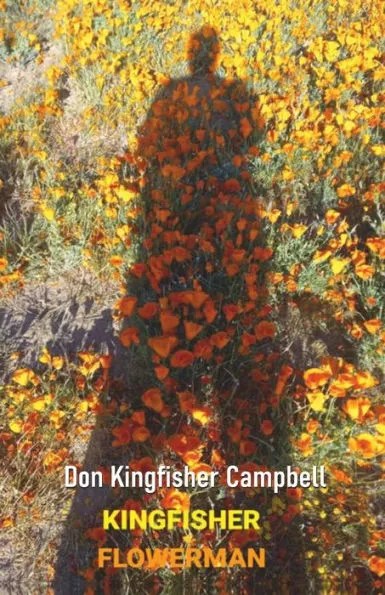
Kingfisher Flowerman (Four Feathers Press) by Don Kingfisher Campbell
Kingfisher Flowerman collects 48 diverse poems by Don Kingfisher Campbell, all with flowers in them in one way or another. An array of poetic incorporations on the concept of the interaction of flora and fauna. From the “fountains and flowers” of the July 4th poem “Surrender” to making flower metaphors in the dining room with muffins, cards, balloons, and people in “UNO Party”, this poesia explores a universe of symbolism and celebration within our minds and surroundings of wistful romance, road trips, and eternal skies via the observing and interpreting heart and vision of the Kingfisher poet.
La Lengua Inside Me (FollowSong Press) by Adrian Ernesto Cepeda
La Lengua Inside Me is a journey reflected in poems inspired by Cepeda’s familia, Latinx cultural heroines and heroes and politico-themed verses. It starts off with Cepeda as a child, and as the narrative grows, the poems progress by rediscovering his cultura that has been so prominent and influential in his vida. The poems from La Lengua Inside Me focus on reclaiming his Latinx heritage, his lengua and his culture that is specific, yet universal.
Dreaming Under Polka-Dot Stars (World Stage Press) by Cory Besskepp Cofer
Michael Torres says about Dreaming Under Polka-Dot Stars:
“The poems in Dreaming Under Polka-Dot Stars are one part joyful trumpet song, one part elegy. They capture the problems and pleasures of childhood with precision, rendering each image within with the complexity we know we lived through. There’s gospel music in these pages, neon lights flickering through a day dream, and a glimpse of singing cousins. Homies come through too. Fathers serve us sausage and eggs on Sundays. And mothers call us home when it gets dark. Each poem cracks open. Here you’ll find uncles embracing stories before passing them down. Cory Cofer sets these very stories spinning into a history he has been called to carry on.”
Resurrection Walk (Little, Brown and Company) by Michael Connelly
Defense attorney Mickey Haller is back, taking the long shot cases, where the chances of winning are one in a million. After getting a wrongfully convicted man out of prison, he is inundated with pleas from incarcerated people claiming innocence. He enlists his half brother, retired LAPD Detective Harry Bosch, to weed through the letters, knowing most claims will be false.
Bosch pulls a needle from the haystack: a woman in prison for killing her husband, a sheriff’s deputy, but who still maintains her innocence. Bosch reviews the case and sees elements that don’t add up, and a sheriff’s department intent on bringing quick justice in the killing of one of its own.

Harlem at Four (Penguin Random House) by Dr. Michael Datcher
This picture book is broken up into two parts, meet Harlem: the girl and the neighborhood. Part one follows the adventures of a little girl named Harlem and her single father as they go on a museum “playdate” with painters Romare Bearden and Jean-Michel Basquiat, listen to John Coltrane records, and conduct science experiments in their apartment (“The volcano erupts /Red lava on Valentine’s Day!”).
Part two takes the reader back to the fourth year of the twentieth century in Harlem the neighborhood. Here, the reader is introduced to Philip A. Payton Jr., aka Papa Payton, whose Afro-American Realty Company gave birth to the Black housing explosion, helping to start America’s Great Black Migration. Because of Papa Peyton, Black families—like Harlem and her father a century later—could move to Harlem and thrive and flourish.
In a Corner of Your Country (Bellucci, Palms & Carmichael Publishing) by Carolina Rivera Escamilla
The result of almost twenty years of work, some of this poetry is intentionally written for theatrical performance, as realized initially by the poet herself.
The Art of Job Hunting (Riot of Roses) by Anastasia Helena Fenald
Are you currently suffering under late-stage capitalism? Do you shell out cookie-cutter answers in every horrible interview? Did society pressure you to enter the workforce to prove your self-worth, or was that Mom and Dad? If you have answered “yes” to any of the following questions, then you are also familiar with getting fucked by job hunting. The Art of Job Hunting is Anastasia Helena Fenald’s second poetry collection, a classic one-two punch of humorous satire and blunt truth. While taking inspiration from job applications, skill assessments, and interview questions, each poem delivers wit and sarcasm sprinkled with plenty of uncomfortable (read: honest) vulnerability.
Driving Force: Automobiles and the New American City, 1900-1930 (Angel City Press) by Stephen Gee
Los Angeles’s car culture has shaped the nation’s preferences in transportation, architecture, leisure, and even dining. The story of the automobile and that of Los Angeles have been entwined for more than a century. Driving Force: Automobiles and the New American City, 1900-1930, explores how the explosive growth of Los Angeles’s passion for automobiles was ignited by an unlikely, visionary mix of entrepreneurs and risk-takers. It owed its inception to the bicycle shop owners who began repairing and selling cars, carriage retailers, and automobile aficionados who ventured into unknown territory to sell a product regarded by nearly all banks and most businesses as a fad at best. These early adopters learned how to broaden the market for automobiles and convince the public that the car was no longer a luxury but a necessity.

Creep: Accusations and Confessions (Avid Reader Press/Simon & Schuster) by Myriam Gurba
A creep can be a singular figure, a villain who makes things go bump in the night. Yet creep is also what the fog does—it lurks into place to do its dirty work, muffling screams, obscuring the truth, and providing cover for those prowling within it.
Creep is Myriam Gurba’s informal sociology of creeps, a deep dive into the dark recesses of the toxic traditions that plague the United States and create the abusers who haunt our books, schools, and homes. Through cultural criticism disguised as personal essay, Gurba studies the ways in which oppression is collectively enacted, sustaining ecosystems that unfairly distribute suffering and premature death to our most vulnerable. Yet identifying individual creeps, creepy social groups, and creepy cultures is only half of this book’s project—the other half is examining how we as individuals, communities, and institutions can challenge creeps and rid ourselves of the fog that seeks to blind us.
Now You Are a Missing Person: A Memoir in Stories, Poems & Fragments (Moon Tide Press) by Susan Hayden
Three devastating losses are at the heart of Susan Hayden’s lyrical memoir, Now You Are a Missing Person. The suddenness of each of these deaths―her father, her childhood best friend and her husband―sparks and guides a series of explorations to claim equilibrium and a sense of self. Stories, poems and fragments are woven together to trace Hayden’s search for identity and belonging through lovers and friends, some enduring, some ephemeral. She creates an intimate album of her life, from the 1970s to the present, evoked in an LA populated by troubadours and actors, both shining and fading. Raised in an observant Jewish family in the suburban San Fernando Valley, she struggles and finds her footing in an ever-shifting culture of expectations around body image, sexuality, motherhood, widowhood, and autonomy.
Little Fleece (Ghost City Press) by Gustavo Hernandez
This collection is part of the 2023 Ghost City Press Summer Micro-Chap Series. There are poems about family and identity in these 15 pages include the poem “Son” which begins: “My father cried the first time he saw me dance/Not an early dance. Not a Spring dance./A Fall wedding. I was in my thirties. He cried./That’s how far he thought me from that kind of joy.”
Evergreen (SOHO Crime) by Naomi Hirahara
It’s been two years since Aki Ito and her family were released from Manzanar detention center and resettled in Chicago with other Japanese Americans. Now the Itos have finally been allowed to return home to California—but nothing is as they left it. The entire Japanese American community is starting from scratch, with thousands of people living in dismal refugee camps while they struggle to find new houses and jobs in over-crowded Los Angeles.

Fixit (Mulholland Books) by Joe Ide
Danger has always followed IQ, a reality he’s keenly aware of as he’s laid up in a hospital bed, recovering from injuries sustained in his last case. Isaiah cannot help himself from being the hero, and any misery he’s suffered as a result—wounds from a knife fight, gnawing paranoia—he’s suffered alone. Yet as IQ recovers, five hundred miles from East Long Beach, he’s unaware that Grace has been abducted by his sworn enemy, the professional hitman Skip Hanson. Skip is savage and psychotic, determined to punish Isaiah for sending him to prison and destroying his life. Now, Isaiah and his sometimes partner, ex-hustler Juanell Dodson, must track scant clues through L.A.’s perilous landscape as Grace’s predicament grows more uncertain.
Dear California: The Golden State in Diaries and Letters (Redwood Press) by David Kipen
California has always been, literally, a place to write home about. Renowned figures and iconoclasts; politicians, actors, and artists; the world-famous and the not-so-much―all have contributed their voices to the patchwork of the state. With this book, cultural historian and California scholar David Kipen reveals this long-storied place through its diaries and letters, and gives readers a highly anticipated follow up to his book Dear Los Angeles.
Running from January 1 through December 31, leaping across decades and centuries, Dear California reflects on the state’s shifting landscapes and the notion of place. Entries talk across the centuries, from indigenous stories told before the Spanish arrived on the Pacific coast through to present-day tweets, blogs, and other ephemera. The collected voices show how far we’ve wandered―and how far we still have to go in chasing the elusive California dream.
Three Hundred Streets of Venice California (FutureCycle Press) by Tom Laichas
Walking the grid of Venice streets, Tom Laichas wanders dreamscape, landscape, and self-portrait. Among these prose poems are wry fables: gnarled parkway trees plotting against the Bureau of Street Services; a derelict commercial property that has witnessed all Five Ages of Man; a peacock strutting for months, unhurried and unharmed, across rush-hour boulevards. Here, too, are anxiety and sorrow: streets that forget the names of their dead; neighbors who wonder whether, above the city’s illuminated midnight sky, there really are stars. In this collection, Venice Beach is entangled with its urban others, from Italy’s Renaissance republic to modern Florida’s Gulf Coast resort.
Hija De Mi Padre (Alegria Publishing) by Solany Lara
Hija De Mi Padre is Solany Lara’s debut bilingual poetry collection in which she explores the emotional complexity associated with the loss of a parent, generational trauma and being a first generation Mexican-American. Solany’s poetry shines light on her healing journey and the resilience that has come from losing her father, who lives on through her and the pages of her book.

Nightfall Marginalia (What Books Press) by Sarah Maclay
A book of nocturnes and ekphrastics, the poem of the dream and the poem as dream, Nightfall Marginalia abandons diurnal constraint as it flickers through lyric and narrative, abecedarian, OuLiPo, prose poem, and parallax view. Twilit, autumnal, narrowly perched between elegy, eros, prayer and grimoire, here, the tangible-the sensate-becomes an entrance even to barely perceptible mystery, whether nearing the threshold of Hypnos or seeking the solace of a liminal dawn.
Tales of an Inland Empire Girl (Los Nietos Press) by Juanita E Mantz
Tales of an Inland Empire Girl is a story of a blue-collar family who lives in the Inland Empire. John, the Cowboy white father, loves his children but drinks too much and is always chasing windmills while Judy, a Mexican mother working two jobs, struggles to lend stability and oscillates between love and anger, and their three children who try their best to survive day by day.
Touch the Sky (El Martillo Press) by Donato Martinez
Touch the Sky is a collection full of poems about Martinez’s family, of the barrio, of work, of what it is to be Mexican in the United States. These are poems of place, Martinez’s world of cultura, familia, and comunidad that made him into what he is today.
Red Door (World Stage Press) by Eisha A Mason
In Red Door, Eisha Mason invites you into sacred realms. The poems in her debut collection reveal her inner process of liberation, transporting you to a place where the soul heals back to life. She explores how to stay true to her spiritual path in the face of systemic violence, discovering how community can triumph over pain and create beauty and justice. Her words connect us to that which lies beyond the Red Door, reuniting us with Life’s boundless Love.
General Release from the Beginning of the World (Parlor Press) by Donna Spruijt-Metz
In General Release from the Beginning of the World, Donna Spruijt-Metz attempts to reconcile the death of the father, the lies of the mother, a hidden half-sister, and the love for a daughter-with the impossible desire to banish the past from the present. She examines shifting relationships with the holy, referred to in the book only as ‘YOU.’ She asks: “Do YOU hear/a whisper/in YOUR//constant night/-and then listen?” She breaks her own heart to touch yours.
The Place of the White Heron: A Novel (Tia Chucha Press) by Alejandro Morales
The book is an allegory of the violence, racism, and international tensions between the United States and México. Protagonist J. I. Cruz embodies a mythic female character. Allusions to pre-Columbian goddesses and other Mexican mythological, religious, artistic, spiritual, and historical figures are part of her psychological and spiritual identity.
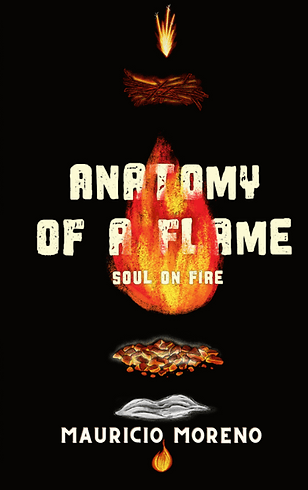
Anatomy of a Flame (Los Angeles Poet Society Press) by Mauricio Moreno
Anatomy of a Flame dissects the intersections of identity and culture amongst a world that wants to define you. It is placed in six movements that include: owning your identity, accepting your darkness, and healing. This book includes themes of mental health, identifying as a first generation child of immigrant parents, the taboos of mental illness among Latinx culture, and nature’s role in our healing. The motif of fire is used in each of the six sections of this book to resemble the journey Moreno showcases within, and how fire can resemble our brightest and darkest moments. The motif of fire concludes with being consumed by the flames, and also embracing what ignites us, burns us, and heals us, with the hopes to help others also find healing.
God Went Like That: A Novel (Curbstone Books 2) by Yxta Maya Murray
In award-winning legal scholar and novelist Yxta Maya Murray’s new novel, federal agent Reyna Rodriguez reports on a real-life nuclear reactor meltdown and accidents that occurred in 1959, 1964, and 1968 at the Santa Susana Field Laboratory. An infamous research and development complex in California’s Simi Valley, the lab was eventually dismantled by the US government—but not before it created a toxic legacy of contamination and numerous cancer clusters. Toxins and nuclear residue may have been further released by the 2018 Woolsey Fire and 2019 floods in the area.
A Man of Two Faces: A Memoir, A History, A Memorial (Grove Press) by Viet Thanh Nguyen
In A Man of Two Faces Viet Thanh Nguyen rewinds the film of his own life. He expands the genre of personal memoir by acknowledging larger stories of refugeehood, colonization, and ideas about Vietnam and America, writing with his trademark sardonic wit and incisive analysis, as well as a deep emotional openness about his life as a father and a son. The book explores the necessity of both forgetting and of memory, the promises America so readily makes and breaks.
The Unvarnished Gary Phillips: A Mondo Pulp Collection (Three Rooms Press) by Gary Phillips
Aztec vampires, astral projecting killers, oxygen stealing bombs, undercover space rangers, aliens occupying Los Angeles, right wing specters haunting the ’hood, masked vigilantes, and mad scientists in their underground lairs plotting world domination populate the stories in this rip-snorting collection. In these pages grindhouse melds with blaxploitation along with strong doses of B movie hardcore drive-in fare.
Another Way of Loving Death (Moontide Press) by Jeremy Ra
Another Way of Loving Death is a collection of poems that traces this queer Chinese-Korean-American poet’s intent to give tangible presence to the intersectional reality among biology, cultural heritage, and evolution. It wants to pierce the core of what makes a singularly-unique yet societally-connected human and solicits the readers to sit next to the poet while listening to his particular, indelible experiences like a trusted confidant, as he wonders at the things quotidian with the amazement of treading on earth’s surface for the first time.

Contadora: Letters from California (Eyewear Publishing) by Linda Ravenswood
Celebrated poet Linda Ravenswood presents 44 hybrid texts which read as maps, diary entries, manifestos, dream fragments, and lists. Her branching perspective of the 500+ years span of the (so-called) Conquest of Mexico by Cortés and the Spanish army (1521-present) explores reverberations across landscapes & cultures of the American West that are still being navigated. The voices explore past, present, & future histories of those who dwell in the West. Some histories explored include WWII Holocaust survivors of Los Angeles, relocated NDN children of the 19th century, Chontales people of the Yucatán encountering ships of Cortés, border blurring, intersectional feminism, and 21st-century balancing acts of Latinidad. This extraordinary collection is a tour de force of poetic craft, colonial sensitivity, intellect, and conscience.
Love Between Downpours (Alegria Publishing) by Jean-Pierre Rueda
Love Between Downpours is a love letter that acknowledges and celebrates poetry’s dexterity and ability to build time bridges with nostalgia, melancholy, joy, and hope.
Make It Stop (Rare Bird Books) by Jim Ruland
Scores of detox and rehab centers across Southern California have adopted a controversial new conditional release policy that forces patients to stay until they pay their bills. And if they can’t pay? They don’t leave.
Enter: Make It Stop, a group of highly skilled recovering addicts dedicated to rescuing those trapped in these prison hospitals by posing as patients and getting them out by any means necessary. But when Scary Gary, one of their top ops, gets killed on assignment, Melanie Marsh and her crew set out to avenge his death and unravel an unthinkable medical conspiracy that threatens to destroy the organization and cripple the city with a dangerous new drug. Melanie may be LA’s best hope but if, and only if, she can stay sober.
From decrepit rehab wards to beachside punk clubs, Make It Stop takes readers into LA’s darkest corners, exploring sobriety, sanity, and a society hell-bent on profiting off those who need its help the most.
Blackouts: A Novel (Farrar, Straus and Giroux) by Justin Torres
Out in the desert in a place called the Palace, a young man tends to a dying soul, someone he once knew briefly but who has haunted the edges of his life: Juan Gay. Playful raconteur, child lost and found and lost, guardian of the institutionalized, Juan has a project to pass along, one built around a true artifact of a book―Sex Variants: A Study of Homosexual Patterns―and its devastating history. This book contains accounts collected in the early twentieth century from queer subjects by a queer researcher, Jan Gay, whose groundbreaking work was then co-opted by a committee, her name buried. The voices of these subjects have been filtered, muted, but it is possible to hear them from within and beyond the text, which, in Juan’s tattered volumes, has been redacted with black marker on nearly every page. As Juan waits for his end, he and the narrator recount for each other moments of joy and oblivion; they resurrect loves, lives, mothers, fathers, minor heroes. In telling their own stories and the story of the book, they resist the ravages of memory and time. The past is with us, beside us, ahead of us; what are we to create from its gaps and erasures?

Vite derubate, Terra derubata (Edizioni Ensemble) by Matt Sedillo
From the preface by Anna Lombardo:
It is well known that history is rewritten by victors who often ignore or keep out ‘other’ stories. In many of the poems translated here, taken from Matt Sedillo’s two collections, Mowing Leaves of Grass and City on the Second Floor, the author rereads and interweaves precisely those “other” stories. He does so in the light of precise data and references, which make his excavation work even richer and more precious. Without too many preambles, he mentions names, places, dates of massacres, savage gentrification, injustices and inequalities almost always carried out in the shadow of declared policies of inclusion carried out through various legislative instruments or racist and homophobic attitudes of the American political, economic and social system towards the so-called minorities.
Letters to My City: Second Edition (Writ Large Projects) by Mike Sonksen
Second edition with a new essay on the late Mike Davis, legendary author of City of Quartz, a new essay on local history of time and space, and a teaching guide to help educators incorporate the book into their curriculum.
The poems and essays in Letters to My City combine two decades of field experience, research, personal observations, and stories told to the author, Mike Sonksen, a third-generation Los Angeles native, by his grandfather and other family members, to interrogate all sides of Los Angeles, its streets, its people, its neighborhoods, as a means to examine the postmodern metropolis.
Greens For My Blues (World Stage Press) by Isaac Sundiata
Greens for my Blues is an authentic and unapologetic collection of poems by Isaac Sundiata presented in two sections. The Blues Poems are a carbon footprint of a time lived, remembered and expressed, bringing creativity to pain. The Greens represent life and growth, offering words to nourish seeds of gratitude, health, happiness and peace. Together, these two sections provide counterbalance in their expressions of the Black experience and the human condition. As Sundiata writes in the title poem “Blues is more serious than it seems /Yet, all it really needs is Greens.”
Thirteen Question Method (Outpost 19) by David L. Ulin
In Thirteen Question Method, a man hides out in a Hollywood apartment from a past he doesn’t want to remember and a present he is desperate to avoid. The summer sky is thick with ash, and across the courtyard, his neighbor won’t stop screaming. When she asks for help in an inheritance dispute with her estranged stepmother, he is drawn into a web of fear and manipulation, until he begins to lose sight of what is real.
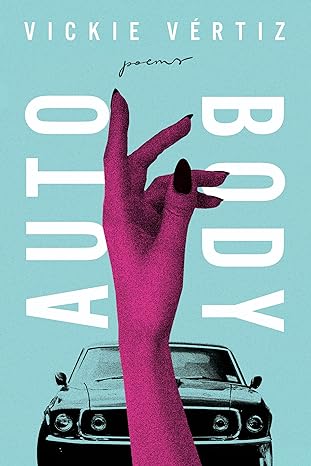
Auto/Body (Ernest Sandeen Prize in Poetry/University of Notre Dame Press) by Vickie Vértiz
From the greased-up engines of auto body shops to the innumerable points of light striking the dance floor of a queer nightclub, Auto/Body, winner of the Ernest Sandeen Prize in Poetry, connects the vulnerability of the narrating queer body to the language of auto mechanics to reveal their shared decadence.
Raised in and near auto body shops, Vickie Vértiz remembers visiting them to elevate the family car to examine what’s underneath, to see what’s working and what’s not. The poetry in this book is also a body shop, but instead we take our bodies, identities, desires, and see what’s firing. In this shop we ask: What needs changing? How do our bodies transcend ways of being we have received so that we may become more ourselves?
Dieagnosis (Riot of Roses) by VOTH
Dieagnosis, is a collection of poetry based on a journey of self-discovery, working through the traumas and the struggles of being a Gay Latino in an impacted religious society. VOTH has come a long way from where he began. Through every challenge, he learned a valuable lesson of never giving up and not letting anyone take his power. Before he diminished his own power by giving it away to bullies, past relationships, and even to his own mind. He references whispers, darkness, and the void because he is a survivor of suicide. Dieagnosis, also contains Checkpoints which are pages where he interacts with readers to acknowledge the consent that was taken. He also has a workbook titled Beacon to deepen the connection with readers.
Maze Mouth (Moon Tide Press) by Brian Sonia-Wallace
Maze Mouth traces the year Brian Sonia-Wallace lost his father and moved to a gay mecca. Expect human pups, apocalypse salesmen, orgy fish, and an insatiable, sushi-eating Death.
Bedside Manners (Arroyo Seco Press) by Aruni Wijesinghe
Bedside Manners is an examination of the poet’s relationship with American healthcare.
I’d Rather Be Lightning (Gasher Press) by Nancy Lynée Woo
I’d Rather Be Lightning is a love song to the earth, celebrating what we stand to lose. These poems are “throwing a tantrum” about the climate crisis, written by a “child /of imperialism whining about freedom /from the bondage of stuff.” What do you get when you combine capitalism, environmentalism, ecology, globalization, fascism, economic crisis, and global pandemic? Nancy Lynée Woo transmutes anxiety into dynamic and playful poems, writing into the absurdity of the global crises facing humanity with a soft wit, enduring hope, and deep love for the more-than-human world. Eco-feminism moving at lightspeed, I’d Rather Be Lightning captures a Millennial’s despair over environmental destruction with bolts of humor, compassion, and formal experimentation.

West of the Santa Ana and Other Sacred Places (Riot of Roses) by Diosa Xochiquetzalcóatl
In this poetry collection, Xochiquetzalcóatl takes you back to the beginning, on a journey down memory lane, where a little girl from an all-American city grows up to realize she isn’t all that all-American after all; hence, beginning the eternal search for heart and home, for roots and wings. And though the journey commences in the past, it emerges in a contemporary setting; and although it ends in the here and now, it takes you back to the beginning of time and space, simultaneously interweaving the threads of her human existence with the intricate web of humanity. All of this, bringing us back to the waters of life, demonstrating how a river truly runs through us all.

 Los Angeles Literature
All Lit Stack poems and prose pieces mentioned in this article can now be found at mobiledatamag.substack.com . On January 14th, I was asked by Lit Stack Blog to change the name of my Lit journal. I complied, and it was an honest mistake on my end.
LikeLike