
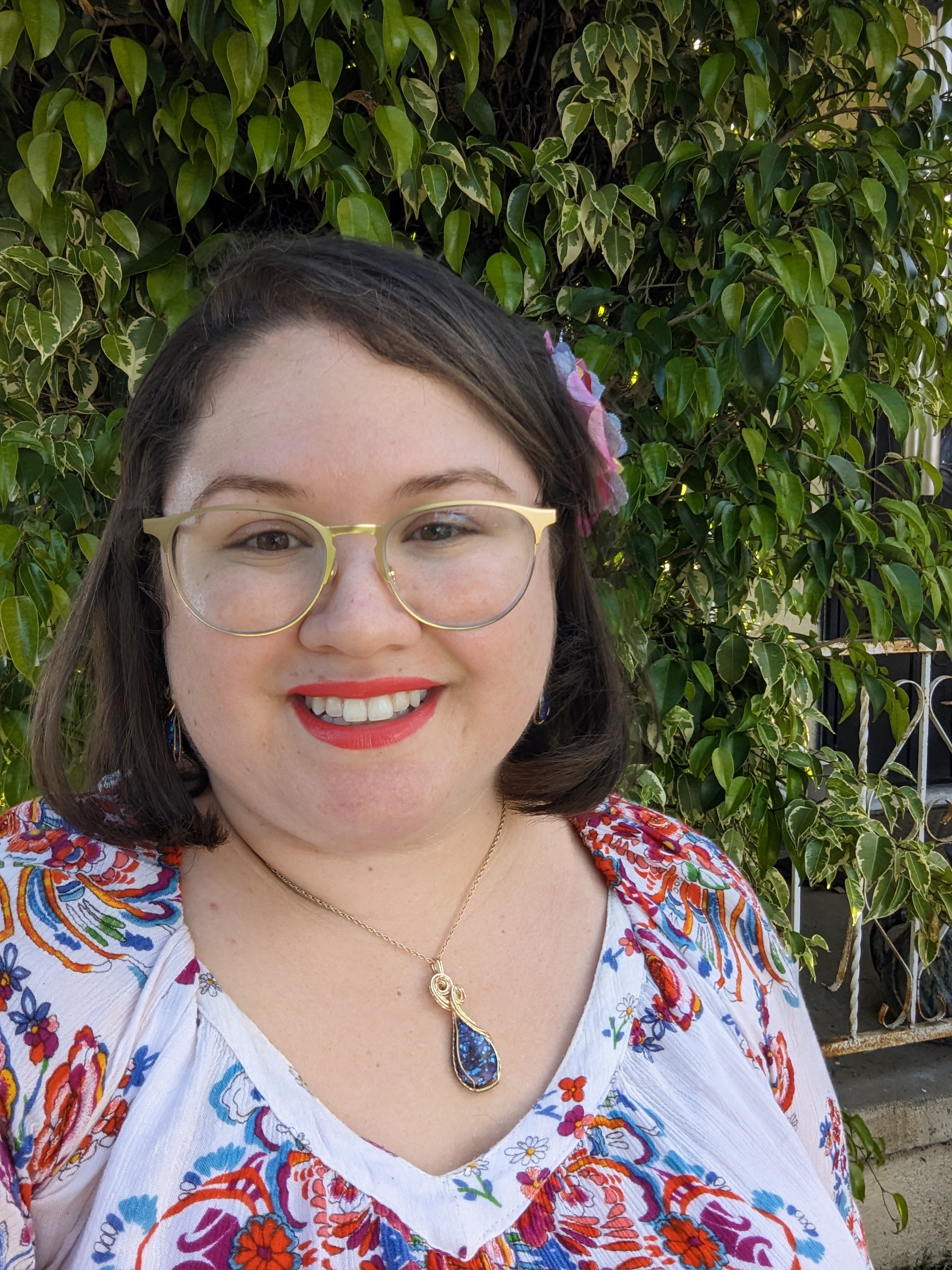
I first met Anastasia Helena Fenald at Holy Grounds Coffee in El Sereno for Alex Petunia’s one-year anniversary celebration for her poetry collection Tending My Wild. Prior to that, I saw a lot of buzz about Help Me, I’m Here: Poems to Myself, (World Stage Press, 2022), on social media. When I started my digital literary journal, Lit Stack, Anastasia was one of the first writers I wanted to be on there. The poetry in her first collection is encouraging, and I pictured Anastasia directly speaking to me while reading it. I wanted readers to see Anastasia talk directly to them through her poetry. I am happy she agreed to be on Lit Stack. That’s where you’ll find a version of “a YouTube ad from the grassroots campaign,” a piece about seeing the persuasion to work for a grassroots organization, meant to attract the unemployed to their company. This piece is now in The Art of Job Hunting: A Dramedy in Verse.
This year, I have gotten to know Anastasia better through other literary events in the Los Angeles community, including some hosted by her press, Riot of Roses. We have talked about her auditioning for comedic monologues, her experience doing stand-up comedy, entertaining her audience, improving on making her audience and readers feel vulnerability, and her striving to bring a presentation of The Art of Job Hunting: A Dramedy in Verse to college/university student bodies.
Many poems (some prose poems) in The Art of Job Hunting critique looking for jobs, expose how formulaic resumes and questionnaires are, and some pieces are sprinkled with personal tales of negative workplace experiences. Reading it comes off like a one-person theater performance, and the book also lends itself to be enjoyed as a comedic presentation on why looking for a job is tense and having a day job is stressful. Everyone who works for a check is beholden to capitalistic structures for eight hours a day. Employees are left tired from pleasing everyone to the point of having disdain for all people who may not have anything to do with their unpleasant days at their workplaces. When readers reflect on their workplace situations, they are instructed in The Art of Job Hunting to laugh as a remedy to overcome being bothered by the mental and emotional tolls of their workplace environments for about forty hours a week for fifty weeks a year.
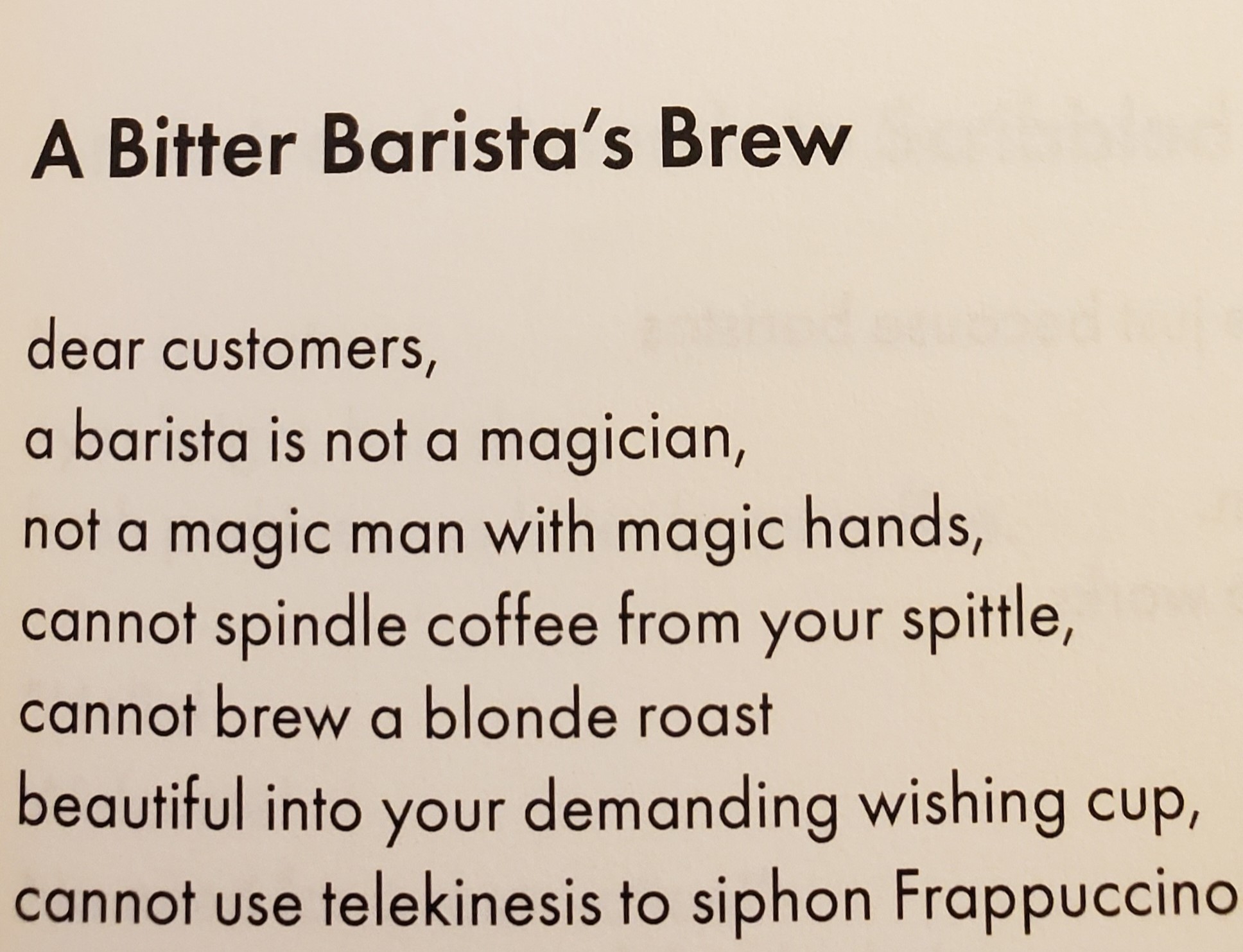
Jesse Tovar: Here is my thoughts when I read “A Bitter Barista’s Brew:”
I was a barista at My Place Cafe in Pasadena for six months while hosting poetry and prose readings for two years over there. Early on with me hosting readings there, I thought there’s no way I’d be an employee there. Then at some point, I felt the need to help out the owner who was losing employees left and right. While I was a barista, I was rude to customers. Owner called me out on it. Still was rude after the fact. There were times I would work and host a poetry reading the same day, and I felt annoyed until after the poetry reading I curated was over. After I quit as a barista, I didn’t want to abruptly end the reading series, so I had mixed feelings the rest of 2022. Yet, all the remaining poetry and prose readings made me feel better. Sorry, all that is to say I deeply resonated with this poem. What poems do you think readers of The Art of Job Hunting will resonate with?
Anastasia Helena Fenald: I’m sorry to hear that! That’s rough, but I’m glad all the prose and poetry made you feel better.
Honestly, I think it depends on the reader! All my poems are very different stories and I have so many styles in which I write. I have poems that are silly, poems that are angry, poems that are honest. Some of my poems are written in multiple choice so there are multiple poems in a poem. Sometimes I lean towards mythical figures and sometimes I lean to writing from the perspective of a dog. And I think that’s awesome. The Art of Job Hunting is not solely my journey of job hunting, it’s about how job hunting is a universal, terrible experience overall.
For poetry, if the poem gave you a strong of emotion, of any kind, then it did its job!
Tovar: You did what I consider an excellent Ted talk on Help Me, I’m Here: Poems to Myself, from World Stage Press, for the Community Literature Initiative (CLI) Beach City Writers Conference. Are you planning something similar for The Art of Job Hunting? I can see this presentation happening at Lit Fest in the Dena, which isn’t far from Red Hen Press HQ.
Fenald: I didn’t realize you were there for that! But, yes, I would love to do a similar Ted Talk format, mostly how to help stay-at-home parents and caregivers translate their skills so it can be mentioned on their resumes. Volunteer work is considered employment, so why not caregiving? Plus, I also want to create space for people to express their grief while they are job hunting and go over self-care tips on how to get through it through alternative ways. Job hunting is a very demoralizing process and it’s important to show people how to express their bitterness and anger authentically—such as, writing a letter to an ex-boss who was an idiot (and never sending it…maybe) and acknowledging the loneliness of job hunting. Job seekers encounter countless failures while looking for employment and I want to give people the permission to complain. While a positive attitude is needed to try again tomorrow, there also needs to dialogue for people to express the absolute suck.
Tovar: I like the subtitle, A Dramedy in Verse, because I can imagine you doing this collection as a one-person theater show as well. I know Lorinda Hawkins Smith has done that for her Justice? Or Just Me? novel series. Is that something in the works?
Fenald: The subtitle actually came from Brenda Vaca, though, the editor and owner of Riot of Roses Publishing House. We were talking about ways to describe the book as we pitch it and she said “dramedy in verse” and it has stuck ever since! My goal, though, is to have a 30-45 min set memorized using multimedia as a backdrop with both music, video, and pictures! I want to eventually present this to colleges, corporations, and employment groups. It’s to have fun, you know? I did a test run of this at my book release party with a power-point presentation. Because corporate vibes are all the vibes.

Tovar: Help Me, I’m Here: Poems to Myself, is mind-blowing for me because I would never think to write to myself years later. Anytime I think to say something to my 11-year-old self or my 20-year-old-self or my 25-year-old-self, I freeze, and express my struggle to articulate the words, ala Lizzie McGuire. What did you do to overcome the struggle to revisit the past you? I will say though I have been able to speak to my 25-year-old self after skimming some of the poems at Cafe Con Libros in Pomona.
Fenald: Well, I had to overcome my own shame and self-hatred. Usually when we think of the past, we call ourselves “dumb”, “stupid”, or “cringe”, but we weren’t. We were kids. And my 11-year-old self wanted to write poetry. Are those poems the best on Earth? God, no! But they are honest and real and I also remember how proud I was when I wrote them. I actively chose to love my own progress versus shame myself on how I wasn’t a bestselling writer when I was 11. We act like you need to be living your best and most successful life at 25, but that’s not true. We are a work in progress each and every day and who we were yesterday gave us wisdom for today.
Tovar: I can argue that your first collection engages with archival theory. I say this because I name drop this theory I heard about in grad school in another book review I wrote. Archival theory is not concerned with literal archives as historical source material but rather how the source material of the past is repurposed in building an argument or composition in question, such as arguing how one can overcome emotional trauma. With that said, do you agree or disagree?
Fenald: It totally does! Help Me, I’m Here is about sharing work I preserved as a child. I typed up every poem I ever wrote and saved them. Then, when I had to switch computers I transferred them using floppy disks to USBs to external hard drives to finally, the cloud. I’ve been through 6 computers now, and thankfully, it’s so much easier to save them this time. Now, I have poems scattered on the web, in the cloud, on my phone, and of course, like most people, I save a lot of files on my desktop.
Tovar: When I learned the name of your 2nd collection, I thought to myself, I have been there. I can honestly say I’m not good at it, but my recent jobs were referred to me without hunting vigorously. So, maybe your collection will help me brush up on that. Is that one thing you wish for your readers?
Fenald: I just want my writers to feel validated. Not every poem will relate to them exactly, but I want them to know they are not alone. Job hunting is dark, mean, and gloomy and sometimes, you can only laugh at yourselves. Most of the time, you pretend you’re not angry. I want people to laugh and be angry and cry and be human. This book is not an interview so my readers don’t need to be their best selves. Hot messes are completely welcomed! And then tomorrow, they can try again and maybe learn how to do the STAR interviewing method.
Tovar: We will obviously learn about your journey in job-hunting, if readers dig for that specifically, whether for leisure or essay writing, right?
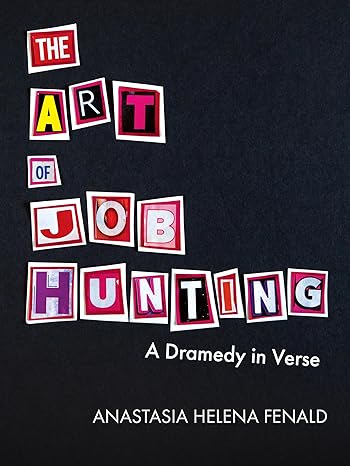
Fenald: In a way, yes! My frustration is front and center in this book, but not all of my answers reflect actual events, just inspirations from my past. In the poem “From the Timeline I still Spoke Ukrainian”, I was in a legal seminar for work and people from a different office asked if they could prevent employees speaking Vietnamese as they did remedial work and it reminded me how I actually got bullied as a little kid for speaking Ukrainian to the point I don’t speak it anymore. Sometimes, I just wanted to write poems for my friends who had been struggling, like in the poem, “Monologue From My Unemployed Boyfriend” was about when my partner got laid-off during the pandemic. He would ask me those questions, like if it was okay for him to go to lunch, when the answer was always yes. Another poem I wrote for others would be “We Don’t Have Villages Anymore” as I wanted mothers/parents returning to the workforce to feel heard when they have to answer why there was a gap in their application. The “rules” state you’re not supposed to mention it was because you had children, but let’s be honest, a lot of times, it’s because you had children.
Tovar: I think it is really awesome there is a different version of “a YouTube ad from the grassroots campaign” in The Art of Job Hunting. I know that there’s a slightly different version of “The Women Who Wear Surgical Masks” by Natalie Scenters-Zapico in an online journal where she name drops Javier Duarte, whereas the book version in Lima::Limon does not say his name. Why do you think it’s important for writers to have slightly different versions of their pieces out in the world?
Fenald: Truthfully? Formatting, for me, is a huge reason some of my pieces are different depending on the medium. While I loved the way I wrote “a YouTube ad from the grassroots campaign”, I needed to modify it to fit in a 9×6 book. So, to make it uniform, the title became “A YouTube Ad From the Grassroots Campaign” and I needed to change the line breaks so it could be easier to read on the page.
And, of course, if given the chance, writers always tweak their work. It’s never finished! We can always add a little bit more.
Tovar: Your writing has been published by independent presses. First was World Stage Press. Now, the second is Riot of Roses. What is wonderful about working with independent presses?
Fenald: The best thing about working with small presses is community. I have met so many friends through the World Stage Press and Riot of Roses and I have so much more opportunity now than I did before. As a poet, I get to be inspired by so many new people each time I work with them. It’s wonderful.
The smart thing about working with an independent press is having another entity be responsible for the little gritty-nitty details of both copyright and business for my piece. I can have a bit of separation between my work and myself personally. It also means business-wise, I have an entity that I can trust to provide for me (such as sales and opportunity) so that my network can grow and I can have a more lucrative future.
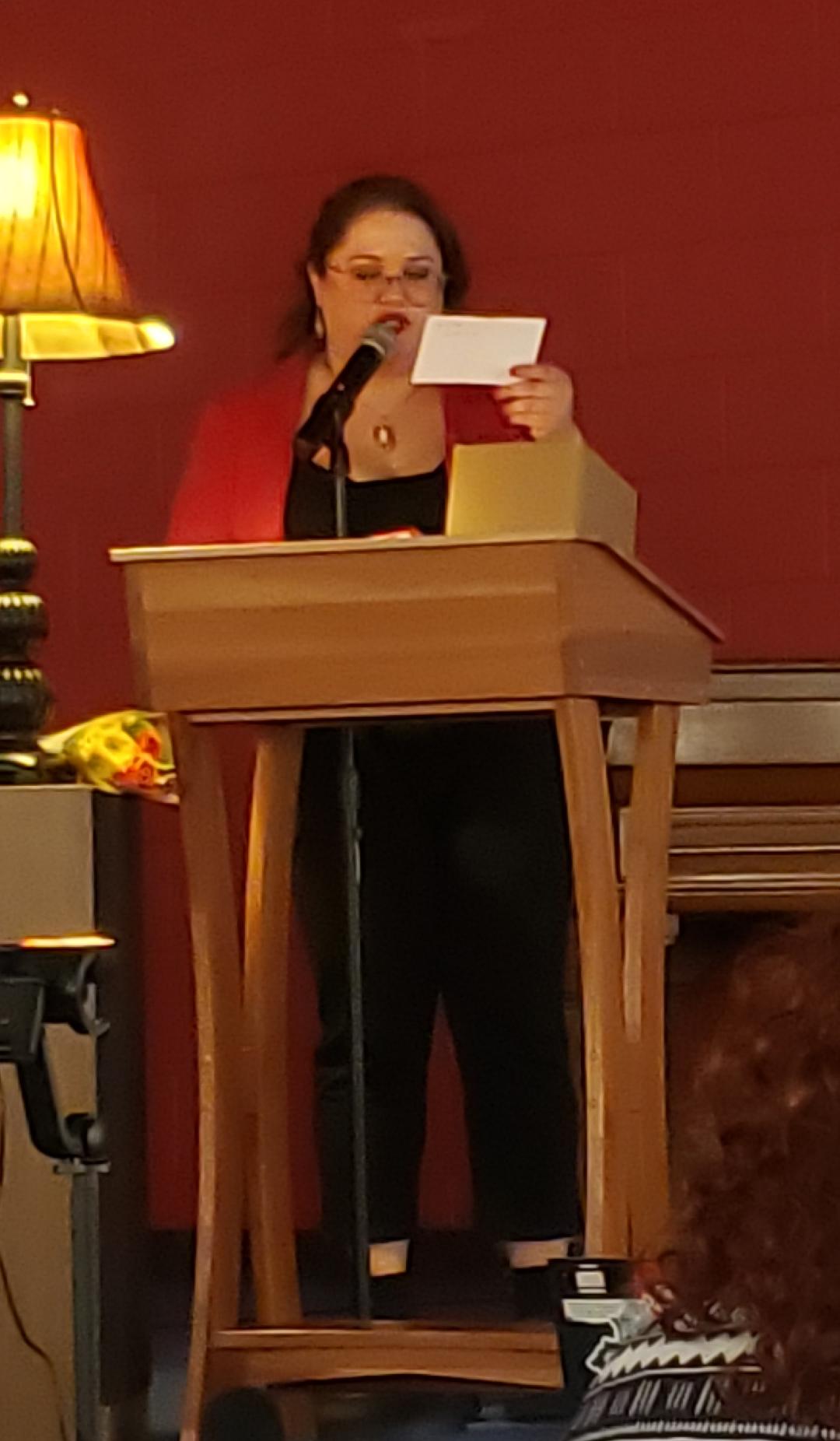
(But don’t be fooled! You don’t make money from writing, you make money through speaking engagements and workshops! Which, an independent press can get those gigs and stepping stones for you.)
Tovar: You wrote on social media recently that “when you see someone perform enough, you can hear their voice as you read. Brenda Vaca has this sing-song quality when she performs and she can project! Like little waves. Some words boom and some are soft.” For me, I can say the same for Carlos Ornelas when I come across his writing outside seeing him read. Actually, whenever I read your poems on the page, I can imagine your voice, especially when you want to express sarcasm, grief, etc. It’s like life brought you three together to demonstrate in various stages throughout the world.
Fenald: Ah, thank you so much! I do read my pieces out loud and try to write them in a way that it can be easily replicated by the reader. Especially in poetry where sound is paramount to create rhythm and rhyme.
Tovar: You and James Coats represent for me the desert areas of So. Cal. It’s also cool that you, Coats, Vaca, Ornelas, and several others have come out of CLI. I would love to have you and Coats read together someday at Joshua Tree Coffee. How does that sound?
Fenald: I would love to go! I’m from the Antelope Valley and I adore joshua trees!
Tovar: Will you be going on a book tour for this book?
I’m going to try at least! I want to go to as many Los Angeles bookstores and libraries in 2024 and it is pinned at the top of my vision board!

 Los Angeles Literature
it’s refreshing to see the brutal honesty of job hunting captured with humor and vulnerability. The blend of poetry. regard animasi
LikeLike