
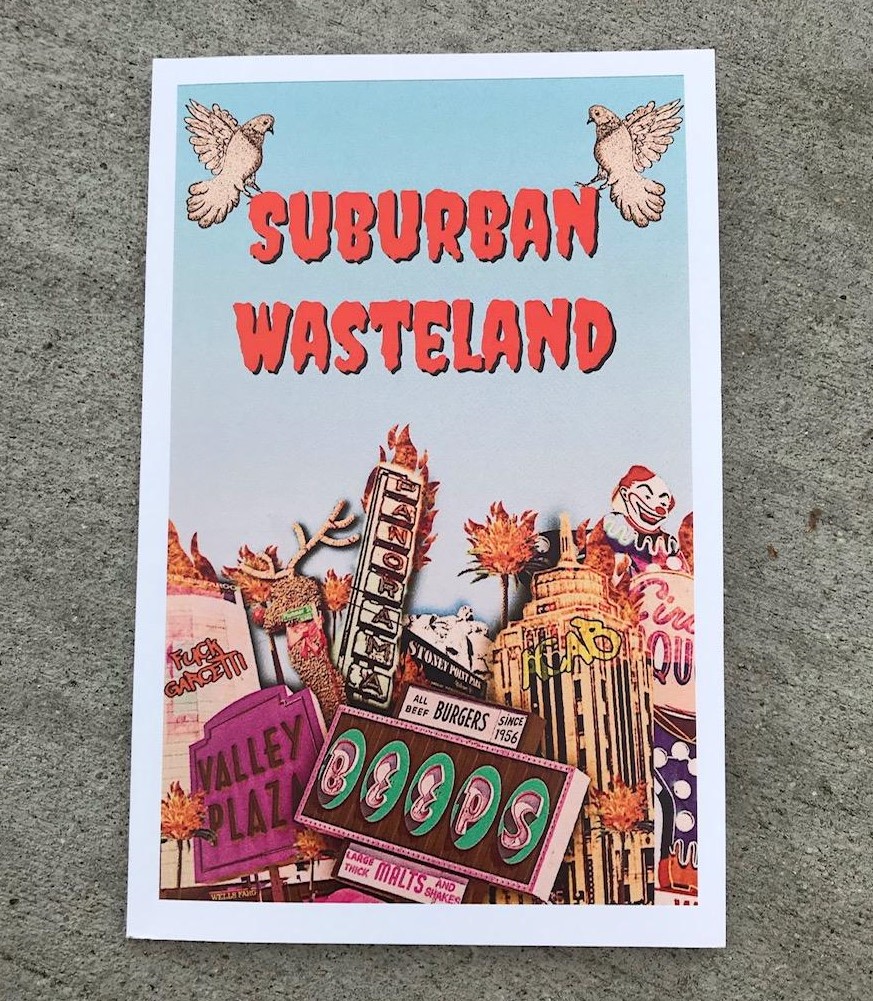
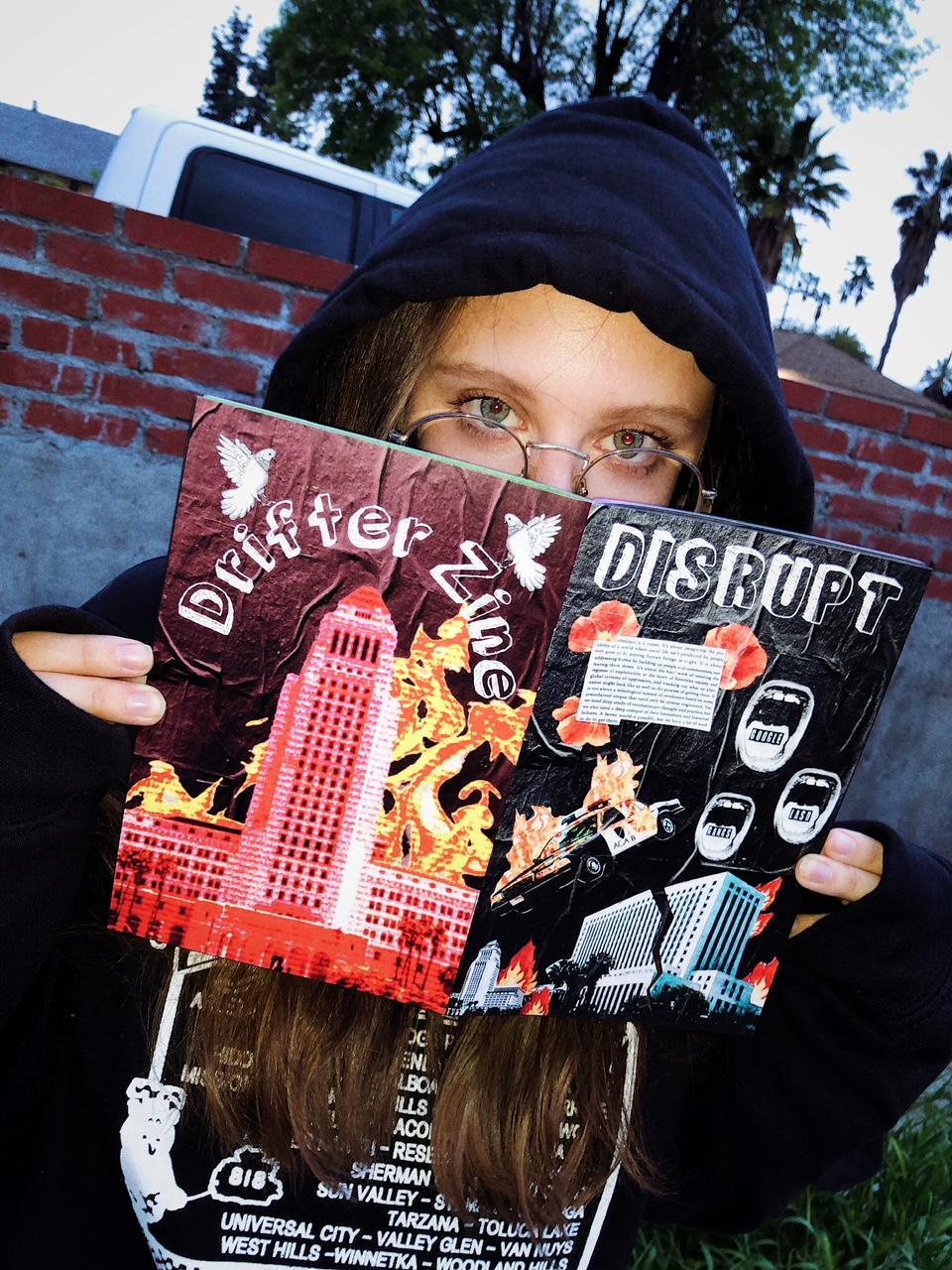
Opening up an issue of Drifter Zine is like holding the L.A. night-sky on the 4th of July: it is loud, colorful, and beautiful. It is definitely the most colorful literary zine you will ever experience, with the colors and layout making it feel more like a punk fanzine than a literary journal.
This fireworks show was the brainchild of Madi Parsley and her partner Iván Salinas (both Cal State Northridge alumni) who decided to start Drifter in April 2020—during the pandemic—as a way to bring artists together during that solitary time. Drifter has also served as a vehicle to showcase creative work from San Fernando Valley locals.
As of now, Drifter has published over 100 writers and artists of various mediums. Drifter begins to climb in popularity as Madi and Iván have been tabling dozens of events from the San Fernando Valley, all the way to Long Beach. Recently, I was able to ask Madi a bunch of questions about The Valley, Drifter, and Valley girls. Here’s how it went down:
Nikolai Garcia: What the fuck is so cool about The Valley?
Madi Parsley: How can I even explain how cool the Valley is, there’s too many fucking things! The Valley has a reputation for having nothing which is the reason this place has cultivated the best DIY scene in Los Angeles. Yeah we don’t have many (or any) venues or galleries but we have a lot of space here in the suburbs and us DIY kids know how to use it. From park shows to cul-de-sac galleries to backyard cinemas we really have it all. It’s truly amazing to be a part of the Valley community because it’s so genuine. Folks are always down to come together and create something. The SFV doesn’t wait for something to come to us, we do it ourselves! That’s why I never want to leave this glorious pit.
Garcia: Can you tell me about some specific places in The Valley that are important to artists or the literary scene out there? Maybe places that helped nurture your own creativity at one point or another, or maybe just a spot where writers hang out?
Parsley: There’s not many, unfortunately. One space that is holding down the Valley is Tia Chucha’s Centro Cultural & Bookstore, founded by Chicano writers Luis J. Rodriguez and Trini Rodriguez. Tia Chucha’s serves all ages through their workshops, open mics, and their annual Celebrating Words Festival. That’s where I found out about Los Angeles Poet Society because Jessica Wilson hosted a monthly open mic there back in the day. But one place can’t serve the entire community, that’s just not possible or accessible for that matter since that space is on the outer edge of the East Valley.
Bookstores are simply bookstores here; they rarely host events for the community and the same goes for coffee shops. I think a lot of us here end up in higher education whether that be community college or Cal State Northridge looking for creative outlets and resources, which we still don’t find. My experience in college was a soul crushing one. Most professors were teaching outdated material, created an unwelcoming environment for writers, and could not tell you about any current publication let alone self-publishing. I think a degree is great, but the money and time is not accessible to a lot of people, so if there were more community resources and outlets this would benefit the community because you don’t need a degree to be a writer or an artist.
I see things slowly changing here. The record store Midnight Hour is starting to do gallery shows and is open to community events like readings. More coffee shops are having open mics and exhibits, so I think folks with spaces are starting to understand what this generation and past generations need in the suburbs. I also think this will be the generation that will open art spaces and bookstores that have resources for the San Fernando Valley.
Garcia: Is this lack of community spaces and resources the reason why you started Drifter?
Parsley: Drifter Zine was definitely created due to a lack of spaces for art to exist but also as a way to defy the stereotypes of the Valley that the media portrays. The San Fernando Valley is a working-class community and has people of all backgrounds, so the SFV isn’t just white picket fences and B list actors. There’s also this idea that the San Fernando Valley has no culture of its own and we have to leave this place in order to make it, that’s bullshit. So, the Valley needed a place to say we have poets, we have artists, we have musicians, just like everywhere else in LA.
Iván (Drifter Zine’s Co-Editor) and I wanted to create something that talked about local issues and how artists and writers here were responding to them. The idea was to make a publication for valley kids by valley kids. That idea for Drifter had been floating around for a couple months at that point and then the pandemic hit so that seemed like the perfect time to just do it. To create a publication to highlight artists and writers from the San Fernando Valley both in print and online. Every issue is themed-based usually with a political undertone and we don’t just publish those who identify as artists or writers, anyone is welcome to submit their work.
Garcia: Can we talk about themes? I feel that there are pros and cons to themes. Do you ever find them to be limiting? Why does Drifter use themes and why do they work so well for Drifter?
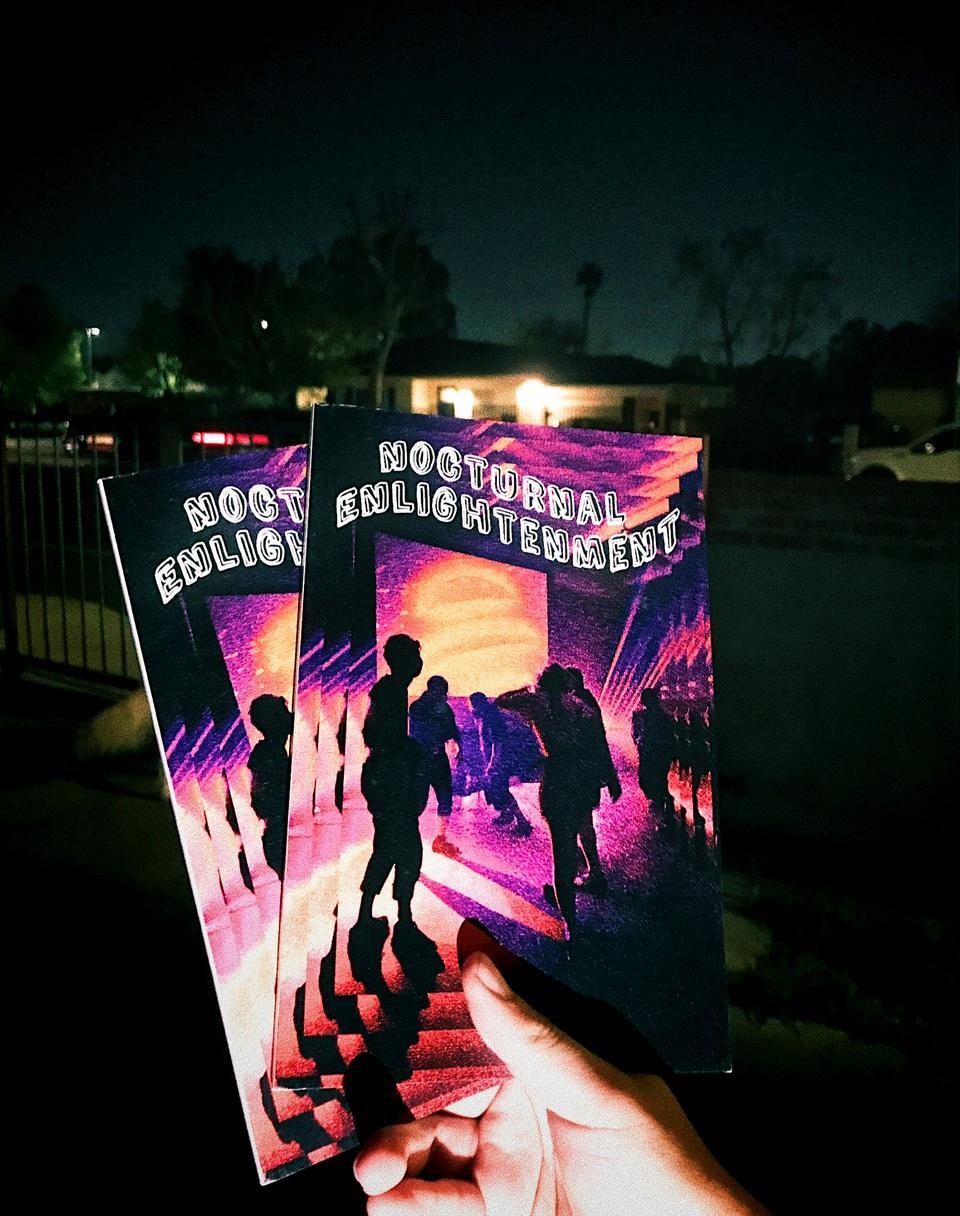
Parsley: I think the limitations that themes create are the reason why they work so well for Drifter. I know themes or topics personally inspire me to create, so I would hope that when we put out a call from submission under a certain theme it would be sort of generative for folks. Themes are also a great way to reach different audiences. Some of our issues have been very specific like the Fem Issue that published Fem identifying artists and writers, but we’ve also had more broad themes like Nocturnal Enlightenment that published work inspired by the night. The zines, because they have a theme, also create this interwoven connection between works. It’s beautiful to me when poems or artwork by people who have never met work so well together, so the issue flows because of those similarities.
We release issues at least twice a year so if one theme doesn’t speak to you maybe the next one will. That structure definitely creates a smaller pool of submissions, which might seem like a con but for us it’s actually helpful. We’re a micro press; it’s just Iván and myself doing everything, so in order for Drifter to exist it needs limitations. A smaller pool of submissions make the review process more manageable, especially if we get a lot of writing. We generally only publish 15 to 20 works per issue, so it’s a way smaller print than your average anthology that publishes anywhere from 60 to 80 works. Drifter is self-funded as well and anyone in publishing right now knows how expensive printing is, especially if you’re doing full color. We want our issues to be as accessible as possible and having less pages makes the zines cheaper in price for everyone but still has that great quality we want.
I’ve been asked before things like, “what are we going to do when we run out of themes?,” I don’t think that’s possible. Iván and I enjoy brainstorming themes and we always have the next two or three issues planned. Like we’re currently working on issue 7, so I’m not worried about running out of ideas anytime soon. We also get inspiration from the people we know and what they’re working on. The community is always inspiring what we do with Drifter.
Garcia: Can we talk about the layout inside the zine? I think what really separates Drifter from other zines and lit journals is the colorful and creative layout. Do you do all the layout yourself? Does this process take longer than editing? Do you ever feel like you are Publisher, Editor and Art Director? Speaking of which, where does your love of collages come from? I know you have a journalism background, but did you also study art in any way?
Parsley: I definitely wanted Drifter to have loud aesthetic, I don’t like a minimalist approach to design. I come from a newspaper background and I wanted to do everything the complete opposite of that. Blocks of text on a page drives me fucking insane, it just kills a story for me. The pages in each of our zines are meant to feel individual and the design is there to amplify the work, whether that be by adding texture, color, or a collage.
I do all the layout while Iván does the editing, and we’re usually working on that at the same time. Splitting those tasks makes it more doable because neither of us are stuck finishing one before we can move on to the other. Layout does take a while though because I don’t make templates for our issues. I’m completely self-taught so I never learned a true process of how to do these things other than just by watching colleagues use inDesign while I worked in my student newsroom.
Yes, it does feel like I wear many hats, maybe too many sometimes. While taking on tasks of a publisher, editor and art director is a lot, the beauty of that is not having to water down any ideas. Iván and I rarely have to compromise on things because we’re on the same page with each zine while we plan them, which is not something I experienced when I worked in a newsroom. So, taking on all those roles is relatively easy when you have a good partner to share them with.
As for my love of collages, that’s fairly new for me actually. I have always loved to paint and draw, but I never tried collaging because it felt kind of intimidating to me. But in early 2020 I discovered artist Casey Kauffmann (also from the valley!) and she does these sick digital collages that she makes on her phone, that really sparked something in me. So, I found an app called Bazaart and started making really shitty collages that I now cringe at but it opened this whole new world of creating art for me. I still do a lot of my collages on my phone through that app but I also use Photopea, which is a free version of Photoshop.
I am in no way professionally trained, I never studied art in college because I think academia would have made me hate it honestly. I’ve always looked at creating art as something personal and I didn’t like to share it, which is funny now since my collages are on all of our zine covers. It’s nice to hear that someone likes the cover or the layout because I have no idea what I’m doing for the most part, and that lack of professionalism is why I love doing Drifter.

Garcia: Looking through the last three issues of Drifter (the only ones I have had access to) it’s very evident that Drifter aims to highlight, not only voices from The Valley, but POC voices. As a White publisher, is this something you feel you have to be continually conscious of doing? And, how does where you come from affect your particular taste in choosing what gets into Drifter?
Parsley: Drifter at its simplest is a community zine therefore it should reflect the population of the San Fernando Valley and Los Angeles. I do think that highlighting POC voices happens organically because that is who lives here and that is who should be highlighted. Seeing how the valley is portrayed in the media does not reflect the valley I know, so it was important to create a publication that was authentic and where folks felt comfortable expressing themselves.
The publishing world is already extremely white, so as a white publisher it is important for me to be an ally and be conscious of how I take up space and who I create space for. I knew the publishing world didn’t need another white girl so if I was going to start this project I wanted to create a space to uplift historically marginalized folks. But that’s also to say Drifter isn’t just me, Iván is a publisher as well. People have found our zine through his work which has led us to be able to accept writing that is bilingual, that opens more doors to who can read and submit to our issues. That’s to say I think it’s important, if you’re going to work on a publishing project, to have a diverse team whether that be through race, gender, sexuality.
Growing up and still living in the San Fernando Valley has made me very political and that’s reflected in Drifter. In my 27 years I’ve watched the valley slowly disappear into luxury apartments, push people into the streets, then arrest them for being unhoused. I want the work we publish in Drifter to talk about these issues. We obviously have themes that we stick to when accepting work, but I’m more inclined to accept something that’s talking about bigger issues like gentrification, abolition, or environmental justice. I want work that is critical of where we live as well as work that celebrates our resilient community.
Garcia: My last question has to do with valley portrayals in media, which you just mentioned. For better or worse, the “Valley Girl,” was a popular archetype in pop-culture during the 80s and 90s, but she has all but disappeared from all media: is this a good thing or a bad thing? Also, what would be the ideal representation of the Valley Girl today?
Parsley: There is a reason this trope needed to die and that’s because it’s insulting. The Valley Girl archetype is an insult to anyone’s intelligence, I don’t know a single person who would even want to feel “seen” by this portrayal. This media is problematic because it paints this image that only white rich people exist in the valley with no issues other than what they’re going to consume. It’s also sexist because here are these no-thoughts head-empty girls on screen and that’s what we are supposed to look up to or feel seen by? It’s just another way to put women in a box. Let it die, burn it, and spread the ashes over Reseda Point.
I don’t think there’s any ideal representation of the Valley Girl because the SFV is not some homogeneous place just like everywhere else. I would like to see the people of the Valley authentically represented in film, which I have not seen. And because someone will say it, no I don’t think Paul Thomas Anderson does a good job portraying the valley. This place is more than just a backdrop or porn. Also, Licorice Pizza was a shit movie and I would like that two hours of my life back! That’s to say Valley folks deserve more than just the “Valley Girl” represented, they deserve the whole community to be represented in multiple feature-length films.
Garcia: Madi, thank you for your honesty in answering all my questions. I look forward to reading the next issue of Drifter.
Drifter will be having a launch party for its new issue, “Delirium,” at the Corbin Bowl on October 1, and you can find Madi and Iván at the San Diego Zine Fest on October 15. Follow Drifter on Instagram @drifter_zine or check out the website drifterzine.com for announcements on when they will open submissions for the next issue, which they predict will be sometime in early 2024.

 Los Angeles Literature