
Editor’s Note: Community News is an occasional article series highlighting some of the community’s news from the previous several months, that does not fit into their own full-length article.

From July 30 – August 6, the Latina Writers Conference, according to their website, took place at various locations throughout Los Ángeles. This weeklong conference gathered Latina creatives from Southern California to discuss topics central to their work as writers, performers, agents, editors, publishers, producers, and booksellers. The conference also “supports the wider representation of Latina voices in publishing, production, and performance, and celebrates all that Latina writers have accomplished, continue to accomplish, and will accomplish into the future.”
This year’s conference was not the first, but the first I attended. It began in 2017, with local poets and arts administrators Jessica Ceballos y Campbell, Iris de Anda, Rebecca Nevarez and Tomas Benitez organizing the daylong event. It took place at the Plaza de La Raza Cultural Center in Lincoln Park, containing outdoor readings, panels in their black box theatre and books for sale in their courtyard, of books by the featured authors. That year featured local Latina writers and authors such as Wendy C. Ortiz, Angela Aguirre, Vickie Vertiz, Jess Castillo and Yesika Salgado, among others.
This year’s conference was a weeklong, organized by poets and arts administrators Xochitl-Julisa Bermejo, Luivette Resto, Jessica Ceballos y Campbell, Rebecca Nevarez and Tomas Benitez. It began on a Saturday in Whittier at Midnight books for the reading I attended, “Read Our Rebellion: Riot of Roses Publishing House Author Reading & LitCrawl” that ended at Casa Verde a block and a half away. The reading featured poets Annalicia Aguilar, Anastasia Helena Fenald, Paola Gutierrez and Diosa Xochiquetzalcóatl, the first poets scheduled to release books from local poet Branda Vaca’s new indie press Riot of Roses.

Each poet read work from their new and upcoming collections. Very personal poems; political poems that make the political personal as Fenald did with the topic of jobs and work; poems written in Spanish, their native tongue, as Gutierrez did, among other types. Ultimately, these four poets read poetry that distinctly displayed their unique voices and perspectives. Each poet couldn’t have written their colleague’s work.
On Tuesday, I tuned into the conference’s live-streamed panel “When Where You Are From Has A Bad Reputation,” featuring Compton poet Janese Miller, poet, writer and San Bernardino native liz gonzalez, San Gabrial Valley resident and Bronx native Luivette Resto and Long Beach resident and Washington Heights native Lucy Rodriguez-Hanley. This in-depth discussion focused on writing about place, the place they’re from. How these places are misrepresented as crime ridden, impoverished and undesirable and how these four Latinas counter the misconceptions of their communities, past and present, and in their writing. Who and what these places truly are through the lived lives of its residents.
On Sunday, August 6th, the Latina Writers Conference concluded with roundtables and pachanga at Plaza de la Raza. Three roundtable discussions (PR and Business for Latina Writers: How to Get Your Work Noticed with Li Yun Alvarado & Ena Coleman; Empowering Journeys: Writing as a Catalyst for Healing, Inspiration, and Personal Growth with Marisa Urrutia Gedney & Linda González; and Navigating the Publishing Journey: From Submission to Success with Cybele Garcia Kohel, Neelanjana Banerjee, & Ramona Pilar), a performance by Maria de la Ghetto, the Chulita Vinyl Club spun records and vendors.
The night concluded with the presentation of the 2023 Maestra Award to Santana native, author, community educator, bookstore owner, curator, and performance ethnographer Sarah Rafael García.
On August 30th, WriteGirl, “a creative writing and mentoring organization that promotes creativity, critical thinking and leadership skills to empower teen girls and gender-expansive youth,” was awarded a 2023 Amazon Literary Partnership grant. The grant “seeks to fund organizations working to champion diverse, marginalized, and underrepresented authors and storytellers.”
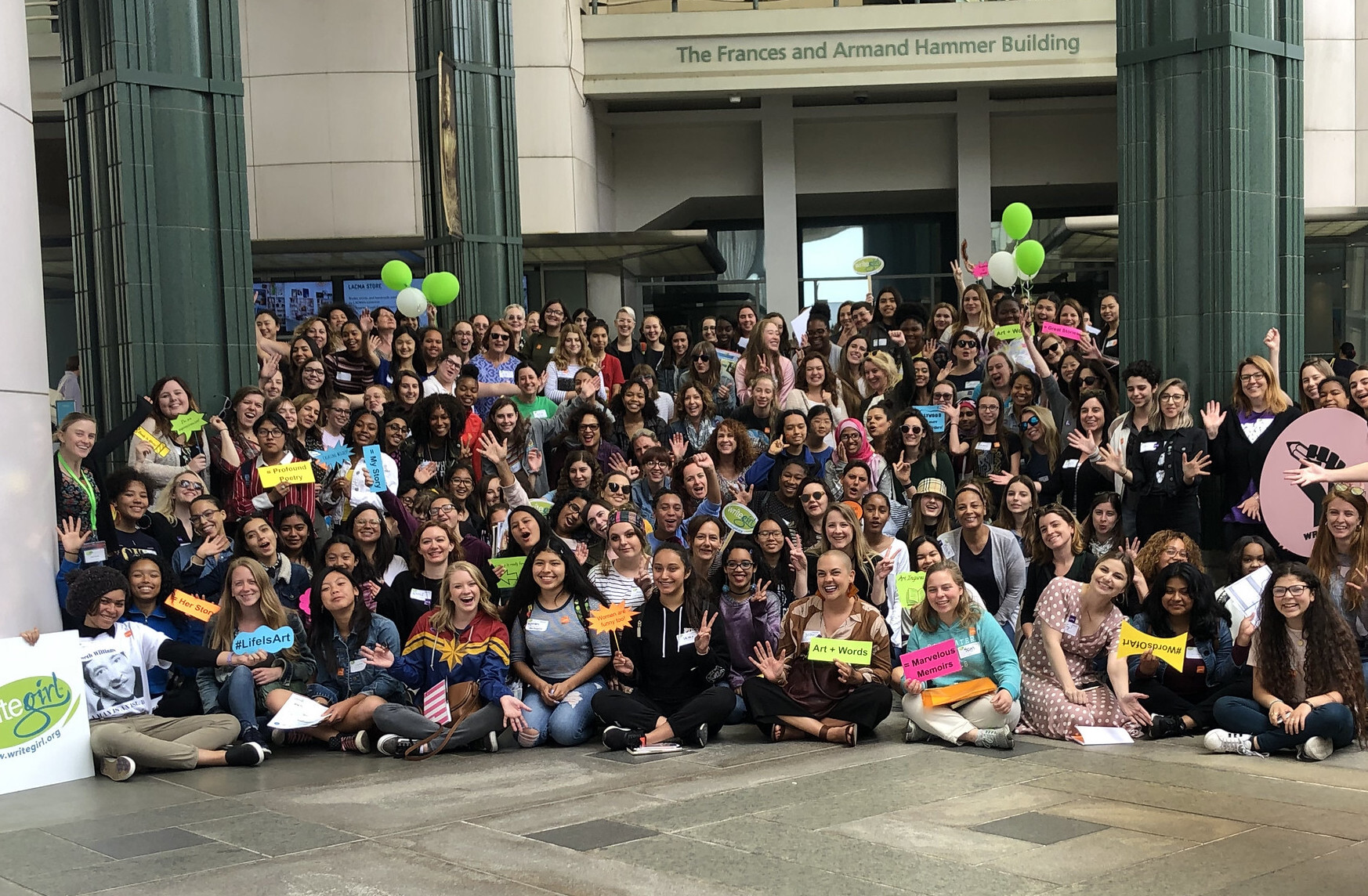
Since 2001, WriteGril has mentored girls and gender-expansive youth in the Los Ángeles area, even boys, through their workshops in schools, at county juvenile detention camps and in day reporting facilities, among other locations.
On Facebook WriteGirl said about receiving the grant, “WriteGirl is excited to join an illustrious group of literary organizations as a 2023 #AmazonLiteraryPartnership grant recipient. The grant will help us reach more underrepresented teens with year-round creative writing workshops, publications and mentoring!”
On October 14th, LitHop will again take place in Fresno’s Tower District. This is the sixth year for the literary festival founded in 2016 by then Fresno Poet Laureate and current California Poet Laureate Lee Herrick. LitHop features 45 minute readings across the district largely highlighting local writers from middle school to Poet Laureates, but also features writers from elsewhere, mostly from other parts of California.
In the past, writers from SoCal have read at LitHop from Gustavo Hernandez to Iris de Anda, Jessica Wilson to Jose Herandez Diaz and Peter J. Harris, among others.
This year is no different. Brian Sonia Wallace, Benin Lemus, Chad Sweeney, Diosa Xochiquetzalcóatl, Linda Ravenswood, Matt Sedillo, Nikolai Garcia, Tauri, Yago S. Cura, soledad con carne (born, raised and lived in the heart of the San Fernando Valley until a move to Oakland in the last year) and Brian Dunlap, are performing at five of the 36 readings. Their readings are: Aideed Medina presents: La Poeta y La Milpa, una lectura poética en español y náhuatl; The End of Conquest; Punk Poetics, From L.Á. to Fresno; and In Praise of Our Stories that take place throughout the day. LitHop concludes at 5pm with the Headline Event featuring Lee Herrick and former California and US Poet Laureate Juan Felipe Herrera.
So far this year many local writers have published books—from essay collections to academic nonfiction, poetry collections to novels, from Tod Goldberg (Gangsters Don’t Die), Myriam Gurba (Creep), Linda Ravenswood (Cantadora – Letters From California), Arthur Kayzakian (The Book of Redacted Paintings), Hector Tobar (Our Migrant Souls: A Meditation on Race and the Meanings and Myths of “Latino”) and others. Recently, several authors had their books reviewed in various publications, such as Women Who Submit, Cultural Daily and Alta Online. Some of these reviews are even written by other local writers.
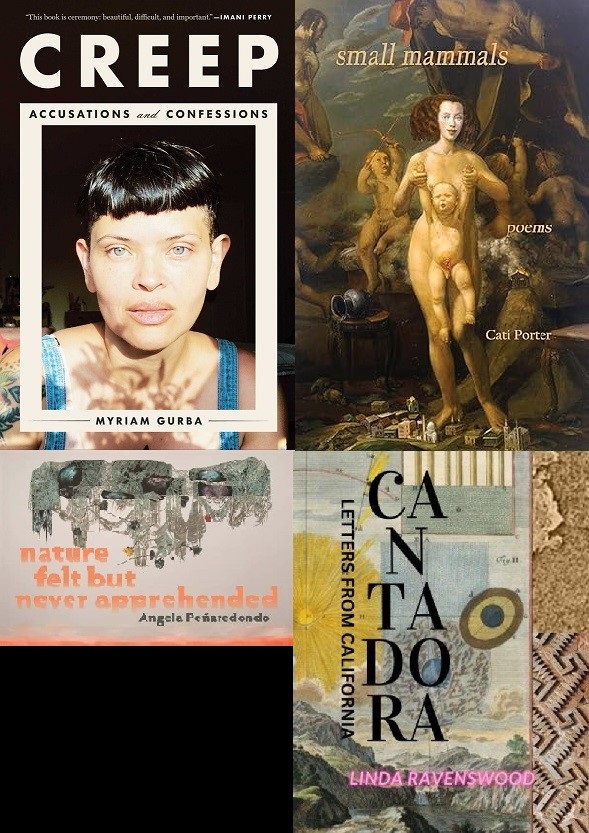
Below is a list of these reviews with a link to where they’re published, each with a brief excerpt from the review itself.
Intersect: Exploring the Longing – Women Who Submit
Lisbeth Coiman on nature felt but never apprehended by Angela Peñaredondo
The imagery in these first poems does not exoticize the tropics nor the male participants of the story. Rather it presents the Philippines in all its complex glory: magnificent nature, Catholic culture, battleground during World War II, “feminization of wage labor,” all occurring “before [the poet’s] birth, who, like a geographer, must go beyond the “excavated map” to understand their legacy. This is the “survivor’s topography.”
However, it’s in the geological analysis that the poet focuses on the women in their ancestry and where her craft shines. Here the poet sees past the exoticization of the tropical female “adorn[ed] in teknite,” “at the Tsubaki nighclub,” “bar girl in a fish tank,” to state “you are much more than others realize.” The last four poems of this first part dissect the patriarchy “lithification/”fossilization and what it means to look beyond the fetish, “love us in our deviancy.”
Review: Small Mammals by Cati Porter – Cultural Daily
John Brantingham
The terror of not knowing someone is that impotent feeling that comes with knowing there is nothing you can do to save them as they act dangerously or foolishly, especially when dealing with teenage boys. In one scene, one of her sons and his good friend have been pushed out of a moving car while unconscious from excessive drinking. Why a teenager would do this is clear. Many of us have drunk to excess in our teenage years. Still, as he sleeps, she wonders about his subconscious life, “(Is he asleep? Is he dreaming?)” (23). This is the mystery of all people. We can never know what another person is thinking. The book draws out how powerful this fact is and how much it affects our relationships.
In Cantadora Ravenswood Channels a New Mestizá Ghostchild – Cultural Daily
Arthur Kayzakian
However, being Hispanic in a white world means Cantandora is a story about race in a world with binaries. Ravenswood offers a third space that compliments Anzaldua’s diagram of what it feels to be truly invisible. The poet writes, “When you’re Latino / you work the kitchen.” The intersectionality of being a woman and a passing immigrant positions Ravenswood’s speaker as someone three or four times removed from the dominant culture’s ideas of desire. To be a woman of color is hard enough in our Anglo-favored patriarchy, but to be a woman of color that feels out of place in their own culture is another form of removal that compounds an already complicated relationship with one’s community. She writes, “When you’re Latino / finishing high school / means you’re a sellout / to some of your friends.” The hatred for being white to the Hispanic community and not being “Latino” enough to the Latinx community is a double invisibility familiar to Anzaldua and many of us who face displacement from our homelands.
Games Without Frontiers – Alta Online
Anita Felicelli on Creep by Myriam Gurba
At one point, Gurba writes, “Analytical essays are autopsies and we’re not supposed to laugh at dead bodies, not even when the body is a clown.” While these essays are full of rigorous critical thought, there’s an intoxicating, lived quality to Gurba’s style of analysis, her willingness to expose the funny and the cruel and the grotesque in a single breath. Gurba doesn’t so much dissect her life or California history as she holds an elaborate wake, reframing our understanding of humor as a means of survival.

 Los Angeles Literature