
2022 is nearly over and it’s time for Los Angeles Literature’s 7th annual “Los Ángeles Writers Publish” list. Not only have the writers in the Los Ángeles literary community continued to publish, they’ve also been nominated for and won awards; built community by hosting readings, open mics and teaching workshops; and by reading at venues and festivals locally, nationally and internationally.
Trenches Full of Poets reading series debuted in March at Page Against the Machine in Long Beach, hosted by poets Nikolai Garcia and Mauricio Moreno. The Post Up is a monthly open mic that debuted in August at Casa Verde in Uptown Whittier hosted by poet and publisher Brenda Vaca. And The Mic at Micky’s is a weekly LGBTQIA+ open mic in West Hollywood, hosted by West Hollywood Poet Laureate Brian Sonia-Wallace, Nate Lovell and Tony Moore.
Political poets Matt Sedillo and David Romero traveled to Alba, Italy in June to participate in the first annual Alba Poetry Festival, founded by poet, publisher of Vagabond Books and former L.Á. resident, Mark Lipman. Inland Empire native Gina Duran, Iris De Anda, David A. Romero, Fernando Albert Salinas, Matt Sedillo, Esser Slentz and Natalie Sierra traveled to New York in August for a panel and reading at Word Up Community Bookshop/Librería Comunitaria, a multilingual, collectively operated, general-interest bookshop. In November poets and writers David A. Romero, Iris De Anda, Matt Sedillo and San Diego poet Sonia Gutierrez traveled to read at Centro Cultural Tijuana in Tijuanna, a few days before Luis J. Rodriguez, Matt Sedillo, Jose Prado, and Dulce Stein spoke on a panel at El Universidad Nacional Autónoma de México in Mexico City, along with Texas writer and poet Norma Cantu and Seattle University professor Gabriella Gutierez Muhs. In December, poet Jaha Zanibu took her new book to New York and read at the Lincoln Center.
Most importantly though, is that the writers of the Los Angeles literary community have published—novels, short stories, essays, poetry, book reviews, opinion pieces, journalism—in journals, magazines and newspapers big, small and otherwise, and with publishers local and national. These writers reflect the diversity of the city, the region’s communities, and the variety of perspectives and life experiences of their residents.
Some writers—Cynthia Guardado (Cenizas), Karo Ska (Loving My Salt Drenched Bones), Leslie Ortega (The Cover Photo Is My Title For This Collection), Susan Straight (Mecca)—made the political personal in discussing racism, family, and how geopolitics affects family, from violence and terror against them individually, as women and/or due to their race or ethnicity, while capturing who these people truly are, holistically as distinct individuals.
Other writers—Lynell George, Mike Sonsken, John Brantingham, David L. Ulin and I, among others—have written criticism and reviews about local writers and their books. They range from critical pieces about poet and activist Amy Uyematsu and sci-fi writer Octavia E. Butler to book reviews on traci kato-kiriyama’s and Jerry Garcia’s poetry collections Navigating With(out) Instruments and Trumpets in the Sky, respectively.
Other local writers wrote about place, capturing neighborhoods and people that live there, that are too often overlooked or misunderstood. These places—South Central, Vietnamese Orange County, El Segundo—are captured with love and clear-eyed critiques.
And yet other writers wrote to heal. For them to come to terms with their trauma so triggers can lessen. They’ve chronicled their journeys to wholeness, even if they are not quite there yet. Such narratives are often written by women of color that infuse to various degrees, some combination of racism, misogyny, violence and the life experiences of the people who commit the trauma to fully portray who they are, as these writers’ journeys to wholeness are journys of understanding and growth.
Plus, other writers wrote about so many other topics and themes, they’re too numerous to mention here. However, many were nominated, finalists or winners of awards for their hard work. Pushcart nominations, International Latino Book Awards, Best of the Net, Oxford Poetry Prize, etc.
The following is a list of all the local writers who have published in magazines, journals, anthologies and newspapers this year that I could find. I sincerely apologize if I have missed anyone. If their work is online, I’ve included a link to their publication. If their work was nominated, a finalist or won an award, I have noted that along side the publication.
Last, is a list of the local writers who have published books this year. Again, I apologize if I’ve missed anyone. Just as before, I’ve noted which books have been nominated, finalists, or winners of awards when possible.
Congratulations to everyone’s success this year and the success of the literary community as a whole. May all this success continue next year.
Publications in Journals, Magazines, Anthologies and Newspapers
- Lisa Alverez—Citric Acid: False Flag
- Iris De Anda—Reimagine America: an anthology for the future: Pirouette, RIP My America
- William Archila—About Place Journal: My Anger is a Burnt Match, To the Mother, Cipitio, Don’t You Know, Los Angeles Review: Poem Series, Annulet: Reflections on ‘The Colonel,’ A Poem of Witness
- Gustavo Arellano—Citric Acid: Change is Your Vocation
- Lin Benedek—Cultural Daily: Forget Everything I Am about to Say, Wicked Games, Architecture: (a) as History; (b) as Aphrodisiac
- Xochitl-Julisa Bermejo—The Offing: In Search of Touch
- John Brantingham—Synchronized Chaos: The Night, The Dark, The Bats, 1952 (Best of the Net Nominee)
- Lynn Bronstein—Al-Khemia Poetica: Ronnie Spector Hugged Me
- Adrian Ernesto Cepeda—Boundless: Does an Hombre Have to Die to Speak to His Own Father? (Pushcart Prize Nominee), Alebrijes Review: I Always Remember Dialing, How Does One Sleep Under a Freeway Underpass? (Best of the Net Nominee), I Saw You in Mis Sueños Last Night
- Victoria Chang—Zyzzyva: “A Belief in Angels” in the 21st Century: Joy in Poetry, Los Angeles Review of Books: Two Roads: A Review-in-Dialogue of Roger Reeves’s “Best Barbarian”,
- Chiwan Choi—Coachella Review: my name is wolf (a boy/then a young man) Pushcart Prize nomination, Oyster River Pages: My Name Is Wolf (Excerpt), Boom California: my name is wolf (of learning to let you go)
- Teresa Mei Chuc—Flowers Blooming From Scars: Hard Conversations
- James Coats—Environmental Education Collective: Find It (2022 Environmental Art Contest Winner, Category: Adult Literary Art), The Press-Enterprise: Building Community Through Workshops and Writing, Spectrum 33
- Kimberly Cobian—Spectrum: Open Window: The Fishbowl Goodbye
- Coco—Reimagine America: an anthology for the future: The Ignorant Id
- Lisbeth Coiman—New York Journal of Books: Borderlines: The Edges of US Capitalism, Immigration, And Democracy, Taste Makers: Seven Immigrant Women Who Revolutionized Food in America, Light Skin Gone to Waste: Stories (Flannery O’Connor Award for Short Fiction Ser.), L.A. Parent: Violin Visions: A Mother’s Wish For Her Son’s Music Lessons Surpasses Reality. Can You Relate?
- Beverly M. Collins—Spectrum: Open Window: Pane, Until Now
- Brendan Constantine—The Nation: Towards Bakersfield, Beat Not Beat:
- Nicelle Davis—Rattle: Honey Pot
- Jose Hernandez Diaz—The Yale Review: The Stranger, Northwest Review: The Tatoo Artist, The Waterfall and Jungle, Waxwing: All My Area Is Known for Is Brown Men Like Me Getting Murdered, Acentos Review: Huevos Revueltos con Chorizo, My Mother’s “Broken” English, Air/Light: The Art of Bullfighting, sixth finch: The Conformist, Verse Daily: The Dragon and the Coyote, Laurel Review: El Cumpleaños, Qu: Bad Mexican, Bad American, Museum of Americana: Heredities, Five South: The War, Hex: Meeting James Tate in Heaven (Best of the Net Nominee), The Moon, 2050, The Man and the Dragon, While Road Review: Abuelita (Best of the Net Nominee), The Skeleton and the Rose
- Peggy Dobreer—Dashboard Horus: What the Bones Weigh, Metamorphosis And a Fountain
- Ron Dowell—Writers Resist: We Are What We Shine, Ebonics
- Brian Dunlap—Reimagine America: an anthology for the future: Dear White People, Hope, Compulsive Reader: A Nontraditional Life: Navigating With(out) Instruments by traci kato-kiriyama, Cultural Daily: A Little Told L.Á. Perspective, Family History: Cenizas by Cynthia Guardado
- Carolina Rivera Escamilla—Bomb: Tracing Time, In Memory of Paula López, The Mandarin: The Wall
- Alex Espinoza—The Best American Mystery and Suspense 2022: Detainment
- Alexis Rhone Fancher—Reimagine America: an anthology for the future: Accustomed to Dead Kids
- Rich Ferguson—Reimagine America: an anthology for the future: Not on your grave, Certain Days Feels so Heavy
- Emily Fernandez—Tiny Seed Journal: Even the Desert, Spotlight: Earth Day in El Sereno
- Michael C. Ford—Reimagine America: an anthology for the future: Octagenetics on Ancient History, Treason Would Feign in One So Far
- Gina Duran—Journal of Radical Wonder: Am I Invisible?
- Sarah Rafael Garcia—Citric Acid: Art on Our Minds, , KCET: The Women of the Vietnamese American Arts Scene in Orange County, Sergio O’Cadiz and the Forgotten Artists of Color in Orange County
- Lynell George—New York Times: The Visions of Octavia Butler, Air/Light: Exile in Desire
- Tod Goldberg—Alta: The Gene Pool, The Structure of the Incidents, The Mysteries, The Best Mysteries and Suspense 2022: A Career Spent Disappointing People
- Natalie Graham—Citric Acid: Consider the Way
- Reyna Grande—San Diego Union-Tribune: Remembering the Bitter with the Sweet, Literary Hub: Reyna Grande on Giving Her Kids the Childhood She Never Had: Reconsidering the Dream of Sweet Valley High, Heroes or Traitors? Writing the Story of the Saint Patrick’s Battalion in the Mexican-American War
- S.A. Griffin—Reimagine America: an anthology for the future: Big Lie America
- Myriam Gurba—Tasteful Rude: The Doctor’s Tongue, Julian, No Princesses: Reflections on the Passing of Sacheen Littlefeather, Moved: On Speaking Spanish
- Lucy Rodriguez-Hanley—Tasteful Rude: Flan Desparramado
- Susan Hayden—MacQueen’s Quarterly: John Muir Warned You This Could Happen, The Last Barstool Date of the Loneliness Prevention Society
- Féi Hernandez—Tasteful Rude: We Watch the Galaxy From Our Porch: Dating While Trans, Los Angeles Press V6: Hybrid Essay
- Gustavo Hernandez—The slowdown (read by Ada Limón), Citric Acid: Husband, Yuzuko’s Christmas Card, Bachelor
- Grant Hier—Citric Acid: Monuments
- Tanya Ko Hong—Allium: Answer, Diaspora, Rendezvous Notes, XXI Century, City of Angels, Arriving at a Shoreline: Anthology: Poetry
- Arminé Iknadossian—Five South: Why I Am Resourceful
- Dana Johnson—Citric Acid: Reaching Out to All of Us”: On the Telling and Retelling of the Biddy Mason Story
- Toni Ann Johnson—Aunt Chole: Gramercy Park is Closed to the Public
- James Evert Jones—Altadena Poetry Review, Once Upon A Poem Anthology, Creative Juices 2
- Lois P. Jones—Tiferet: Big Sure Redwoods By Full Moon: Shifting Voices, October 2020, Letter to God in the WTF Season
- Erin Aubry Kaplan—Red Canary: Making It Home, The People’s Art, The Tornado Chaser, Los Angeles Times: The Enduring Legacy of L.A.’s Eso Won Books — Uplift and the Written Word
- Eunice Kim—Pomona Valley Review: Five Stages
- Don Kingfisher Campbell—Misfit Magazine: A Driveway
- Elline Lipkin—Mantis: A Journal of Poetry, Criticism & Translation: Gretel, Looking Back, Mother in the Earth
- Christian Lozada—Pomona Valley Review: Holidays Are Holidays, I Am Not Unique East Wind ezine: Mapping the Unfamiliar: A Review of Navigating with(out) Instruments by traci kato-kiriyama, Oyster River Pages: Show You Matter, Drunk Monkeys: Origin Story
- Suzanne Lummis—Air/Light: I’m Driving To Fresno (And I don’t care who knows it), Noir Confessions—With Evasions, Noir Stanzas
- Rick Lupert—Dashboard Horus: At the Nutridge Luau (Best of the Net Nominee), Land
- Tina Mai—Citric Acid: Limnology, New York Times: ‘Dickinson’: Drunk on Imagination and Unapologetically Feminist
- Jeffrey Martin—Reimagine America: an anthology for the future: Reclaiming Our Words
- Kate Maruyama—Analog: Bloom, The Astounding Analog Companion: Kate Maruyama on “Bloom”
- Sheila McMullin—Air/Light: Los Angeles, Summer 2020, Thank You
- Donna Spruijt-Metz—Orange Blossom Review: To the Death, Whale Road Review: The Green Before Her
- Richard Modiano—Reimagine America: an anthology for the future: Like the Petals of a Rose
- Briana Muñoz—Reimagine America: an anthology for the future: How to Reimagine America, Cultural Daily: La Basilica / Body of the Femme, For My Mother, a life of a party woman, This Body (Pushcart Prize Nominee/Best of the Net Nominee)
- Ruth Nolan—Basin and Range: Dispatch from California’s Coachella Valley Preserve: Leave only Footprints and Stories in the Sand, San Diego Poetry Anthology: Teaching My Daughter to Put Out Fire
- Harry Northup—Cultural Daily: To Ask for Love (Best of the Net Nominee), One Year Ago Tomorrow, Her Body, From the Center of Competition
- Toti O’Brien—Waxwing (translator): [Here] by Paola d’Agnese
- Dean Okamura—Reimagine America: an anthology for the future: We Sail Ahead
- Daniel A. Olivas—The Millions: Dwell in the Wondrous: The Millions Interviews Silvia Moreno-Garcia, Alive and Fighting: The Millions Interviews Edgar Gomez, Los Angeles Review of Books: Three Questions for Gabino Iglesias Regarding His Novel “The Devil Takes You Home”, Three Questions for Lizz Huerta Regarding Her Debut Novel “The Lost Dreamer”, Four Questions for Frederick Luis Aldama Regarding His Bilingual Children’s Book, “Con Papá / With Papá”, Four Questions for Xochitl Gonzalez Regarding Her Debut Novel, “Olga Dies Dreaming”
- Leslie Ortega—Pomona Valley Review: Papa’s Tackle Box
- Wendy C. Ortiz—Tasteful Rude: Noncompliant Heart
- Hanna Pachman—The Coachella Review: Angels on Twitter
- Victoria Patterson—Citric Acid: Family Portraits at Newport Beach Restaurants
- Isabel Quintero—Tasteful Rude: Of Tacos y Heartbreak
- Jeremy Ra—Cultural Daily: What Jesus Said While in Line for the Bathroom (Pushcart Prize Nominee), Coronavirus Loves You
- Linda Ravenswood—Oxford Poetry Prize (2nd Prize): Elementary School, Variant Literature: Untitled Note from Oregon
- Tisha Marie Reichle-Aguilera—Empty House Press: We Wish, Luna Station Quarterly: Seven Strands, Inlandia: We Watch, The Milk House: Get Back On, High Country News: Stories About Breaking the Family Curse, Alebrijes Review: We Are Itchy, Bumpy, Scratchy, and Scarred, Five Minutes: #OnlineDating
- Thelma T. Reyna—Reimagine America: an anthology for the future: Half-Million
- Kevin Ridgeway—Misfit Magazine: Itchy & Scratchy, MacQueen’s Quarterly: Bob Dylan Was Here, Cultural Daily:
- Sophie Rivera—LiveWire: Girasoles, A Body of Work
- Gabriel San Román—Citric Acid: Alex Odeh, the Palestinian Question, and an Unsolved Terror Bombing in Santa Ana
- Luis J. Rodriguez—Reimagine America: an anthology for the future: We Are the Weave and the Weaver, The Dream and the Dreamer
- David Romero—hamptonthink.org: Sin Fronteras: Dispatches From Mexico City, Life in Quarantine: A Neighborhood of Glass Windows, A Safe Place to Live, The 286, Summer at the Movies, It Washes Us Away, Reimagine America: an anthology for the future: You Were Born a Tree (Pushcart Prize Nominee)
- Matt Sedillo—Reimagine America: an anthology for the future: Democracy
- Carla Sameth—Metro Weekly: My Wife Who Became My Husband
- Hiram Sims—Reimagine America: an anthology for the future: We Are Still Here
- Mike Sonksen—Alta: For Mike Davis, Amy Uyematsu’s Power Verses, KCET.org: ‘A Day of Poetry in LA’ Celebrates the Diversity and Strength of L.A.’s Poetry Community, Remembering Mike Davis: How His Curiosity for Los Angeles Changed The Way We See Our City, Cultural Daily: Switching Codes with Luivette Resto, Interlitq: A Whole Ecosystem: Collective Effervescence in Los Angeles Poetry, Critical Planning: LA is Better When We Ride Together, Running Around the City, Angels Flight: Letter to L.A.: The Light at the End of the Tunnel, Reimagine America: an anthology for the future: Reflection on Grace Lee Boggs’ New Moment, John Brown Believed
- Carl Stilwell—Reimagine America: an anthology for the future: Thanking the Birds, Ode to Dirt, Spectrum: Open Window: Open
- Susan Straight—Lit Hub: Susan Straight on Louise Erdrich and the Characters Who Haven’t Left Our Dreams
- Kareem Tayyar—Citric Acid: Book of Dreams
- Lynn Thompson—Angels Flight: Cure for a Dead Zone
- Andrew Tonkovich—Citric Acid: Self Storage
- David L. Ulin—Los Angeles Times: When America’s Public Narrative Fractures, Can We Still Find Our Truth in Books?, Why Inappropriate Books Are the Best Kind, A (hopefully premature) Obituary for Bookforum and the Magazines that Connect Us, Elegy For a Big, Beautiful L.A. Cat, Alta: The Naked City, Why You Should Read This: ‘The House of the Spirits’, If You Build It, They Will Come, Why You Should Read This: ‘Less’, The Master of Urban Dialectic
- Amy Uyematsu—Al-Khemia Poetica: Guanyin, Godess of Mercy
- Pam Ward—Cultural Daily: Single Mom, What Miles Thought He Heard Cicely Say, Hollywood Hills, Al-Khemia Poetica: Drop It Like It’s Hot, The Wig
- D.J. Waldie—Los Angeles Times: D.J. Waldie, A Onetime Critic of Mike Davis, Praises His Immense Influence
- Ravina Wadhwani—LiveWire: This is How We Bury Her, Swallow, Soil
- Romaine Washington—Boundless: Decidious (Pushcart Prize Nominee)
- Ellen Webre—Cultural Daily: Don’t Look Down, Red Cento, The Budding Boy (Pushcart Prize Nominee)
- Aruni Wijesinghe—Cultural Daily: Glow, Goldie Unlocks, The Mount Lavinia Hotel, Colombo, A Friendly Ghost, Flight Paths, or How Tall is a Bag of Bmati Rice, Engagement Party, MacQueen’s Quarterly: Feed, Kidney-shaped Pool, Ouroboros, Shark Reef Literary Magazine: Moonrise Over the Fluff ‘N’ Fold (Best of the Net Nominee), The Los Angeles Press V6: Curvy Girl Ghazal
- Terry Wolverton—Al-Khemia Poetica: Falling, The Los Angeles Press V6: Dancing With the Stars
- Nancy Lynée Woo—Nixes Mate Review: End of the Holocene
- Mitsuye Yamada—Citric Acid: Pareidolia, In Some Countries
Books Published and Forthcoming 2022-2023
Notes on Shapeshifting (Not a Cult) by Gabi Abráo
Gabi Abrāo’s Notes on Shapeshifting is an ode to existing in physical form, fully aware of the changing energy that flows through every aspect of it. As Abrāo writes, “tapping into the ether body to take a break from the demands of the earth body,/making peace with ephemerality,/lightness,/shapeshifting”. Throughout this collection, you are invited to travel through various states; pure infatuation to heartbreak, confidence to defeat, from a skepticism for living to a full-on trust in it. And Notes on Shapeshifting yearns to soothe and arouse along the way.
Divine Blue Light (City Lights Pocket Poets Series) by Will Alexander
Will Alexander, a finalist for the 2022 Pulitzer Prize in Poetry, published a new collection of poems that are an intersection between surrealism and afro-futurism, where Césaire meets Sun Ra. Divine Blue Light is set “against the ruins of a contemporary globalist discourse, which he denounces as a ‘lingual theocracy of super-imposed rationality,’ [in] poems [that] constitute an alternative cartography that draws upon omnivorous reading—in subjects from biology to astronomy to history to philosophy—amalgamating their diverse vocabularies. It was named of Publishers Weekly’s Top 10 Notable Poetry Books for Fall 2022.
Coffee, Shopping, Murder, Love (Red Hen Press) by Carlos Allende
A campy dark comedy for the angry and the disenchanted written by an instructor in the UCLA Extension Writer’s Program.
Last November, I found a dead body inside the freezer that my roommate keeps inside the garage. My first thought was to call the police, but Jignesh hadn’t paid his share of the rent just yet. It wasn’t due until the thirtieth, and you know how difficult it is to find people who pay on time. Jignesh always does. Also, he had season tickets for the LA Opera, and well . . . Madame Butterfly. Tosca. The Flying Dutchman . . . at the Dorothy Chandler . . . you cannot say no to that, can you? Well, it’s been a few good months now—Madame Butterfly was just superb, thank you. However, last Friday, I found a second body inside that stupid freezer in the garage. This time I’m evicting Jignesh. My house isn’t a mortuary…alas, I need to come up with some money first. You’ll understand, therefore, that I desperately need to sell this novel. Just enough copies to help me survive until I find a job . . . what could I do that doesn’t demand too much effort? We have a real treasure here, anyhow. Some chapters are almost but not quite pornographic. You could safely lend this to nana afterward!
A People’s Guide to Orange County by Gustavo Arellano, Elaine Lewinnek and ThuyVo Dang
A People’s Guide to Orange County is an alternative tour guide that documents sites of oppression, resistance, struggle, and transformation in Orange County, California. Orange County is more than the well-known images on orange crate labels, the high-profile amusement parks of Disneyland and Knott’s Berry Farm, or the beaches. It is also a unique site of agricultural and suburban history, political conservatism in a liberal state, and more diversity and discordance than its pop-cultural images show. It is a space of important agricultural labor disputes, segregation and resistance to segregation, privatization and the struggle for public space, politicized religions, Cold War global migrations, vibrant youth cultures, and efforts for environmental justice. Memorably, Ronald Reagan called Orange County the place “where all the good Republicans go to die,” but it is also the place where many working-class immigrants have come to live and work in its agricultural, military-industrial, and tourist service economies.
Ladybug (Inlandia Institute) by Nikia Chaney
From poet, author, educator Nikia Chaney comes an experimental memoir of extreme poverty and schizophrenia, mothering and love. “This is Inglewood, California, 1988, bright and loud, spilling brown colored kids out on the sidewalk, like butterflies or trash, their mothers screaming at them from the front door. You sigh. Niki, and your voice is quiet, serious, sometimes I hear people talking to me…Can you hear them too? I strain to listen. You have gone silent again, stiff and lost. I lean into your body and try with my whole being to hear. I make my posture like yours. I close my eyes thinking that it might help me hear better. I brace myself and imagine my ears becoming as big as an antenna, huge satellite dishes that will pick up all the sound in all the house in all the neighborhood in all the world. But I only hear the water running in the sink. Outside a bird caws, then the whoosh of a car driving by. Mommy. Mommy. I can hear them too. I can hear people talking too. I hear them. I hear them like you. You sigh, so relieved and happy. You smile at me in the mirror and laugh, a little, coming back into the room. I refuse to look at you, especially your eyes. I do not know what I will see.”
The Trees Witness Everything (Copper Canyon Press) by Victoria Chang
A lover of strict form, poet Victoria Chang turns to compact Japanese waka, innovating on tradition while continuing her pursuit of one of life’s hardest questions: how to let go. In The Trees Witness Everything, Victoria Chang reinvigorates language by way of concentration, using constraint to illuminate and free the wild interior. Largely composed in various Japanese syllabic forms called “wakas,” each poem is shaped by pattern and count. This highly original work innovates inside the lineage of great poets including W.S. Merwin, whose poem titles are repurposed as frames and mirrors for the text, stitching past and present in complex dialogue. Chang depicts the smooth, melancholic isolation of the mind while reaching outward to name―with reverence, economy, and whimsy―the ache of wanting, the hawk and its shadow, our human urge to hide the minute beneath the light.
Incidental Takes (Hummingbird Press) by Teresa Mei Chuc (Chúc Mỹ Tuệ)—Spring 2023
Doug Rawlings blurbs the book by saying: “Teresa Mei Chuc has put together a remarkably powerful book woven together with an eye for detail and an ear for jolting juxtapositions. Her sense of wonder and her deep empathy with the natural world manifest themselves through the plight of the whale, for example. It is almost as if the spaces between poems are vast tracts of ocean water and the brilliant words rising up are breaching whales. The poems call to us: ‘Pay attention!’ Here is a poet who can use the power of words to speak for the natural world.”
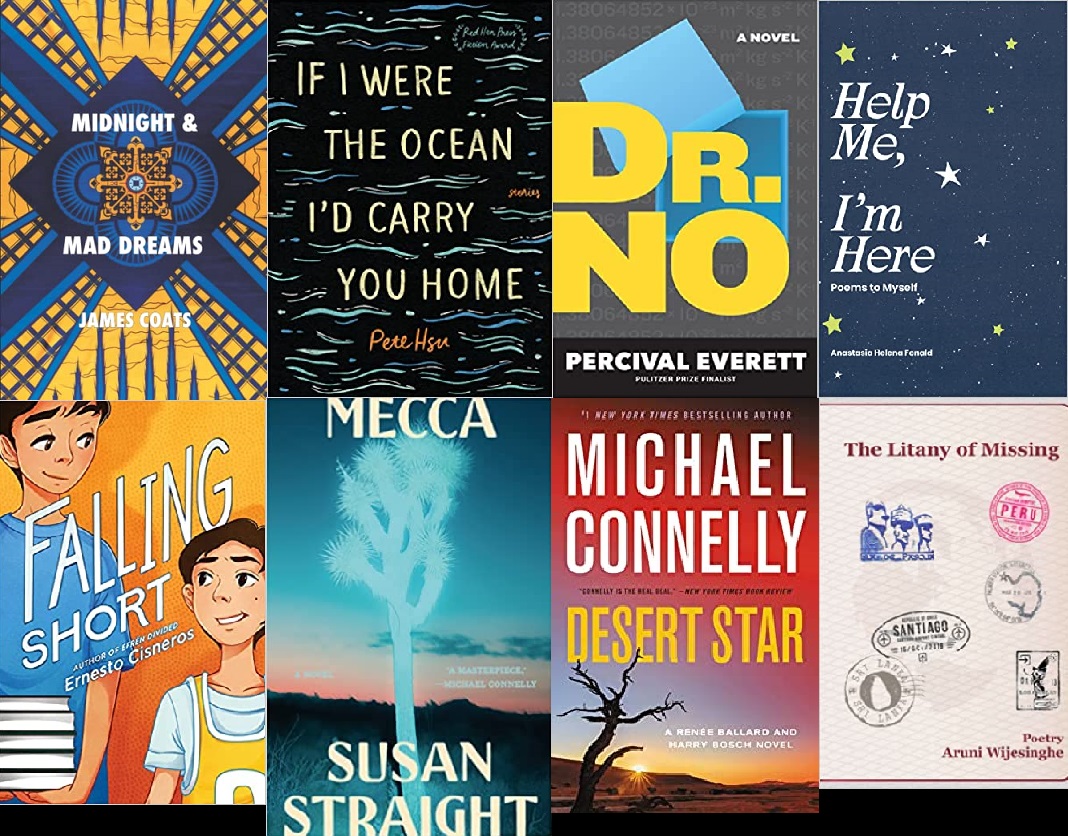
Falling Short (Quill Tree Books) by Ernesto Cisneros
Isaac and Marco already know sixth grade is going to change their lives. But it won’t change things at home—not without each other’s help.
This year, star basketball player Isaac plans on finally keeping up with his schoolwork. Better grades will surely stop Isaac’s parents from arguing all the time. Meanwhile, straight-A Marco vows on finally winning his father’s approval by earning a spot on the school’s basketball team.
But will their friendship and support for each other be enough to keep the two boys from falling short?
The book won a Silver Medal for Best Youth Chapter Fiction Book at the 24th Annual International Latino Book Awards.
the déjà vu: black dreams & black time (Coffee House Press) by Gabrielle Civil
Emerging from the intersection of pandemic and uprising, the déjà vu activates forms both new and ancestral, drawing movement, speech, and lyric essay into performance memoir. As Civil considers Haitian tourist paintings, dance rituals, race at the movies, black feminist legacies, and more, she reflects on her personal losses and desires, speculates on black time, and dreams into expansive black life. With intimacy, humor, and verve, the déjà vu blurs boundaries between memory, grief, and love; then, now, and the future.
Midnight & Mad Dreams (Word Stage Press) by James Coats
In his new poetry collection, Inland Empire native James Coats asks how can poetry be used to fight racism and oppression? Throughout this book that idea is explored through the use of language, storytelling and poetic form. The topics covered range from the murder of unarmed Black people to environmental rights and water protection.
Desert Star (Little Brown and Company) by Michael Connelly
A year has passed since LAPD detective Renée Ballard quit the force in the face of misogyny, demoralization, and endless red tape. But after the chief of police himself tells her she can write her own ticket within the department, Ballard takes back her badge, leaving “the Late Show” to rebuild and lead the cold case unit at the elite Robbery-Homicide Division.
For years, Harry Bosch has been working a case that haunts him—the murder of an entire family by a psychopath who still walks free. Ballard makes Bosch an offer: come volunteer as an investigator in her new Open-Unsolved Unit, and he can pursue his “white whale” with the resources of the LAPD behind him.
Racing the Light (G.P. Putnam’s Sons) by Robert Crais
Adele Schumacher isn’t a typical worried mom. When she hires Elvis to find her missing son, a controversial podcaster named Josh Shoe, she brings a bag filled with cash, bizarre tales of government conspiracies, and a squad of professional bodyguards. Finding Josh should be simple, but Elvis quickly learns he isn’t alone in the hunt—a deadly team of mysterious strangers are determined to find Josh and his adult film star girlfriend first.
With dangerous secrets lurking behind every lead, Elvis needs his friend Joe Pike more than ever to uncover the truth about Josh, corrupt politicians, and the vicious business cartels rotting the heart of Los Angeles from within. And when Elvis’s estranged girlfriend, Lucy Chenier, and her son, Ben, return, he learns just how much he has to lose…if he survives.
Librarians With Spines Vol. III (Hinchas Press) edited by Yago Cura and Westley Reason
The editors behind the Librarian with Spines series have released the third volume in this popular series. Volume III of LWS is another anthology—this time, 5 essays on radical librarianship and a Spanglish interview with Oregon Library Superstar Star Khan-that engages with critical topics and themes that explore what it means to “librarian” on behalf of marginalized and under-represented communities. From Andrew Barber and Michelle Gohr’s indictment of the Neoliberal Academic Library to Oleg Kagan’s championing of the library as a space for immigrant empowerment to Yesenia Villar’s courageous essay confronting racism and oppression in public librarianship to Jason Alston’s decimation of armchair advocacy vis-a-vis delusions of grandeur common in librarianship to Roland Barksdale-Hall’s reflections on creating empowerment curriculum for residents in public housing.
Roots of Redemption: You have No Right To Remain Silent (FlowerSong Press) by Iris De Anda
Author Ana Castillo says about Roots of Redemption: “In this collection, Los Angeles poet Iris de Anda serves as witness to the range of travesties and tragedies resulting from the Trump Era and what came before and continues. The poet as testifier, as spy in the hole of society’s conscience, as brave foot soldier who pulls the pin on the hand grenade exploding with poetic truths.
Watts UpRise (World Stage Press) by Ron L. Dowell
Watts UpRise, a finalist for the Press 53 Award For Poetry, is a very public love letter to the city of Watts, Los Angeles. The collection renders homage to its most notable artistic landmark, the Watts Towers, and its creator, Sabato Rodia. The Towers epitomizes the beauty, strength, and resiliency of the city and its inhabitants and serves as a reminder that beautiful things must be kept heart-close and loved. Our town, with its whole BIG heart, open and bleeding for the world to see, is something cherished like a wildfire burning. The poem “Compton, An Energy-Fueled Dark Star,” was a 2021 Pushcart Prize nominee.
I Wore This Dress Today For You, Mom (Red Hen Press) by Kim Dower
Acclaimed for combining the accessible and profound, her poems about motherhood are some of her most moving and disarmingly candid. I Wore This Dress Today for You, Mom is an anthology of her poems on being a mother—childbirth to empty nest—as well as being a daughter with all the teenaged messiness, drama and conflict, to finally caring for one’s mother suffering from dementia. Culled from her four collections as well as a selection of new work, these poems, heartbreaking, funny, surprising, and touching, explore the quirky, unexpected observations, and bittersweet moments mothers and daughters share. These evocative poems do not glorify mothers, but rather look under the hood of motherhood and explore the deep crevices and emotions of these impenetrable relationships: the love, despair, joy, humor and gratitude that fills our lives.
Moments From My Mother’s Life Which Cling Like My Own Memories (Arroyo Seco Press) by Judith Grammel Evans
Judith Grammel Evans says about her book: “My mother grew up in Highland Park, then a suburban fringe of Los Angeles, during the dark years of The Great Depression and World War II. She was sweet and unassuming, always afraid to impose or be the center of attention. And yet, right up to the last week of her life, she never stopped writing letters in her beautiful calligraphy, drawing pictures, and retelling stories of her youth. The words that follow are mine, but the experiences and feelings are all hers.”
Dr. No (Greywolf Press) by Percival Everett
The protagonist of Percival Everett’s new novel is a brilliant professor of mathematics who goes by Wala Kitu. (Wala, he explains, means “nothing” in Tagalog, and Kitu is Swahili for “nothing.”) He is an expert on nothing. That is to say, he is an expert, and his area of study is nothing, and he does nothing about it. This makes him the perfect partner for the aspiring villain John Sill, who wants to break into Fort Knox to steal, well, not gold bars but a shoebox containing nothing. Once he controls nothing he’ll proceed with a dastardly plan to turn a Massachusetts town into nothing. Or so he thinks.
Help Me, I’m Here: Poems to Myself (World Stage Press) by Anastasia Helena Fenald
If you enjoyed the darkness of Edgar Allan Poe’s poetry as a teenager, but fell in love with the healing of Nikita Gil as an adult, then Fenald’s debut poetry collection Help Me, I’m Here: Poems to Myself is for you. Part lonely and raw childhood poems and part ultimate self-love that blooms because of growing up and surviving, this collection is the conversation that people are too afraid to have with themselves.
Beat Not Beat: An Anthology of California Poets Screwing on the Beat and Post-Beat Tradition (Moon Tide Press) Edited by Rich Ferguson, S.A. Griffin, Alexis Rhone Fancher, and Kim Shuck
Beat Not Beat, edited by Rich Ferguson is an anthology of California poets screwing on the Beat and post-Beat tradition. Co-edited by Alexis Rhone Fancher, S.A. Griffin and Kim Shuck, this dynamic anthology spans the postwar, atomic-bomb-obsessed American landscape to the here and now: a period when Beat poets, the Vortex, Baby Beats, and their progenitors inspired one another through cultural, political, and humorous means to create new forms of consciousness weaponizing pen and paper to enact mighty forms of lyrical rebellion. The collection features notable poets such as Bob Kaufman, Diane di Prima, Jack Hirschman, Wanda Coleman, Lawrence Ferlinghetti and Charles Bukowski. It also features contemporary poets such as Douglas Kearney, Brendan Constantine, Kim Addonizio, Ellyn Maybe, Will Alexander, and former United States Poet Laureate Robert Hass.
Trumpets in the Sky (Moon Tide Press) by Jerry Garcia
In Garcia’s second collection of poems, Trumpets in the Sky, he points to the universe while proclaiming the complexities of living on planet earth. These poems are full of astonishment, absurdity, reverence, and social science. Some are surreal, some are staid, all are sincere.
Altar of the Imagination (Finishing Line Press) by Marisa Urrutia Gedney
Altar of the Imagination is a work of love and loss. Each poem is a witness attempting to make order out of the three generations of women surviving an immigrant history sick with guilt and shame. When the chaos cleared and the last of the lineage is born into and falls in abundant love early in life, there is now confusion of choice: how does she live a satisfied life?
As an Aztec dancer, offering prayer to Coatlicue, Coyolxauhqui, and Tonantzin in every dance, each poem asks permission to honor the endurance of her family. Each poem is a plea, teach her how to do this: live. To live how the other women who came before her could not: free.
Instruction Between Takeoff and Landing (University of Akron Press) by Charles Jensen
The poems in Instructions between Takeoff and Landing take place in the middle of myriad journeys: tracking the twin Voyager satellites as they vanish into the unknown, reckoning with a troubling national history, looking back at life lived and forward to the life yet to come. Speakers meditate on the death of loved ones and their own mortality, relationships bent and broken, misleading histories at odds with personal stories, faith and doubt, a ubiquitous media culture, and their own origins and hoped-for destinations. Weaving deft transitions in tone from tender to bombastic, apologetic to brash, and humorous to elegiac, this collection asserts the ways in which even now, we strive to contain Whitmanic multitudes within the constantly shifting borders of self. Poems hover in the liminal space between traditional and innovative form, locating there a way to entice the reader to enter while pushing the boundaries of what poetry can do. Amid this collection’s formal inventions, poems offer a sustained reading comprehension exam that both encapsulates and interrogates the speaker, the culture, and even the reader. In the context of a nation hinging on the axes of justice, freedom, self-expression, and tragedy, the voices in these poems reflect on how they both shape and are shaped by the invisible forces and inescapable influences that surround us.
To the Realization of Perfect Helplessness (Knopf) by Robin Coste Lewis
Twenty-five years ago, after her maternal grandmother’s death, Robin Coste Lewis discovered a stunning collection of photographs in an old suitcase under her bed, filled with everything from sepia tintypes to Technicolor Polaroids. Lewis’s family had survived one of the largest migrations in human history, when six million Americans fled the South, attempting to escape from white supremacy and white terrorism. But these photographs of daily twentieth-century Black life revealed a concealed, interior history. The poetry Lewis joins to these vivid images stands forth as an inspiring alternative to the usual ways we frame the old stories of “race” and “migration,” placing them within a much vaster span of time and history.
Ripples, Shadows & Huddled Scraps (Independently Published) by Jeffrey Martin
Former host of Tía Chucha’s bi-weekly open mic, Ripples, Shadows & Huddled Scraps, is Jeffrey Martin’s first novel. This story of a life, depicts such arduous and difficult paths, endured by a young man on a mission; ultimately, to heal his inner child. He never loses his compassion; he does not allow the world to harden him; but he does allow it to strengthen his resolve. He survives, despite his pain, emotional abandonment and turmoil, subscribing to a much higher calling; authenticity.
SongAgain (Beyond Baroque Books) by Peter J. Harris
For decades now, Peter J. Harris’s voice has mesmerized his readers and listeners. He moves us with his words and his presence, his dignity and his vulnerability, with his truth-telling and the way he can spin a tale, turning narrative into song, lyric into incantation. And here he is, doing it again in SongAgain.
An Eternal Lei: A Leilani Santiago Hawai’i Mystery (Prospect Park Books) by Naomi Hirahara
It’s the middle of the pandemic and Hawaii has been virtually closed to tourists.
So when Leilani Santiago and her young sisters save a mysterious woman wearing an unusual lei from drowning in Waimea Bay in Kaua‘i, questions abound. Who is she and where did she come from? Leilani suddenly finds herself in the middle of a murder investigation when the lei is traced back to her best friend, the very pregnant Courtney Kahuakai, and her family’s flower business.
While the woman is in a medically-induced coma at a local hospital, Leilani sets out to discover her identity and her connections to the island. She is drawn deeper into the mystery, only to stumble into secrets that prove deadly. When Leilani’s investigation puts her family in danger, her survival and the safety of those dearest to her will depend on her sense of ingenuity and the strength of her island community.
If I Were the Ocean, I’d Carry You Home (Red Hen Press) by Pete Hsu
If I Were the Ocean, I’d Carry You Home, Pete Hsu’s debut story collection, captures the essence of surviving in a life set adrift. Children and young people navigate a world where the presence of violence and death rear themselves in everyday places: Vegas casinos, birthday parties, church services, and sunny days at the beach. Each story is a meditation on living in a world not made for us—the pervasive fear, the adaptations, the unexpected longings. A gripping and energetic debut, Hsu’s writing beats with the naked rhythms of an unsettled human heart.
The Goodbye Coast: A Philip Marlowe Novel (Mulholland Books) by Joe Ide
The seductive and relentless figure of Raymond Chandler’s detective, Philip Marlowe, is vividly re-imagined in present-day Los Angeles. Here is a city of scheming Malibu actresses, ruthless gang members, virulent inequality, and washed-out police. Acclaimed and award-winning novelist Joe Ide imagines a Marlowe very much of our time: he’s a quiet, lonely, and remarkably capable and confident private detective, though he lives beneath the shadow of his father, a once-decorated LAPD homicide detective, famous throughout the city, who’s given in to drink after the death of Marlowe’s mother.
Marlowe, against his better judgement, accepts two missing person cases, the first a daughter of a faded, tyrannical Hollywood starlet, and the second, a British child stolen from his mother by his father. At the center of The Goodbye Coast is Marlowe’s troubled and confounding relationship with his father, a son who despises yet respects his dad, and a dad who’s unable to hide his bitter disappointment with his grown boy.
Tales of an Inland Empire Girl (Los Nietos Press) by Juanita Mantz
Jenny, her barely-younger twin Jackie, and their baby sister Annie try to navigate their parents’ troubles. The story zooms in on Jenny as she descends from stellar student to angry punk rock dropout, hiding in shame under the high school bleachers as her twin sister graduates from high school. It’s the story of Jenny hitting rock-bottom, and finally, slowly picking herself up and starting to put the pieces of her life back together.
Agave Blues (TouchPoint Press) by Ruthie Marlenée
Sometimes, la sangre atrae, “the blood calls you back,” and when Maya gets the call to go back to her agave roots to claim the body of her long-missing father, her world changes forever. Set against the backdrop of her childhood in Mexico, Agave Blues is the story of ailing attorney Maya, in a broken relationship and butting heads with her teenage daughter, Lily.
Maya swore never to return, but once she sets foot on mystical grounds, she uncovers her family’s turbulent history and how tequila infuses deep secrets that have altered her life, both emotionally and physically.
General Release from the Beginning of the World (Parlor Press) by Donna Spruijt-Metz—January 3, 2023
In General Release from the Beginning of the World, Donna Spruijt-Metz attempts to reconcile the death of the father, the lies of the mother, a hidden half-sister, and the love for a daughter-with the impossible desire to banish the past from the present. She examines shifting relationships with the holy, referred to in the book only as ‘YOU.’ She asks: “Do YOU hear/a whisper/in YOUR//constant night/-and then listen?” She breaks her own heart to touch yours.
Doctor Poets & Other Healers: COVID in Their Own Words (Golden Foothills Press) edited by Frank L. Meyskens, Thelma T. Reyna and Johanna Shapiro
Year 2. After the once-in-a-century invasion of the coronavirus hit the United States in 2020, our nation was weary and battered, with schools, churches, public places shut down and the economy sputtering. In the second year of the COVID-19 outbreak, the heroism and devotion of U.S. healthcare workers stood strong– despite burnout, despite assaults by virus-deniers, anti-maskers, anti-vaxxers, conspiracy theorists, despite purveyors of misinformation that hobbled our nation’s recovery. In this ground-breaking anthology, 26 poets and essayists—physicians, nurses, psychologists, social workers, private caregivers, holistic practitioners, medical school students, and a hospital chaplain—share their personal experiences navigating the pandemic and our changed lives, tending to patients, dealing with loss, uncertainty, grief, and isolation, surviving in a world turned topsy-turvy, continuing the fight to save lives through resilience, selflessness, and the eternal flame of hope.
Gold Medal Winner in the category of Best Poetry Anthology in English at the 24th Annaul International Latino Book Awards.
The Forbidden Lunchbox (Punk Hostage Press) by Richard Modiano
L.Á. native Poet Pam Ward says about The Forbidden Lunchbox:“Relevant, vivid, deliciously explicit, Modiano, king of LA’s literary scene, time-travels internationally from coffee shops to bars occupying the space between lipstick women sitting alone to intimate portraits of Bukowski and Bela Lugosi. Scenarios seemingly mundane spring from the page, rich, well-paced poems flow somewhere near LA’s River, where hospital rain drips, where ‘sleep is buried in caves inhabited by lemurs,’ or live in the atomic lunchboxes of Hiroshima. Written in a sparse, frantic clip, both complicated and engaging, this master of the gemstone phrase, ‘feral cats calling for mates,’ Modiano’s approaches the poem like a thief you don’t see coming, calmly, quietly arresting, with verse that burns, electrifies the mind, ‘hiding inside the flame of a single match, waiting to set fire to your dead body.’”
90s Poetry Book (World Stage Press) by Shane Murray
Some of everyone’s favorite hip hop and r&b songs have been turned into poetry. From poetry, to fashion, to sketches, to photos. This book is all about paying homage to a great era of music. This book is a time capsule of the 90s era, where you could relive where you were and what you were doing at the time some of these songs were composed and you can enjoy the vibe of the poetry being presented.
The Knife Thrower’s Daughter (Moon Tide Press) by Terri Niccum
The Knife Thrower’s Daughter is Terri Niccum’s first full-length volume of poetry. Peopled with a range of characters (farm children, early-day factory seamstresses, the 50-Foot Woman, and, yes, carnie folk) these poems reflect the delicate choreography needed to honor our human commitments while reaching for what makes life glorious. But, in typical Niccum style, death and his partner grief are only a misstep away.
After the Dome Tree (Bamboo Dart Press) by Ruth Noland
In After the Dome Fire, author Ruth Nolan takes readers on an eco-poetic journey through the wilderness of California’s Mojave Desert and Southern California, and the work of firefighting and raising a daughter as a single parent in a rough yet nurturing landscape. The poems also evoke a fierce and beautiful “desert” revealed as a vibrant character with its own agency to survive and regenerate from the devastating impacts of wildfires.
How to Date A Flying Mexican (University of Nevada Press) by Daniel A. Olivas
How to Date a Flying Mexican is a collection of stories derived from Chicano and Mexican culture but ranging through fascinating literary worlds of magical realism, fairy tales, fables, and dystopian futures. Many of Daniel A. Olivas’s characters confront—both directly and obliquely—questions of morality, justice, and self-determination.
The collection is made up of Olivas’s favorite previously published stories, along with two new stories—one dystopian and the other magical— that challenge the Trump administration’s anti-immigration rhetoric and policies. How to Date a Flying Mexican draws together some of Olivas’s most unforgettable and strange tales, allowing readers to experience his very distinct, and very Chicano, fiction.
The Cover Photo Is My Title For This Collection (Self Published) Leslie Ortega
Poet Leslie Ortega spent most of her time working as an accountant writing the poems in this self-published collection in an incognito window at work. These are tender poems about her parents, capturing some specific part of who they are. Many of these poems codeswitch between English and Spanish, the Spanish she says she, “doubt[s] that I even know what they are saying/rewinds in my head.”
One-Shot Harry (Soho Crime) by Gary Phillips
Gary Phillips is a lifelong Angeleño and “key figure in contemporary Southern California crime fiction” author and critic David L. Ulin says. In his new novel, race and civil rights in 1963 Los Angeles provide the backdrop, with racial tensions running high on the eve of Martin Luther King’s Freedom Rally, to a story about an African American crime scene photographer seeking justice for a friend.
When Ingram hears about a deadly automobile accident on his police scanner, he recognizes the vehicle described as belonging to his good friend and old army buddy, a white jazz trumpeter. The LAPD declares the car crash an accident, but when Ingram develops his photos, he sees signs of foul play. Ingram feels compelled to play detective, even if it means putting his own life on the line. Armed with his wits, his camera, and occasionally his Colt .45, “One-Shot” Harry plunges headfirst into the seamy underbelly of LA society, tangling with racists, leftists, gangsters, zealots, and lovers as he attempts to solve the mystery.
Contadora: Letters From California (Eyewear Publishing) by Linda Ravenswood—January 30, 2023
Celebrated poet Linda Ravenswood presents 44 hybrid texts which read as maps, diary entries, manifestos, dream fragments, and lists. Her branching perspective of the 500+ years span of the (so-called) Conquest of Mexico by Cortés and the Spanish army (1521-present) explores reverberations across landscapes & cultures of the American West that are still being navigated. The voices explore past, present, & future histories of those who dwell in the West. Some histories explored include WWII Holocaust survivors of Los Angeles, relocated NDN children of the 19th century, Chontales people of the Yucatán encountering ships of Cortés, border blurring, intersectional feminism, and 21st-century balancing acts of Latinidad. This extraordinary collection is a tour de force of poetic craft, colonial sensitivity, intellect, and conscience.
Living on Islands Not Found on Maps (FlowerSong Press) by Luivette Resto
In these vulnerable pages, there are lessons and conversations with Audre Lorde, Tina Turner, Nikki Giovanni, and Naomi Ayala as well as Resto’s ancestors, children, the ocean, and herself. All of it centering around inheritance, shame, grief, resilience, spirituality, and the multitudinous roles of women. Resto is: daughter, mother, lover, poet, dreamer, and Wonder Woman: “Her fans don’t know about…/the bruises on her wrists/from deflecting bullets with gold bracelets, /and the calluses left on palms after lassoing lying kingpins.”
The book won a Bronze Medal for the The Juan Felipe Herrera Best Poetry Book Award–One Author–English at the 24th Annual International Latino Book Awards.
Rejection Letters: (Chapbooks 2015-2020) (Arroyo Seco Press) by Kevin Ridgeway
Paul Corman-Roberts says of Kevin Ridgeway’s poetry: “Kevin Ridgeway gives us the best of transgressive literature, not gratuity but the brutal negotiation of the emotional corruption of humans, in a way that is far more honest than Bukowski’s alpha male posturing. You had better flinch and wince John Wayne because when the whole shithouse comes down, the last men standing will be the poets like Kevin Ridgeway.”
One Day on the Gold Line: A Memoir in Essays (Golden Foothills Press) by Carla Rachel Sameth
Through meditations on race, culture, and family, One Day on the Gold Line tells the story of a queer Jewish single mother raising a Black son in Los Angeles. A memoir-in-essays, it examines life’s surprising changes that come through choice or circumstance, often seemingly out of nowhere, and sometimes darkly humorous—even as the situations are dire.
One Day on the Gold Line: A Memoir in Essays by Carla Rachel Sameth is a 2021 Independent Press Award Distinguished Favorite in the category of Memoir.
Loving My Salt-Drenched Bones (World Stage Press) By Karo Ska
We don’t overcome trauma. We learn to live with how it shaped us.
In loving my salt-drenched bones, karo ska, a bi-racial survivor of child sexual abuse, is not afraid to tackle the topics we rarely talk about—anxiety, depression, suicide, racism, grief. Ska invites us to swim through the tumultuous rivers of healing and asks that we fall in love with our vulnerabilities. Through striking images and poignant metaphors, ska shows us the power of being our true, authentic selves.
Mecca (Farrar, Straus and Giroux) by Susan Straight
Finalist for the 2022 Kirkus Prize, Mecca traces the intertwined lives of native Californians fighting for life and land.
Johnny Frías has California in his blood. A descendant of the state’s Indigenous people and Mexican settlers, he has Southern California’s forgotten towns and canyons in his soul. He spends his days as a highway patrolman pulling over speeders, ignoring their racist insults, and pushing past the trauma of his rookie year, when he killed a man assaulting a young woman named Bunny, who ran from the scene, leaving Johnny without a witness. But like the Santa Ana winds that every year bring the risk of fire, Johnny’s moment of action twenty years ago sparked a slow-burning chain of connections that unites a vibrant, complex cast of characters in ways they never see coming.
That Blue Trickster Time (What Books Press) by Amy Uyematsu
In revisiting her family’s history during the World War II incarceration of Japanese Americans, Amy Uyematsu’s latest collection, That Blue Trickster Time, is a powerful affirmation of Asian Americans during a global pandemic in which anti-Asian racism is at an all-time high. But it is also a stirring salute to older women-as mothers and warriors, rebels and ancient goddesses. While addressing serious social and political issues, Uyematsu’s poems are deeply rooted in a reverence for nature and spiritual growth that comes with aging. The anger of her youthful protest days is still there, but now she can affirm this world of conflict and beauty as she speaks to the radiance of the ordinary, whether her love of stones and pine trees or her fascination with numbers and folk art. These are poems which celebrate being an older woman of color.
Between Good Men & No Man At All (World Stage Press) by Pam Ward
Los Angeles Poet Laureate Lynn Thompson says of Between Good Men & No Men At All, “Pam Ward shapes the distance of remembering with poignancy, a black eye, a knocked down Dinah, and blam blam. In her pen, language croons on “the corner of 43rd and pain.” Summon your courage and plunge into Ward’s truths; you’ll be glad you did.”
Ursula Lake (Red Hen Press) by Charles Harper Webb
Long Beach State English Professor Charles Harper Webb’s novel is about former best friends Scott and Errol who meet unexpectedly at Oso Lake, a remote Canadian fly-fishing paradise where, five years before, fresh out of college, they had the time of their lives. Their situations, though, have changed, their high hopes quashed by workaday realities and, in Errol’s case, marriage to Claire, who has come with him trying to stave off divorce. But Oso Lake has changed. The fall before, a woman’s severed head was left in a campfire pit beside the lake. The shadow cast by her murder is darkened further by a fire-scarred white truck driver who claims to be a long-dead Native shaman and has plans to eradicate not only Scott, Errol, and Claire, but all of Western civilization. The beauty of the wilderness becomes, every day, more threatening and perverse. But the worst danger the vacationers face may be themselves.
Only So Much (What Books Press) by Jan Wesley
This is a book of memory from childhood beyond middle age, and though the poems are experiences sparked by remembered scenes and interactions, they also explore how memory works and comes to us, the discoveries through them of who the speaker has become. This is a biography of characters who embody actions and consequences of the speaker to reveal the darker sides of what she has lived, to consider if there is redemption for the worst and best in her. The poems move in non-linear time with cultural and political contexts to weave with the characters’ impulses, behaviors, and beliefs as they revolve around her mother’s suicide, her indulgences in escape from duty and urban discomforts, with a focus on the “edginess” of events and interactions. The adventures of rearing up against difficulties, and of indiscretions, teach her the practice of survival and the victories of perception and renewal.
2 Revere Place (Moontide Press) by Aruni Wijesinghe
In 2 Revere Place, Aruni Wijesinghe unfolds her family’s first ten years in the United States through a gently curated collection of poems. The narrative moves from Sri Lankan beaches through apartment living in the Bronx to a quiet Rockland County suburb, leaving a trail of details charting the journey. Wijesinghe chronicles her family’s evolution into Americans through the eyes of a child learning what it means to hold two countries inside herself. Her reflections on the past help call the immigrant experience of 1970’s America into laser focus. Part memoir and part coming-of-age story, 2 Revere Place invites readers to live inside skin that tiptoes the line between cultures.
The Litany of Missing (Arroyo Seco Press) by Aruni Wijesinghe
The Litany of Missing is Aruni’s second poetry collection. In it, she explores the themes of love, loss, the non-linear journey of grief, and how what is lost is ultimately found again through linked prose and verse.
Hechizera: Sus Sultry Spells (Editorial Raíces) by Diosa Xochiquetzalcóatl
Diosa’s second poetry collection Hechizera: Sus Sultry Spells, is a multilingual poetry collection that takes a deep dive into the land of the 13 Underworlds, the land of Hades and Persephone, the land of Mictlan. In this poetry collection, we explore our shadow selves, our wounded warrior, that side of humanity that is looked down upon. With the guidance of Xochiquetzal, the Mexica Goddess of beauty, sex, and fertility, Diosa X makes us lick our wounds, embrace our own sexuality and sensuality as well as our feminine power by bringing this darkness to the light, giving birth to the new world, the Aquarian Era, el Sexto Sol.
I’m Writing to Tell You (Mama’s Kitchen Press) by Jaha Zainabu
I’m Writing to Tell You is a collection of vulnerable, transparent, inspiring and entertaining poetry written by Jaha Zainabu. In this book, she talks about her journey and soul work as a woman and mother. She lives with bipolar 1 and talks about her life with depression. She is also encouraging and witty in her poetry.
Here Go the Knives (Moon Tide Press) by Kelsey Bryan-Zwick
Kelsey Bryan-Zwick’s debut book of poetry, Here Go the Knives, portraits life with disability in America. Diagnosed with scoliosis as a child, Bryan-Zwick has navigated nine extensive spine surgeries, over two decades of debilitating pain, and countless medical procedures. To tell this story, they draw upon memoir, magical realism, and the tarot deck in this hybrid-multi-modal text: pages that unfold for the reader’s interpretation. Included in, Here Go the Knives, are illustrations by the author that pace this narrative much like an illuminated manuscript. This multisensory approach creates space for this delicate story to extend from skin to spine, metal to bone, and body to page.
Extra: Award Winners, Released in 2021
Refractive Africa: Ballet of the Forgotten (New Directions) by Will Alexander
Three kinetically distilled long poems. The volume’s opening poem pays homage to the innovative Nigerian-Yoruban author Amos Tutuola; it ends with an encomium to the modernist Malagasy poet Jean-Joseph Rabearivelo. A tribute to the Congo forms the bridge and brisé vole of the book. Refractive Africa Ballet of the Forgotten was a finalist for the 2022 Pulitzer Prize for Poetry.
L.A. Weather (Flatiron Books) by María Amparo Escandón
María Amparo Escandón’s novel won The Rudolfo Anaya Best Latino Focused Fiction Book Award–English at the 24th Annual International Latino Book Awards. It’s about Oscar, the weather-obsessed patriarch of the Alvarado family who desperately wants a little rain. L.A. is parched, dry as a bone, and he’s harboring a costly secret that distracts him from everything else. His wife, Keila, desperate for a life with a little more intimacy and a little less Weather Channel, feels she has no choice but to end their marriage.
Zapote Tree (Golden Foothills Press) by Alejandro Morales
Acclaimed American Latino author, Alejandro Morales, author of numerous novels, short story collections, and nonfiction, presents his first book of poetry to the world. This book’s unforgettable characters—migrants, mothers, elders, mythological figures, alcoholics, heroes, villains, and spirits—expand our understanding of diverse cultures, such as those Dr. Morales straddles with wisdom and compassion. It won a Bronze Medal for Best First Book-Nonfiction-English at the 24th Annual International Latino Book Awards.

 Los Angeles Literature