
By Lynell George
FROM: The New York Times
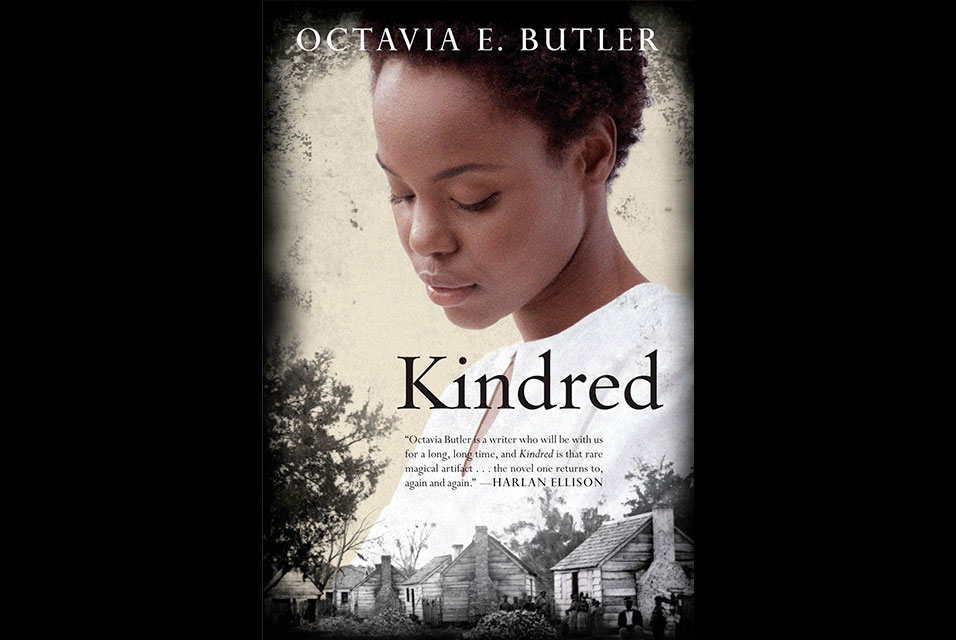
Octavia Estelle Butler was the daughter of a shoeshine man, who died when she was a baby, and a maid. A self-described loner, Butler always stood apart: far from the loud tangle of children at recess; standing in the shade of the generous sycamore and oak trees of Pasadena, California; or secreted inside her bedroom in the after-school hours, lost within some exotic elsewhere of storybooks.
Some of the books were her own, saved up for, while others were castoffs rescued by her mother, who scrubbed, dusted and ironed in houses in the majority-white and wealthy Pasadena neighborhoods that were adjacent, yet worlds apart, from her own. Butler’s mother walked her to the library, where they signed up for a card. That small slip of paper became her passport to travel widely.
Boundlessly curious and a keen observer, Butler lived vividly in her imagination. The stories between the covers of those books served as a balm, providing locales within which she could disappear, occupy new settings, explore new possibilities and try on new characteristics. She began making up stories at 5 or 6 and regaling her mother with them.
She read with thirst and purpose. She became a fixture at the Peter Pan Room, the children’s section of the elegant Pasadena Central Library. When she had exhausted those shelves, she was dismayed to learn that the adult stacks were off-limits until her 14th birthday.
She developed workarounds. She saved up change, which sang in her pocket as she walked to the store to purchase her first books — about horses, dinosaurs and the stars she could barely see because of the scrim of Southern California smog.
“Here, I was trying to write about Mars,” she recalled as an adult, “and I knew nothing about it.”
At school, Butler struggled to find her footing, but the sciences captivated her. They hinted at something larger — a series of open questions. Read Rest of Article Here

 Los Angeles Literature