
By Jonah Meyer
FROM: Mud Season Review
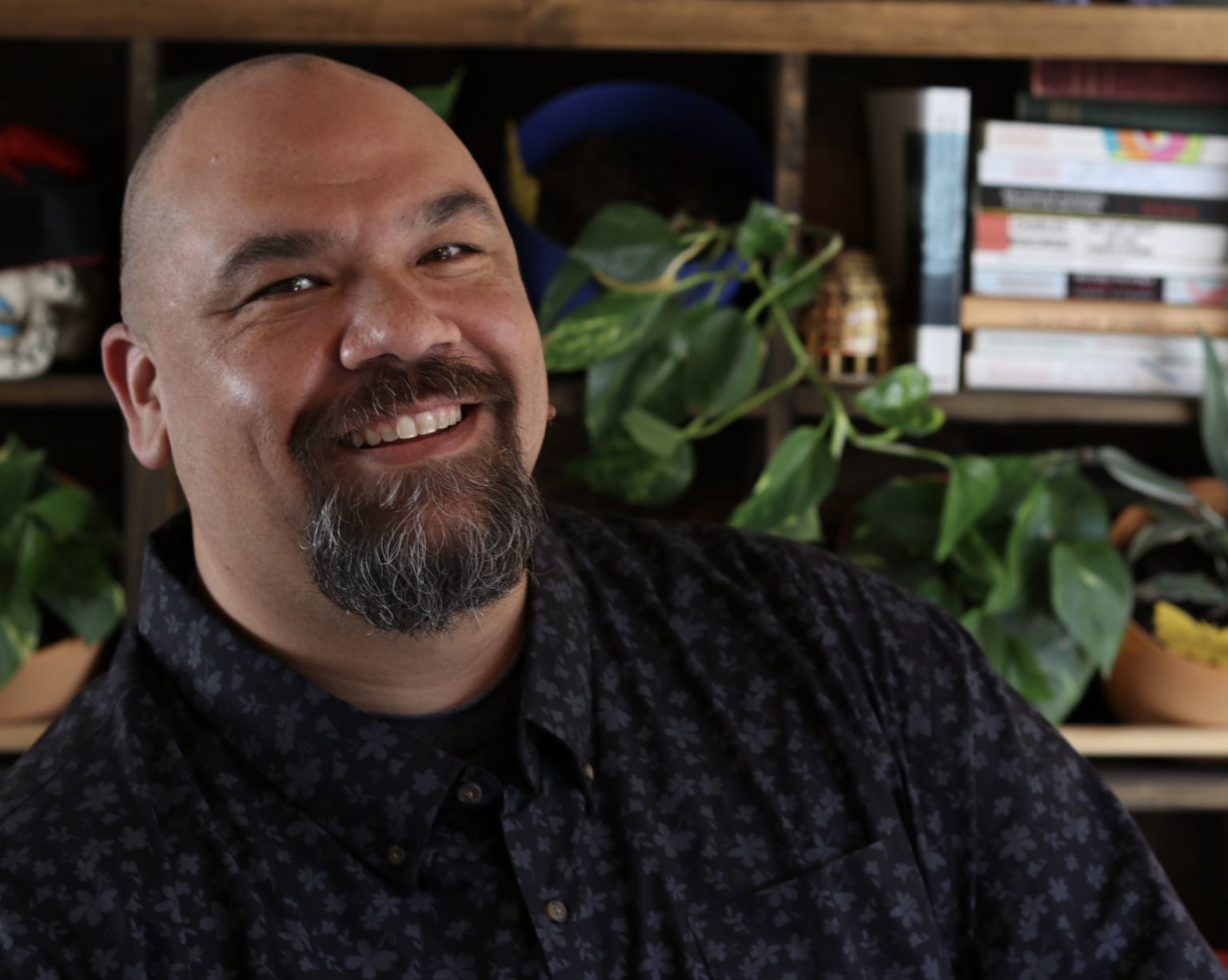
An Interview with Christian Hanz Lozada.
“It’s like the dude on the dance floor whose arms are flailing to their own beat. Yeah, we’re looking, but not because they’re cool – it’s because we don’t want to get randomly smacked.”
Christian Hanz Lozada
You’ve described yourself as the son of an immigrant Filipino (your father) and a descendent of the Confederacy (your Southern, White mother), noting that your “heart beats with hope and exclusion.” Explaining your poems appearing here in Mud Season Review, you’ve said these selections “describe the internal negotiations and concessions people make to maintain their identities.” How has this “split,” or dual identity of self (for lack of better descriptor) shaped your writing of poetry? How does this unique identity shape your view of the world and your place in it—both as a human being and as a poet?
Having a mixed identity shapes my writing by making me hold multiple views in tension with each other. As the son of one person who is defiantly “racially colorblind” even though the catalyst for her parents’ divorce was racism (not to mention her having children of color) and another who holds his culture at arm’s length and away from his kids, I try to write about the regular reminders of being a person of color in America, including Whiteness. Within that community, we don’t see ourselves as part of that conversation, but we are leading it. It’s like the dude on the dance floor whose arms are flailing to their own beat. Yeah, we’re looking, but not because they’re cool – it’s because we don’t want to get randomly smacked.
In “Breathing America,” Brown Dad floods the house with English in order to maintain basic family survival, and everything must be counted in order to tread the water (and not drown) while the family—like fish—must breathe through their skin. You end the poem with: “To breathe in these depths, my family exchanged / broken dialects for unaccented regrets.” Tell me about the meaning, or ideas/experiences behind this powerful statement.
I love the idea of how fish absorb their surroundings through skin. People do, too, and cultural immersion is an example of it. To get along, especially outside of enclaves and safe spaces, there is a certain amount of assimilation that is necessary. If you look at the progression of environments from the one my brothers and I grew up in, with two parents who were struggling to get out of poverty and excluding anything that didn’t meet that end, to now where all four of us are college-educated professionals with no cultural ties to the South or the Philippines, you’ll start to see how the environment not only dictated our identities but how we learned to thrive in it. But the cost: none of us speak much, if any, Cebuano. I didn’t know that was the name of our language until I was 18 and visited the Philippines for the first time. The only word I have is manoy, which means elder and is what I was told to call my older brothers. I stopped calling them that as soon as I hit my teens.
If I had kids, I have a diluted White identity and no Filipinx identity to teach them other than the one I craft from books and chosen family. As a professor at a college with a good-sized Filipinx population, that part of my culture should be a boon to me and my students, but all I can teach is its absence. Read Rest of Interview Here

 Los Angeles Literature