
FROM: Soutout LA
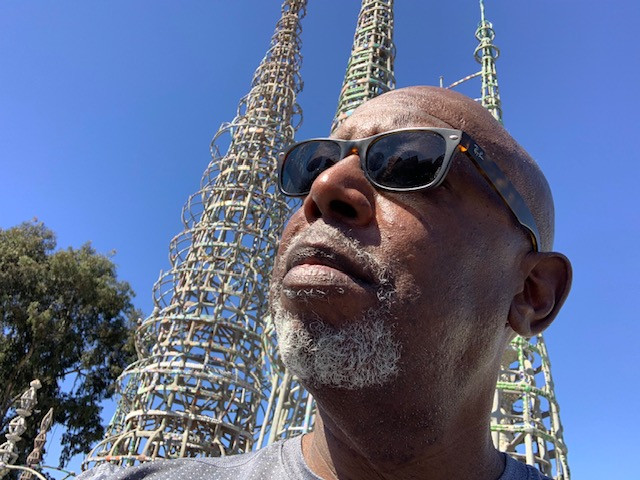
We had the good fortune of connecting with Ron L. Dowell and we’ve shared our conversation below.
Hi Ron L., what was your thought process behind starting your own business?
I have an undergraduate business degree in accounting from CSUDH. I passed the Uniform Certified Public Accountant Examination in the mid-80s. At the time, I worked in public service as a program auditor and wanted to mesh the best of public and private business approaches while preparing to leave public service for the private sector. Working for the public sector was viewed by the private sector as a disadvantage during the 80s. I was never employed by private, public accounting firms that could offer the experience I needed. I experimented with private sector business strategies while working for L.A. County healthcare and later public safety (law enforcement), such as performance measurement, specific goal attainment, best practices, and team building successfully.
I developed a passion for process improvements using business solutions in the public sector. That passion I coupled with my love for writing when in 2010 I converted a Master’s Degree thesis into a published book: Compton4COPS: Community-Based Crime Fighting in Disadvantaged Racially and Ethnically Diverse Urban Communities. But, over two decades earlier, I’d started my own tax preparation business, RonDowCo. Since COPS was self-published, I decided to connect my poetry and fiction writing to another company and formed Deniggerlator Publishing. Like my earlier experiences with trying to transition to the private sector, I knew the road would be difficult, and there are not a lot of Black faces in the literary world, especially males. I also know that much of my personal experience and history is being erased and that there are not many narratives that tell my story, having been born and raised in Los Angeles. For example, I lived in public housing in my early years, first in Jordan Downs and later in Palm Lane. Although it was built shortly after World War II until it was razed in 1968-71 to make Dr. Martin Luther King Jr. General Hospital, there’s not much history about Palm Lane. Over two hundred households lived in a nexus of single-story, flat-roofed fourplex apartments splayed across 26 acres, a county strip between Watts and the city of Compton: a sort of neutral zone between disparate communities, like an O ring used to seal opposing surfaces against high pressure. Read Rest of Interview Here

 Los Angeles Literature