
By Brian Dunlap
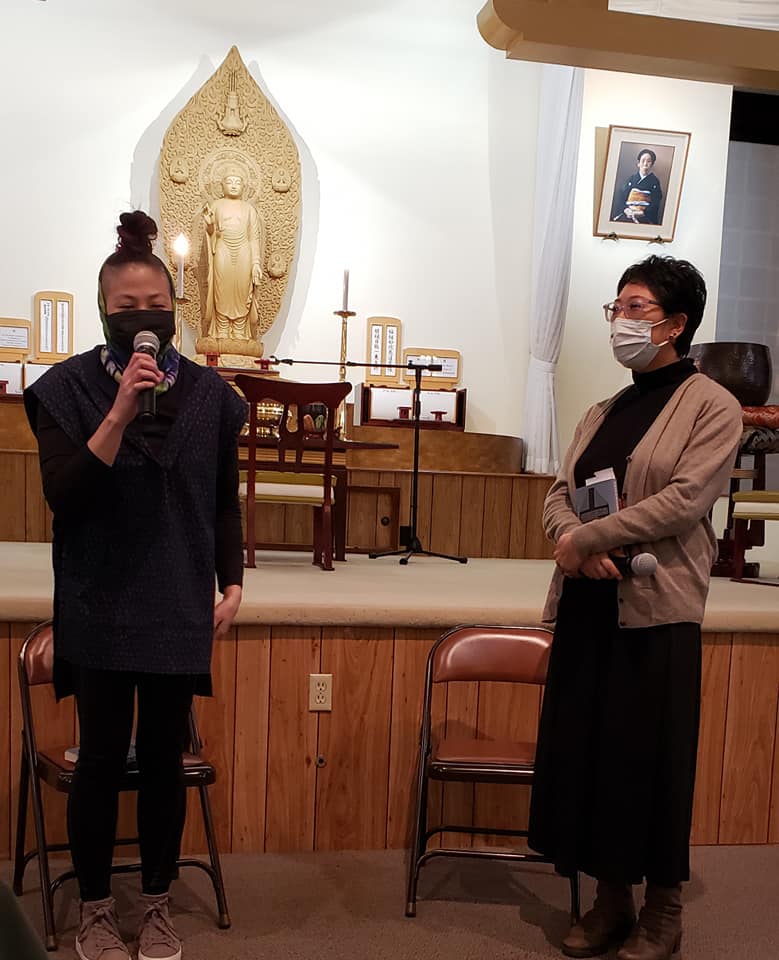
One of the last literary events of the year occurred Saturday at the Rissho Kosei-Kai Buddhist church in Boyle Heights. It was the release party for traci kato-kiriyama’s new book of poetry, micro essays and notes to self, Navigating With(out) Instruments. The event was hosted by the master mc himself, Mike Sonksen. This Buddhist church was where Sonksen married his wife Emi.
This was kato-kiriyama’s second book, first in a decade. A book I heard was forthcoming since I first heard of her, back in 2015. The book felt as if it was always coming soon, but was never going to be released. But, as kato-kiriyama said during her conversation with Emi, at times the book became emotionally difficult to write causing her to need to step away from the manuscript for long periods.
Finally, Navigating With(out) Instruments is out in the world.
*****
The celebration kicked off with Rissho Kosei-Kai blessing their new bookstore, The Bodhi Tree, reading sutra’s, reciting chants and making an offering. On their shelves were books on the teachings of the Lotus Sutra and near the front counter, a display of Mike Sonksen’s book Letters to My City.
Out, kitty-corner from the bookstore, was the table where kato-kiriyama sold and signed her book and conversed with attendees. But the reading took place upstairs. Upstairs with local writers F. Douglas Brown, Luivette Resto, Allan Aquino and Terry Robinson reading a few of their own poems.
They briefly spoke on their personal relationship with kato-kiriyama and her selfless character, as exemplified by her work in the Little Tokyo community. Someone mentioned how she provides space and a voice for others through her long running Little Tokyo Open Mic, Tuesday Night Project. It’s the longest running Asian American open mic in the country.
The poem from the four readers that stood out most to me was Allan Aquino’s new poem about Panorama City. It spoke to the hard realities of the neighborhood when he was younger, the gang violence, individuals who called it home, he himself avoiding the gang life.
After, traci kato-kiriyama was in conversation with Emi, who had been a member of the Rissho Kasei-Kai her entire life. They spoke to each other with love and warmth, Emi commenting on how she loved how Buddhist she found the book to be, especially the notes to self. kato-kiriyama said she originally wrote those notes for herself as encouragement and motivation to keep working on the manuscript when it became too heavy to continue on. Her belief is that a writer’s role is to confront the hardest aspects of who we are, which was how she approached the writing of Navigating With(out) Instruments. Then she thought others could find these notes to self, along with her notes to country and world, useful, and decided to include them in the book.
The warmth and love remained once the conversation and reading concluded, everyone migrating downstairs to converse, buy traci kato-kiriyama’s book, check out the bookstore, to snack on cookies and wraps and most important, to be in community. After nearly two pandemic-filled years, the need to be in community and to celebrate (traci’s book release) was palpable.

 Los Angeles Literature