
By Nathan Deuel
FROM: Los Angeles Times
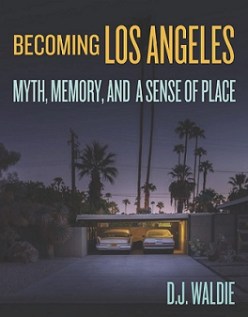 It’s so easy to write very badly about Los Angeles. Just ask the New York Times, or consult the work of any number of day-tripping feature writers, novelists and memoirists. The list of essential books that get L.A. right is short but it definitely includes D.J. Waldie’s classic 1992 memoir, “Holy Land.” Anchored in Lakewood, where Waldie is a lifelong resident and a city administrator, it was an artful and original cry of suburban pain. Nearly three decades later, he’s out with an essay collection, “Becoming Los Angeles,” which makes that short list of classics just a little bit longer.
“Holy Land’s” onslaught of short and muscular chapters — heavy with granular detail, philosophical musings, lacerating self-criticism and waves of fresh insights on one of L.A.’s less vaunted corners — still resonates today. “Becoming Los Angeles” is more tart and wise, what you might call an older man’s exhausted report on what’s still going wrong with our city. Any SoCal citizen should read both; what’s news is that the second one is just as bold and smart as his beloved debut, albeit in a different key.
“Holy Land” was acclaimed by many, including Joan Didion, for the mesmerizing energy of its set pieces. It shouldn’t be too surprising that “Becoming Los Angeles” is more measured, even jaded. Waldie is pretty brutal in assessing what his own or really any single human’s effort could possibly accomplish.
“This is a book about a place Angelenos no longer live in,” Waldie writes in the preface, and in a way it does feel like a document of the past. Partly this is because Waldie started writing 10 years ago, before the latest waves of gentrification, followed of course by the twin detonations of COVID and Black Lives Matter. In the wake of all that, a book by a white guy was always going to feel … not so urgent. And yet, though Waldie’s got his eye on the rear-view mirror, he’s angling it in many fresh and welcome directions.
Part of Waldie’s successful formula is to balance sweeping historical sketches with little pocket stories, sometimes composite, always clever, bringing even familiar events to brighter life. For instance, he has a sustained riff, much funnier than it has to be, on the fuzzy origins of California’s U.S. annexation: the signing of a “treaty/capitulation” on a “rainy/not so rainy Wednesday” that “made California suddenly American.” Read Rest of Review Here

 Los Angeles Literature