
by Brian Dunlap
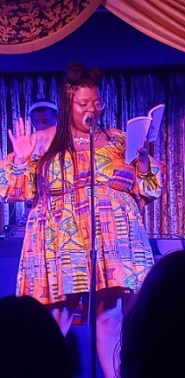 DJ spinned records. Conversations rose and intermingled in the air. “be/trouble” by bridgette bianca rested on a card table near Writ Large Press’ Peter Woods. The lady of the evening, professor and poet bridgette bianca stood, by the entrance greeting attendees as they arrived. Some already found this night so necessary, they needed their book signed before the evening began.
It was Saturday night. February. The Virgil. bridgette bianca’s release party for her debut poetry collection “be/trouble.”
At 8pm, the party kicked off. The event organizer, L.A. author and lawyer Natasha Deon, stepped to the mic. Conversations died, the audience leaned in. Not before long the first reader graced the mic, spoken word poet Barbara Faint. From Barbara’s first word, it was clear, if it wasn’t already, that it was a night to celebrate strong women of color. Fierce. Uncompromising. Her last poem, a poem of strength, her strength, the last image: her fist in the air, her middle finger raised at what this country always tries to do to black women: keep them down, keep them broken, to destroy them.
Poet Chenel King and her sister, singer Miya King, were two other performers who primed the stage for bianca. Chenel recited poetry to music while Maya provided the vocals for the refrain. The final poem was one that was both heavy and funny. In it she took back the agency from white society and gave it back to the big momma figure in a poem about big momma finally providing her own self-care. Relaxing, even providing herself with a little sexual pleasure. Loving herself instead of everyone else.
When bridgette bianca took the stage, “be/trouble” cluched in one hand, the crowd was as electric as if Beyoncé stood before them. Chanting her name. Chanting her name. Electric. bianca was about to read unflinching, unapologetic poems about the full spectrum of blackness and especially female blackness. And as she read, her poems were like the best spoken word performance, capturing the emotions behind each word. The audience responded like it was a black church service. “Yes,” “that’s right,” “say it girl,” intersected with snaps in agreement.
The audience–made up of mostly black, and brown, but also of white, and some Asian attendees–needed bianca’s poetry. Narratives that reflected their stories, their lives. Speaking truths that are not heard enough about “the colonizers greatest mistake was/underestimating our resilience/we been minding our own business/and mining something stronger than vibranium,” as in the poem “some heros wear their durags with the capes flapping.” And it was the first poetry reading I remember, where the audience chanted for bianca to come back for an encore. Chanting, “one more poem.”
When the reading ended, “be/trouble” had sold out. The crowd mingled, strengthening the bonds of the literary community. I even met the young poet Jordan Nakamura, an MFA student at Antioch University in Culver City. Worried about saying something important in his writing. Worried if he had anything important to say like bianca.
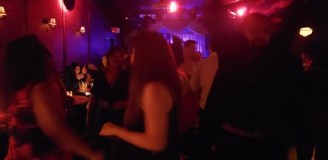
Many in attendance waited in line for bianca to sign their copy of “be/trouble.” And as the night wore on, with the DJ continuing to spin records, some ventured to the floor to dance. Some writers, like poet Joseph Rios, comfortable enough to embarrass themselves.

 Los Angeles Literature