
By Alex Espinoza
FROM: L.A. Times
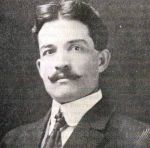 As the president issues the first veto of his tenure after Congress rejected his declaration of a national emergency to fund his wall, it’s hard to imagine that the dynamics along the U.S.-Mexico border were once different, when people shuttled back and forth between the two nations. Facundo Bernal marks such a moment in “Palos de Ciego,” his manuscript of poetry translated to English for the first time by Anthony Seidman as “A Stab in the Dark” for the Los Angeles Review of Books.
This iteration of “Palos de Ciego” comes to us when the political climate turns its attention to the border and to migrant caravans. Perhaps it is ironic, then, that this body of writing, only recently rediscovered, surfaces now as a reminder of “a time, before fences, walls, and the Border Patrol, when the border only existed to be crossed,” writes Josh Kun, a 2016 MacArthur Fellow and USC professor, in the book’s introduction.
The poems collected in “Palos de Ciego” were first published in the newspaper La Prensa in 1921. Writing under the pseudonym Míster Blind, Bernal’s work offers a unique perspective on the experiences of Latinos during a period when the city was in the midst of an economic boom and Los Angeles’ Mexican American population swelled in numbers. “‘Palos de Ciego’ is one of the first books of poems about the city, and yet it is nowhere to be found in accounts of L.A. literary history,” Kun continues. In fact, one is hard pressed to find any information about the writings of Facundo Bernal — or anything on the man himself, for that matter. A quick online search reveals a few scant details about the life and work of a writer whose poetry provides keen insight into the lives of Mexican Americans during the early 20th century. “Palos de Ciego” stands as one of the earliest bodies of literature chronicling the experiences of Chicanos in Los Angeles, a radical new telling of a subject we thought we already knew, one we thought had already been written.
A true fronterizo, Bernal was born in Hermosillo, Mexico, in 1883 and came of age during the reign of one of the country’s most recognized despots — Porfirio Díaz. Along with his brother Francisco, Bernal’s work and political and artistic views were shaped and influenced by the country’s burgeoning literary community. Bernal first came to Southern California in 1913 as an exiled journalist whose brash and belligerent screeds against the dictatorship of Díaz and the political corruptions of Mexico had resulted in death threats and stints in jail. He found sanctuary in Los Angeles, in “[our] divine city/ of beachside resorts/ and parks brimming/ with lush lakesides,/ in the beautiful Angelo-polis/” he tells us in his poem, “The Crime Wave.” Read Rest of Review Here

 Los Angeles Literature