
by K.E. OGDEN
From: Kenyon Review Online
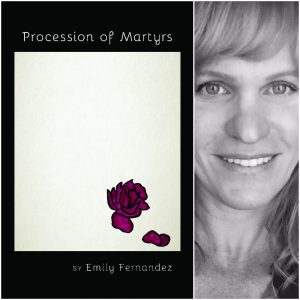 This is the fifth interview in an ongoing series about the intersections of writing, teaching, and identity. Read Past Interviews in the series: Kathy Kottaras, Jimmy Santiago Baca, Mike Rose, Virginia Pye.
Emily Fernandez has lived in California almost every year of her life, except for a three-year tour in New York, where she graduated from NYU with an M.A. in English literature. She lives in Los Angeles and teaches at Pasadena City College where she runs the Visiting Writers series with her colleagues and also organizes the annual Pasadena City College Poetry Day celebration each April. Her new chapbook, Procession of Martyrs, was just released by Finishing Line Press. She is a proud member of the LA womyn’s writing group Las Lunas Locas. Her poems have been featured at Poetic Diversity and Verse Virtual.
Kirsten Ogden and Emily Fernandez talked using Facebook Messenger between December 2017 and April 2018.
Emily, Tell me about your new chapbook out from Finishing Line Press, A Procession of Martyrs.
I was a fiction writer for a long while, but I realized I don’t have what it takes to revise a novel, at least not right now. When I started writing poetry, I still had the mindset of a prose writer. I was thinking about character, voice, and narration. Many of my poems are told in different voices. I wanted them to read like Dylan songs. In college I didn’t have a television so I would listen to Dylan’s songs. I could easily get the emotional weight of the lyrics, but when I tried to figure out the plot, I never could. I liked the puzzle of it, the string of imagery that is from both the past and present, from fact and fiction. There are also some really personal poems in there too.
Procession of Martyrs was selected by Finishing Line after you submitted for the New Women’s Voices Chapbook series. What do you like about the chapbook genre for poets?
Chapbooks are wonderful. They are not the museum exhibition. They are the first art show at a little gallery off the main strip. They are little gifts, hints about the magic that is still to come, and they are essential for new poets. Read Rest of Interview Here

 Los Angeles Literature