
An interview with one of America’s greatest living poets, Chiwan Choi.
By By Ed Lin
From: Giant Robot Media
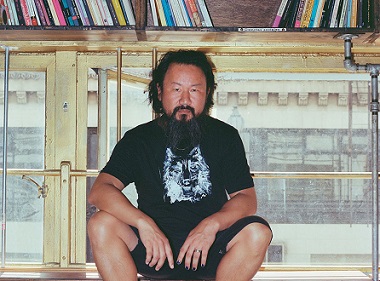
Chiwan Choi is a one of our country’s greatest living poets.
I’m not saying this lightly. His work has an immediacy of a cereal jingle and also the permanence of haunted childhood memories.
Don’t take my word for it. The New York Times recently featured a poem from Choi’s third book, The Yellow House (2017, Civil Coping Mechanisms). His other books include Abductions (2012, Writ Large Press) and The Flood (2010, Tia Chuca Press).
It is staggering to know that English is Choi’s third language, after Korean and Spanish, learned during a brief stay in Paraguay. Perhaps this in/adaptability of language and culture has instilled in his work a multifaceted quality that reveals more with each reading.
I recently caught up with Choi at a barbecue place in New York City.
GR: The spoken word is much older than the written word. By the time Gilgamesh was chiseled into tablets, language was already millennia old and that story was, as well. What do you think is more powerful: the written word or the spoken word?
CC: I think that’s sort of a false division, because when I do a reading from my book, is that a written word or a spoken word? I can’t imagine people way back when not finding a way to track it as they were creating their piece before they spoke in front of you. There must have been some recording method, even if it’s some sort of memorizing technique or whatever to be able to perform long pieces. So when I read from my book in front of people, it’s spoken, and if I read it many times I could probably read it without even looking at the page. At that point is it the written word or the spoken word?
GR: Do you always have the book in front of you even if you don’t need to read from it?
CC: Yeah, I wanna say the words I wanna say. It’s not because I feel like I should look at the page. I don’t wanna mispeak. Read Rest of Interview Here.

 Los Angeles Literature